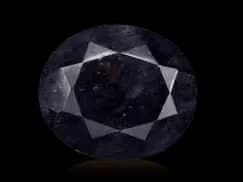
Blue Aventurine
Blue Aventurine is a distinctive quartz-rich gemstone with cool blue tones and subtle natural inclusions, offering durable beauty for cabochons, beads, carvings, and jewelry.
Blue Aventurine is a blue quartz-rich ornamental gemstone, commonly understood as quartz or quartzite containing fine inclusions of dumortierite that create its characteristic blue appearance. Unlike a single mineral species, aventurine is a material variety whose appearance depends on the host quartz and its included minerals. The dominant chemical composition of the quartz host is silicon dioxide (SiO2). Blue Aventurine is commonly associated with dumortierite inclusions, an aluminium borosilicate mineral that can occur as fine fibrous or granular material within quartz. The quartz host belongs to the trigonal crystal system, although Blue Aventurine commonly occurs as a massive, polycrystalline aggregate rather than well-formed individual crystals. Its hardness is around 7 on the Mohs scale, making it reasonably durable for many jewelry applications. It has a specific gravity of approximately 2.64-2.69 and a refractive index around 1.54-1.55, with values varying according to the amount and nature of included material. Its luster is typically vitreous to slightly waxy, and it breaks with a conchoidal to uneven fracture rather than showing cleavage. Blue Aventurine ranges from pale blue and blue-gray to deeper blue and blue-violet shades. Color intensity is influenced by the concentration and distribution of included minerals, especially dumortierite. Some specimens show attractive patterns, streaks, clouds, or fine inclusions rather than a perfectly uniform body color. Dumortierite-bearing quartz from Brazil, including material associated with the Vaca Morta locality, is a well-known example of blue quartz material in the gem and lapidary trade. Blue quartz varieties have also appeared in ornamental objects, beads, carvings, cabochons, and collector specimens. Historically, aventurine has been valued primarily as an ornamental quartz material rather than as a traditional high-value faceted gemstone. Today, Blue Aventurine is appreciated for its distinctive color, natural patterning, good everyday hardness, and accessible price compared with many blue precious gemstones. Natural Blue Aventurine can be especially appealing to buyers who want a blue gemstone with an organic, softly patterned appearance rather than the uniform transparency of sapphire or topaz.
- Mineral Family
- Quartz
- Chemical Formula
- SiO2
- Mohs Hardness
- 7
- Refractive Index
- 1.54 - 1.55
- Specific Gravity
- 2.64 - 2.69
- Cleavage
- None
- Crystal System
- Trigonal
- Luster
- Vitreous
- Color Range
- Blue
When buying Blue Aventurine online or in person, evaluate the material as an ornamental quartz gemstone and focus on natural appearance, consistency, craftsmanship, and accurate identification. Color: Look for attractive blue, blue-gray, or blue-violet tones with an even or naturally patterned distribution. Stronger color is not automatically better; attractive patterning and visual balance can be more important than maximum saturation. Clarity: Blue Aventurine is commonly translucent to opaque because of its included minerals. Natural inclusions are part of its identity, so perfectly clear material is not necessarily a quality advantage. Cut: Cabochons, beads, polished slabs, carvings, and smooth freeform pieces are common. A good cut should display the color and natural pattern without excessive pits, cracks, or poor polishing. Faceted material is less typical when the material is strongly opaque or aggregate in structure. Carat: Carat weight matters mainly for finished jewelry pricing, but size alone does not determine quality. Large pieces may be relatively affordable compared with rare transparent blue gemstones. Origin: Ask for the stated locality when origin is important, but do not assume that origin alone proves superior quality. Brazilian dumortierite-bearing quartz is a recognized material in the trade, while commercial Blue Aventurine can occur from different deposits. Treatments: Ask whether the stone is natural, dyed, coated, impregnated, or otherwise enhanced. Some quartz and aventurine materials in the market may be treated, so sellers should clearly disclose known treatments. Natural vs lab-grown: Natural Blue Aventurine is a geological material formed in nature. It should not be confused with laboratory-grown quartz or dyed materials marketed under similar names. Certification: A laboratory report can be useful for higher-value purchases or when identification and treatment status are important. For ordinary inexpensive cabochons or beads, certification may cost more than the material itself. Authenticity: Buy from a reputable seller and request clear photographs, treatment disclosure, locality information when available, and an accurate description of the material. Price: Blue Aventurine is generally an affordable ornamental gemstone. Price depends on color, pattern, quality of polish, size, workmanship, provenance, and whether the material has been treated. When you buy Blue Aventurine online, compare the actual stone photographs, dimensions, treatment disclosure, and return policy rather than relying only on the gemstone name.
Blue Aventurine has a Mohs hardness of about 7, making it suitable for many types of jewelry, but it can still be scratched by harder gemstones and materials. Clean it with lukewarm water, a small amount of mild soap, and a soft cloth or soft brush. Rinse thoroughly and dry gently after cleaning. Avoid harsh chemicals, abrasive cleaners, sudden temperature changes, and prolonged exposure to strong heat. Because Blue Aventurine can contain natural inclusions, avoid rough handling and protect polished surfaces from hard impacts. Ultrasonic or steam cleaning is best avoided unless a qualified professional has confirmed that the specific stone and any treatments are suitable for those methods. For storage, keep Blue Aventurine separate from harder gemstones such as sapphire, ruby, and diamond, preferably in a soft pouch or individual jewelry compartment. Pendants, earrings, and occasional-wear pieces are generally practical choices. For rings and bracelets used every day, choose protective settings and remove the jewelry during heavy work, sports, gardening, or activities where the stone could be struck or exposed to abrasive materials.
Blue Aventurine is a blue quartz-rich ornamental gemstone, commonly understood as quartz or quartzite containing fine inclusions of dumortierite that create its characteristic blue appearance. Unlike a single mineral species, aventurine is a material variety whose appearance depends on the host quartz and its included minerals. The dominant chemical composition of the quartz host is silicon dioxide (SiO2). Blue Aventurine is commonly associated with dumortierite inclusions, an aluminium borosilicate mineral that can occur as fine fibrous or granular material within quartz. The quartz host belongs to the trigonal crystal system, although Blue Aventurine commonly occurs as a massive, polycrystalline aggregate rather than well-formed individual crystals. Its hardness is around 7 on the Mohs scale, making it reasonably durable for many jewelry applications. It has a specific gravity of approximately 2.64-2.69 and a refractive index around 1.54-1.55, with values varying according to the amount and nature of included material. Its luster is typically vitreous to slightly waxy, and it breaks with a conchoidal to uneven fracture rather than showing cleavage. Blue Aventurine ranges from pale blue and blue-gray to deeper blue and blue-violet shades. Color intensity is influenced by the concentration and distribution of included minerals, especially dumortierite. Some specimens show attractive patterns, streaks, clouds, or fine inclusions rather than a perfectly uniform body color. Dumortierite-bearing quartz from Brazil, including material associated with the Vaca Morta locality, is a well-known example of blue quartz material in the gem and lapidary trade. Blue quartz varieties have also appeared in ornamental objects, beads, carvings, cabochons, and collector specimens. Historically, aventurine has been valued primarily as an ornamental quartz material rather than as a traditional high-value faceted gemstone. Today, Blue Aventurine is appreciated for its distinctive color, natural patterning, good everyday hardness, and accessible price compared with many blue precious gemstones. Natural Blue Aventurine can be especially appealing to buyers who want a blue gemstone with an organic, softly patterned appearance rather than the uniform transparency of sapphire or topaz.
- Mineral Family
- Quartz
- Chemical Formula
- SiO2
- Mohs Hardness
- 7
- Refractive Index
- 1.54 - 1.55
- Specific Gravity
- 2.64 - 2.69
- Cleavage
- None
- Crystal System
- Trigonal
- Luster
- Vitreous
- Color Range
- Blue
When buying Blue Aventurine online or in person, evaluate the material as an ornamental quartz gemstone and focus on natural appearance, consistency, craftsmanship, and accurate identification. Color: Look for attractive blue, blue-gray, or blue-violet tones with an even or naturally patterned distribution. Stronger color is not automatically better; attractive patterning and visual balance can be more important than maximum saturation. Clarity: Blue Aventurine is commonly translucent to opaque because of its included minerals. Natural inclusions are part of its identity, so perfectly clear material is not necessarily a quality advantage. Cut: Cabochons, beads, polished slabs, carvings, and smooth freeform pieces are common. A good cut should display the color and natural pattern without excessive pits, cracks, or poor polishing. Faceted material is less typical when the material is strongly opaque or aggregate in structure. Carat: Carat weight matters mainly for finished jewelry pricing, but size alone does not determine quality. Large pieces may be relatively affordable compared with rare transparent blue gemstones. Origin: Ask for the stated locality when origin is important, but do not assume that origin alone proves superior quality. Brazilian dumortierite-bearing quartz is a recognized material in the trade, while commercial Blue Aventurine can occur from different deposits. Treatments: Ask whether the stone is natural, dyed, coated, impregnated, or otherwise enhanced. Some quartz and aventurine materials in the market may be treated, so sellers should clearly disclose known treatments. Natural vs lab-grown: Natural Blue Aventurine is a geological material formed in nature. It should not be confused with laboratory-grown quartz or dyed materials marketed under similar names. Certification: A laboratory report can be useful for higher-value purchases or when identification and treatment status are important. For ordinary inexpensive cabochons or beads, certification may cost more than the material itself. Authenticity: Buy from a reputable seller and request clear photographs, treatment disclosure, locality information when available, and an accurate description of the material. Price: Blue Aventurine is generally an affordable ornamental gemstone. Price depends on color, pattern, quality of polish, size, workmanship, provenance, and whether the material has been treated. When you buy Blue Aventurine online, compare the actual stone photographs, dimensions, treatment disclosure, and return policy rather than relying only on the gemstone name.
Blue Aventurine has a Mohs hardness of about 7, making it suitable for many types of jewelry, but it can still be scratched by harder gemstones and materials. Clean it with lukewarm water, a small amount of mild soap, and a soft cloth or soft brush. Rinse thoroughly and dry gently after cleaning. Avoid harsh chemicals, abrasive cleaners, sudden temperature changes, and prolonged exposure to strong heat. Because Blue Aventurine can contain natural inclusions, avoid rough handling and protect polished surfaces from hard impacts. Ultrasonic or steam cleaning is best avoided unless a qualified professional has confirmed that the specific stone and any treatments are suitable for those methods. For storage, keep Blue Aventurine separate from harder gemstones such as sapphire, ruby, and diamond, preferably in a soft pouch or individual jewelry compartment. Pendants, earrings, and occasional-wear pieces are generally practical choices. For rings and bracelets used every day, choose protective settings and remove the jewelry during heavy work, sports, gardening, or activities where the stone could be struck or exposed to abrasive materials.
Blue Aventurine for Sale
No gems found
Try broadening your search or adjusting your filters.
Have a gem of your own? List it free - no fees