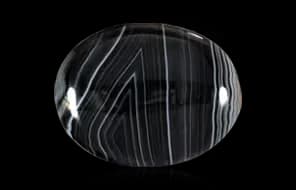
Striped Onyx
Striped Onyx is a distinctive chalcedony prized for its parallel bands, contrasting colors, polished surface and timeless appeal in jewelry and carved gems.
Striped Onyx is a banded variety of chalcedony, the microcrystalline form of quartz. Its defining feature is straight or approximately parallel layering, commonly showing contrasting bands such as black and white, brown and white, or other natural color combinations. Its chemical composition is silicon dioxide (SiO2), and it belongs to the quartz mineral family. True onyx has a trigonal crystal system, although its extremely fine-grained aggregate structure means individual crystals are not normally visible. It has a Mohs hardness of about 6.5 to 7, a specific gravity generally around 2.55 to 2.70, a refractive index of approximately 1.530 to 1.543, and a waxy to vitreous luster. Cleavage is absent, while fracture is typically conchoidal or uneven. Striped Onyx develops through the deposition of successive silica-rich layers, producing its characteristic parallel banding. The material occurs in a range of colors, with black, white, gray, brown, red, yellow and green tones possible depending on the minerals and conditions involved during formation. Classic onyx is traditionally associated with black-and-white banding, while red-brown banded material is commonly described as sardonyx. The name onyx is also sometimes used commercially for banded calcite, often called onyx marble, but that material is chemically and physically different from true chalcedony onyx. Onyx has a long history in decorative arts and jewelry. Ancient civilizations valued layered onyx for seals, cameos, intaglios, beads and carved objects because the contrasting bands could be used to create striking relief designs. Today, Striped Onyx is used for cabochons, beads, pendants, earrings, bracelets, rings and ornamental carvings. Buyers value it particularly for its graphic banding, attractive polish, affordability compared with many rarer gemstones, and the individuality of each piece. Because the pattern is natural, the direction, width and contrast of the stripes can vary considerably from one gemstone to another.
- Mineral Family
- Quartz
- Chemical Formula
- SiO2
- Mohs Hardness
- 6.5 - 7
- Refractive Index
- 1.530 - 1.543
- Specific Gravity
- 2.55 - 2.70
- Cleavage
- None
- Crystal System
- Trigonal
- Luster
- Waxy
- Color Range
- Black, White, Gray, Red, Yellow, Green
When buying Striped Onyx, begin with the color and quality of the banding. Strong contrast, clean parallel stripes and an attractive distribution of colors can make a specimen more visually desirable. Examine clarity and surface quality for cracks, pits, fractures or excessive inclusions that could weaken a cut stone. Since Striped Onyx is commonly cut as a cabochon or polished bead, the quality of the polish and symmetry of the cut are especially important. Carat weight matters less than the overall pattern, size, condition and craftsmanship because onyx is available in relatively large pieces. Origin can be interesting to collectors, but it should not automatically be treated as a guarantee of quality or value. Treatments should always be disclosed. Some onyx materials, particularly black commercial onyx, may be dyed to enhance or create color, and buyers should distinguish treated material from naturally colored material. Striped Onyx is a natural gemstone material rather than a commonly laboratory-grown jewelry stone; however, dyed chalcedony, imitation materials and commercially marketed banded calcite can be sold under confusing trade descriptions. Ask whether the material is natural chalcedony onyx and whether any color treatment has been applied. For higher-value specimens, an independent gemological report can help confirm the material and disclose detectable treatments. Authenticity is particularly important because 'onyx' is also widely used in the decorative-stone trade for banded calcite or aragonite, which has a much lower hardness and different optical properties. Price is influenced by color, banding contrast, pattern quality, size, polish, craftsmanship, treatment status and provenance when documented. For buyers searching to buy Striped Onyx online, choose sellers who clearly identify the material, disclose treatments, provide accurate photographs and dimensions, and explain whether the stone is true chalcedony onyx rather than onyx marble.
Striped Onyx should be cared for gently. Clean it with a soft, slightly damp cloth and mild soapy water when necessary, then dry it thoroughly. Avoid harsh chemicals, prolonged soaking, abrasive cleaners, steam cleaning and ultrasonic cleaners, particularly where the stone may have treatments or a porous surface. Store Striped Onyx separately from harder gemstones such as sapphire, ruby and diamond to reduce the risk of scratches. Although its 6.5 to 7 Mohs hardness gives it reasonable durability, it is still vulnerable to scratches, sharp impacts and abrasion. Rings and bracelets should receive more careful treatment because they experience frequent contact with hard surfaces. Avoid exposing treated material to strong chemicals or excessive heat. For everyday jewelry, regular gentle cleaning and careful storage will help preserve the stone's polish and distinctive banding.
Striped Onyx is a banded variety of chalcedony, the microcrystalline form of quartz. Its defining feature is straight or approximately parallel layering, commonly showing contrasting bands such as black and white, brown and white, or other natural color combinations. Its chemical composition is silicon dioxide (SiO2), and it belongs to the quartz mineral family. True onyx has a trigonal crystal system, although its extremely fine-grained aggregate structure means individual crystals are not normally visible. It has a Mohs hardness of about 6.5 to 7, a specific gravity generally around 2.55 to 2.70, a refractive index of approximately 1.530 to 1.543, and a waxy to vitreous luster. Cleavage is absent, while fracture is typically conchoidal or uneven. Striped Onyx develops through the deposition of successive silica-rich layers, producing its characteristic parallel banding. The material occurs in a range of colors, with black, white, gray, brown, red, yellow and green tones possible depending on the minerals and conditions involved during formation. Classic onyx is traditionally associated with black-and-white banding, while red-brown banded material is commonly described as sardonyx. The name onyx is also sometimes used commercially for banded calcite, often called onyx marble, but that material is chemically and physically different from true chalcedony onyx. Onyx has a long history in decorative arts and jewelry. Ancient civilizations valued layered onyx for seals, cameos, intaglios, beads and carved objects because the contrasting bands could be used to create striking relief designs. Today, Striped Onyx is used for cabochons, beads, pendants, earrings, bracelets, rings and ornamental carvings. Buyers value it particularly for its graphic banding, attractive polish, affordability compared with many rarer gemstones, and the individuality of each piece. Because the pattern is natural, the direction, width and contrast of the stripes can vary considerably from one gemstone to another.
- Mineral Family
- Quartz
- Chemical Formula
- SiO2
- Mohs Hardness
- 6.5 - 7
- Refractive Index
- 1.530 - 1.543
- Specific Gravity
- 2.55 - 2.70
- Cleavage
- None
- Crystal System
- Trigonal
- Luster
- Waxy
- Color Range
- Black, White, Gray, Red, Yellow, Green
When buying Striped Onyx, begin with the color and quality of the banding. Strong contrast, clean parallel stripes and an attractive distribution of colors can make a specimen more visually desirable. Examine clarity and surface quality for cracks, pits, fractures or excessive inclusions that could weaken a cut stone. Since Striped Onyx is commonly cut as a cabochon or polished bead, the quality of the polish and symmetry of the cut are especially important. Carat weight matters less than the overall pattern, size, condition and craftsmanship because onyx is available in relatively large pieces. Origin can be interesting to collectors, but it should not automatically be treated as a guarantee of quality or value. Treatments should always be disclosed. Some onyx materials, particularly black commercial onyx, may be dyed to enhance or create color, and buyers should distinguish treated material from naturally colored material. Striped Onyx is a natural gemstone material rather than a commonly laboratory-grown jewelry stone; however, dyed chalcedony, imitation materials and commercially marketed banded calcite can be sold under confusing trade descriptions. Ask whether the material is natural chalcedony onyx and whether any color treatment has been applied. For higher-value specimens, an independent gemological report can help confirm the material and disclose detectable treatments. Authenticity is particularly important because 'onyx' is also widely used in the decorative-stone trade for banded calcite or aragonite, which has a much lower hardness and different optical properties. Price is influenced by color, banding contrast, pattern quality, size, polish, craftsmanship, treatment status and provenance when documented. For buyers searching to buy Striped Onyx online, choose sellers who clearly identify the material, disclose treatments, provide accurate photographs and dimensions, and explain whether the stone is true chalcedony onyx rather than onyx marble.
Striped Onyx should be cared for gently. Clean it with a soft, slightly damp cloth and mild soapy water when necessary, then dry it thoroughly. Avoid harsh chemicals, prolonged soaking, abrasive cleaners, steam cleaning and ultrasonic cleaners, particularly where the stone may have treatments or a porous surface. Store Striped Onyx separately from harder gemstones such as sapphire, ruby and diamond to reduce the risk of scratches. Although its 6.5 to 7 Mohs hardness gives it reasonable durability, it is still vulnerable to scratches, sharp impacts and abrasion. Rings and bracelets should receive more careful treatment because they experience frequent contact with hard surfaces. Avoid exposing treated material to strong chemicals or excessive heat. For everyday jewelry, regular gentle cleaning and careful storage will help preserve the stone's polish and distinctive banding.
Striped Onyx for Sale
No gems found
Try broadening your search or adjusting your filters.
Have a gem of your own? List it free - no fees