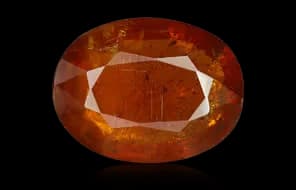
Red Kyanite
Red Kyanite is an uncommon color variety of kyanite, prized for its warm red to reddish-orange hues, distinctive crystal structure, and collector appeal.
Red Kyanite is a rare color variety of kyanite, an aluminum silicate mineral in the Al2SiO5 group. Like other kyanite, it forms mainly in metamorphic environments under conditions of elevated pressure and is commonly found in schists and gneisses. Its unusual color makes it particularly interesting to collectors and gemstone enthusiasts. Kyanite has a strongly directional hardness of about 4 to 7 on the Mohs scale, meaning hardness varies according to crystallographic direction. It has perfect cleavage in one direction and good cleavage in others, so it should be handled with care. Its refractive index is approximately 1.710-1.735 and its specific gravity is about 3.55-3.70. Kyanite is triclinic and typically has a vitreous to pearly luster. Red and reddish-orange kyanite material has been documented from Tanzania, including the Loliondo area of northern Tanzania, where unusual orange kyanite associated with spessartine has been reported. The color of kyanite can result from trace elements and structural variations; color should therefore be evaluated on the individual stone rather than assumed from the variety name. Red Kyanite may occur as transparent to translucent material and can display natural color zoning and inclusions. Because strongly saturated red material is uncommon, attractive faceted examples are of particular interest to collectors. In jewelry, Red Kyanite is best suited to carefully designed pendants, earrings, brooches and occasional-wear rings where the stone can be protected from hard knocks. Buyers value natural Red Kyanite for its unusual color, geological character, scarcity and individuality rather than for any claimed metaphysical effect.
- Mineral Family
- Kyanite
- Chemical Formula
- Al2SiO5
- Mohs Hardness
- 4 - 7
- Refractive Index
- 1.710 - 1.735
- Specific Gravity
- 3.55 - 3.70
- Cleavage
- Perfect in one direction; good in two directions
- Crystal System
- Triclinic
- Luster
- Vitreous
- Color Range
- Red, Orange, Pink
When buying Red Kyanite gemstone, evaluate the complete stone rather than relying on color alone. Color is one of the most important factors: vivid, attractive red to reddish-orange tones with good saturation generally command greater interest than pale or uneven material. Clarity should be assessed according to the stone's intended use. Natural inclusions and color zoning are common in kyanite, so an inclusion-free appearance is not always realistic for rare material. Cut is especially important because kyanite has directional properties and cleavage. A skilled cutter can orient the stone to display its strongest color while minimizing durability risks. Carat weight matters because larger transparent, well-colored specimens can be difficult to obtain. Origin may add collector interest, particularly when supported by credible locality documentation, but origin should not automatically be treated as a guarantee of higher quality. Ask the seller whether the stone is natural and whether any treatment has been applied. Kyanite is generally encountered as an untreated natural gemstone, but a reputable seller should disclose any enhancement or alteration. Natural Red Kyanite should be distinguished from simulants and other red gemstones through proper gemological testing. Laboratory certification is recommended for valuable stones and should identify the mineral species and disclose detectable treatments where applicable. Authenticity is best established through a qualified gemological laboratory rather than appearance alone. Price depends on color saturation, transparency, clarity, cut quality, size, origin documentation, treatment status and overall rarity. Be cautious of unusually inexpensive stones marketed as exceptionally rare, and compare like-for-like material before buying Red Kyanite online.
Red Kyanite requires more care than harder gemstones because its Mohs hardness is strongly directional and it has pronounced cleavage. For cleaning, use lukewarm water, a small amount of mild soap and a soft cloth or very soft brush. Rinse thoroughly and dry gently. Avoid ultrasonic and steam cleaners because vibration, heat and internal weakness can increase the risk of damage. Protect the gemstone from sharp impacts, sudden temperature changes, abrasive surfaces and prolonged contact with harder gems such as diamond or sapphire. Red Kyanite is better suited to occasional-wear jewelry than pieces exposed to frequent knocks. Pendants and earrings are generally safer choices than rings worn every day. Store each stone separately in a soft pouch or fabric-lined compartment so it cannot rub against harder jewelry. If a Red Kyanite setting becomes loose or the stone develops a visible chip or fracture, have it inspected by a professional jeweler before wearing it again.
Red Kyanite is a rare color variety of kyanite, an aluminum silicate mineral in the Al2SiO5 group. Like other kyanite, it forms mainly in metamorphic environments under conditions of elevated pressure and is commonly found in schists and gneisses. Its unusual color makes it particularly interesting to collectors and gemstone enthusiasts. Kyanite has a strongly directional hardness of about 4 to 7 on the Mohs scale, meaning hardness varies according to crystallographic direction. It has perfect cleavage in one direction and good cleavage in others, so it should be handled with care. Its refractive index is approximately 1.710-1.735 and its specific gravity is about 3.55-3.70. Kyanite is triclinic and typically has a vitreous to pearly luster. Red and reddish-orange kyanite material has been documented from Tanzania, including the Loliondo area of northern Tanzania, where unusual orange kyanite associated with spessartine has been reported. The color of kyanite can result from trace elements and structural variations; color should therefore be evaluated on the individual stone rather than assumed from the variety name. Red Kyanite may occur as transparent to translucent material and can display natural color zoning and inclusions. Because strongly saturated red material is uncommon, attractive faceted examples are of particular interest to collectors. In jewelry, Red Kyanite is best suited to carefully designed pendants, earrings, brooches and occasional-wear rings where the stone can be protected from hard knocks. Buyers value natural Red Kyanite for its unusual color, geological character, scarcity and individuality rather than for any claimed metaphysical effect.
- Mineral Family
- Kyanite
- Chemical Formula
- Al2SiO5
- Mohs Hardness
- 4 - 7
- Refractive Index
- 1.710 - 1.735
- Specific Gravity
- 3.55 - 3.70
- Cleavage
- Perfect in one direction; good in two directions
- Crystal System
- Triclinic
- Luster
- Vitreous
- Color Range
- Red, Orange, Pink
When buying Red Kyanite gemstone, evaluate the complete stone rather than relying on color alone. Color is one of the most important factors: vivid, attractive red to reddish-orange tones with good saturation generally command greater interest than pale or uneven material. Clarity should be assessed according to the stone's intended use. Natural inclusions and color zoning are common in kyanite, so an inclusion-free appearance is not always realistic for rare material. Cut is especially important because kyanite has directional properties and cleavage. A skilled cutter can orient the stone to display its strongest color while minimizing durability risks. Carat weight matters because larger transparent, well-colored specimens can be difficult to obtain. Origin may add collector interest, particularly when supported by credible locality documentation, but origin should not automatically be treated as a guarantee of higher quality. Ask the seller whether the stone is natural and whether any treatment has been applied. Kyanite is generally encountered as an untreated natural gemstone, but a reputable seller should disclose any enhancement or alteration. Natural Red Kyanite should be distinguished from simulants and other red gemstones through proper gemological testing. Laboratory certification is recommended for valuable stones and should identify the mineral species and disclose detectable treatments where applicable. Authenticity is best established through a qualified gemological laboratory rather than appearance alone. Price depends on color saturation, transparency, clarity, cut quality, size, origin documentation, treatment status and overall rarity. Be cautious of unusually inexpensive stones marketed as exceptionally rare, and compare like-for-like material before buying Red Kyanite online.
Red Kyanite requires more care than harder gemstones because its Mohs hardness is strongly directional and it has pronounced cleavage. For cleaning, use lukewarm water, a small amount of mild soap and a soft cloth or very soft brush. Rinse thoroughly and dry gently. Avoid ultrasonic and steam cleaners because vibration, heat and internal weakness can increase the risk of damage. Protect the gemstone from sharp impacts, sudden temperature changes, abrasive surfaces and prolonged contact with harder gems such as diamond or sapphire. Red Kyanite is better suited to occasional-wear jewelry than pieces exposed to frequent knocks. Pendants and earrings are generally safer choices than rings worn every day. Store each stone separately in a soft pouch or fabric-lined compartment so it cannot rub against harder jewelry. If a Red Kyanite setting becomes loose or the stone develops a visible chip or fracture, have it inspected by a professional jeweler before wearing it again.
Red Kyanite for Sale
No gems found
Try broadening your search or adjusting your filters.
Have a gem of your own? List it free - no fees