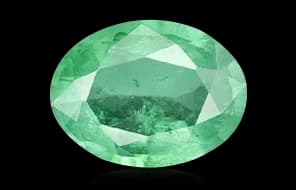
Green Kyanite
Green Kyanite is a rare, naturally green variety of kyanite prized for its distinctive color, unusual directional hardness, and collector appeal in fine jewelry.
Green Kyanite is a naturally green variety of kyanite, an aluminum silicate mineral valued by collectors and gemstone enthusiasts for its unusual physical properties and distinctive bladed crystal habit. Kyanite belongs to the aluminosilicate mineral group and has the chemical formula Al2SiO5, the same composition shared by andalusite and sillimanite, which form under different geological conditions. Kyanite typically develops during high-pressure metamorphism of aluminum-rich rocks such as schist and gneiss. Green material is comparatively uncommon, with its color associated with trace elements such as chromium and, in some material, vanadium or iron. Green Kyanite may range from pale to medium green and can show color zoning or subtle variations in tone. Its most remarkable gemological feature is directional hardness: it measures approximately 4-4.5 along one crystallographic direction and about 6-7 across another. This anisotropic hardness, together with perfect cleavage, makes cutting technically demanding and means the finished stone should be handled with care. Kyanite is triclinic, has a vitreous to pearly luster, a specific gravity of about 3.53-3.70, and refractive indices around 1.710-1.735. Notable green kyanite localities include Brazil, Kenya, Tanzania, India, Nepal, and parts of the United States. Green kyanite from Bahia, Brazil, is documented in the gemological literature, while green crystals from Avery County, North Carolina, are well-known mineral specimens. Fine transparent faceted material is much less common than ordinary mineral specimens, which contributes to its collector interest. Historically, kyanite has been valued both as an industrial mineral and as a mineral specimen, while gem-quality varieties have gained attention in the colored-stone market. Today, Green Kyanite is used in rings, pendants, earrings, bracelets, and collector pieces, although protective settings and less exposed jewelry designs are preferable because of its cleavage and directional hardness. Buyers value natural Green Kyanite for its unusual green color, geological rarity, individual character, and the distinctive cutting challenge it presents.
- Mineral Family
- Kyanite
- Chemical Formula
- Al2SiO5
- Mohs Hardness
- 4 - 4.5
- Refractive Index
- 1.710 - 1.735
- Specific Gravity
- 3.53 - 3.70
- Cleavage
- Perfect on {100}; good on {010}
- Crystal System
- Triclinic
- Luster
- Vitreous
- Color Range
- Green
When buying Green Kyanite gemstone, evaluate the stone as a combination of color, clarity, cut, carat weight, origin, treatment status, and documentation. Color is an important quality factor: attractive, evenly distributed green with good saturation is generally more desirable than dull or heavily uneven material, although natural zoning can add character. Clarity should be judged according to the stone's intended use. Transparent, eye-clean Green Kyanite is uncommon and can command a premium, while translucent material and visible inclusions are more typical of collector specimens. Cut quality is especially important because kyanite's directional hardness and perfect cleavage make it challenging to facet. A skilled cutter must orient the rough carefully to reduce the risk of chipping and produce an attractive face-up appearance. Carat weight also affects value, particularly when larger stones combine good color, transparency, and sound construction. Origin can influence collector interest, but geographic origin should not automatically be treated as a guarantee of superior quality. Ask whether the stone is natural and whether any treatment has been applied. Natural Green Kyanite is encountered in the trade, while dyed or otherwise altered material and imitations can occur, so treatment disclosure matters. Kyanite does not have a routine synthetic counterpart that buyers should assume is equivalent to natural material; however, laboratory identification can distinguish kyanite from imitations and other green gems. For higher-value purchases, an independent gemological laboratory report can confirm species, identify detectable treatments, and provide useful documentation. Before you buy Green Kyanite online, request clear photographs or video, precise carat weight and dimensions, treatment disclosure, and certification where appropriate. Price is influenced by color quality, transparency, cutting quality, size, origin, rarity, and market demand rather than by carat weight alone.
Green Kyanite jewelry requires more care than its attractive appearance may suggest. Its directional hardness ranges from approximately 4-4.5 to 6-7, and it has perfect cleavage, so sharp impacts, abrasion, and poorly protected settings can cause chips or fractures. For routine cleaning, use lukewarm water, a small amount of mild soap, and a soft cloth or very soft brush. Rinse gently and dry thoroughly with a soft cloth. Avoid harsh chemicals, abrasive cleaners, steam cleaning, ultrasonic cleaners, and sudden temperature changes unless a qualified gemologist has confirmed that the particular stone and setting can tolerate them. Store Green Kyanite separately from harder gemstones such as sapphire, ruby, and diamond to reduce scratching, preferably in a soft-lined compartment or individual pouch. For everyday wear, pendants and earrings are generally safer choices than exposed rings because they experience less impact and abrasion. If worn in a ring, choose a protective setting and remove the jewelry before sports, manual work, gardening, or other activities where the gemstone may be struck. Periodically inspect the setting for looseness or damage, especially around the stone's cleavage directions.
Green Kyanite is a naturally green variety of kyanite, an aluminum silicate mineral valued by collectors and gemstone enthusiasts for its unusual physical properties and distinctive bladed crystal habit. Kyanite belongs to the aluminosilicate mineral group and has the chemical formula Al2SiO5, the same composition shared by andalusite and sillimanite, which form under different geological conditions. Kyanite typically develops during high-pressure metamorphism of aluminum-rich rocks such as schist and gneiss. Green material is comparatively uncommon, with its color associated with trace elements such as chromium and, in some material, vanadium or iron. Green Kyanite may range from pale to medium green and can show color zoning or subtle variations in tone. Its most remarkable gemological feature is directional hardness: it measures approximately 4-4.5 along one crystallographic direction and about 6-7 across another. This anisotropic hardness, together with perfect cleavage, makes cutting technically demanding and means the finished stone should be handled with care. Kyanite is triclinic, has a vitreous to pearly luster, a specific gravity of about 3.53-3.70, and refractive indices around 1.710-1.735. Notable green kyanite localities include Brazil, Kenya, Tanzania, India, Nepal, and parts of the United States. Green kyanite from Bahia, Brazil, is documented in the gemological literature, while green crystals from Avery County, North Carolina, are well-known mineral specimens. Fine transparent faceted material is much less common than ordinary mineral specimens, which contributes to its collector interest. Historically, kyanite has been valued both as an industrial mineral and as a mineral specimen, while gem-quality varieties have gained attention in the colored-stone market. Today, Green Kyanite is used in rings, pendants, earrings, bracelets, and collector pieces, although protective settings and less exposed jewelry designs are preferable because of its cleavage and directional hardness. Buyers value natural Green Kyanite for its unusual green color, geological rarity, individual character, and the distinctive cutting challenge it presents.
- Mineral Family
- Kyanite
- Chemical Formula
- Al2SiO5
- Mohs Hardness
- 4 - 4.5
- Refractive Index
- 1.710 - 1.735
- Specific Gravity
- 3.53 - 3.70
- Cleavage
- Perfect on {100}; good on {010}
- Crystal System
- Triclinic
- Luster
- Vitreous
- Color Range
- Green
When buying Green Kyanite gemstone, evaluate the stone as a combination of color, clarity, cut, carat weight, origin, treatment status, and documentation. Color is an important quality factor: attractive, evenly distributed green with good saturation is generally more desirable than dull or heavily uneven material, although natural zoning can add character. Clarity should be judged according to the stone's intended use. Transparent, eye-clean Green Kyanite is uncommon and can command a premium, while translucent material and visible inclusions are more typical of collector specimens. Cut quality is especially important because kyanite's directional hardness and perfect cleavage make it challenging to facet. A skilled cutter must orient the rough carefully to reduce the risk of chipping and produce an attractive face-up appearance. Carat weight also affects value, particularly when larger stones combine good color, transparency, and sound construction. Origin can influence collector interest, but geographic origin should not automatically be treated as a guarantee of superior quality. Ask whether the stone is natural and whether any treatment has been applied. Natural Green Kyanite is encountered in the trade, while dyed or otherwise altered material and imitations can occur, so treatment disclosure matters. Kyanite does not have a routine synthetic counterpart that buyers should assume is equivalent to natural material; however, laboratory identification can distinguish kyanite from imitations and other green gems. For higher-value purchases, an independent gemological laboratory report can confirm species, identify detectable treatments, and provide useful documentation. Before you buy Green Kyanite online, request clear photographs or video, precise carat weight and dimensions, treatment disclosure, and certification where appropriate. Price is influenced by color quality, transparency, cutting quality, size, origin, rarity, and market demand rather than by carat weight alone.
Green Kyanite jewelry requires more care than its attractive appearance may suggest. Its directional hardness ranges from approximately 4-4.5 to 6-7, and it has perfect cleavage, so sharp impacts, abrasion, and poorly protected settings can cause chips or fractures. For routine cleaning, use lukewarm water, a small amount of mild soap, and a soft cloth or very soft brush. Rinse gently and dry thoroughly with a soft cloth. Avoid harsh chemicals, abrasive cleaners, steam cleaning, ultrasonic cleaners, and sudden temperature changes unless a qualified gemologist has confirmed that the particular stone and setting can tolerate them. Store Green Kyanite separately from harder gemstones such as sapphire, ruby, and diamond to reduce scratching, preferably in a soft-lined compartment or individual pouch. For everyday wear, pendants and earrings are generally safer choices than exposed rings because they experience less impact and abrasion. If worn in a ring, choose a protective setting and remove the jewelry before sports, manual work, gardening, or other activities where the gemstone may be struck. Periodically inspect the setting for looseness or damage, especially around the stone's cleavage directions.
Green Kyanite for Sale
No gems found
Try broadening your search or adjusting your filters.
Have a gem of your own? List it free - no fees