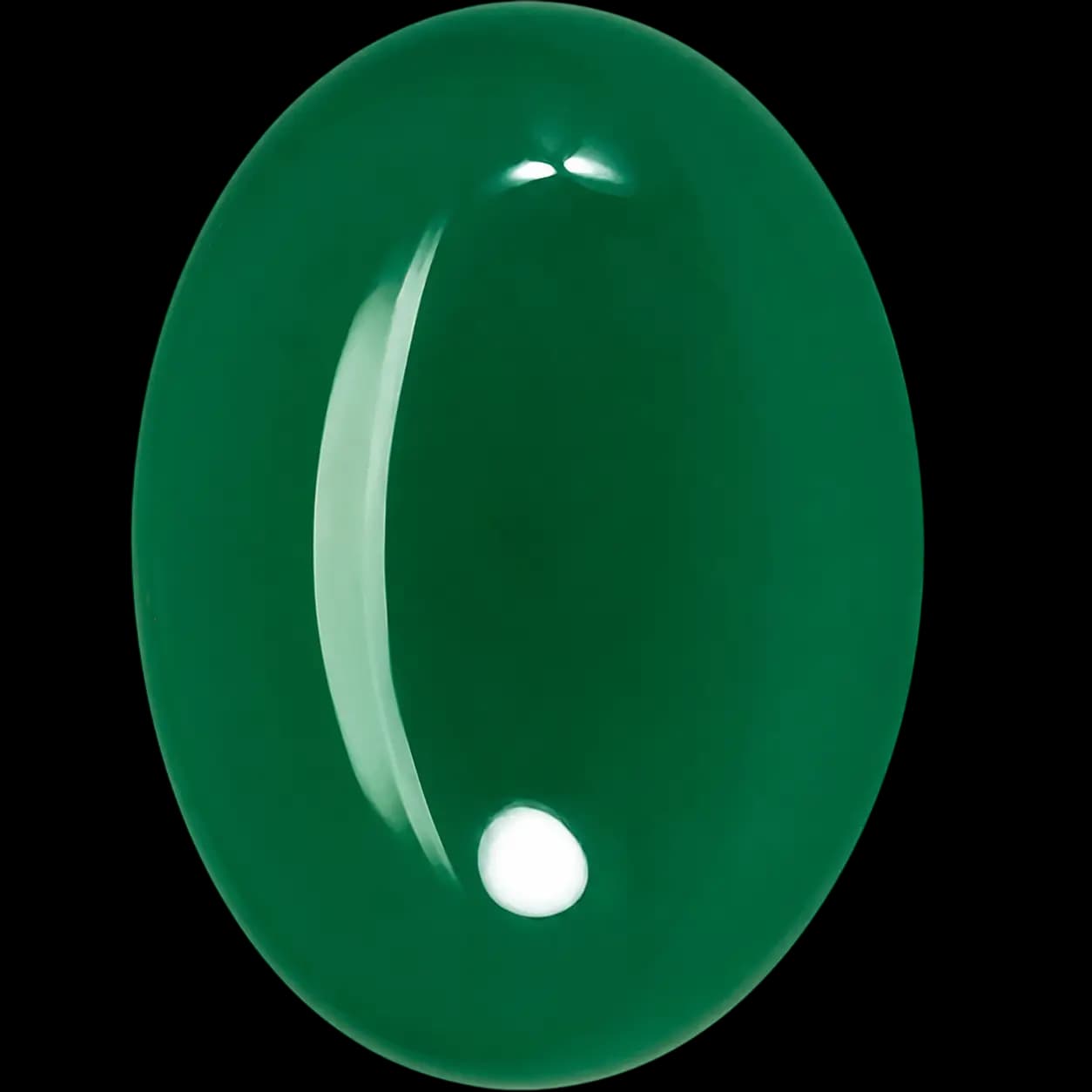
Onyx
Onyx is a striking variety of chalcedony admired for its deep colors, smooth polish, and timeless elegance. Discover natural Onyx gemstone jewelry valued for its bold beauty and versatility.
Onyx is a variety of chalcedony, which belongs to the quartz mineral family. It is a microcrystalline form of silicon dioxide (SiO₂) created through the deposition of silica-rich materials in cavities of volcanic and sedimentary rocks over long geological periods.
Known for its smooth texture and rich appearance, Onyx is most recognized in deep black varieties, although it can also occur in white, green, red, orange, and banded forms. Unlike many transparent gemstones, Onyx is generally opaque and valued for its even color, polished surface, and decorative appeal.
The gemstone has a trigonal crystal system and displays a waxy to vitreous luster. Its good durability, with a Mohs hardness of 6.5 to 7, makes it suitable for many jewelry applications when properly cared for.
Historically, Onyx has been used for thousands of years in carvings, seals, cameos, and decorative objects. Ancient civilizations valued its ability to take a fine polish and its suitability for detailed engraving. Today, natural Onyx gemstone jewelry remains popular in rings, pendants, bracelets, earrings, and statement accessories.
Famous sources of Onyx include Brazil, India, Mexico, Madagascar, Uruguay, and the United States. Buyers appreciate Onyx for its dramatic appearance, affordability, and ability to complement both modern and classic jewelry designs.
- Mineral Family
- Quartz
- Chemical Formula
- SiO₂
- Mohs Hardness
- 6.5 - 7
- Refractive Index
- 1.530 - 1.539
- Specific Gravity
- 2.58 - 2.64
- Cleavage
- None
- Crystal System
- Trigonal
- Luster
- Waxy
- Color Range
- Black, White, Green, Red, Orange
When buying Onyx gemstone jewelry, several quality factors should be considered.
Color: The most popular Onyx variety is deep, uniform black Onyx. Other attractive varieties include white, green, red, orange, and naturally banded patterns. Consistent color and an attractive surface appearance generally increase value.
Clarity: Onyx is usually opaque. Unlike transparent gemstones, internal clarity is less important than surface quality, even color distribution, and absence of cracks or visible damage.
Cut: Onyx is commonly shaped into cabochons, beads, carvings, and polished decorative forms. A high-quality cut enhances its smooth finish and visual appeal.
Carat: Since Onyx is widely available, size has less influence on price compared with rare gemstones. Larger pieces with excellent color and polish may command higher prices.
Origin: Onyx is found in various locations worldwide, including Brazil, India, Mexico, and the United States. Origin can influence collector interest but is usually less important than appearance and craftsmanship.
Treatments: Many black Onyx stones available in the market are dyed to achieve a deeper color. Buyers should ask whether the gemstone has been treated and choose sellers who provide transparent information.
Natural vs Lab-grown: Natural Onyx is formed through geological processes, while synthetic or imitation materials may be produced to resemble its appearance. Confirm authenticity before purchasing.
Certification: For valuable purchases, request gemstone documentation from a reputable laboratory or seller. Certification helps confirm material identity and any disclosed treatments.
The price of Onyx depends mainly on color quality, treatment status, craftsmanship, size, and whether it is used as a loose gemstone or finished jewelry piece. Buy Onyx online from trusted sellers offering clear descriptions and authenticity details.
Onyx jewelry should be handled with gentle care to maintain its polished appearance.
Cleaning: Use a soft cloth with mild soap and lukewarm water. Gently wipe the gemstone and dry it completely after cleaning.
Storage: Store Onyx jewelry separately in a soft pouch or lined jewelry box to prevent scratches from harder gemstones or metal pieces.
Everyday Wear: Onyx is suitable for regular jewelry use, but rings and bracelets may experience more impact and should be worn carefully.
Avoid: Do not expose Onyx to harsh chemicals, abrasive cleaners, sudden temperature changes, steam cleaners, or ultrasonic cleaners, as these may affect the surface or treatments.
Onyx is a variety of chalcedony, which belongs to the quartz mineral family. It is a microcrystalline form of silicon dioxide (SiO₂) created through the deposition of silica-rich materials in cavities of volcanic and sedimentary rocks over long geological periods.
Known for its smooth texture and rich appearance, Onyx is most recognized in deep black varieties, although it can also occur in white, green, red, orange, and banded forms. Unlike many transparent gemstones, Onyx is generally opaque and valued for its even color, polished surface, and decorative appeal.
The gemstone has a trigonal crystal system and displays a waxy to vitreous luster. Its good durability, with a Mohs hardness of 6.5 to 7, makes it suitable for many jewelry applications when properly cared for.
Historically, Onyx has been used for thousands of years in carvings, seals, cameos, and decorative objects. Ancient civilizations valued its ability to take a fine polish and its suitability for detailed engraving. Today, natural Onyx gemstone jewelry remains popular in rings, pendants, bracelets, earrings, and statement accessories.
Famous sources of Onyx include Brazil, India, Mexico, Madagascar, Uruguay, and the United States. Buyers appreciate Onyx for its dramatic appearance, affordability, and ability to complement both modern and classic jewelry designs.
- Mineral Family
- Quartz
- Chemical Formula
- SiO₂
- Mohs Hardness
- 6.5 - 7
- Refractive Index
- 1.530 - 1.539
- Specific Gravity
- 2.58 - 2.64
- Cleavage
- None
- Crystal System
- Trigonal
- Luster
- Waxy
- Color Range
- Black, White, Green, Red, Orange
When buying Onyx gemstone jewelry, several quality factors should be considered.
Color: The most popular Onyx variety is deep, uniform black Onyx. Other attractive varieties include white, green, red, orange, and naturally banded patterns. Consistent color and an attractive surface appearance generally increase value.
Clarity: Onyx is usually opaque. Unlike transparent gemstones, internal clarity is less important than surface quality, even color distribution, and absence of cracks or visible damage.
Cut: Onyx is commonly shaped into cabochons, beads, carvings, and polished decorative forms. A high-quality cut enhances its smooth finish and visual appeal.
Carat: Since Onyx is widely available, size has less influence on price compared with rare gemstones. Larger pieces with excellent color and polish may command higher prices.
Origin: Onyx is found in various locations worldwide, including Brazil, India, Mexico, and the United States. Origin can influence collector interest but is usually less important than appearance and craftsmanship.
Treatments: Many black Onyx stones available in the market are dyed to achieve a deeper color. Buyers should ask whether the gemstone has been treated and choose sellers who provide transparent information.
Natural vs Lab-grown: Natural Onyx is formed through geological processes, while synthetic or imitation materials may be produced to resemble its appearance. Confirm authenticity before purchasing.
Certification: For valuable purchases, request gemstone documentation from a reputable laboratory or seller. Certification helps confirm material identity and any disclosed treatments.
The price of Onyx depends mainly on color quality, treatment status, craftsmanship, size, and whether it is used as a loose gemstone or finished jewelry piece. Buy Onyx online from trusted sellers offering clear descriptions and authenticity details.
Onyx jewelry should be handled with gentle care to maintain its polished appearance.
Cleaning: Use a soft cloth with mild soap and lukewarm water. Gently wipe the gemstone and dry it completely after cleaning.
Storage: Store Onyx jewelry separately in a soft pouch or lined jewelry box to prevent scratches from harder gemstones or metal pieces.
Everyday Wear: Onyx is suitable for regular jewelry use, but rings and bracelets may experience more impact and should be worn carefully.
Avoid: Do not expose Onyx to harsh chemicals, abrasive cleaners, sudden temperature changes, steam cleaners, or ultrasonic cleaners, as these may affect the surface or treatments.
Onyx for Sale
No gems found
Try broadening your search or adjusting your filters.
Have a gem of your own? List it free - no fees