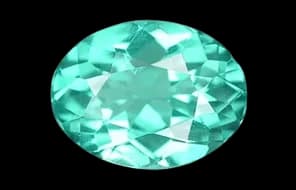
Neon Apatite
Neon Apatite is prized for its vivid electric blue to blue-green color, lively brilliance, and collector appeal, making it an eye-catching choice for distinctive gemstone jewelry.
Neon Apatite is a gem-quality variety of apatite known especially for its intense neon blue to blue-green colors. Apatite is a group of calcium phosphate minerals, commonly represented by the formula Ca5(PO4)3(F,Cl,OH), with fluorapatite, hydroxylapatite, and chlorapatite among its principal end members. Gem-quality apatite belongs to the hexagonal crystal system and typically has a vitreous luster, a refractive index of about 1.630–1.667, a specific gravity of 3.16–3.22, and a Mohs hardness of 5. Its cleavage is generally indistinct, but its relatively low hardness and brittle nature require careful handling. Neon Apatite is most admired in saturated blue, blue-green, and cyan-like hues. Vivid blue material from Madagascar is particularly well known in the gem trade, while neon blue apatite has also been documented from Brazil. GIA has documented a 12.50-carat neon blue cat’s-eye apatite reported from Brazil, illustrating the range of exceptional apatite specimens found in the market. Apatite forms in a variety of geological environments, including igneous and metamorphic rocks, and is also an important phosphate mineral in nature. The name apatite derives from a Greek word meaning “to deceive,” reflecting its historical tendency to be confused with other minerals. Today, transparent neon-colored material is fashioned into faceted gems and cabochons for rings, pendants, earrings, and collector pieces. Because apatite is softer than quartz, beryl, and tourmaline, it is better suited to jewelry that receives limited abrasion rather than demanding everyday wear. Buyers value Neon Apatite primarily for its exceptional color, visual brightness, relative rarity in fine gem quality, and distinctive appearance compared with more familiar blue gemstones.
- Mineral Family
- Apatite
- Chemical Formula
- Ca5(PO4)3(F,Cl,OH)
- Mohs Hardness
- 5
- Refractive Index
- 1.630 - 1.667
- Specific Gravity
- 3.16 - 3.22
- Cleavage
- Indistinct
- Crystal System
- Hexagonal
- Luster
- Vitreous
- Color Range
- Blue, Cyan, Green
When you buy Neon Apatite online, color should usually be the first consideration. The most desirable stones show vivid, evenly distributed neon blue to blue-green color with strong saturation without becoming excessively dark. Clarity is also important because transparent, eye-clean material is relatively desirable, although inclusions can occur naturally and should not automatically indicate poor quality. Cut has a major effect on appearance: a well-proportioned faceted cut can maximize brightness and color, while cabochon cuts may be selected for attractive inclusions or phenomena such as chatoyancy. Carat weight matters because larger, transparent, strongly colored stones can be harder to find, but size alone should never outweigh color, clarity, and cutting quality. Origin can influence market appeal, particularly for well-documented blue material from Madagascar, but a reputable laboratory report is more useful than an origin claim without evidence. Treatment disclosure is essential. Heat treatment can alter apatite color, and documented research has shown that heating can produce or modify blue and green colors in some apatite. A seller should clearly state whether a stone has been heated or otherwise treated. Natural Neon Apatite should be distinguished from synthetic or imitation materials. Although apatite can be produced synthetically for non-gem applications, buyers seeking a natural gemstone should request independent identification when value warrants it. Certification from a respected gemological laboratory can help confirm species, natural origin, detectable treatments, and sometimes geographic origin. Authenticity should be evaluated through laboratory testing rather than color or appearance alone. Price depends on color intensity, clarity, transparency, cut quality, carat weight, treatment status, origin documentation, and overall rarity. Be cautious of stones marketed as “Paraiba Apatite” in a way that could confuse them with Paraíba tourmaline; the two are different gemstones.
Neon Apatite requires more care than harder jewelry stones because it has a Mohs hardness of 5 and can scratch or abrade relatively easily. Clean it gently with lukewarm water, a mild soap, and a soft cloth or soft brush. Avoid abrasive cleaners and harsh chemicals. Because apatite can be sensitive to impact and abrasion, ultrasonic and steam cleaning are best avoided unless a qualified gemologist has confirmed that the particular stone is suitable. Store Neon Apatite separately from harder gems such as quartz, topaz, sapphire, and diamond to prevent scratches. For everyday wear, earrings and pendants are generally safer choices than rings because they receive less impact. If used in a ring, consider a protective setting and remove the jewelry before sports, heavy work, cleaning, or activities that could expose the stone to knocks and abrasion. Periodically inspect the setting and have valuable pieces professionally checked when necessary.
Neon Apatite is a gem-quality variety of apatite known especially for its intense neon blue to blue-green colors. Apatite is a group of calcium phosphate minerals, commonly represented by the formula Ca5(PO4)3(F,Cl,OH), with fluorapatite, hydroxylapatite, and chlorapatite among its principal end members. Gem-quality apatite belongs to the hexagonal crystal system and typically has a vitreous luster, a refractive index of about 1.630–1.667, a specific gravity of 3.16–3.22, and a Mohs hardness of 5. Its cleavage is generally indistinct, but its relatively low hardness and brittle nature require careful handling. Neon Apatite is most admired in saturated blue, blue-green, and cyan-like hues. Vivid blue material from Madagascar is particularly well known in the gem trade, while neon blue apatite has also been documented from Brazil. GIA has documented a 12.50-carat neon blue cat’s-eye apatite reported from Brazil, illustrating the range of exceptional apatite specimens found in the market. Apatite forms in a variety of geological environments, including igneous and metamorphic rocks, and is also an important phosphate mineral in nature. The name apatite derives from a Greek word meaning “to deceive,” reflecting its historical tendency to be confused with other minerals. Today, transparent neon-colored material is fashioned into faceted gems and cabochons for rings, pendants, earrings, and collector pieces. Because apatite is softer than quartz, beryl, and tourmaline, it is better suited to jewelry that receives limited abrasion rather than demanding everyday wear. Buyers value Neon Apatite primarily for its exceptional color, visual brightness, relative rarity in fine gem quality, and distinctive appearance compared with more familiar blue gemstones.
- Mineral Family
- Apatite
- Chemical Formula
- Ca5(PO4)3(F,Cl,OH)
- Mohs Hardness
- 5
- Refractive Index
- 1.630 - 1.667
- Specific Gravity
- 3.16 - 3.22
- Cleavage
- Indistinct
- Crystal System
- Hexagonal
- Luster
- Vitreous
- Color Range
- Blue, Cyan, Green
When you buy Neon Apatite online, color should usually be the first consideration. The most desirable stones show vivid, evenly distributed neon blue to blue-green color with strong saturation without becoming excessively dark. Clarity is also important because transparent, eye-clean material is relatively desirable, although inclusions can occur naturally and should not automatically indicate poor quality. Cut has a major effect on appearance: a well-proportioned faceted cut can maximize brightness and color, while cabochon cuts may be selected for attractive inclusions or phenomena such as chatoyancy. Carat weight matters because larger, transparent, strongly colored stones can be harder to find, but size alone should never outweigh color, clarity, and cutting quality. Origin can influence market appeal, particularly for well-documented blue material from Madagascar, but a reputable laboratory report is more useful than an origin claim without evidence. Treatment disclosure is essential. Heat treatment can alter apatite color, and documented research has shown that heating can produce or modify blue and green colors in some apatite. A seller should clearly state whether a stone has been heated or otherwise treated. Natural Neon Apatite should be distinguished from synthetic or imitation materials. Although apatite can be produced synthetically for non-gem applications, buyers seeking a natural gemstone should request independent identification when value warrants it. Certification from a respected gemological laboratory can help confirm species, natural origin, detectable treatments, and sometimes geographic origin. Authenticity should be evaluated through laboratory testing rather than color or appearance alone. Price depends on color intensity, clarity, transparency, cut quality, carat weight, treatment status, origin documentation, and overall rarity. Be cautious of stones marketed as “Paraiba Apatite” in a way that could confuse them with Paraíba tourmaline; the two are different gemstones.
Neon Apatite requires more care than harder jewelry stones because it has a Mohs hardness of 5 and can scratch or abrade relatively easily. Clean it gently with lukewarm water, a mild soap, and a soft cloth or soft brush. Avoid abrasive cleaners and harsh chemicals. Because apatite can be sensitive to impact and abrasion, ultrasonic and steam cleaning are best avoided unless a qualified gemologist has confirmed that the particular stone is suitable. Store Neon Apatite separately from harder gems such as quartz, topaz, sapphire, and diamond to prevent scratches. For everyday wear, earrings and pendants are generally safer choices than rings because they receive less impact. If used in a ring, consider a protective setting and remove the jewelry before sports, heavy work, cleaning, or activities that could expose the stone to knocks and abrasion. Periodically inspect the setting and have valuable pieces professionally checked when necessary.
Neon Apatite for Sale
No gems found
Try broadening your search or adjusting your filters.
Have a gem of your own? List it free - no fees