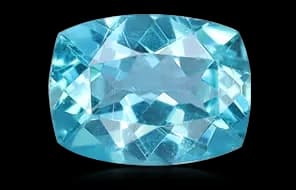
Blue Apatite
Blue Apatite is prized for its vivid ocean-blue color, glassy luster and distinctive character. Its beauty makes it an appealing choice for jewelry and gemstone collections.
Blue Apatite is a gem variety of apatite, a group of phosphate minerals found in many geological environments. Its chemical composition is represented by Ca5(PO4)3(F,Cl,OH), with fluorine, chlorine and hydroxyl varying within the mineral structure. Apatite crystallizes in the hexagonal crystal system and has a Mohs hardness of about 5, making it noticeably softer than sapphire, ruby and quartz. It has a vitreous luster, a refractive index of approximately 1.628–1.649 and a specific gravity of about 3.16–3.22. Blue is one of apatite's most attractive gem colors, ranging from light and medium blue to saturated blue and vivid neon-like shades. Color can vary because of trace elements and structural factors within the mineral. Some of the most sought-after blue apatite is associated with deposits in Madagascar, Brazil and other localities known for gem-quality apatite. Madagascar is particularly recognized in the trade for vivid blue to neon-colored material. Apatite has a long history as a mineral specimen and source of phosphate, while transparent gem-quality crystals are valued more recently for their color and collectible appeal. Today, Blue Apatite is commonly fashioned into faceted gemstones, cabochons, beads and decorative pieces. Because of its moderate hardness, it is especially well suited to earrings, pendants and carefully worn rings rather than jewelry exposed to frequent abrasion. Blue Apatite meaning is best understood through its visual character and gemological qualities rather than unverified metaphysical claims. Buyers value natural Blue Apatite for its attractive blue color, transparency, individuality and the opportunity to own a distinctive gemstone that is less commonly encountered than many mainstream jewelry stones.
- Mineral Family
- Apatite
- Chemical Formula
- Ca5(PO4)3(F,Cl,OH)
- Mohs Hardness
- 5
- Refractive Index
- 1.628 - 1.649
- Specific Gravity
- 3.16 - 3.22
- Cleavage
- Poor
- Crystal System
- Hexagonal
- Luster
- Vitreous
- Color Range
- Blue
When buying Blue Apatite online, evaluate the stone as a combination of color, clarity, cut, carat weight, origin and treatment rather than relying on size alone. Color is usually the most important visual factor. Look for attractive, evenly distributed blue color with good saturation and avoid stones that appear excessively gray, brownish or dull unless that appearance is specifically desired. Vivid neon-like blue material can command a premium when the color is natural and the stone has good transparency. Clarity is also important because Blue Apatite can contain natural inclusions. Eye-clean stones with good transparency are generally more desirable for faceted jewelry, while translucent material can still be attractive in cabochons and larger decorative stones. Cut should maximize color and light return while maintaining appropriate proportions. Well-cut ovals, rounds, cushions and other faceted shapes can display Blue Apatite beautifully. Carat weight affects price, but larger size should not compensate for weak color, poor transparency or an inferior cut. Origin may influence rarity and buyer interest, particularly when a stone can be reliably linked to a respected gem-producing locality, but origin should not automatically be treated as a guarantee of quality. Ask whether the Blue Apatite is natural and whether any treatments have been applied. Heat treatment or other enhancement should be disclosed when present, and any dyed, assembled or laboratory-grown material should be clearly identified. Laboratory-grown or synthetic apatite materials can exist, so buyers should confirm that the stone being sold is natural if that is important to them. For valuable or unusually fine specimens, an independent gemological report can provide additional confidence about identity, treatments and characteristics. Authenticity is best assessed through a reputable seller, transparent disclosures and, when appropriate, laboratory testing. Price depends on color intensity, transparency, clarity, cut quality, size, origin, treatment status and overall beauty. A high-quality natural Blue Apatite with vivid color and strong transparency can be considerably more valuable than a larger but pale or heavily included stone.
Blue Apatite requires more care than harder gemstones because its Mohs hardness is around 5. For routine cleaning, use lukewarm water, a small amount of mild soap and a soft cloth or soft brush. Rinse carefully and dry with a clean, lint-free cloth. Avoid harsh chemicals, abrasive cleaners, rough brushes and sudden temperature changes. Ultrasonic and steam cleaners are best avoided unless a qualified gemologist has confirmed that the particular stone and any treatments can safely withstand them. Store Blue Apatite separately from harder gemstones such as sapphire, ruby, diamond and quartz to prevent scratches. A soft pouch or fabric-lined compartment is ideal. For everyday wear, pendants and earrings are generally safer choices than rings because they experience less impact and abrasion. Remove Blue Apatite jewelry before sports, heavy manual work, gardening or activities where the stone could be knocked or scratched. With sensible handling and proper storage, natural Blue Apatite can retain its attractive color and polish for many years.
Blue Apatite is a gem variety of apatite, a group of phosphate minerals found in many geological environments. Its chemical composition is represented by Ca5(PO4)3(F,Cl,OH), with fluorine, chlorine and hydroxyl varying within the mineral structure. Apatite crystallizes in the hexagonal crystal system and has a Mohs hardness of about 5, making it noticeably softer than sapphire, ruby and quartz. It has a vitreous luster, a refractive index of approximately 1.628–1.649 and a specific gravity of about 3.16–3.22. Blue is one of apatite's most attractive gem colors, ranging from light and medium blue to saturated blue and vivid neon-like shades. Color can vary because of trace elements and structural factors within the mineral. Some of the most sought-after blue apatite is associated with deposits in Madagascar, Brazil and other localities known for gem-quality apatite. Madagascar is particularly recognized in the trade for vivid blue to neon-colored material. Apatite has a long history as a mineral specimen and source of phosphate, while transparent gem-quality crystals are valued more recently for their color and collectible appeal. Today, Blue Apatite is commonly fashioned into faceted gemstones, cabochons, beads and decorative pieces. Because of its moderate hardness, it is especially well suited to earrings, pendants and carefully worn rings rather than jewelry exposed to frequent abrasion. Blue Apatite meaning is best understood through its visual character and gemological qualities rather than unverified metaphysical claims. Buyers value natural Blue Apatite for its attractive blue color, transparency, individuality and the opportunity to own a distinctive gemstone that is less commonly encountered than many mainstream jewelry stones.
- Mineral Family
- Apatite
- Chemical Formula
- Ca5(PO4)3(F,Cl,OH)
- Mohs Hardness
- 5
- Refractive Index
- 1.628 - 1.649
- Specific Gravity
- 3.16 - 3.22
- Cleavage
- Poor
- Crystal System
- Hexagonal
- Luster
- Vitreous
- Color Range
- Blue
When buying Blue Apatite online, evaluate the stone as a combination of color, clarity, cut, carat weight, origin and treatment rather than relying on size alone. Color is usually the most important visual factor. Look for attractive, evenly distributed blue color with good saturation and avoid stones that appear excessively gray, brownish or dull unless that appearance is specifically desired. Vivid neon-like blue material can command a premium when the color is natural and the stone has good transparency. Clarity is also important because Blue Apatite can contain natural inclusions. Eye-clean stones with good transparency are generally more desirable for faceted jewelry, while translucent material can still be attractive in cabochons and larger decorative stones. Cut should maximize color and light return while maintaining appropriate proportions. Well-cut ovals, rounds, cushions and other faceted shapes can display Blue Apatite beautifully. Carat weight affects price, but larger size should not compensate for weak color, poor transparency or an inferior cut. Origin may influence rarity and buyer interest, particularly when a stone can be reliably linked to a respected gem-producing locality, but origin should not automatically be treated as a guarantee of quality. Ask whether the Blue Apatite is natural and whether any treatments have been applied. Heat treatment or other enhancement should be disclosed when present, and any dyed, assembled or laboratory-grown material should be clearly identified. Laboratory-grown or synthetic apatite materials can exist, so buyers should confirm that the stone being sold is natural if that is important to them. For valuable or unusually fine specimens, an independent gemological report can provide additional confidence about identity, treatments and characteristics. Authenticity is best assessed through a reputable seller, transparent disclosures and, when appropriate, laboratory testing. Price depends on color intensity, transparency, clarity, cut quality, size, origin, treatment status and overall beauty. A high-quality natural Blue Apatite with vivid color and strong transparency can be considerably more valuable than a larger but pale or heavily included stone.
Blue Apatite requires more care than harder gemstones because its Mohs hardness is around 5. For routine cleaning, use lukewarm water, a small amount of mild soap and a soft cloth or soft brush. Rinse carefully and dry with a clean, lint-free cloth. Avoid harsh chemicals, abrasive cleaners, rough brushes and sudden temperature changes. Ultrasonic and steam cleaners are best avoided unless a qualified gemologist has confirmed that the particular stone and any treatments can safely withstand them. Store Blue Apatite separately from harder gemstones such as sapphire, ruby, diamond and quartz to prevent scratches. A soft pouch or fabric-lined compartment is ideal. For everyday wear, pendants and earrings are generally safer choices than rings because they experience less impact and abrasion. Remove Blue Apatite jewelry before sports, heavy manual work, gardening or activities where the stone could be knocked or scratched. With sensible handling and proper storage, natural Blue Apatite can retain its attractive color and polish for many years.
Blue Apatite for Sale
No gems found
Try broadening your search or adjusting your filters.
Have a gem of your own? List it free - no fees