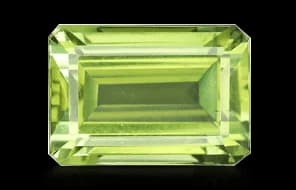
Green Apatite
Green Apatite is an uncommon gemstone prized for its fresh green hues, vitreous luster and distinctive character, offering an appealing choice for jewelry collectors.
Green Apatite is the green color variety of apatite, a group of phosphate minerals best known in gemology for their attractive colors and transparent to translucent crystals. Apatite belongs to the apatite supergroup and commonly has the general chemical formula Ca5(PO4)3(F,Cl,OH), reflecting variation among fluorapatite, chlorapatite and hydroxylapatite. It crystallizes in the hexagonal system and has a Mohs hardness of about 5, making it softer than many popular jewelry gemstones. Its refractive index is typically around 1.628-1.649 and its specific gravity is approximately 3.16-3.22. Green apatite can occur in shades ranging from light yellowish green and fresh grass green to deeper bluish or forest-green tones. Transparent material can be faceted to emphasize color and brilliance, while translucent material may be fashioned as cabochons. Some apatite specimens can also display chatoyancy, particularly when aligned inclusions create a cat's-eye effect. Gem-quality apatite occurs in several parts of the world, with notable material reported from countries including Madagascar, Brazil, Mexico and Myanmar. Apatite has a long mineralogical history, while its transparent gem varieties have become increasingly appreciated by collectors and jewelry enthusiasts. Today, Green Apatite jewelry is most suitable for earrings, pendants and occasional-wear rings because of its moderate hardness and susceptibility to scratching. Buyers value natural Green Apatite for its uncommon color, transparency, individual inclusions and relatively distinctive appearance compared with more familiar green gemstones.
- Mineral Family
- Apatite
- Chemical Formula
- Ca5(PO4)3(F,Cl,OH)
- Mohs Hardness
- 5
- Refractive Index
- 1.628 - 1.649
- Specific Gravity
- 3.16 - 3.22
- Cleavage
- Imperfect on {0001}
- Crystal System
- Hexagonal
- Luster
- Vitreous
- Color Range
- Green
When buying Green Apatite online, color is one of the first factors to consider. Attractive stones generally show an appealing, evenly distributed green bodycolor with good saturation, although personal preference and the stone's intended use also matter. Clarity is important in transparent faceted material because fewer visible inclusions can improve visual appeal and light return, while inclusions may be acceptable or even desirable in unusual collector specimens and cat's-eye material. Cut should be selected according to the rough material: well-proportioned faceted cuts can enhance brilliance, while cabochons are appropriate for translucent or chatoyant stones. Carat weight can affect price, particularly when larger stones retain strong color and good transparency. Origin may add collector interest when it is reliably documented, but locality alone does not determine quality or value. Ask whether the gemstone has undergone any treatment intended to alter its color or apparent clarity, and ensure any treatment is clearly disclosed. Natural Green Apatite should be distinguished from laboratory-created or synthetic materials and imitations where relevant; sellers should clearly state the material's identity and disclose any treatments. For higher-value purchases, an independent report from a reputable gemological laboratory can help confirm species, natural origin where determinable, treatments and other identification details. Authenticity is best assessed through a combination of gemological testing, transparent seller information and appropriate documentation rather than appearance alone. Green Apatite price depends on color, clarity, transparency, cut quality, carat weight, origin, treatment status and overall rarity. Because apatite is relatively soft, buyers should also consider intended jewelry use before purchasing a large faceted stone for everyday wear.
Green Apatite requires thoughtful care because its Mohs hardness of about 5 makes it more vulnerable to scratches and abrasion than harder gemstones. Clean it gently with lukewarm water, a mild soap and a soft cloth or brush, then rinse and dry carefully. Avoid harsh chemicals, abrasive cleaners and rough cleaning materials. Because treatment status can vary between stones, avoid using steam or ultrasonic cleaners unless a qualified jeweler has confirmed that the specific stone can safely withstand them. Store Green Apatite separately from harder gemstones such as sapphire, ruby, diamond and quartz to prevent scratching. A soft jewelry pouch or individual compartment is ideal. For everyday wear, pendants and earrings are generally safer choices than rings. Remove Green Apatite jewelry before strenuous activities, sports, housework or situations where the stone could receive impact or abrasion. With careful handling and suitable settings, Green Apatite can remain an attractive addition to a gemstone collection for many years.
Green Apatite is the green color variety of apatite, a group of phosphate minerals best known in gemology for their attractive colors and transparent to translucent crystals. Apatite belongs to the apatite supergroup and commonly has the general chemical formula Ca5(PO4)3(F,Cl,OH), reflecting variation among fluorapatite, chlorapatite and hydroxylapatite. It crystallizes in the hexagonal system and has a Mohs hardness of about 5, making it softer than many popular jewelry gemstones. Its refractive index is typically around 1.628-1.649 and its specific gravity is approximately 3.16-3.22. Green apatite can occur in shades ranging from light yellowish green and fresh grass green to deeper bluish or forest-green tones. Transparent material can be faceted to emphasize color and brilliance, while translucent material may be fashioned as cabochons. Some apatite specimens can also display chatoyancy, particularly when aligned inclusions create a cat's-eye effect. Gem-quality apatite occurs in several parts of the world, with notable material reported from countries including Madagascar, Brazil, Mexico and Myanmar. Apatite has a long mineralogical history, while its transparent gem varieties have become increasingly appreciated by collectors and jewelry enthusiasts. Today, Green Apatite jewelry is most suitable for earrings, pendants and occasional-wear rings because of its moderate hardness and susceptibility to scratching. Buyers value natural Green Apatite for its uncommon color, transparency, individual inclusions and relatively distinctive appearance compared with more familiar green gemstones.
- Mineral Family
- Apatite
- Chemical Formula
- Ca5(PO4)3(F,Cl,OH)
- Mohs Hardness
- 5
- Refractive Index
- 1.628 - 1.649
- Specific Gravity
- 3.16 - 3.22
- Cleavage
- Imperfect on {0001}
- Crystal System
- Hexagonal
- Luster
- Vitreous
- Color Range
- Green
When buying Green Apatite online, color is one of the first factors to consider. Attractive stones generally show an appealing, evenly distributed green bodycolor with good saturation, although personal preference and the stone's intended use also matter. Clarity is important in transparent faceted material because fewer visible inclusions can improve visual appeal and light return, while inclusions may be acceptable or even desirable in unusual collector specimens and cat's-eye material. Cut should be selected according to the rough material: well-proportioned faceted cuts can enhance brilliance, while cabochons are appropriate for translucent or chatoyant stones. Carat weight can affect price, particularly when larger stones retain strong color and good transparency. Origin may add collector interest when it is reliably documented, but locality alone does not determine quality or value. Ask whether the gemstone has undergone any treatment intended to alter its color or apparent clarity, and ensure any treatment is clearly disclosed. Natural Green Apatite should be distinguished from laboratory-created or synthetic materials and imitations where relevant; sellers should clearly state the material's identity and disclose any treatments. For higher-value purchases, an independent report from a reputable gemological laboratory can help confirm species, natural origin where determinable, treatments and other identification details. Authenticity is best assessed through a combination of gemological testing, transparent seller information and appropriate documentation rather than appearance alone. Green Apatite price depends on color, clarity, transparency, cut quality, carat weight, origin, treatment status and overall rarity. Because apatite is relatively soft, buyers should also consider intended jewelry use before purchasing a large faceted stone for everyday wear.
Green Apatite requires thoughtful care because its Mohs hardness of about 5 makes it more vulnerable to scratches and abrasion than harder gemstones. Clean it gently with lukewarm water, a mild soap and a soft cloth or brush, then rinse and dry carefully. Avoid harsh chemicals, abrasive cleaners and rough cleaning materials. Because treatment status can vary between stones, avoid using steam or ultrasonic cleaners unless a qualified jeweler has confirmed that the specific stone can safely withstand them. Store Green Apatite separately from harder gemstones such as sapphire, ruby, diamond and quartz to prevent scratching. A soft jewelry pouch or individual compartment is ideal. For everyday wear, pendants and earrings are generally safer choices than rings. Remove Green Apatite jewelry before strenuous activities, sports, housework or situations where the stone could receive impact or abrasion. With careful handling and suitable settings, Green Apatite can remain an attractive addition to a gemstone collection for many years.
Green Apatite for Sale
No gems found
Try broadening your search or adjusting your filters.
Have a gem of your own? List it free - no fees