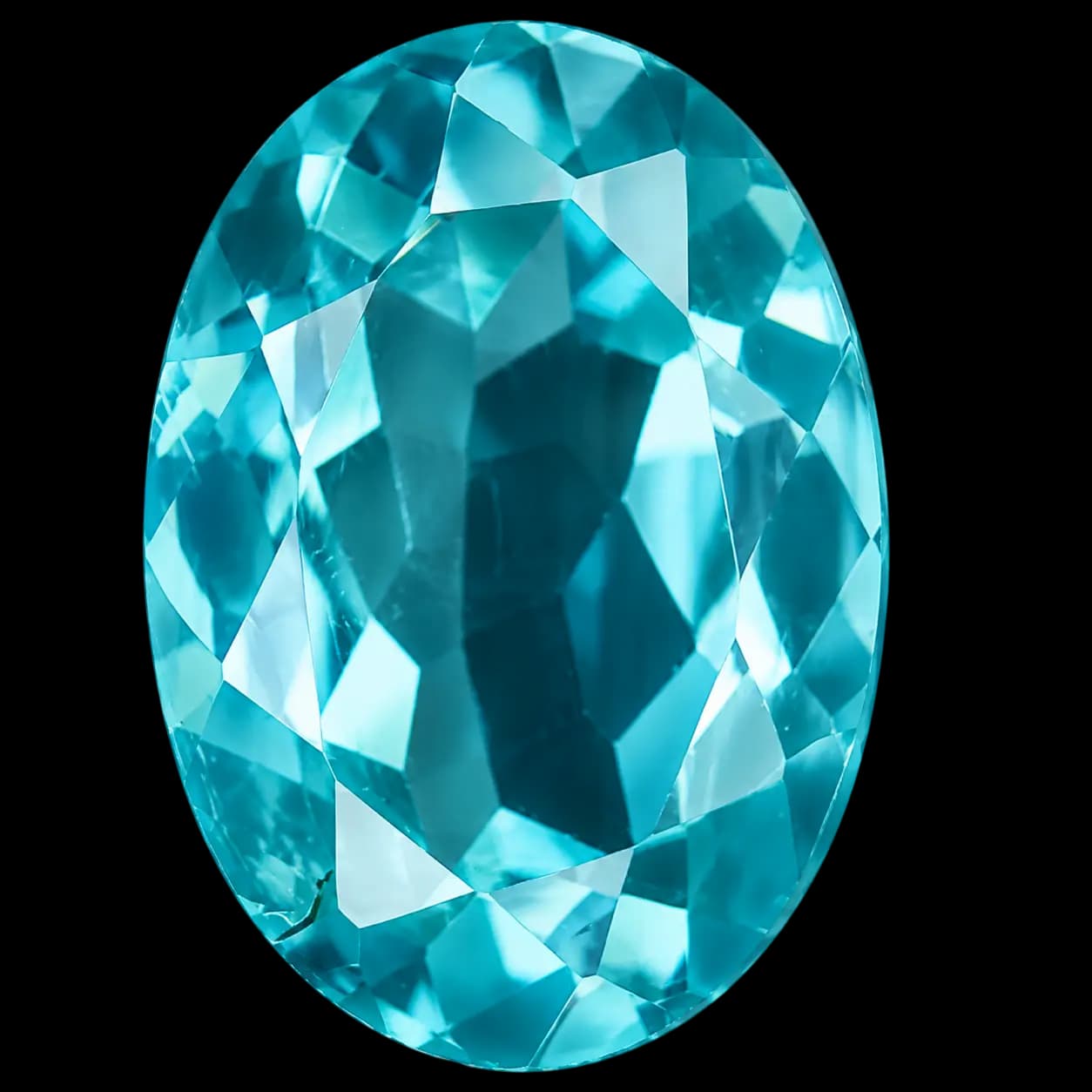
Apatite
Apatite is a vibrant gemstone admired for its striking blue, green, and neon colors. Known for its glass-like brilliance and unique mineral identity, it is a favorite among collectors and jewelry designers.
Apatite is a naturally occurring phosphate mineral group known for its attractive colors and bright vitreous luster. The name Apatite comes from the Greek word "apatáo," meaning "to deceive," because it was historically confused with other gemstones due to its similar appearance.
Apatite belongs to the phosphate mineral family and forms in igneous and metamorphic environments. It develops when calcium phosphate minerals crystallize within geological formations over millions of years. Its chemical composition is calcium phosphate with fluorine, chlorine, or hydroxyl elements represented by the formula Ca5(PO4)3(F,Cl,OH).
Apatite crystals belong to the hexagonal crystal system and typically have a Mohs hardness of 5, making them suitable for jewelry when handled carefully. It displays a vitreous luster and can show excellent transparency and brilliance when finely cut.
Apatite is available in a wide range of colors, including vivid blue, blue-green, green, yellow, purple, pink, and white. The highly sought-after neon blue and electric blue varieties, especially from Madagascar and Brazil, are valued for their intense saturation and exceptional visual appeal.
Important sources of Apatite include Madagascar, Brazil, Mexico, Russia, Myanmar, Canada, and the United States. Some notable varieties include neon blue Apatite from Madagascar and rare purple or pink specimens valued by collectors.
Throughout history, Apatite has been studied as an important mineral specimen and gemstone material. Today, it is increasingly popular in rings, pendants, earrings, and collector jewelry because of its unusual colors and distinctive character.
Buyers value natural Apatite gemstone for its vibrant appearance, rarity of fine colors, and individuality. Each stone often displays unique color variations and natural features that make it different from more common gemstones.
- Mineral Family
- Apatite
- Chemical Formula
- Ca5(PO4)3(F,Cl,OH)
- Mohs Hardness
- 5
- Refractive Index
- 1.634 - 1.638
- Specific Gravity
- 3.16 - 3.22
- Cleavage
- Poor
- Crystal System
- Hexagonal
- Luster
- Vitreous
- Color Range
- Blue, Green, Yellow, Purple, Pink, White
Choosing a quality Apatite gemstone requires evaluating several important factors, including color, clarity, cut, carat weight, origin, and treatments.
Color: Color is the most important factor affecting Apatite value. The most desirable stones display vivid neon blue, electric blue, or intense blue-green tones. Bright and evenly distributed colors generally command higher prices than pale or grayish varieties.
Clarity: Apatite can contain natural inclusions, which are common due to its mineral formation. Eye-clean stones with good transparency are more desirable, especially for faceted jewelry. Visible fractures or heavily included areas may reduce durability and value.
Cut: Apatite is commonly cut into oval, cushion, pear, round, and emerald shapes to maximize color and brilliance. Because it has moderate hardness, skilled cutting is important to protect the gemstone and enhance its appearance.
Carat: Larger Apatite gemstones with strong color and good clarity are less common and may command higher prices. Size should always be considered together with overall quality rather than weight alone.
Origin: Important Apatite sources include Madagascar, Brazil, Mexico, and Russia. Origin can influence collector interest, but color quality, transparency, and craftsmanship usually have a greater impact on value.
Treatments: Most natural Apatite is sold without significant enhancement. Some stones may undergo treatments such as heat enhancement to improve appearance. Any known treatments should be disclosed by the seller.
Natural vs Lab-Grown: Natural Apatite is valued for its geological formation and individual characteristics. Buyers should confirm whether a gemstone is natural and request treatment information before purchasing.
Certification and Authenticity: For valuable Apatite gemstones, purchasing from reputable sellers and requesting independent gemstone certification can help confirm authenticity, natural origin, and disclosed treatments.
Price Factors: Apatite gemstone prices depend mainly on color intensity, clarity, size, cut quality, origin, and rarity. Exceptional neon blue stones with strong transparency are among the most desirable varieties.
## How to Care for Apatite
Apatite requires careful handling because its Mohs hardness of 5 makes it softer than many popular jewelry gemstones.
Clean Apatite jewelry using lukewarm water, mild soap, and a soft cloth or soft brush. Avoid harsh chemicals, ultrasonic cleaners, and steam cleaning methods, as they may damage the gemstone.
Store Apatite separately from harder gemstones such as diamonds, sapphires, and rubies to prevent scratches. A fabric-lined jewelry box or individual pouch is recommended.
Apatite jewelry is best suited for occasional wear, earrings, and pendants. Rings should be worn carefully and protected from impacts, scratches, and rough daily activities.
Apatite is a naturally occurring phosphate mineral group known for its attractive colors and bright vitreous luster. The name Apatite comes from the Greek word "apatáo," meaning "to deceive," because it was historically confused with other gemstones due to its similar appearance.
Apatite belongs to the phosphate mineral family and forms in igneous and metamorphic environments. It develops when calcium phosphate minerals crystallize within geological formations over millions of years. Its chemical composition is calcium phosphate with fluorine, chlorine, or hydroxyl elements represented by the formula Ca5(PO4)3(F,Cl,OH).
Apatite crystals belong to the hexagonal crystal system and typically have a Mohs hardness of 5, making them suitable for jewelry when handled carefully. It displays a vitreous luster and can show excellent transparency and brilliance when finely cut.
Apatite is available in a wide range of colors, including vivid blue, blue-green, green, yellow, purple, pink, and white. The highly sought-after neon blue and electric blue varieties, especially from Madagascar and Brazil, are valued for their intense saturation and exceptional visual appeal.
Important sources of Apatite include Madagascar, Brazil, Mexico, Russia, Myanmar, Canada, and the United States. Some notable varieties include neon blue Apatite from Madagascar and rare purple or pink specimens valued by collectors.
Throughout history, Apatite has been studied as an important mineral specimen and gemstone material. Today, it is increasingly popular in rings, pendants, earrings, and collector jewelry because of its unusual colors and distinctive character.
Buyers value natural Apatite gemstone for its vibrant appearance, rarity of fine colors, and individuality. Each stone often displays unique color variations and natural features that make it different from more common gemstones.
- Mineral Family
- Apatite
- Chemical Formula
- Ca5(PO4)3(F,Cl,OH)
- Mohs Hardness
- 5
- Refractive Index
- 1.634 - 1.638
- Specific Gravity
- 3.16 - 3.22
- Cleavage
- Poor
- Crystal System
- Hexagonal
- Luster
- Vitreous
- Color Range
- Blue, Green, Yellow, Purple, Pink, White
Choosing a quality Apatite gemstone requires evaluating several important factors, including color, clarity, cut, carat weight, origin, and treatments.
Color: Color is the most important factor affecting Apatite value. The most desirable stones display vivid neon blue, electric blue, or intense blue-green tones. Bright and evenly distributed colors generally command higher prices than pale or grayish varieties.
Clarity: Apatite can contain natural inclusions, which are common due to its mineral formation. Eye-clean stones with good transparency are more desirable, especially for faceted jewelry. Visible fractures or heavily included areas may reduce durability and value.
Cut: Apatite is commonly cut into oval, cushion, pear, round, and emerald shapes to maximize color and brilliance. Because it has moderate hardness, skilled cutting is important to protect the gemstone and enhance its appearance.
Carat: Larger Apatite gemstones with strong color and good clarity are less common and may command higher prices. Size should always be considered together with overall quality rather than weight alone.
Origin: Important Apatite sources include Madagascar, Brazil, Mexico, and Russia. Origin can influence collector interest, but color quality, transparency, and craftsmanship usually have a greater impact on value.
Treatments: Most natural Apatite is sold without significant enhancement. Some stones may undergo treatments such as heat enhancement to improve appearance. Any known treatments should be disclosed by the seller.
Natural vs Lab-Grown: Natural Apatite is valued for its geological formation and individual characteristics. Buyers should confirm whether a gemstone is natural and request treatment information before purchasing.
Certification and Authenticity: For valuable Apatite gemstones, purchasing from reputable sellers and requesting independent gemstone certification can help confirm authenticity, natural origin, and disclosed treatments.
Price Factors: Apatite gemstone prices depend mainly on color intensity, clarity, size, cut quality, origin, and rarity. Exceptional neon blue stones with strong transparency are among the most desirable varieties.
## How to Care for Apatite
Apatite requires careful handling because its Mohs hardness of 5 makes it softer than many popular jewelry gemstones.
Clean Apatite jewelry using lukewarm water, mild soap, and a soft cloth or soft brush. Avoid harsh chemicals, ultrasonic cleaners, and steam cleaning methods, as they may damage the gemstone.
Store Apatite separately from harder gemstones such as diamonds, sapphires, and rubies to prevent scratches. A fabric-lined jewelry box or individual pouch is recommended.
Apatite jewelry is best suited for occasional wear, earrings, and pendants. Rings should be worn carefully and protected from impacts, scratches, and rough daily activities.
Apatite for Sale
No gems found
Try broadening your search or adjusting your filters.
Have a gem of your own? List it free - no fees