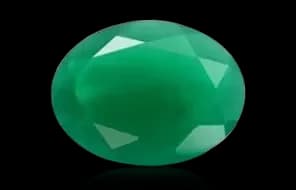
Green Onyx
Green Onyx is an elegant green chalcedony prized for its smooth polish, attractive color and accessible price, making it a versatile choice for jewelry.
Green Onyx is a trade name commonly used for green chalcedony, a microcrystalline variety of quartz. The name can also be applied commercially to green banded materials and, importantly, to softer calcite-based decorative stone, so buyers should confirm exactly what material is being offered. Quartz-based Green Onyx has the chemical formula SiO₂, a trigonal crystal system, a Mohs hardness of 6.5–7, a specific gravity of approximately 2.55–2.64, and a refractive index around 1.530–1.540. Its polished surface typically shows a waxy to vitreous luster and it has no cleavage, with conchoidal fracture typical of chalcedony. Green chalcedony can range from pale mint and sage tones to deeper green shades. Some naturally colored green chalcedony owes its color to trace elements or mineral inclusions; other commercial material is dyed to produce a stronger, more uniform green. GIA has documented naturally colored bluish-green chalcedony colored by chromium and nickel, demonstrating that natural green chalcedony does occur. Green Onyx is formed when silica-rich fluids deposit microscopic quartz within cavities and fractures in host rock, with successive deposition sometimes producing banding. Historically, chalcedony and onyx have been valued for carving, seals, cameos and ornamental objects across the Mediterranean, Middle East and Europe. Today, Green Onyx is commonly fashioned into cabochons, beads, carvings and occasionally faceted gems for rings, pendants, earrings and bracelets. Its combination of attractive green color, good polish, reasonable durability and comparatively accessible pricing makes it appealing to jewelry buyers and collectors. It should not be confused with emerald, which is a beryl, or with green onyx marble, which is generally calcite and substantially softer.
- Mineral Family
- Quartz
- Chemical Formula
- SiO₂
- Mohs Hardness
- 6.5 - 7
- Refractive Index
- 1.530 - 1.540
- Specific Gravity
- 2.55 - 2.64
- Cleavage
- None
- Crystal System
- Trigonal
- Luster
- Waxy
- Color Range
- Green
When buying Green Onyx gemstone, begin with the material itself. Confirm that the seller means quartz-based chalcedony rather than calcite or decorative onyx marble. Color is important: attractive stones may show soft mint, sage or deeper green tones, while an exceptionally uniform and intensely saturated green can indicate dyeing. Clarity in chalcedony is assessed differently from transparent gemstones; look for an even body appearance, attractive translucency where present, clean polishing and natural-looking internal features. Cut quality matters because well-shaped cabochons and faceted stones should have smooth surfaces, balanced proportions and good symmetry. Carat weight affects price, but dimensions, color, finish and overall material quality are often more important than weight alone. Origin can add interest and provenance, but it should not automatically determine value unless supported by reliable documentation. Treatments are particularly important because much commercial green chalcedony sold under the Green Onyx name may be dyed. Treatment disclosure should be clear and should not be confused with a natural-color stone. Lab-grown Green Onyx is not generally a meaningful commercial category; instead, buyers should distinguish natural quartz-based material from dyed or otherwise treated natural chalcedony and from imitations. For higher-value stones, request an independent gemological report identifying the material and disclosing detectable treatments. To assess authenticity, avoid relying on color, temperature or appearance alone. Professional testing of refractive index, specific gravity, microscopic features and other properties is more reliable. Price depends on color quality, translucency, pattern, size, cutting, treatment status, craftsmanship, provenance and certification. If you plan to buy Green Onyx online, choose sellers that provide clear photographs, treatment disclosure, accurate measurements and return or verification policies.
Green Onyx gemstone is reasonably durable for jewelry, but its 6.5–7 Mohs hardness means it can still be scratched by harder materials. Clean it with lukewarm water, a soft cloth and, when necessary, a small amount of mild soap. Avoid abrasive cleaners, bleach, strong acids, harsh chemicals and prolonged exposure to aggressive cleaning solutions. Ultrasonic and steam cleaning are best avoided unless a qualified gem professional has confirmed that the specific stone and treatment are suitable. Dyed material deserves particular care because harsh chemicals or inappropriate cleaning can affect the appearance of the treatment. Store Green Onyx separately from harder gemstones such as sapphire, ruby and diamond, preferably in a soft pouch or lined jewelry compartment. Rings worn every day should be protected from sharp impacts and heavy manual work. Remove Green Onyx jewelry before using household chemicals, swimming in chemically treated water or performing activities that could cause knocks or abrasion. Regular gentle cleaning and careful storage will help preserve its polish and color.
Green Onyx is a trade name commonly used for green chalcedony, a microcrystalline variety of quartz. The name can also be applied commercially to green banded materials and, importantly, to softer calcite-based decorative stone, so buyers should confirm exactly what material is being offered. Quartz-based Green Onyx has the chemical formula SiO₂, a trigonal crystal system, a Mohs hardness of 6.5–7, a specific gravity of approximately 2.55–2.64, and a refractive index around 1.530–1.540. Its polished surface typically shows a waxy to vitreous luster and it has no cleavage, with conchoidal fracture typical of chalcedony. Green chalcedony can range from pale mint and sage tones to deeper green shades. Some naturally colored green chalcedony owes its color to trace elements or mineral inclusions; other commercial material is dyed to produce a stronger, more uniform green. GIA has documented naturally colored bluish-green chalcedony colored by chromium and nickel, demonstrating that natural green chalcedony does occur. Green Onyx is formed when silica-rich fluids deposit microscopic quartz within cavities and fractures in host rock, with successive deposition sometimes producing banding. Historically, chalcedony and onyx have been valued for carving, seals, cameos and ornamental objects across the Mediterranean, Middle East and Europe. Today, Green Onyx is commonly fashioned into cabochons, beads, carvings and occasionally faceted gems for rings, pendants, earrings and bracelets. Its combination of attractive green color, good polish, reasonable durability and comparatively accessible pricing makes it appealing to jewelry buyers and collectors. It should not be confused with emerald, which is a beryl, or with green onyx marble, which is generally calcite and substantially softer.
- Mineral Family
- Quartz
- Chemical Formula
- SiO₂
- Mohs Hardness
- 6.5 - 7
- Refractive Index
- 1.530 - 1.540
- Specific Gravity
- 2.55 - 2.64
- Cleavage
- None
- Crystal System
- Trigonal
- Luster
- Waxy
- Color Range
- Green
When buying Green Onyx gemstone, begin with the material itself. Confirm that the seller means quartz-based chalcedony rather than calcite or decorative onyx marble. Color is important: attractive stones may show soft mint, sage or deeper green tones, while an exceptionally uniform and intensely saturated green can indicate dyeing. Clarity in chalcedony is assessed differently from transparent gemstones; look for an even body appearance, attractive translucency where present, clean polishing and natural-looking internal features. Cut quality matters because well-shaped cabochons and faceted stones should have smooth surfaces, balanced proportions and good symmetry. Carat weight affects price, but dimensions, color, finish and overall material quality are often more important than weight alone. Origin can add interest and provenance, but it should not automatically determine value unless supported by reliable documentation. Treatments are particularly important because much commercial green chalcedony sold under the Green Onyx name may be dyed. Treatment disclosure should be clear and should not be confused with a natural-color stone. Lab-grown Green Onyx is not generally a meaningful commercial category; instead, buyers should distinguish natural quartz-based material from dyed or otherwise treated natural chalcedony and from imitations. For higher-value stones, request an independent gemological report identifying the material and disclosing detectable treatments. To assess authenticity, avoid relying on color, temperature or appearance alone. Professional testing of refractive index, specific gravity, microscopic features and other properties is more reliable. Price depends on color quality, translucency, pattern, size, cutting, treatment status, craftsmanship, provenance and certification. If you plan to buy Green Onyx online, choose sellers that provide clear photographs, treatment disclosure, accurate measurements and return or verification policies.
Green Onyx gemstone is reasonably durable for jewelry, but its 6.5–7 Mohs hardness means it can still be scratched by harder materials. Clean it with lukewarm water, a soft cloth and, when necessary, a small amount of mild soap. Avoid abrasive cleaners, bleach, strong acids, harsh chemicals and prolonged exposure to aggressive cleaning solutions. Ultrasonic and steam cleaning are best avoided unless a qualified gem professional has confirmed that the specific stone and treatment are suitable. Dyed material deserves particular care because harsh chemicals or inappropriate cleaning can affect the appearance of the treatment. Store Green Onyx separately from harder gemstones such as sapphire, ruby and diamond, preferably in a soft pouch or lined jewelry compartment. Rings worn every day should be protected from sharp impacts and heavy manual work. Remove Green Onyx jewelry before using household chemicals, swimming in chemically treated water or performing activities that could cause knocks or abrasion. Regular gentle cleaning and careful storage will help preserve its polish and color.
Green Onyx for Sale
No gems found
Try broadening your search or adjusting your filters.
Have a gem of your own? List it free - no fees