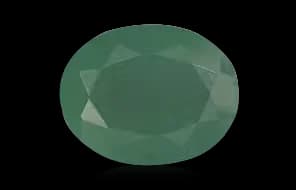
Green Aventurine
Green Aventurine is a distinctive quartz gemstone known for its fresh green color and natural aventurescence, created by reflective fuchsite inclusions.
Green Aventurine is a green variety of aventurine quartz, a quartz-rich material distinguished by its characteristic aventurescence—the subtle shimmer produced when light reflects from tiny mineral inclusions. In green material, the color and sparkle are commonly associated with chromium-bearing fuchsite, a green mica. GIA has documented fuchsite inclusions in aventurine quartz and gemological measurements around 1.54 refractive index and 2.66 specific gravity. Aventurine is commonly encountered as a massive or granular quartz-rich material rather than as large, transparent individual quartz crystals. Its quartz composition gives it a Mohs hardness of about 7, making it suitable for many jewelry and ornamental applications, although its granular structure and mica inclusions mean it should still be protected from sharp impacts. The chemical composition of the quartz component is silicon dioxide (SiO₂). Typical gemological references place its refractive index around 1.544–1.553 and specific gravity around 2.64–2.69. Green Aventurine ranges from pale, muted green to medium and deeper green, with the appearance influenced by the amount, size, distribution, and orientation of fuchsite inclusions. The most recognizable examples show an attractive, irregular shimmer rather than the perfectly uniform glitter seen in some man-made glass imitations. Commercial material is associated particularly with India, with additional occurrences and supply from Brazil, Russia, and other regions. Provenance can add interest, but locality alone does not establish quality or value. The name aventurine is historically connected with the Italian phrase a ventura, meaning “by chance,” and the term became associated with aventurescent materials. Today, Green Aventurine is widely used for cabochons, beads, bracelets, pendants, carvings, polished stones, and decorative objects. Its combination of attractive green color, natural shimmer, good hardness, broad availability, and approachable pricing makes it appealing to jewelry buyers, collectors, and anyone looking for a distinctive natural gemstone. For buyers, the most important characteristics are genuine natural material, attractive color, pleasing aventurescence, sound structure, quality polishing, and accurate disclosure of any treatments or imitations.
- Mineral Family
- Quartz
- Chemical Formula
- SiO₂
- Mohs Hardness
- 7
- Refractive Index
- 1.544 - 1.553
- Specific Gravity
- 2.64 - 2.69
- Cleavage
- None
- Crystal System
- Trigonal
- Luster
- Vitreous
- Color Range
- Green
When you buy Green Aventurine online, evaluate the stone as a natural quartz-based gem material rather than relying on symbolic claims or a country name alone. Color is an important visual factor: look for an attractive green tone with reasonably consistent distribution. Depending on personal preference, lighter greens can offer a softer appearance while deeper greens can create a richer look. Aventurescence is one of the defining features of Green Aventurine. Examine how the shimmer appears under changing light and angles; natural fuchsite inclusions generally produce an irregular, directional sparkle rather than perfectly identical glitter throughout the stone. Clarity should be judged differently from transparent faceted gems. Green Aventurine is commonly translucent to opaque, and its inclusions are part of its identity. Instead of demanding complete clarity, look for an appealing balance of body color, translucency, inclusion pattern, and aventurescence. Cut is usually focused on cabochons, beads, carvings, and polished forms rather than traditional faceting. A well-shaped cabochon should have a smooth surface, balanced proportions, and a polish that presents the color and shimmer effectively. Carat weight matters for jewelry, but size alone does not determine quality. Larger pieces may cost more, while an exceptionally attractive smaller stone can be more desirable than a dull or poorly polished larger one. Origin can be interesting for collectors, but buyers should avoid assuming that material from one country is automatically superior. Green Aventurine is commercially associated with India and also occurs in places including Brazil and Russia. Ask for provenance documentation when origin is specifically being claimed. Treatments and imitations deserve attention. Natural Green Aventurine is valued for its natural color and aventurescence, but buyers should distinguish it from dyed quartzite, other green stones, and man-made aventurine glass such as goldstone. Goldstone can display unusually regular metallic-looking sparkles because of metallic inclusions in glass, which differ from the natural fuchsite-related appearance of Green Aventurine. Green Aventurine is not generally sold as a laboratory-grown gemstone in the same way as synthetic quartz varieties; however, imitations and treated materials can enter the market. Certification is not normally required for inexpensive commercial aventurine, but an independent gemological report can be useful for higher-value purchases, unusual material, disputed identity, or important provenance claims. A credible seller should clearly state whether the material is natural, treated, dyed, composite, or an imitation. Price is primarily influenced by color, aventurescence, overall appearance, size, quality of polish, craftsmanship, rarity of an unusual material, and the final jewelry design. For a natural Green Aventurine purchase, prioritize accurate disclosure, attractive appearance, workmanship, and seller reputation over exaggerated claims about rarity or special properties.
Green Aventurine has a Mohs hardness of about 7, so it is reasonably durable for many types of jewelry, but it can still be scratched by harder materials and damaged by sharp impacts. For routine cleaning, use lukewarm water, a small amount of mild soap, and a soft cloth or soft brush. Rinse thoroughly and dry with a clean, soft cloth. Avoid harsh chemicals, abrasive cleaners, prolonged exposure to high heat, and sudden temperature changes. Because aventurine can contain mica inclusions and may have a granular structure, avoid rough handling and strong impacts, particularly with thin cabochons, carved pieces, or jewelry with exposed edges. Store Green Aventurine separately from harder gemstones to reduce scratching, ideally in a soft pouch or lined jewelry compartment. For everyday wear, bracelets and rings deserve more care because they are exposed to knocks and friction. Remove the jewelry before strenuous activities, household cleaning, or situations where the stone may encounter chemicals or hard surfaces. When buying or maintaining a valuable piece, follow the care recommendations provided by the jeweler or gemological laboratory, especially if the material has been treated or incorporated into a composite design.
Green Aventurine is a green variety of aventurine quartz, a quartz-rich material distinguished by its characteristic aventurescence—the subtle shimmer produced when light reflects from tiny mineral inclusions. In green material, the color and sparkle are commonly associated with chromium-bearing fuchsite, a green mica. GIA has documented fuchsite inclusions in aventurine quartz and gemological measurements around 1.54 refractive index and 2.66 specific gravity. Aventurine is commonly encountered as a massive or granular quartz-rich material rather than as large, transparent individual quartz crystals. Its quartz composition gives it a Mohs hardness of about 7, making it suitable for many jewelry and ornamental applications, although its granular structure and mica inclusions mean it should still be protected from sharp impacts. The chemical composition of the quartz component is silicon dioxide (SiO₂). Typical gemological references place its refractive index around 1.544–1.553 and specific gravity around 2.64–2.69. Green Aventurine ranges from pale, muted green to medium and deeper green, with the appearance influenced by the amount, size, distribution, and orientation of fuchsite inclusions. The most recognizable examples show an attractive, irregular shimmer rather than the perfectly uniform glitter seen in some man-made glass imitations. Commercial material is associated particularly with India, with additional occurrences and supply from Brazil, Russia, and other regions. Provenance can add interest, but locality alone does not establish quality or value. The name aventurine is historically connected with the Italian phrase a ventura, meaning “by chance,” and the term became associated with aventurescent materials. Today, Green Aventurine is widely used for cabochons, beads, bracelets, pendants, carvings, polished stones, and decorative objects. Its combination of attractive green color, natural shimmer, good hardness, broad availability, and approachable pricing makes it appealing to jewelry buyers, collectors, and anyone looking for a distinctive natural gemstone. For buyers, the most important characteristics are genuine natural material, attractive color, pleasing aventurescence, sound structure, quality polishing, and accurate disclosure of any treatments or imitations.
- Mineral Family
- Quartz
- Chemical Formula
- SiO₂
- Mohs Hardness
- 7
- Refractive Index
- 1.544 - 1.553
- Specific Gravity
- 2.64 - 2.69
- Cleavage
- None
- Crystal System
- Trigonal
- Luster
- Vitreous
- Color Range
- Green
When you buy Green Aventurine online, evaluate the stone as a natural quartz-based gem material rather than relying on symbolic claims or a country name alone. Color is an important visual factor: look for an attractive green tone with reasonably consistent distribution. Depending on personal preference, lighter greens can offer a softer appearance while deeper greens can create a richer look. Aventurescence is one of the defining features of Green Aventurine. Examine how the shimmer appears under changing light and angles; natural fuchsite inclusions generally produce an irregular, directional sparkle rather than perfectly identical glitter throughout the stone. Clarity should be judged differently from transparent faceted gems. Green Aventurine is commonly translucent to opaque, and its inclusions are part of its identity. Instead of demanding complete clarity, look for an appealing balance of body color, translucency, inclusion pattern, and aventurescence. Cut is usually focused on cabochons, beads, carvings, and polished forms rather than traditional faceting. A well-shaped cabochon should have a smooth surface, balanced proportions, and a polish that presents the color and shimmer effectively. Carat weight matters for jewelry, but size alone does not determine quality. Larger pieces may cost more, while an exceptionally attractive smaller stone can be more desirable than a dull or poorly polished larger one. Origin can be interesting for collectors, but buyers should avoid assuming that material from one country is automatically superior. Green Aventurine is commercially associated with India and also occurs in places including Brazil and Russia. Ask for provenance documentation when origin is specifically being claimed. Treatments and imitations deserve attention. Natural Green Aventurine is valued for its natural color and aventurescence, but buyers should distinguish it from dyed quartzite, other green stones, and man-made aventurine glass such as goldstone. Goldstone can display unusually regular metallic-looking sparkles because of metallic inclusions in glass, which differ from the natural fuchsite-related appearance of Green Aventurine. Green Aventurine is not generally sold as a laboratory-grown gemstone in the same way as synthetic quartz varieties; however, imitations and treated materials can enter the market. Certification is not normally required for inexpensive commercial aventurine, but an independent gemological report can be useful for higher-value purchases, unusual material, disputed identity, or important provenance claims. A credible seller should clearly state whether the material is natural, treated, dyed, composite, or an imitation. Price is primarily influenced by color, aventurescence, overall appearance, size, quality of polish, craftsmanship, rarity of an unusual material, and the final jewelry design. For a natural Green Aventurine purchase, prioritize accurate disclosure, attractive appearance, workmanship, and seller reputation over exaggerated claims about rarity or special properties.
Green Aventurine has a Mohs hardness of about 7, so it is reasonably durable for many types of jewelry, but it can still be scratched by harder materials and damaged by sharp impacts. For routine cleaning, use lukewarm water, a small amount of mild soap, and a soft cloth or soft brush. Rinse thoroughly and dry with a clean, soft cloth. Avoid harsh chemicals, abrasive cleaners, prolonged exposure to high heat, and sudden temperature changes. Because aventurine can contain mica inclusions and may have a granular structure, avoid rough handling and strong impacts, particularly with thin cabochons, carved pieces, or jewelry with exposed edges. Store Green Aventurine separately from harder gemstones to reduce scratching, ideally in a soft pouch or lined jewelry compartment. For everyday wear, bracelets and rings deserve more care because they are exposed to knocks and friction. Remove the jewelry before strenuous activities, household cleaning, or situations where the stone may encounter chemicals or hard surfaces. When buying or maintaining a valuable piece, follow the care recommendations provided by the jeweler or gemological laboratory, especially if the material has been treated or incorporated into a composite design.
Green Aventurine for Sale
No gems found
Try broadening your search or adjusting your filters.
Have a gem of your own? List it free - no fees