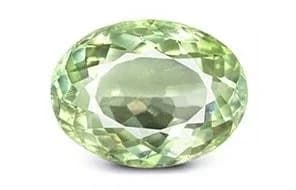
Green Amethyst
Green Amethyst, better known as prasiolite, is a rare green variety of quartz prized for its soft color, glassy luster, durability, and elegant appeal in fine jewelry.
Overview: Green Amethyst is the common trade name for prasiolite, a green variety of quartz. The name can be misleading because amethyst itself is the purple variety of quartz; prasiolite is more accurately described as green quartz. It is transparent to translucent and commonly displays a delicate pale green to richer green appearance with a vitreous luster.
Mineral Family: Prasiolite belongs to the quartz mineral family. Quartz has the chemical formula SiO2, a Mohs hardness of 7, a trigonal crystal system, a refractive index of approximately 1.544-1.553, and a specific gravity around 2.65–2.66. Its cleavage is poor or indistinct, and it typically breaks with a conchoidal fracture.
Formation and Composition: Green color in quartz can develop through natural geological processes involving trace elements, irradiation, and heating. Naturally occurring prasiolite is rare. Much of the prasiolite sold in the jewelry market is produced by controlled treatment of suitable quartz, particularly amethyst, while some green quartz is produced through irradiation. Treatment does not make a gemstone synthetic; a natural quartz crystal can be treated to change its color.
Color Varieties: Prasiolite is generally seen in pale green, mint green, yellowish green, grayish green, and olive-green tones. Attractive stones have an even, pleasing body color and good transparency. Very saturated or unusually vivid green material should be examined carefully because color origin and treatment can significantly affect value.
Famous Examples and Sources: Brazil is particularly important in the history of green quartz because amethyst from the Montezuma area of Minas Gerais is known to turn green through controlled heating. Natural prasiolite has also been documented in locations including Thunder Bay, Ontario, Canada, and parts of Poland. Natural material is considerably rarer than treated green quartz.
Global History: Prasiolite has become established in the modern gemstone trade as an attractive green member of the quartz family. Its availability increased as treatment techniques made it possible to reliably produce appealing green material from suitable quartz. Modern gemological testing helps distinguish natural color from treated material and synthetic quartz.
Modern Jewelry Use: With a Mohs hardness of 7, prasiolite is suitable for many jewelry designs, including rings, earrings, pendants, bracelets, and necklaces. Its soft green appearance works particularly well in contemporary settings and pairs beautifully with white gold, yellow gold, rose gold, platinum, and silver. Because quartz can be affected by strong heat and sudden temperature changes, protective settings are preferable for pieces intended for frequent wear.
Why Buyers Value It: Green Amethyst appeals to buyers who want the look of a fresh green gemstone at an accessible price point. Its combination of transparency, vitreous brilliance, wearable hardness, and distinctive color makes it versatile for both everyday jewelry and collector pieces. Buyers should pay particular attention to whether the stone is natural or treated, as well as to its clarity, cut, color, and documentation.
- Mineral Family
- Quartz
- Chemical Formula
- SiO2
- Mohs Hardness
- 7
- Refractive Index
- 1.544 - 1.553
- Specific Gravity
- 2.65 - 2.66
- Cleavage
- Poor/indistinct
- Crystal System
- Trigonal
- Luster
- Vitreous
- Color Range
- Green
Color: Color is one of the most noticeable factors when evaluating Green Amethyst. Look for an attractive, evenly distributed green tone with good transparency. Pale mint and soft green shades are common, while strongly saturated green material can be less typical and deserves careful examination.
Clarity: Prasiolite is valued for transparency and visual cleanliness. Minor inclusions may be present, particularly in natural material, but obvious fractures, clouds, or distracting inclusions can reduce beauty and durability. Eye-clean stones with good transparency are especially attractive for faceted jewelry.
Cut: A well-proportioned cut maximizes the stone's light return, transparency, and green color. Round, oval, cushion, pear, emerald, and other faceted designs can work well. Poorly proportioned cuts may appear dull or overly pale even when the rough material is attractive.
Carat: Larger prasiolite gems are available, but size alone does not determine value. Compare carat weight with dimensions, color, clarity, cut quality, and treatment status. A well-cut smaller gemstone can be more attractive than a larger stone with weak color or poor transparency.
Origin: Origin can be important when a seller claims natural prasiolite or a notable locality. Brazil is strongly associated with treated green quartz and historically important material from Minas Gerais, while natural green quartz has also been documented in Canada and Poland. An origin claim should be supported by reliable documentation when it materially affects price.
Treatments: Treatment is a major consideration. Much commercial prasiolite is produced by heating amethyst or by other color-treatment processes involving quartz. Buyers should ask whether the green color is natural or induced and should not assume that the trade name Green Amethyst means the stone is naturally green.
Natural vs Lab-Grown: Natural prasiolite exists but is rare. Synthetic quartz can also be produced in laboratories and may have essentially the same chemical and physical properties as natural quartz. A laboratory report may be necessary when natural origin or natural color is important to the purchase. Treated natural quartz should be described as treated, not synthetic.
Certification: For valuable, unusual, or claimed natural-color specimens, an independent gemological report can provide useful information about identity, treatment, and whether the color is natural or induced. Certification becomes especially valuable when a seller makes specific claims about origin or rarity.
Authenticity: Do not rely solely on appearance or the name Green Amethyst. Ask for the gem's identity, treatment disclosure, and supporting documentation. A reputable seller should clearly state whether the stone is natural, treated, or laboratory-grown and should avoid presenting treated quartz as naturally colored prasiolite.
Price Factors: Green Amethyst is generally more affordable than many fine green gemstones, but prices vary with color, clarity, cut quality, size, treatment status, natural rarity, and documentation. Natural-color prasiolite can command a premium when its provenance and characteristics are well documented. Avoid judging value from carat weight alone.
Cleaning: Clean Green Amethyst with lukewarm water, mild soap, and a soft brush or soft cloth. Rinse thoroughly and dry with a lint-free cloth.
Storage: Store prasiolite separately from harder gemstones to reduce the risk of scratches. A soft jewelry pouch or lined compartment is ideal. Avoid allowing pieces to knock against one another during storage.
Everyday Wear: Quartz has a Mohs hardness of 7 and is suitable for many types of jewelry, but rings and bracelets receive more impact and abrasion than earrings or pendants. Protective settings can help reduce the risk of chips and surface damage.
Things to Avoid: Avoid harsh chemicals, abrasive cleaners, prolonged exposure to intense heat, and sudden temperature changes. Heat-treated or naturally colored quartz should not be subjected to unnecessary thermal shock. Steam cleaners and ultrasonic cleaners are best avoided unless a professional confirms that the specific stone and setting are suitable. Remove jewelry before strenuous activities, household cleaning, or situations where the gemstone could be struck.
Overview: Green Amethyst is the common trade name for prasiolite, a green variety of quartz. The name can be misleading because amethyst itself is the purple variety of quartz; prasiolite is more accurately described as green quartz. It is transparent to translucent and commonly displays a delicate pale green to richer green appearance with a vitreous luster.
Mineral Family: Prasiolite belongs to the quartz mineral family. Quartz has the chemical formula SiO2, a Mohs hardness of 7, a trigonal crystal system, a refractive index of approximately 1.544-1.553, and a specific gravity around 2.65–2.66. Its cleavage is poor or indistinct, and it typically breaks with a conchoidal fracture.
Formation and Composition: Green color in quartz can develop through natural geological processes involving trace elements, irradiation, and heating. Naturally occurring prasiolite is rare. Much of the prasiolite sold in the jewelry market is produced by controlled treatment of suitable quartz, particularly amethyst, while some green quartz is produced through irradiation. Treatment does not make a gemstone synthetic; a natural quartz crystal can be treated to change its color.
Color Varieties: Prasiolite is generally seen in pale green, mint green, yellowish green, grayish green, and olive-green tones. Attractive stones have an even, pleasing body color and good transparency. Very saturated or unusually vivid green material should be examined carefully because color origin and treatment can significantly affect value.
Famous Examples and Sources: Brazil is particularly important in the history of green quartz because amethyst from the Montezuma area of Minas Gerais is known to turn green through controlled heating. Natural prasiolite has also been documented in locations including Thunder Bay, Ontario, Canada, and parts of Poland. Natural material is considerably rarer than treated green quartz.
Global History: Prasiolite has become established in the modern gemstone trade as an attractive green member of the quartz family. Its availability increased as treatment techniques made it possible to reliably produce appealing green material from suitable quartz. Modern gemological testing helps distinguish natural color from treated material and synthetic quartz.
Modern Jewelry Use: With a Mohs hardness of 7, prasiolite is suitable for many jewelry designs, including rings, earrings, pendants, bracelets, and necklaces. Its soft green appearance works particularly well in contemporary settings and pairs beautifully with white gold, yellow gold, rose gold, platinum, and silver. Because quartz can be affected by strong heat and sudden temperature changes, protective settings are preferable for pieces intended for frequent wear.
Why Buyers Value It: Green Amethyst appeals to buyers who want the look of a fresh green gemstone at an accessible price point. Its combination of transparency, vitreous brilliance, wearable hardness, and distinctive color makes it versatile for both everyday jewelry and collector pieces. Buyers should pay particular attention to whether the stone is natural or treated, as well as to its clarity, cut, color, and documentation.
- Mineral Family
- Quartz
- Chemical Formula
- SiO2
- Mohs Hardness
- 7
- Refractive Index
- 1.544 - 1.553
- Specific Gravity
- 2.65 - 2.66
- Cleavage
- Poor/indistinct
- Crystal System
- Trigonal
- Luster
- Vitreous
- Color Range
- Green
Color: Color is one of the most noticeable factors when evaluating Green Amethyst. Look for an attractive, evenly distributed green tone with good transparency. Pale mint and soft green shades are common, while strongly saturated green material can be less typical and deserves careful examination.
Clarity: Prasiolite is valued for transparency and visual cleanliness. Minor inclusions may be present, particularly in natural material, but obvious fractures, clouds, or distracting inclusions can reduce beauty and durability. Eye-clean stones with good transparency are especially attractive for faceted jewelry.
Cut: A well-proportioned cut maximizes the stone's light return, transparency, and green color. Round, oval, cushion, pear, emerald, and other faceted designs can work well. Poorly proportioned cuts may appear dull or overly pale even when the rough material is attractive.
Carat: Larger prasiolite gems are available, but size alone does not determine value. Compare carat weight with dimensions, color, clarity, cut quality, and treatment status. A well-cut smaller gemstone can be more attractive than a larger stone with weak color or poor transparency.
Origin: Origin can be important when a seller claims natural prasiolite or a notable locality. Brazil is strongly associated with treated green quartz and historically important material from Minas Gerais, while natural green quartz has also been documented in Canada and Poland. An origin claim should be supported by reliable documentation when it materially affects price.
Treatments: Treatment is a major consideration. Much commercial prasiolite is produced by heating amethyst or by other color-treatment processes involving quartz. Buyers should ask whether the green color is natural or induced and should not assume that the trade name Green Amethyst means the stone is naturally green.
Natural vs Lab-Grown: Natural prasiolite exists but is rare. Synthetic quartz can also be produced in laboratories and may have essentially the same chemical and physical properties as natural quartz. A laboratory report may be necessary when natural origin or natural color is important to the purchase. Treated natural quartz should be described as treated, not synthetic.
Certification: For valuable, unusual, or claimed natural-color specimens, an independent gemological report can provide useful information about identity, treatment, and whether the color is natural or induced. Certification becomes especially valuable when a seller makes specific claims about origin or rarity.
Authenticity: Do not rely solely on appearance or the name Green Amethyst. Ask for the gem's identity, treatment disclosure, and supporting documentation. A reputable seller should clearly state whether the stone is natural, treated, or laboratory-grown and should avoid presenting treated quartz as naturally colored prasiolite.
Price Factors: Green Amethyst is generally more affordable than many fine green gemstones, but prices vary with color, clarity, cut quality, size, treatment status, natural rarity, and documentation. Natural-color prasiolite can command a premium when its provenance and characteristics are well documented. Avoid judging value from carat weight alone.
Cleaning: Clean Green Amethyst with lukewarm water, mild soap, and a soft brush or soft cloth. Rinse thoroughly and dry with a lint-free cloth.
Storage: Store prasiolite separately from harder gemstones to reduce the risk of scratches. A soft jewelry pouch or lined compartment is ideal. Avoid allowing pieces to knock against one another during storage.
Everyday Wear: Quartz has a Mohs hardness of 7 and is suitable for many types of jewelry, but rings and bracelets receive more impact and abrasion than earrings or pendants. Protective settings can help reduce the risk of chips and surface damage.
Things to Avoid: Avoid harsh chemicals, abrasive cleaners, prolonged exposure to intense heat, and sudden temperature changes. Heat-treated or naturally colored quartz should not be subjected to unnecessary thermal shock. Steam cleaners and ultrasonic cleaners are best avoided unless a professional confirms that the specific stone and setting are suitable. Remove jewelry before strenuous activities, household cleaning, or situations where the gemstone could be struck.
Green Amethyst for Sale
No gems found
Try broadening your search or adjusting your filters.
Have a gem of your own? List it free - no fees