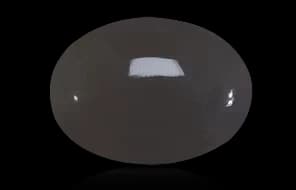
Gray Onyx
Gray Onyx is a sophisticated quartz gemstone known for its soft gray tones, subtle banding, polished luster, and versatile appeal in contemporary jewelry.
Gray Onyx is a trade name used for gray-toned onyx or chalcedony, a cryptocrystalline form of quartz composed primarily of silicon dioxide (SiO2). True onyx is characterized by straight, parallel bands, while gray material sold as onyx may also be relatively uniform in color. It belongs to the quartz family and has a trigonal crystal system. Gray Onyx typically has a Mohs hardness of 6.5-7, a refractive index around 1.53-1.54, and a specific gravity of approximately 2.60-2.65. Its luster is generally waxy in rough material and can become vitreous with polishing. Gray shades can range from pale silver-gray and smoky gray to charcoal, sometimes accompanied by white or darker parallel bands. Onyx forms as silica-rich fluids deposit microscopic quartz and chalcedony within cavities and fractures, with successive layers producing characteristic banding. Onyx has a long history as an ornamental stone and has been carved into cameos, intaglios, beads, and decorative objects, particularly in ancient Mediterranean cultures. Today, Gray Onyx jewelry is valued for its understated color, smooth polish, distinctive natural patterns, and ability to complement both minimalist and statement designs. Buyers often appreciate it as an accessible quartz gemstone that combines visual character with good everyday durability when worn with reasonable care.
- Mineral Family
- Quartz
- Chemical Formula
- SiO2
- Mohs Hardness
- 6.5 - 7
- Refractive Index
- 1.53 - 1.54
- Specific Gravity
- 2.60 - 2.65
- Cleavage
- None
- Crystal System
- Trigonal
- Luster
- Waxy
- Color Range
- Gray, White, Black
When buying Gray Onyx, start with color and pattern. Attractive material often has an even, appealing gray tone with well-defined natural banding or visual variation. Clarity is less important than it is for transparent gemstones because onyx is commonly translucent to opaque. Examine the cut and polish carefully: cabochons, beads, polished slabs, and carved pieces are especially common, and a smooth, even surface enhances the stone's appearance. Carat weight matters less for Gray Onyx than overall size, pattern, quality, and craftsmanship because the material is readily available in larger pieces. Origin can add interest and provenance, but it should not automatically be treated as a guarantee of superior quality. Treatments deserve particular attention. Onyx and related chalcedony materials may be dyed or otherwise treated to alter or intensify color, and sellers should disclose such treatments. Natural Gray Onyx should be distinguished from dyed chalcedony, other gray quartz materials, and banded calcite sold under misleading onyx terminology. Lab-grown onyx is not a standard commercial gemstone category; ask whether the stone is natural chalcedony or quartz and whether it has been treated. For higher-value purchases, request an independent gemological report when appropriate. Certification is particularly useful when the material is expensive, unusually colored, or marketed with a specific origin. Authenticity should be assessed through gemological testing rather than appearance alone. Price is influenced by color, pattern, size, polish, craftsmanship, treatment status, provenance, and overall quality.
Gray Onyx is reasonably durable but should still be treated with care because its 6.5-7 Mohs hardness can be scratched by harder materials. Clean Gray Onyx jewelry with lukewarm water, a small amount of mild soap, and a soft cloth or soft brush. Rinse thoroughly and dry with a clean cloth. Store pieces separately from harder gemstones to reduce scratching. Avoid harsh chemicals, abrasive cleaners, prolonged exposure to strong heat, and sudden temperature changes. Because some onyx materials are dyed or treated, prolonged contact with chemicals, solvents, or aggressive cleaning methods may affect the color or surface. For rings worn frequently, consider a protective setting and remove the jewelry before strenuous work or activities where the stone may receive hard knocks.
Gray Onyx is a trade name used for gray-toned onyx or chalcedony, a cryptocrystalline form of quartz composed primarily of silicon dioxide (SiO2). True onyx is characterized by straight, parallel bands, while gray material sold as onyx may also be relatively uniform in color. It belongs to the quartz family and has a trigonal crystal system. Gray Onyx typically has a Mohs hardness of 6.5-7, a refractive index around 1.53-1.54, and a specific gravity of approximately 2.60-2.65. Its luster is generally waxy in rough material and can become vitreous with polishing. Gray shades can range from pale silver-gray and smoky gray to charcoal, sometimes accompanied by white or darker parallel bands. Onyx forms as silica-rich fluids deposit microscopic quartz and chalcedony within cavities and fractures, with successive layers producing characteristic banding. Onyx has a long history as an ornamental stone and has been carved into cameos, intaglios, beads, and decorative objects, particularly in ancient Mediterranean cultures. Today, Gray Onyx jewelry is valued for its understated color, smooth polish, distinctive natural patterns, and ability to complement both minimalist and statement designs. Buyers often appreciate it as an accessible quartz gemstone that combines visual character with good everyday durability when worn with reasonable care.
- Mineral Family
- Quartz
- Chemical Formula
- SiO2
- Mohs Hardness
- 6.5 - 7
- Refractive Index
- 1.53 - 1.54
- Specific Gravity
- 2.60 - 2.65
- Cleavage
- None
- Crystal System
- Trigonal
- Luster
- Waxy
- Color Range
- Gray, White, Black
When buying Gray Onyx, start with color and pattern. Attractive material often has an even, appealing gray tone with well-defined natural banding or visual variation. Clarity is less important than it is for transparent gemstones because onyx is commonly translucent to opaque. Examine the cut and polish carefully: cabochons, beads, polished slabs, and carved pieces are especially common, and a smooth, even surface enhances the stone's appearance. Carat weight matters less for Gray Onyx than overall size, pattern, quality, and craftsmanship because the material is readily available in larger pieces. Origin can add interest and provenance, but it should not automatically be treated as a guarantee of superior quality. Treatments deserve particular attention. Onyx and related chalcedony materials may be dyed or otherwise treated to alter or intensify color, and sellers should disclose such treatments. Natural Gray Onyx should be distinguished from dyed chalcedony, other gray quartz materials, and banded calcite sold under misleading onyx terminology. Lab-grown onyx is not a standard commercial gemstone category; ask whether the stone is natural chalcedony or quartz and whether it has been treated. For higher-value purchases, request an independent gemological report when appropriate. Certification is particularly useful when the material is expensive, unusually colored, or marketed with a specific origin. Authenticity should be assessed through gemological testing rather than appearance alone. Price is influenced by color, pattern, size, polish, craftsmanship, treatment status, provenance, and overall quality.
Gray Onyx is reasonably durable but should still be treated with care because its 6.5-7 Mohs hardness can be scratched by harder materials. Clean Gray Onyx jewelry with lukewarm water, a small amount of mild soap, and a soft cloth or soft brush. Rinse thoroughly and dry with a clean cloth. Store pieces separately from harder gemstones to reduce scratching. Avoid harsh chemicals, abrasive cleaners, prolonged exposure to strong heat, and sudden temperature changes. Because some onyx materials are dyed or treated, prolonged contact with chemicals, solvents, or aggressive cleaning methods may affect the color or surface. For rings worn frequently, consider a protective setting and remove the jewelry before strenuous work or activities where the stone may receive hard knocks.
Gray Onyx for Sale
No gems found
Try broadening your search or adjusting your filters.
Have a gem of your own? List it free - no fees