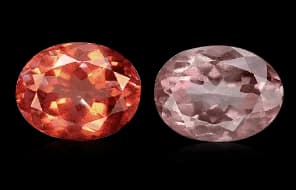
Color Change Garnet
Color Change Garnet is a rare garnet variety prized for dramatic shifts between colors under different lighting, combining exceptional optical character with everyday jewelry appeal.
Color Change Garnet is a fascinating variety of garnet distinguished by its ability to display noticeably different colors under different light sources. Unlike pleochroism, which changes with viewing direction, genuine color change is primarily dependent on the illumination. Many examples shift between green, blue-green or yellow-green in daylight and orange, pink, red or purple tones under incandescent light. The effect can range from subtle to striking, and its strength is one of the defining attractions of the gem.
Garnet is a mineral group rather than a single mineral species. Many color-change garnets are principally pyrope-spessartine solid solutions, although almandine, grossular and other garnet components may also occur. GIA research has documented color-change material with substantial pyrope and spessartine content, demonstrating that the chemical composition can vary considerably from one deposit or specimen to another. For this reason, there is no single fixed chemical formula that accurately describes every Color Change Garnet.
These gems form through geological processes that produce garnet-bearing rocks and allow different chemical components to enter the garnet crystal structure. Trace elements, particularly vanadium and chromium in some material, can contribute to the distinctive absorption behavior responsible for color change. Documented material has come from localities including Madagascar, Sri Lanka, Tanzania, Kenya and other regions, with the exact appearance and chemistry varying by source.
Color Change Garnet has a cubic crystal system, no cleavage, vitreous luster and a Mohs hardness generally within the garnet range of 6.5 to 7.5. Its refractive index and specific gravity vary with composition; gemological studies of color-change material have reported values around 1.73-1.82 for refractive index and roughly 3.62-4.00 for specific gravity. These variations are important when identifying an individual stone, so a laboratory report should be evaluated alongside the gem itself.
Historically, garnet has been used in jewelry for thousands of years, while the study of modern color-change garnets has revealed unusual pyrope-spessartine material with optical behavior comparable in concept to other color-change gems. Some stones are particularly prized when they show a strong, clearly defined transition between complementary colors. A well-cut stone can emphasize the phenomenon while maintaining brightness and attractive proportions.
In modern jewelry, Color Change Garnet works especially well in rings, pendants, earrings and statement pieces. Its relatively good hardness and lack of cleavage make it suitable for many jewelry designs, although rings should still be protected from hard impacts. Buyers value the gem primarily for its rarity, natural color-changing phenomenon, individuality and the visual interest it creates under changing lighting conditions.
- Mineral Family
- Garnet
- Chemical Formula
- Variable; commonly pyrope-spessartine
- Mohs Hardness
- 6.5 - 7.5
- Refractive Index
- 1.73 - 1.82
- Specific Gravity
- 3.62 - 4.00
- Cleavage
- None
- Crystal System
- Cubic
- Luster
- Vitreous
- Color Range
- Green, Blue, Yellow, Orange, Pink, Red, Purple
When buying Color Change Garnet, evaluate the stone as a complete gem rather than relying on a single color photograph. Color is the first consideration: compare the gem under daylight-equivalent and incandescent lighting and look for a clear, attractive transition. Stronger and more distinct color change is generally more desirable, but the quality of both colors matters as well.
Clarity should be assessed according to the stone's size, cut and intended use. Eye-clean material can be particularly attractive, but natural garnets may contain inclusions that help establish their identity and origin. Cut is especially important because proportions, symmetry and facet arrangement influence brightness and how clearly the color change can be observed. Cushion, oval, round and other faceted designs can work well when the cutting is optimized for the individual rough.
Carat weight affects price, but size alone does not determine value. A larger stone with a weak color change or poor cutting may be less desirable than a smaller gem with vivid colors, strong change and excellent brilliance. Origin can add interest and may influence price when a recognized locality is associated with unusual or collectible material, but origin should be supported by credible documentation rather than assumed from appearance.
Treatments should always be disclosed. Buyers should ask whether the stone is untreated, heated, fracture-filled or otherwise enhanced. Color Change Garnet is not defined by a standard routine treatment, so unusually low prices or unusual appearances warrant additional verification. Natural and laboratory-grown or synthetic materials should also be clearly distinguished. A reputable seller should state whether the gemstone is natural and disclose any known treatments.
For valuable stones, an independent gemological report is one of the best safeguards. The report should identify the gemstone, document relevant gemological properties and disclose treatments when detectable. Because Color Change Garnet can have variable chemistry and overlap with other garnet varieties, laboratory testing can be particularly useful for authentication. Price is ultimately influenced by the strength and attractiveness of the color change, body color, clarity, cut quality, carat weight, provenance, treatment status and laboratory documentation.
Color Change Garnet is reasonably durable for jewelry, but its Mohs hardness of about 6.5-7.5 means it can still be scratched by harder materials. Clean it with warm water, mild soap and a soft brush or cloth, then rinse thoroughly and dry gently.
Garnets generally have no cleavage and can be suitable for regular jewelry wear, but they should still be protected from hard knocks, especially in rings. Remove Color Change Garnet jewelry before activities involving heavy impact, abrasive materials or harsh chemicals.
For storage, keep each gemstone or jewelry piece separately in a soft pouch or lined compartment so it cannot rub against harder gems such as diamond or corundum. Ultrasonic cleaning can be acceptable for some garnets, but it should be avoided when the stone has significant fractures or potentially vulnerable treatments. Steam cleaning is not recommended for garnet. When treatment or fracture filling is suspected, use only gentle warm soapy water and seek professional advice before using any mechanical cleaning method.
Color Change Garnet is a fascinating variety of garnet distinguished by its ability to display noticeably different colors under different light sources. Unlike pleochroism, which changes with viewing direction, genuine color change is primarily dependent on the illumination. Many examples shift between green, blue-green or yellow-green in daylight and orange, pink, red or purple tones under incandescent light. The effect can range from subtle to striking, and its strength is one of the defining attractions of the gem.
Garnet is a mineral group rather than a single mineral species. Many color-change garnets are principally pyrope-spessartine solid solutions, although almandine, grossular and other garnet components may also occur. GIA research has documented color-change material with substantial pyrope and spessartine content, demonstrating that the chemical composition can vary considerably from one deposit or specimen to another. For this reason, there is no single fixed chemical formula that accurately describes every Color Change Garnet.
These gems form through geological processes that produce garnet-bearing rocks and allow different chemical components to enter the garnet crystal structure. Trace elements, particularly vanadium and chromium in some material, can contribute to the distinctive absorption behavior responsible for color change. Documented material has come from localities including Madagascar, Sri Lanka, Tanzania, Kenya and other regions, with the exact appearance and chemistry varying by source.
Color Change Garnet has a cubic crystal system, no cleavage, vitreous luster and a Mohs hardness generally within the garnet range of 6.5 to 7.5. Its refractive index and specific gravity vary with composition; gemological studies of color-change material have reported values around 1.73-1.82 for refractive index and roughly 3.62-4.00 for specific gravity. These variations are important when identifying an individual stone, so a laboratory report should be evaluated alongside the gem itself.
Historically, garnet has been used in jewelry for thousands of years, while the study of modern color-change garnets has revealed unusual pyrope-spessartine material with optical behavior comparable in concept to other color-change gems. Some stones are particularly prized when they show a strong, clearly defined transition between complementary colors. A well-cut stone can emphasize the phenomenon while maintaining brightness and attractive proportions.
In modern jewelry, Color Change Garnet works especially well in rings, pendants, earrings and statement pieces. Its relatively good hardness and lack of cleavage make it suitable for many jewelry designs, although rings should still be protected from hard impacts. Buyers value the gem primarily for its rarity, natural color-changing phenomenon, individuality and the visual interest it creates under changing lighting conditions.
- Mineral Family
- Garnet
- Chemical Formula
- Variable; commonly pyrope-spessartine
- Mohs Hardness
- 6.5 - 7.5
- Refractive Index
- 1.73 - 1.82
- Specific Gravity
- 3.62 - 4.00
- Cleavage
- None
- Crystal System
- Cubic
- Luster
- Vitreous
- Color Range
- Green, Blue, Yellow, Orange, Pink, Red, Purple
When buying Color Change Garnet, evaluate the stone as a complete gem rather than relying on a single color photograph. Color is the first consideration: compare the gem under daylight-equivalent and incandescent lighting and look for a clear, attractive transition. Stronger and more distinct color change is generally more desirable, but the quality of both colors matters as well.
Clarity should be assessed according to the stone's size, cut and intended use. Eye-clean material can be particularly attractive, but natural garnets may contain inclusions that help establish their identity and origin. Cut is especially important because proportions, symmetry and facet arrangement influence brightness and how clearly the color change can be observed. Cushion, oval, round and other faceted designs can work well when the cutting is optimized for the individual rough.
Carat weight affects price, but size alone does not determine value. A larger stone with a weak color change or poor cutting may be less desirable than a smaller gem with vivid colors, strong change and excellent brilliance. Origin can add interest and may influence price when a recognized locality is associated with unusual or collectible material, but origin should be supported by credible documentation rather than assumed from appearance.
Treatments should always be disclosed. Buyers should ask whether the stone is untreated, heated, fracture-filled or otherwise enhanced. Color Change Garnet is not defined by a standard routine treatment, so unusually low prices or unusual appearances warrant additional verification. Natural and laboratory-grown or synthetic materials should also be clearly distinguished. A reputable seller should state whether the gemstone is natural and disclose any known treatments.
For valuable stones, an independent gemological report is one of the best safeguards. The report should identify the gemstone, document relevant gemological properties and disclose treatments when detectable. Because Color Change Garnet can have variable chemistry and overlap with other garnet varieties, laboratory testing can be particularly useful for authentication. Price is ultimately influenced by the strength and attractiveness of the color change, body color, clarity, cut quality, carat weight, provenance, treatment status and laboratory documentation.
Color Change Garnet is reasonably durable for jewelry, but its Mohs hardness of about 6.5-7.5 means it can still be scratched by harder materials. Clean it with warm water, mild soap and a soft brush or cloth, then rinse thoroughly and dry gently.
Garnets generally have no cleavage and can be suitable for regular jewelry wear, but they should still be protected from hard knocks, especially in rings. Remove Color Change Garnet jewelry before activities involving heavy impact, abrasive materials or harsh chemicals.
For storage, keep each gemstone or jewelry piece separately in a soft pouch or lined compartment so it cannot rub against harder gems such as diamond or corundum. Ultrasonic cleaning can be acceptable for some garnets, but it should be avoided when the stone has significant fractures or potentially vulnerable treatments. Steam cleaning is not recommended for garnet. When treatment or fracture filling is suspected, use only gentle warm soapy water and seek professional advice before using any mechanical cleaning method.
Color Change Garnet for Sale
No gems found
Try broadening your search or adjusting your filters.
Have a gem of your own? List it free - no fees