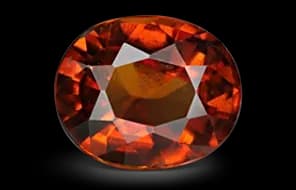
Ceylon Gomed
Ceylon Gomed, the Sri Lankan variety of hessonite garnet, is prized for its warm honey, orange, and reddish-brown colors, distinctive glow, and excellent durability.
Ceylon Gomed is the traditional trade name commonly used for hessonite garnet from Sri Lanka, a gem variety of grossular garnet in the garnet mineral group. Its warm honey-orange to reddish-brown colors and characteristic soft, glowing appearance make it distinctive among garnets. Hessonite forms in metamorphic environments, particularly in rocks where calcium- and aluminum-rich minerals interact with silica-bearing fluids. Its chemical formula is Ca3Al2(SiO4)3, and it crystallizes in the cubic crystal system. With a Mohs hardness of about 7–7.5, hessonite is well suited to many types of jewelry, although reasonable care is recommended for rings exposed to frequent impact. It has a vitreous luster, no cleavage, a refractive index of approximately 1.73–1.75, and a specific gravity around 3.61–3.68. Natural hessonite commonly contains inclusions, and some stones display a characteristic hazy or treacly internal appearance rather than the high transparency associated with some other gems. Ceylon Gomed is primarily found in Sri Lanka, one of the world's historically important colored-gem sources, although hessonite also occurs in other countries. Sri Lankan material is valued by collectors and jewelry buyers for its attractive color, transparency, cut quality, and provenance. In modern jewelry, Ceylon Gomed is fashioned into rings, pendants, earrings, bracelets, and collector stones. Buyers value it for its distinctive warm color, natural character, good durability, and connection to Sri Lanka's long-established colored-stone trade. When shopping for a natural Ceylon Gomed gemstone, the most important considerations are verified identity, color quality, clarity, cut, treatment disclosure, and reliable documentation of origin when origin is being claimed.
- Mineral Family
- Garnet
- Chemical Formula
- Ca3Al2(SiO4)3
- Mohs Hardness
- 7 - 7.5
- Refractive Index
- 1.73 - 1.75
- Specific Gravity
- 3.61 - 3.68
- Cleavage
- None
- Crystal System
- Cubic
- Luster
- Vitreous
- Color Range
- Orange, Yellow, Red
When buying Ceylon Gomed online, evaluate the gemstone as a natural hessonite garnet rather than relying on traditional claims or marketing language. Color is one of the most important value factors. Attractive stones commonly show honey, orange, cinnamon, golden-orange, or reddish-brown hues, with strong saturation and an appealing balance between body color and transparency. Clarity should be judged according to the stone's overall appearance. Natural hessonite frequently contains inclusions, so minor inclusions are not automatically a sign of poor quality; however, heavily included material may appear cloudy and have reduced visual appeal. Cut should maximize brilliance, color presentation, symmetry, and face-up appearance. Oval and cushion shapes are common, while other cuts can be selected according to the rough and intended jewelry design. Carat weight affects price, but two stones of the same weight can have very different values because of differences in color, clarity, cut, transparency, treatment, and provenance. Origin can influence market value when it is independently established, but a Sri Lankan origin claim should be supported by credible laboratory documentation rather than seller description alone. Hessonite garnet is generally encountered as a natural gemstone, and buyers should ask whether any treatment or enhancement has been applied. A reputable seller should clearly disclose known treatments. For higher-value purchases, an independent gemological report can confirm species and variety and may provide an origin opinion when the laboratory offers that service. Check that the report details match the actual stone, including measurements and identifying characteristics. Authenticity is best assessed through professional gemological testing rather than visual tests such as looking for a particular inclusion or attempting to distinguish stones by origin at home. Price depends primarily on quality, size, transparency, color, cut, treatment status, and credible provenance. A good buying decision balances visual beauty, laboratory documentation, seller reputation, and price rather than choosing solely by carat weight.
Ceylon Gomed is reasonably durable for jewelry, but proper care will help preserve its polish and brilliance. For routine cleaning, use lukewarm water, a small amount of mild soap, and a soft cloth or soft brush. Rinse thoroughly and dry with a clean, lint-free cloth. Avoid abrasive cleaners and harsh chemicals that can affect the stone, metal, or setting. Because rings receive more knocks and abrasion than earrings or pendants, remove a Ceylon Gomed ring before heavy manual work, sports, gardening, or activities where the stone may be struck. Store the gemstone separately from harder materials to reduce the risk of surface scratches. A fabric-lined jewelry box or individual soft pouch is suitable. Avoid exposing the jewelry unnecessarily to strong chemicals, sudden temperature changes, or ultrasonic or steam cleaning unless a qualified jeweler has confirmed that the specific stone and setting are suitable. Periodically inspect the mounting, especially for rings, and have loose settings checked by a professional jeweler.
Ceylon Gomed is the traditional trade name commonly used for hessonite garnet from Sri Lanka, a gem variety of grossular garnet in the garnet mineral group. Its warm honey-orange to reddish-brown colors and characteristic soft, glowing appearance make it distinctive among garnets. Hessonite forms in metamorphic environments, particularly in rocks where calcium- and aluminum-rich minerals interact with silica-bearing fluids. Its chemical formula is Ca3Al2(SiO4)3, and it crystallizes in the cubic crystal system. With a Mohs hardness of about 7–7.5, hessonite is well suited to many types of jewelry, although reasonable care is recommended for rings exposed to frequent impact. It has a vitreous luster, no cleavage, a refractive index of approximately 1.73–1.75, and a specific gravity around 3.61–3.68. Natural hessonite commonly contains inclusions, and some stones display a characteristic hazy or treacly internal appearance rather than the high transparency associated with some other gems. Ceylon Gomed is primarily found in Sri Lanka, one of the world's historically important colored-gem sources, although hessonite also occurs in other countries. Sri Lankan material is valued by collectors and jewelry buyers for its attractive color, transparency, cut quality, and provenance. In modern jewelry, Ceylon Gomed is fashioned into rings, pendants, earrings, bracelets, and collector stones. Buyers value it for its distinctive warm color, natural character, good durability, and connection to Sri Lanka's long-established colored-stone trade. When shopping for a natural Ceylon Gomed gemstone, the most important considerations are verified identity, color quality, clarity, cut, treatment disclosure, and reliable documentation of origin when origin is being claimed.
- Mineral Family
- Garnet
- Chemical Formula
- Ca3Al2(SiO4)3
- Mohs Hardness
- 7 - 7.5
- Refractive Index
- 1.73 - 1.75
- Specific Gravity
- 3.61 - 3.68
- Cleavage
- None
- Crystal System
- Cubic
- Luster
- Vitreous
- Color Range
- Orange, Yellow, Red
When buying Ceylon Gomed online, evaluate the gemstone as a natural hessonite garnet rather than relying on traditional claims or marketing language. Color is one of the most important value factors. Attractive stones commonly show honey, orange, cinnamon, golden-orange, or reddish-brown hues, with strong saturation and an appealing balance between body color and transparency. Clarity should be judged according to the stone's overall appearance. Natural hessonite frequently contains inclusions, so minor inclusions are not automatically a sign of poor quality; however, heavily included material may appear cloudy and have reduced visual appeal. Cut should maximize brilliance, color presentation, symmetry, and face-up appearance. Oval and cushion shapes are common, while other cuts can be selected according to the rough and intended jewelry design. Carat weight affects price, but two stones of the same weight can have very different values because of differences in color, clarity, cut, transparency, treatment, and provenance. Origin can influence market value when it is independently established, but a Sri Lankan origin claim should be supported by credible laboratory documentation rather than seller description alone. Hessonite garnet is generally encountered as a natural gemstone, and buyers should ask whether any treatment or enhancement has been applied. A reputable seller should clearly disclose known treatments. For higher-value purchases, an independent gemological report can confirm species and variety and may provide an origin opinion when the laboratory offers that service. Check that the report details match the actual stone, including measurements and identifying characteristics. Authenticity is best assessed through professional gemological testing rather than visual tests such as looking for a particular inclusion or attempting to distinguish stones by origin at home. Price depends primarily on quality, size, transparency, color, cut, treatment status, and credible provenance. A good buying decision balances visual beauty, laboratory documentation, seller reputation, and price rather than choosing solely by carat weight.
Ceylon Gomed is reasonably durable for jewelry, but proper care will help preserve its polish and brilliance. For routine cleaning, use lukewarm water, a small amount of mild soap, and a soft cloth or soft brush. Rinse thoroughly and dry with a clean, lint-free cloth. Avoid abrasive cleaners and harsh chemicals that can affect the stone, metal, or setting. Because rings receive more knocks and abrasion than earrings or pendants, remove a Ceylon Gomed ring before heavy manual work, sports, gardening, or activities where the stone may be struck. Store the gemstone separately from harder materials to reduce the risk of surface scratches. A fabric-lined jewelry box or individual soft pouch is suitable. Avoid exposing the jewelry unnecessarily to strong chemicals, sudden temperature changes, or ultrasonic or steam cleaning unless a qualified jeweler has confirmed that the specific stone and setting are suitable. Periodically inspect the mounting, especially for rings, and have loose settings checked by a professional jeweler.
Ceylon Gomed for Sale
No gems found
Try broadening your search or adjusting your filters.
Have a gem of your own? List it free - no fees