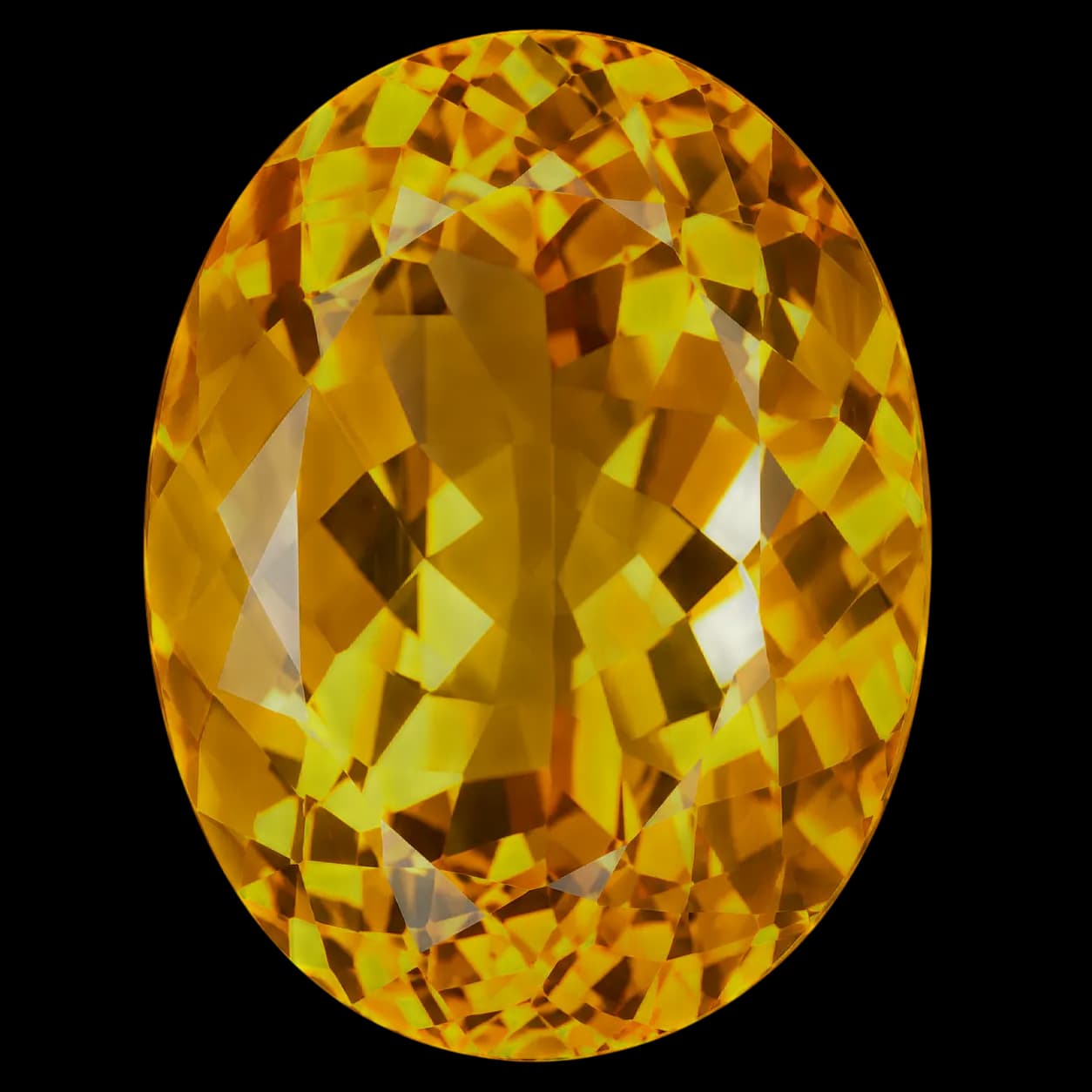
Citrine
Natural Citrine is a radiant golden quartz prized for its warm color, excellent durability, and affordability. Perfect for everyday jewelry, it combines timeless beauty with exceptional value.
Citrine is the yellow to golden-orange variety of quartz and is one of the world's most popular colored gemstones. Its cheerful color, attractive brilliance, and durability have made it a favorite for rings, pendants, earrings, bracelets, and custom jewelry.
Natural Citrine forms when trace amounts of iron are incorporated into quartz crystals under specific geological conditions. While genuine natural Citrine exists, it is relatively uncommon. Much of the Citrine available in the jewelry trade today is produced by carefully heating amethyst or smoky quartz, a stable and widely accepted treatment that creates the familiar golden color.
With a chemical composition of silicon dioxide (SiO₂), a Mohs hardness of 7, and excellent toughness, Citrine is suitable for regular wear. It displays a vitreous luster, has no true cleavage, and is commonly fashioned into brilliant faceted gemstones that maximize sparkle.
The finest Citrine colors range from light lemon yellow and golden yellow to rich honey and deep orange-yellow. Stones with even color saturation and excellent transparency are especially valued. Brownish or overly smoky tones generally command lower prices.
Important commercial sources include Brazil, Madagascar, Bolivia, Zambia, Russia, Uruguay, and parts of Africa. Brazil remains the dominant producer for the global gemstone market.
Throughout history, Citrine has been admired for its sunny appearance and was widely used in Ancient Greek and Roman jewelry. During the Victorian and Art Deco periods, it became especially fashionable in statement jewelry, a popularity that continues today.
Collectors and jewelry buyers appreciate Citrine because it offers attractive size, vibrant color, and durability at a relatively accessible price compared to many other colored gemstones. Whether purchased as a loose gemstone or set into fine jewelry, natural Citrine remains an elegant and versatile choice.
- Mineral Family
- Quartz
- Chemical Formula
- SiO₂
- Mohs Hardness
- 7
- Refractive Index
- 1.544 - 1.553
- Specific Gravity
- 2.65
- Cleavage
- None
- Crystal System
- Trigonal
- Luster
- Vitreous
- Color Range
- Yellow, Orange
When buying a Citrine gemstone, prioritize color above all else. The most desirable stones display rich golden-yellow, honey, or slightly orange-yellow hues with even saturation throughout the gem. Extremely pale stones often appear less valuable, while overly brown stones may resemble smoky quartz.
Clarity is another major quality factor. Citrine is commonly eye-clean, so visible inclusions or fractures generally reduce value. Transparent stones with excellent brilliance are preferred.
A well-executed cut greatly enhances brightness and sparkle. Popular shapes include oval, cushion, emerald, pear, round, and trillion cuts. Symmetry, polish, and proper proportions should always be evaluated.
Unlike many rare gemstones, larger Citrine gemstones remain relatively affordable. However, exceptionally colored large natural stones still command premium prices.
Brazilian Citrine is the best-known commercial source, although excellent material is also produced in Madagascar, Bolivia, Uruguay, Zambia, and other regions. Origin alone should not determine value; overall quality is far more important.
Most Citrine sold worldwide has been heat-treated from natural amethyst or smoky quartz. This treatment is permanent and widely accepted within the gem trade. Sellers should clearly disclose any treatments. Lab-created quartz also exists and should always be identified as synthetic.
Whenever possible, purchase certified Citrine from reputable gem laboratories or trusted gemstone dealers. Certification helps verify identity and treatment disclosure while providing additional confidence during purchase.
Price depends primarily on color, transparency, cutting quality, treatment disclosure, size, and overall appearance rather than origin alone.
Citrine is durable enough for everyday wear but benefits from proper care. Clean it using lukewarm water, mild soap, and a soft brush before drying with a lint-free cloth. Avoid abrasive cleaners, steam cleaning for heavily fractured stones, and prolonged exposure to harsh chemicals.
Store Citrine separately in a soft pouch or lined jewelry box to prevent scratching from harder gemstones such as sapphire or diamond. Remove Citrine jewelry before heavy manual work, sports, or activities involving impact.
Although its color is generally stable, avoiding prolonged exposure to excessive heat and strong sunlight can help preserve the gemstone's appearance over many years. Regular cleaning and careful storage will keep Citrine jewelry bright and beautiful.
Citrine is the yellow to golden-orange variety of quartz and is one of the world's most popular colored gemstones. Its cheerful color, attractive brilliance, and durability have made it a favorite for rings, pendants, earrings, bracelets, and custom jewelry.
Natural Citrine forms when trace amounts of iron are incorporated into quartz crystals under specific geological conditions. While genuine natural Citrine exists, it is relatively uncommon. Much of the Citrine available in the jewelry trade today is produced by carefully heating amethyst or smoky quartz, a stable and widely accepted treatment that creates the familiar golden color.
With a chemical composition of silicon dioxide (SiO₂), a Mohs hardness of 7, and excellent toughness, Citrine is suitable for regular wear. It displays a vitreous luster, has no true cleavage, and is commonly fashioned into brilliant faceted gemstones that maximize sparkle.
The finest Citrine colors range from light lemon yellow and golden yellow to rich honey and deep orange-yellow. Stones with even color saturation and excellent transparency are especially valued. Brownish or overly smoky tones generally command lower prices.
Important commercial sources include Brazil, Madagascar, Bolivia, Zambia, Russia, Uruguay, and parts of Africa. Brazil remains the dominant producer for the global gemstone market.
Throughout history, Citrine has been admired for its sunny appearance and was widely used in Ancient Greek and Roman jewelry. During the Victorian and Art Deco periods, it became especially fashionable in statement jewelry, a popularity that continues today.
Collectors and jewelry buyers appreciate Citrine because it offers attractive size, vibrant color, and durability at a relatively accessible price compared to many other colored gemstones. Whether purchased as a loose gemstone or set into fine jewelry, natural Citrine remains an elegant and versatile choice.
- Mineral Family
- Quartz
- Chemical Formula
- SiO₂
- Mohs Hardness
- 7
- Refractive Index
- 1.544 - 1.553
- Specific Gravity
- 2.65
- Cleavage
- None
- Crystal System
- Trigonal
- Luster
- Vitreous
- Color Range
- Yellow, Orange
When buying a Citrine gemstone, prioritize color above all else. The most desirable stones display rich golden-yellow, honey, or slightly orange-yellow hues with even saturation throughout the gem. Extremely pale stones often appear less valuable, while overly brown stones may resemble smoky quartz.
Clarity is another major quality factor. Citrine is commonly eye-clean, so visible inclusions or fractures generally reduce value. Transparent stones with excellent brilliance are preferred.
A well-executed cut greatly enhances brightness and sparkle. Popular shapes include oval, cushion, emerald, pear, round, and trillion cuts. Symmetry, polish, and proper proportions should always be evaluated.
Unlike many rare gemstones, larger Citrine gemstones remain relatively affordable. However, exceptionally colored large natural stones still command premium prices.
Brazilian Citrine is the best-known commercial source, although excellent material is also produced in Madagascar, Bolivia, Uruguay, Zambia, and other regions. Origin alone should not determine value; overall quality is far more important.
Most Citrine sold worldwide has been heat-treated from natural amethyst or smoky quartz. This treatment is permanent and widely accepted within the gem trade. Sellers should clearly disclose any treatments. Lab-created quartz also exists and should always be identified as synthetic.
Whenever possible, purchase certified Citrine from reputable gem laboratories or trusted gemstone dealers. Certification helps verify identity and treatment disclosure while providing additional confidence during purchase.
Price depends primarily on color, transparency, cutting quality, treatment disclosure, size, and overall appearance rather than origin alone.
Citrine is durable enough for everyday wear but benefits from proper care. Clean it using lukewarm water, mild soap, and a soft brush before drying with a lint-free cloth. Avoid abrasive cleaners, steam cleaning for heavily fractured stones, and prolonged exposure to harsh chemicals.
Store Citrine separately in a soft pouch or lined jewelry box to prevent scratching from harder gemstones such as sapphire or diamond. Remove Citrine jewelry before heavy manual work, sports, or activities involving impact.
Although its color is generally stable, avoiding prolonged exposure to excessive heat and strong sunlight can help preserve the gemstone's appearance over many years. Regular cleaning and careful storage will keep Citrine jewelry bright and beautiful.
Citrine for Sale
No gems found
Try broadening your search or adjusting your filters.
Have a gem of your own? List it free - no fees