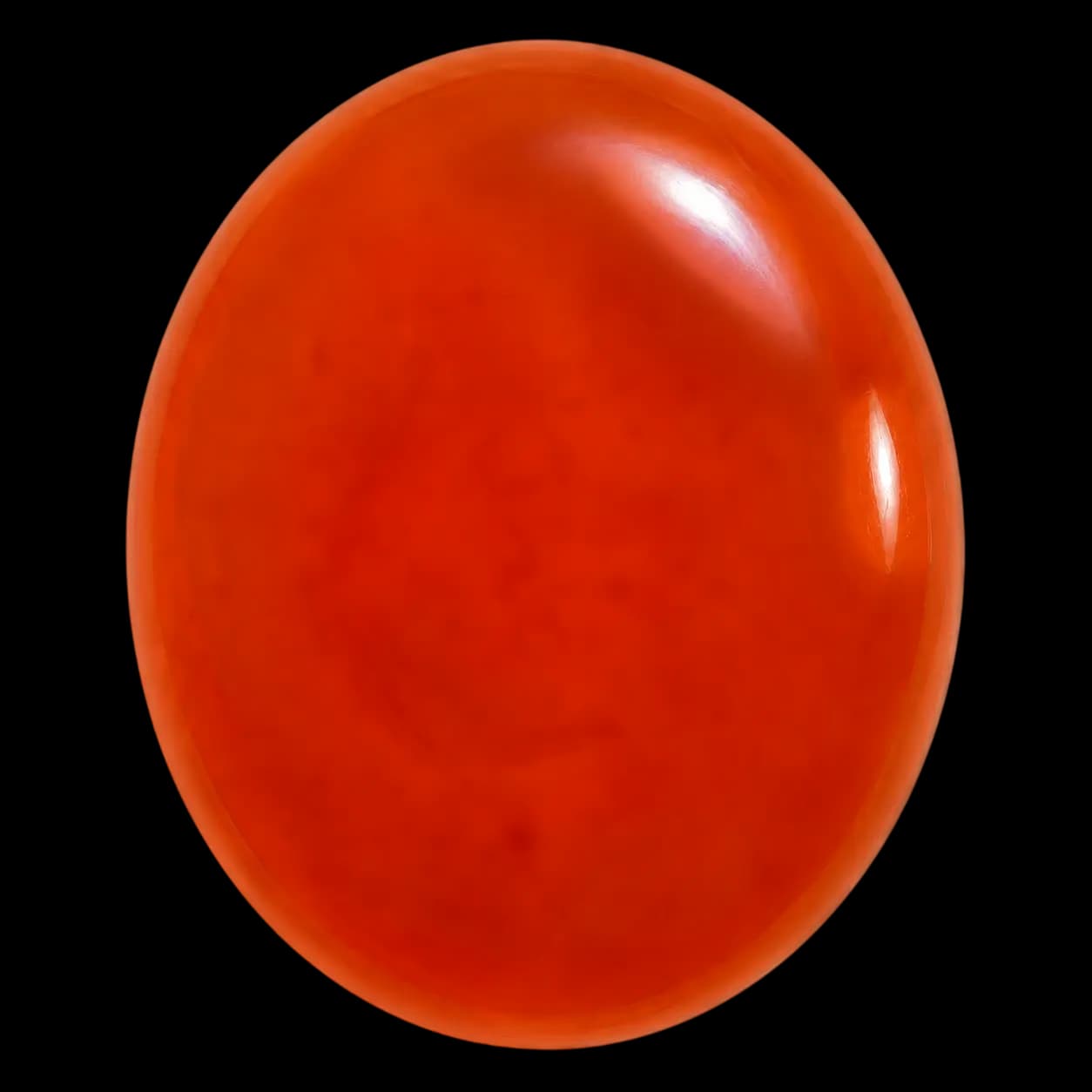
Carnelian
Carnelian is a warm, glowing chalcedony prized for its rich orange-red color, smooth polish, and timeless appeal in everyday jewelry.
Carnelian is a variety of chalcedony, which is microcrystalline quartz valued for its warm body color and polished glow. Its color is caused mainly by iron oxide and can range from bright orange to deep red-orange. Well-known for beads, cabochons, pendants, and statement rings, Carnelian has been admired since ancient times in Egypt, Rome, and the broader Mediterranean world.
From a gemological standpoint, Carnelian belongs to the quartz family and is typically opaque to slightly translucent. It forms in silica-rich environments, often as a cryptocrystalline mineral material with a fine, even texture that takes an excellent polish. Its chemical composition is SiO2, with a Mohs hardness of 6.5 to 7, making it durable enough for many jewelry styles when set and worn with normal care.
Collectors and jewelry buyers value Carnelian for its welcoming color, affordability, and classic versatility. It works beautifully in gold, silver, and mixed-metal designs, and its smooth surface gives it a refined, luminous appearance. In the market, quality is usually judged by color saturation, evenness, polish, absence of visible fractures, and whether the stone is natural, dyed, or heat-treated. Natural Carnelian with strong, even color and a clean finish is especially attractive for fine jewelry.
- Mineral Family
- Quartz
- Chemical Formula
- SiO2
- Mohs Hardness
- 6.5 - 7
- Refractive Index
- 1.530 - 1.540
- Specific Gravity
- 2.58 - 2.64
- Cleavage
- None
- Crystal System
- Trigonal
- Luster
- Vitreous
- Color Range
- Orange, Red
When buying Carnelian gemstone jewelry, start with color. The most desirable stones usually show a rich, even orange to red-orange tone with a lively glow rather than a flat or muddy appearance. Color consistency matters more than size, especially for cabochons, beads, and pendant stones.
Clarity for Carnelian is different from transparent gems because it is usually opaque to slightly translucent. Look for a smooth, well-polished surface and an attractive, even appearance. Chips, pits, dull polish, or obvious dye concentration can reduce value.
Cut is also important. Carnelian is commonly cut as cabochons, carved pieces, beads, and smooth freeforms because these styles best display its color and texture. Faceted Carnelian exists, but polished cabochons are more traditional and often more flattering.
Carat weight influences price, but quality is usually driven more by color depth, polish, size uniformity, and overall craftsmanship. Origin can matter too, especially when buyers are looking for stones from reputable sources with consistent material.
Treatments should always be disclosed. Carnelian may be dyed or heat-treated, and natural stones are usually priced higher when color and finish are excellent. Ask whether the stone is natural, treated, or dyed. For higher-value purchases, look for a lab report or seller documentation that clearly states the identification and any treatments.
Authenticity is important because Carnelian can be confused with dyed chalcedony, glass, or other lookalike materials. A trustworthy seller should provide real photos, clear treatment details, and a transparent return policy. Price is influenced by color strength, polish, size, origin, treatment status, and the quality of the setting if the stone is mounted in jewelry.
Carnelian is a durable gemstone, but it still benefits from careful handling. Clean it with lukewarm water, mild soap, and a soft cloth or soft brush. Rinse well and dry it gently to preserve its polish.
Store Carnelian separately from harder gemstones such as sapphire, topaz, or diamond to reduce the risk of scratches. A soft pouch or lined jewelry box works well.
For everyday wear, Carnelian is suitable for many jewelry styles, including rings, pendants, earrings, and bracelets, but it should be protected from sharp blows and rough surfaces. Remove Carnelian jewelry before heavy manual work, sports, or cleaning.
Avoid harsh chemicals, ultrasonic cleaners, bleach, and strong acids. Prolonged heat and direct sunlight can also affect some stones, especially if they are dyed or treated. With sensible care, Carnelian jewelry can keep its warm color and polished look for years.
Carnelian is a variety of chalcedony, which is microcrystalline quartz valued for its warm body color and polished glow. Its color is caused mainly by iron oxide and can range from bright orange to deep red-orange. Well-known for beads, cabochons, pendants, and statement rings, Carnelian has been admired since ancient times in Egypt, Rome, and the broader Mediterranean world.
From a gemological standpoint, Carnelian belongs to the quartz family and is typically opaque to slightly translucent. It forms in silica-rich environments, often as a cryptocrystalline mineral material with a fine, even texture that takes an excellent polish. Its chemical composition is SiO2, with a Mohs hardness of 6.5 to 7, making it durable enough for many jewelry styles when set and worn with normal care.
Collectors and jewelry buyers value Carnelian for its welcoming color, affordability, and classic versatility. It works beautifully in gold, silver, and mixed-metal designs, and its smooth surface gives it a refined, luminous appearance. In the market, quality is usually judged by color saturation, evenness, polish, absence of visible fractures, and whether the stone is natural, dyed, or heat-treated. Natural Carnelian with strong, even color and a clean finish is especially attractive for fine jewelry.
- Mineral Family
- Quartz
- Chemical Formula
- SiO2
- Mohs Hardness
- 6.5 - 7
- Refractive Index
- 1.530 - 1.540
- Specific Gravity
- 2.58 - 2.64
- Cleavage
- None
- Crystal System
- Trigonal
- Luster
- Vitreous
- Color Range
- Orange, Red
When buying Carnelian gemstone jewelry, start with color. The most desirable stones usually show a rich, even orange to red-orange tone with a lively glow rather than a flat or muddy appearance. Color consistency matters more than size, especially for cabochons, beads, and pendant stones.
Clarity for Carnelian is different from transparent gems because it is usually opaque to slightly translucent. Look for a smooth, well-polished surface and an attractive, even appearance. Chips, pits, dull polish, or obvious dye concentration can reduce value.
Cut is also important. Carnelian is commonly cut as cabochons, carved pieces, beads, and smooth freeforms because these styles best display its color and texture. Faceted Carnelian exists, but polished cabochons are more traditional and often more flattering.
Carat weight influences price, but quality is usually driven more by color depth, polish, size uniformity, and overall craftsmanship. Origin can matter too, especially when buyers are looking for stones from reputable sources with consistent material.
Treatments should always be disclosed. Carnelian may be dyed or heat-treated, and natural stones are usually priced higher when color and finish are excellent. Ask whether the stone is natural, treated, or dyed. For higher-value purchases, look for a lab report or seller documentation that clearly states the identification and any treatments.
Authenticity is important because Carnelian can be confused with dyed chalcedony, glass, or other lookalike materials. A trustworthy seller should provide real photos, clear treatment details, and a transparent return policy. Price is influenced by color strength, polish, size, origin, treatment status, and the quality of the setting if the stone is mounted in jewelry.
Carnelian is a durable gemstone, but it still benefits from careful handling. Clean it with lukewarm water, mild soap, and a soft cloth or soft brush. Rinse well and dry it gently to preserve its polish.
Store Carnelian separately from harder gemstones such as sapphire, topaz, or diamond to reduce the risk of scratches. A soft pouch or lined jewelry box works well.
For everyday wear, Carnelian is suitable for many jewelry styles, including rings, pendants, earrings, and bracelets, but it should be protected from sharp blows and rough surfaces. Remove Carnelian jewelry before heavy manual work, sports, or cleaning.
Avoid harsh chemicals, ultrasonic cleaners, bleach, and strong acids. Prolonged heat and direct sunlight can also affect some stones, especially if they are dyed or treated. With sensible care, Carnelian jewelry can keep its warm color and polished look for years.
Carnelian for Sale
No gems found
Try broadening your search or adjusting your filters.
Have a gem of your own? List it free - no fees