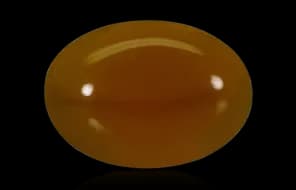
Brown Onyx
Brown Onyx is a warm-toned variety of banded chalcedony, valued for its earthy color, smooth polish, durability and distinctive layered appearance in jewelry and carvings.
Brown Onyx is a brown-colored variety of onyx, a banded form of chalcedony within the quartz family. Onyx is composed primarily of silicon dioxide (SiO₂) and has a microcrystalline structure. Its natural brown appearance can range from light honey-brown and tan to deeper chocolate and reddish-brown tones, sometimes with contrasting lighter bands. Gemologically, onyx belongs to the quartz group and has a trigonal crystal system. It typically has a Mohs hardness of 6.5-7, a specific gravity around 2.60-2.65, and refractive index readings around 1.530-1.539. Its natural luster is waxy, becoming vitreous and attractive after polishing. Onyx has no observed cleavage and commonly shows a conchoidal fracture. These properties make it reasonably durable for jewelry, although it can still be scratched or chipped by harder materials such as sapphire and diamond. Brown Onyx forms when silica-rich fluids deposit microscopic quartz and chalcedony in successive layers, producing the characteristic parallel or curved banding associated with onyx. The term onyx has a long history and comes from the Greek word for claw or fingernail, reflecting the appearance of some traditionally banded material. Onyx has been used for centuries in carved objects, seals, ornaments, inlays and decorative art. Today, Brown Onyx is used in cabochons, pendants, rings, bracelets, earrings, beads and carved jewelry. It is particularly attractive when polished because the warm brown body color and natural banding create a refined, understated appearance. Buyers value Brown Onyx for its affordability, versatility, distinctive patterns and ability to complement both warm and neutral jewelry metals. It is important to note that the word 'onyx' is also used commercially for banded calcite or marble-like decorative stone, which is a different material from quartz-based gemological onyx. For gemstone purchases, the material should therefore be clearly identified and, where appropriate, independently tested.
- Mineral Family
- Quartz
- Chemical Formula
- SiO₂
- Mohs Hardness
- 6.5 - 7
- Refractive Index
- 1.530 - 1.539
- Specific Gravity
- 2.60 - 2.65
- Cleavage
- None observed
- Crystal System
- Trigonal
- Luster
- Waxy
When buying Brown Onyx, evaluate the stone for natural-looking color, attractive banding, surface quality, cut and overall finish. Color is primarily a matter of personal preference, but rich brown tones with attractive, well-defined bands can be especially appealing. Clarity is less important than it is for transparent faceted gemstones because Brown Onyx is commonly translucent to opaque; instead, look for a clean surface without distracting cracks, chips or excessive pits. Cut and polish have a major effect on appearance. Cabochons and polished beads should have smooth, even surfaces and symmetrical shapes, while carved pieces should show clean workmanship. Carat weight matters less than size, pattern and craftsmanship for many Brown Onyx pieces because the material is generally affordable and commonly available in larger sizes. Origin can be interesting to collectors, but it should not automatically be treated as a guarantee of quality. Ask the seller where the material was sourced and whether the stated origin is documented. Treatments deserve particular attention. Chalcedony and onyx-like materials can be dyed, and some commercially sold 'onyx' may be treated or may refer to a different decorative material altogether. A reputable seller should disclose known treatments and accurately identify the material. Brown Onyx does not have a widely traded laboratory-grown equivalent comparable to synthetic ruby or synthetic sapphire; however, imitation, dyed and misidentified materials can occur. For valuable stones, an independent gemological report can help confirm the material and detect treatments. Authenticity should be assessed through proper gemological testing rather than appearance alone. Price is influenced by color, banding, size, polish, craftsmanship, rarity of the pattern, treatment status and seller reputation. Because Brown Onyx is generally an affordable gemstone material, unusually high prices should be justified by exceptional size, carving, provenance or quality rather than by unsupported claims about rarity or special powers. If you are planning to buy Brown Onyx online, choose a seller that provides clear photographs, accurate dimensions, treatment disclosure, return terms and appropriate certification for higher-value pieces.
Brown Onyx is moderately durable but should still be treated as a softer gemstone than sapphire or diamond. Clean it with lukewarm water, a small amount of mild soap and a soft cloth. Rinse thoroughly and dry with a soft, lint-free cloth. Avoid harsh chemicals, acidic cleaners, abrasive powders and prolonged exposure to strong solvents, as these may affect the surface or any treatment present. Ultrasonic and steam cleaners are best avoided unless a qualified gemologist has confirmed that the specific stone and treatment are suitable. Store Brown Onyx separately from harder gemstones to reduce scratching, preferably in a soft pouch or fabric-lined compartment. Avoid dropping or striking the stone, particularly around thin edges, drilled areas and corners. Brown Onyx can be suitable for everyday jewelry when properly protected, but rings and bracelets receive more impact and abrasion than pendants or earrings. Remove Brown Onyx jewelry before strenuous activities, household cleaning, swimming or situations involving chemicals and hard surfaces.
Brown Onyx is a brown-colored variety of onyx, a banded form of chalcedony within the quartz family. Onyx is composed primarily of silicon dioxide (SiO₂) and has a microcrystalline structure. Its natural brown appearance can range from light honey-brown and tan to deeper chocolate and reddish-brown tones, sometimes with contrasting lighter bands. Gemologically, onyx belongs to the quartz group and has a trigonal crystal system. It typically has a Mohs hardness of 6.5-7, a specific gravity around 2.60-2.65, and refractive index readings around 1.530-1.539. Its natural luster is waxy, becoming vitreous and attractive after polishing. Onyx has no observed cleavage and commonly shows a conchoidal fracture. These properties make it reasonably durable for jewelry, although it can still be scratched or chipped by harder materials such as sapphire and diamond. Brown Onyx forms when silica-rich fluids deposit microscopic quartz and chalcedony in successive layers, producing the characteristic parallel or curved banding associated with onyx. The term onyx has a long history and comes from the Greek word for claw or fingernail, reflecting the appearance of some traditionally banded material. Onyx has been used for centuries in carved objects, seals, ornaments, inlays and decorative art. Today, Brown Onyx is used in cabochons, pendants, rings, bracelets, earrings, beads and carved jewelry. It is particularly attractive when polished because the warm brown body color and natural banding create a refined, understated appearance. Buyers value Brown Onyx for its affordability, versatility, distinctive patterns and ability to complement both warm and neutral jewelry metals. It is important to note that the word 'onyx' is also used commercially for banded calcite or marble-like decorative stone, which is a different material from quartz-based gemological onyx. For gemstone purchases, the material should therefore be clearly identified and, where appropriate, independently tested.
- Mineral Family
- Quartz
- Chemical Formula
- SiO₂
- Mohs Hardness
- 6.5 - 7
- Refractive Index
- 1.530 - 1.539
- Specific Gravity
- 2.60 - 2.65
- Cleavage
- None observed
- Crystal System
- Trigonal
- Luster
- Waxy
When buying Brown Onyx, evaluate the stone for natural-looking color, attractive banding, surface quality, cut and overall finish. Color is primarily a matter of personal preference, but rich brown tones with attractive, well-defined bands can be especially appealing. Clarity is less important than it is for transparent faceted gemstones because Brown Onyx is commonly translucent to opaque; instead, look for a clean surface without distracting cracks, chips or excessive pits. Cut and polish have a major effect on appearance. Cabochons and polished beads should have smooth, even surfaces and symmetrical shapes, while carved pieces should show clean workmanship. Carat weight matters less than size, pattern and craftsmanship for many Brown Onyx pieces because the material is generally affordable and commonly available in larger sizes. Origin can be interesting to collectors, but it should not automatically be treated as a guarantee of quality. Ask the seller where the material was sourced and whether the stated origin is documented. Treatments deserve particular attention. Chalcedony and onyx-like materials can be dyed, and some commercially sold 'onyx' may be treated or may refer to a different decorative material altogether. A reputable seller should disclose known treatments and accurately identify the material. Brown Onyx does not have a widely traded laboratory-grown equivalent comparable to synthetic ruby or synthetic sapphire; however, imitation, dyed and misidentified materials can occur. For valuable stones, an independent gemological report can help confirm the material and detect treatments. Authenticity should be assessed through proper gemological testing rather than appearance alone. Price is influenced by color, banding, size, polish, craftsmanship, rarity of the pattern, treatment status and seller reputation. Because Brown Onyx is generally an affordable gemstone material, unusually high prices should be justified by exceptional size, carving, provenance or quality rather than by unsupported claims about rarity or special powers. If you are planning to buy Brown Onyx online, choose a seller that provides clear photographs, accurate dimensions, treatment disclosure, return terms and appropriate certification for higher-value pieces.
Brown Onyx is moderately durable but should still be treated as a softer gemstone than sapphire or diamond. Clean it with lukewarm water, a small amount of mild soap and a soft cloth. Rinse thoroughly and dry with a soft, lint-free cloth. Avoid harsh chemicals, acidic cleaners, abrasive powders and prolonged exposure to strong solvents, as these may affect the surface or any treatment present. Ultrasonic and steam cleaners are best avoided unless a qualified gemologist has confirmed that the specific stone and treatment are suitable. Store Brown Onyx separately from harder gemstones to reduce scratching, preferably in a soft pouch or fabric-lined compartment. Avoid dropping or striking the stone, particularly around thin edges, drilled areas and corners. Brown Onyx can be suitable for everyday jewelry when properly protected, but rings and bracelets receive more impact and abrasion than pendants or earrings. Remove Brown Onyx jewelry before strenuous activities, household cleaning, swimming or situations involving chemicals and hard surfaces.
Brown Onyx for Sale
No gems found
Try broadening your search or adjusting your filters.
Have a gem of your own? List it free - no fees