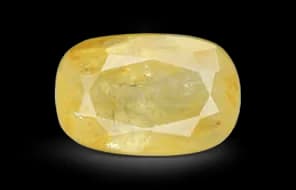
Yellow Garnet
Yellow garnet is a distinctive garnet variety prized for its warm golden to yellow-green color, lively brilliance and elegant appeal in fine jewelry.
Yellow garnet is a yellow to yellow-green member of the garnet family, with grossular being one of the principal garnet species represented by this color range. Grossular is a calcium-aluminium silicate with the chemical formula Ca3Al2(SiO4)3 and an isometric crystal system. Yellow coloration can result from trace elements and compositional variation within the garnet group. Grossular commonly measures 6.5–7.5 on the Mohs scale, has a refractive index of about 1.738–1.745, a specific gravity near 3.60, and a vitreous to adamantine luster. Garnets are formed in a variety of geological environments, including metamorphic rocks, where heat and pressure allow their constituent minerals to crystallize. Yellow garnet should not be treated as a single mineral species, however: yellow material can also occur among other garnet compositions, so laboratory identification is important when precise species or origin matters. Notable yellow and yellow-green garnets include material from Mali and other garnet-producing regions. Garnet has a long history as a gemstone, with members of the group used for jewelry and decorative objects since antiquity. Today, yellow garnet is particularly attractive in rings, earrings, pendants and statement pieces because its warm color works well with both yellow and white metals. Buyers value natural yellow garnet for its distinctive color, brilliance, durability suitable for many jewelry applications, and the variety found within the garnet family.
- Mineral Family
- Garnet
- Chemical Formula
- Ca3Al2(SiO4)3
- Mohs Hardness
- 6.5 - 7.5
- Refractive Index
- 1.738 - 1.745
- Specific Gravity
- 3.60
- Cleavage
- None
- Crystal System
- Cubic
- Luster
- Vitreous
- Color Range
- Yellow, Green
When buying yellow garnet online, start with color. Attractive stones generally show a pleasing, lively yellow or yellow-green hue with good brightness rather than an overly brown or gray appearance. Clarity should be evaluated according to the stone's type and size; eye-clean material can be especially appealing, while characteristic inclusions may help document natural origin but should not reduce durability. Cut is important because well-proportioned faceting can maximize garnet's brilliance and dispersion. Carat weight affects price, but rarity, color quality, clarity, cut and overall beauty often matter more than size alone. Origin can add interest and, when documented, may influence value, although a locality should not automatically be treated as a guarantee of quality. Ask whether the stone is natural and whether any treatments have been applied. Garnet is a natural mineral family, while laboratory-created garnet materials also exist, so product descriptions should clearly distinguish natural gemstones from synthetic or simulant materials. For valuable yellow garnet, an independent gemological report can help confirm identity, natural or synthetic status, detectable treatments and, where applicable, geographic origin. Authenticity should be assessed through reputable sellers, accurate measurements, consistent gemological properties and appropriate laboratory documentation. Price varies according to color, clarity, cut quality, carat weight, rarity, origin and certification.
To care for yellow garnet jewelry, clean it gently with warm water, mild soap and a soft brush, then rinse and dry with a soft cloth. Because garnet hardness varies by species and falls below that of sapphire and diamond, avoid exposing it to unnecessary abrasion or hard impacts. Store yellow garnet separately from harder gemstones to reduce scratching, preferably in a soft pouch or individual compartment. Rings worn every day deserve particular attention because their exposed stones can encounter knocks and abrasive surfaces. Remove yellow garnet jewelry before strenuous activities, household work and situations where the stone may be struck. Avoid harsh chemicals, abrasive cleaners and sudden temperature changes unless a qualified jeweler confirms that the specific stone and treatment can safely tolerate them. Ultrasonic or steam cleaning should be avoided when the stone contains significant fractures, cavities or treatment-sensitive characteristics.
Yellow garnet is a yellow to yellow-green member of the garnet family, with grossular being one of the principal garnet species represented by this color range. Grossular is a calcium-aluminium silicate with the chemical formula Ca3Al2(SiO4)3 and an isometric crystal system. Yellow coloration can result from trace elements and compositional variation within the garnet group. Grossular commonly measures 6.5–7.5 on the Mohs scale, has a refractive index of about 1.738–1.745, a specific gravity near 3.60, and a vitreous to adamantine luster. Garnets are formed in a variety of geological environments, including metamorphic rocks, where heat and pressure allow their constituent minerals to crystallize. Yellow garnet should not be treated as a single mineral species, however: yellow material can also occur among other garnet compositions, so laboratory identification is important when precise species or origin matters. Notable yellow and yellow-green garnets include material from Mali and other garnet-producing regions. Garnet has a long history as a gemstone, with members of the group used for jewelry and decorative objects since antiquity. Today, yellow garnet is particularly attractive in rings, earrings, pendants and statement pieces because its warm color works well with both yellow and white metals. Buyers value natural yellow garnet for its distinctive color, brilliance, durability suitable for many jewelry applications, and the variety found within the garnet family.
- Mineral Family
- Garnet
- Chemical Formula
- Ca3Al2(SiO4)3
- Mohs Hardness
- 6.5 - 7.5
- Refractive Index
- 1.738 - 1.745
- Specific Gravity
- 3.60
- Cleavage
- None
- Crystal System
- Cubic
- Luster
- Vitreous
- Color Range
- Yellow, Green
When buying yellow garnet online, start with color. Attractive stones generally show a pleasing, lively yellow or yellow-green hue with good brightness rather than an overly brown or gray appearance. Clarity should be evaluated according to the stone's type and size; eye-clean material can be especially appealing, while characteristic inclusions may help document natural origin but should not reduce durability. Cut is important because well-proportioned faceting can maximize garnet's brilliance and dispersion. Carat weight affects price, but rarity, color quality, clarity, cut and overall beauty often matter more than size alone. Origin can add interest and, when documented, may influence value, although a locality should not automatically be treated as a guarantee of quality. Ask whether the stone is natural and whether any treatments have been applied. Garnet is a natural mineral family, while laboratory-created garnet materials also exist, so product descriptions should clearly distinguish natural gemstones from synthetic or simulant materials. For valuable yellow garnet, an independent gemological report can help confirm identity, natural or synthetic status, detectable treatments and, where applicable, geographic origin. Authenticity should be assessed through reputable sellers, accurate measurements, consistent gemological properties and appropriate laboratory documentation. Price varies according to color, clarity, cut quality, carat weight, rarity, origin and certification.
To care for yellow garnet jewelry, clean it gently with warm water, mild soap and a soft brush, then rinse and dry with a soft cloth. Because garnet hardness varies by species and falls below that of sapphire and diamond, avoid exposing it to unnecessary abrasion or hard impacts. Store yellow garnet separately from harder gemstones to reduce scratching, preferably in a soft pouch or individual compartment. Rings worn every day deserve particular attention because their exposed stones can encounter knocks and abrasive surfaces. Remove yellow garnet jewelry before strenuous activities, household work and situations where the stone may be struck. Avoid harsh chemicals, abrasive cleaners and sudden temperature changes unless a qualified jeweler confirms that the specific stone and treatment can safely tolerate them. Ultrasonic or steam cleaning should be avoided when the stone contains significant fractures, cavities or treatment-sensitive characteristics.
Yellow Garnet for Sale
No gems found
Try broadening your search or adjusting your filters.
Have a gem of your own? List it free - no fees