Star Garnet
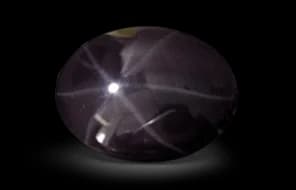
Star Garnet is a rare garnet variety prized for its dramatic asterism—a luminous four- or six-rayed star that appears across its rich purple-red surface.
Star Garnet is a phenomenal variety of garnet distinguished by asterism, an optical effect that creates a star-like pattern when the stone is viewed under a suitable light source. The most recognized material comes from Idaho in the United States and from deposits in India. Idaho Star Garnet is typically an almandine-pyrope garnet with a deep purple, reddish-purple, plum, or dark red body color. The star effect is produced by fine, oriented rutile inclusions within the garnet that reflect light in intersecting directions. Four-rayed stars are common in Idaho material, while six-rayed examples are considerably rarer.
Garnet is a group of closely related silicate minerals rather than a single mineral species. Star Garnet commonly falls within the pyrope-almandine compositional range, with magnesium and iron occupying the major divalent-element position in its crystal structure. Its general composition can therefore be expressed as (Mg,Fe)3Al2(SiO4)3. Garnet crystallizes in the cubic system and has no cleavage, contributing to its good durability for jewelry. Garnets generally have a vitreous luster and a refractive index that varies with composition.
The distinctive star is best displayed by cutting the rough as a cabochon rather than faceting it. A well-oriented dome allows the reflected light from the internal rutile needles to form a visible star that moves as the stone or light source changes position. GIA notes that asterism is most desirable when the star is sharp, centered, and clearly defined, while strong color and good transparency can also increase appeal.
Idaho Star Garnet has particular historical importance in American gemology and was designated Idaho's official state stone in 1967. The Emerald Creek area of northern Idaho is especially associated with star garnet, where garnets occur in metamorphic rocks. The stones range from pink and red through purple and dark maroon, with some showing pronounced asterism.
Today, Star Garnet jewelry is most commonly designed around polished cabochons that showcase the optical effect. It can be used in rings, pendants, earrings, bracelets, and collector pieces. Because the star is the defining feature, a cabochon with a bright, centered, mobile star can be more desirable than a stone with a higher degree of conventional clarity but weak asterism. Buyers value natural Star Garnet for its unusual optical phenomenon, distinctive dark color, durability, and relatively uncommon occurrence.
- Mineral Family
- Garnet
- Chemical Formula
- (Mg,Fe)3Al2(SiO4)3
- Mohs Hardness
- 7 - 7.5
- Refractive Index
- 1.75 - 1.81
- Specific Gravity
- 3.80 - 4.20
- Cleavage
- None
- Crystal System
- Cubic
- Luster
- Vitreous
- Color Range
- Purple, Red, Black
When buying Star Garnet, evaluate the stone as a phenomenal gem rather than judging it by ordinary faceted-garnet standards. Color is important: saturated purple, reddish-purple, plum, and deep red tones are particularly characteristic. A stone that is too dark may lose visible color, while excessive opacity can reduce the visual presence of the star. The most important quality factor is usually the asterism itself. Look for a star that is centered, sharp, symmetrical, and visible across the dome when viewed under a single point-like light source. Four-rayed stars are common in Idaho material; six-rayed stars are rarer and can command a premium when the effect is strong.
Clarity should be considered in context. Rutile inclusions are essential to the asterism, so a Star Garnet is not expected to be inclusion-free. Instead, assess whether the inclusions create a clean and attractive star without making the stone excessively opaque. Cut is particularly important because the cabochon dome must be oriented correctly to display the asterism. Poor orientation can produce a weak, off-center, or uneven star even when the rough contains suitable inclusions.
Carat weight affects price, but size alone does not determine value. Larger stones with strong color and a bright, centered star can be significantly more desirable than larger stones with weak optical effects. Origin can also influence collector interest, especially for documented Idaho material. Treatment status should be disclosed by the seller; buyers should not assume that every stone described as Star Garnet is untreated simply because asterism is natural-looking.
Natural Star Garnet should be distinguished from imitations and laboratory-created garnet materials. Ask whether the stone is natural, whether any treatment has been applied, and whether the stated origin has been documented. For valuable stones, an independent gemological report can help confirm identity, natural status, measurements, and detectable treatments. A reputable seller should provide clear photographs or video showing the star under appropriate lighting and should disclose any known enhancements.
Price depends on the strength and symmetry of the star, body color, transparency, carat weight, cut quality, origin, rarity of the ray pattern, treatment status, and overall craftsmanship. If you plan to buy Star Garnet online, prioritize sellers who provide detailed images, accurate dimensions, treatment disclosure, return terms, and independent certification when appropriate.
Star Garnet is relatively durable, with a Mohs hardness of about 7 to 7.5, making it suitable for many types of jewelry. Because Star Garnet is usually cut as a cabochon, its smooth polished surface can withstand normal wear, but it should still be protected from hard impacts and abrasive materials.
For routine cleaning, use lukewarm water, a small amount of mild soap, and a soft cloth or soft brush. Rinse thoroughly and dry with a clean, lint-free cloth. Avoid harsh chemicals, abrasive cleaners, and rough polishing materials that can scratch or dull the surface. When the jewelry is set in a more delicate mounting, follow the care recommendations for the entire piece rather than the gemstone alone.
Store Star Garnet separately from harder gemstones to reduce the risk of scratches. A soft jewelry pouch or individual compartment is ideal. Avoid prolonged exposure to extreme heat or sudden temperature changes, particularly when the stone has been set into jewelry with other materials. For everyday wear, remove Star Garnet jewelry during activities where the stone could receive strong knocks, such as heavy manual work, sports, or household tasks.
Star Garnet is a phenomenal variety of garnet distinguished by asterism, an optical effect that creates a star-like pattern when the stone is viewed under a suitable light source. The most recognized material comes from Idaho in the United States and from deposits in India. Idaho Star Garnet is typically an almandine-pyrope garnet with a deep purple, reddish-purple, plum, or dark red body color. The star effect is produced by fine, oriented rutile inclusions within the garnet that reflect light in intersecting directions. Four-rayed stars are common in Idaho material, while six-rayed examples are considerably rarer.
Garnet is a group of closely related silicate minerals rather than a single mineral species. Star Garnet commonly falls within the pyrope-almandine compositional range, with magnesium and iron occupying the major divalent-element position in its crystal structure. Its general composition can therefore be expressed as (Mg,Fe)3Al2(SiO4)3. Garnet crystallizes in the cubic system and has no cleavage, contributing to its good durability for jewelry. Garnets generally have a vitreous luster and a refractive index that varies with composition.
The distinctive star is best displayed by cutting the rough as a cabochon rather than faceting it. A well-oriented dome allows the reflected light from the internal rutile needles to form a visible star that moves as the stone or light source changes position. GIA notes that asterism is most desirable when the star is sharp, centered, and clearly defined, while strong color and good transparency can also increase appeal.
Idaho Star Garnet has particular historical importance in American gemology and was designated Idaho's official state stone in 1967. The Emerald Creek area of northern Idaho is especially associated with star garnet, where garnets occur in metamorphic rocks. The stones range from pink and red through purple and dark maroon, with some showing pronounced asterism.
Today, Star Garnet jewelry is most commonly designed around polished cabochons that showcase the optical effect. It can be used in rings, pendants, earrings, bracelets, and collector pieces. Because the star is the defining feature, a cabochon with a bright, centered, mobile star can be more desirable than a stone with a higher degree of conventional clarity but weak asterism. Buyers value natural Star Garnet for its unusual optical phenomenon, distinctive dark color, durability, and relatively uncommon occurrence.
- Mineral Family
- Garnet
- Chemical Formula
- (Mg,Fe)3Al2(SiO4)3
- Mohs Hardness
- 7 - 7.5
- Refractive Index
- 1.75 - 1.81
- Specific Gravity
- 3.80 - 4.20
- Cleavage
- None
- Crystal System
- Cubic
- Luster
- Vitreous
- Color Range
- Purple, Red, Black
When buying Star Garnet, evaluate the stone as a phenomenal gem rather than judging it by ordinary faceted-garnet standards. Color is important: saturated purple, reddish-purple, plum, and deep red tones are particularly characteristic. A stone that is too dark may lose visible color, while excessive opacity can reduce the visual presence of the star. The most important quality factor is usually the asterism itself. Look for a star that is centered, sharp, symmetrical, and visible across the dome when viewed under a single point-like light source. Four-rayed stars are common in Idaho material; six-rayed stars are rarer and can command a premium when the effect is strong.
Clarity should be considered in context. Rutile inclusions are essential to the asterism, so a Star Garnet is not expected to be inclusion-free. Instead, assess whether the inclusions create a clean and attractive star without making the stone excessively opaque. Cut is particularly important because the cabochon dome must be oriented correctly to display the asterism. Poor orientation can produce a weak, off-center, or uneven star even when the rough contains suitable inclusions.
Carat weight affects price, but size alone does not determine value. Larger stones with strong color and a bright, centered star can be significantly more desirable than larger stones with weak optical effects. Origin can also influence collector interest, especially for documented Idaho material. Treatment status should be disclosed by the seller; buyers should not assume that every stone described as Star Garnet is untreated simply because asterism is natural-looking.
Natural Star Garnet should be distinguished from imitations and laboratory-created garnet materials. Ask whether the stone is natural, whether any treatment has been applied, and whether the stated origin has been documented. For valuable stones, an independent gemological report can help confirm identity, natural status, measurements, and detectable treatments. A reputable seller should provide clear photographs or video showing the star under appropriate lighting and should disclose any known enhancements.
Price depends on the strength and symmetry of the star, body color, transparency, carat weight, cut quality, origin, rarity of the ray pattern, treatment status, and overall craftsmanship. If you plan to buy Star Garnet online, prioritize sellers who provide detailed images, accurate dimensions, treatment disclosure, return terms, and independent certification when appropriate.
Star Garnet is relatively durable, with a Mohs hardness of about 7 to 7.5, making it suitable for many types of jewelry. Because Star Garnet is usually cut as a cabochon, its smooth polished surface can withstand normal wear, but it should still be protected from hard impacts and abrasive materials.
For routine cleaning, use lukewarm water, a small amount of mild soap, and a soft cloth or soft brush. Rinse thoroughly and dry with a clean, lint-free cloth. Avoid harsh chemicals, abrasive cleaners, and rough polishing materials that can scratch or dull the surface. When the jewelry is set in a more delicate mounting, follow the care recommendations for the entire piece rather than the gemstone alone.
Store Star Garnet separately from harder gemstones to reduce the risk of scratches. A soft jewelry pouch or individual compartment is ideal. Avoid prolonged exposure to extreme heat or sudden temperature changes, particularly when the stone has been set into jewelry with other materials. For everyday wear, remove Star Garnet jewelry during activities where the stone could receive strong knocks, such as heavy manual work, sports, or household tasks.
Star Garnet for Sale
No gems found
Try broadening your search or adjusting your filters.
Have a gem of your own? List it free - no fees