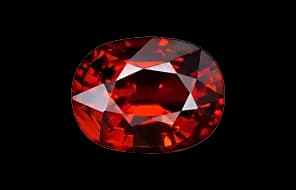
Red Spessartite
Red spessartite is a vivid garnet prized for its saturated red to red-orange color, strong brilliance, excellent durability, and distinctive collector appeal.
Red spessartite is the red variety of spessartine garnet, a manganese-rich member of the garnet group. Its chemical formula is Mn3Al2(SiO4)3, and it crystallizes in the cubic system. With a Mohs hardness of 7 to 7.5, no cleavage, a vitreous luster, and a refractive index of about 1.79-1.81, it is well suited to jewelry when worn with sensible care.
Spessartite forms primarily in igneous and metamorphic geological environments where manganese is available. Trace elements and variations in composition influence its appearance, producing colors that range from orange and reddish orange to vivid red. Red spessartite is especially sought after when it displays a rich, saturated red body color combined with good transparency and lively brilliance.
Important sources of spessartite and red to reddish-orange material have included Madagascar, Nigeria, Namibia, Tanzania, Mozambique, Brazil, Myanmar, and historical deposits in the United States. Some localities are particularly known for intensely colored material, making origin an important part of the collector and buying conversation.
Red spessartite became increasingly popular as gem-quality garnet deposits were discovered and developed in different parts of the world. Today, it is used in rings, earrings, pendants, necklaces, and other fine jewelry. Its high refractive index gives well-cut stones noticeable sparkle, while its hardness makes it practical for many jewelry designs.
Buyers value natural red spessartite for its vivid color, brilliance, relative rarity in fine saturated red material, and individuality compared with more familiar garnet varieties. As a January birthstone through its garnet classification, it also offers a distinctive alternative for buyers seeking a less conventional birthstone gem.
- Mineral Family
- Garnet
- Chemical Formula
- Mn3Al2(SiO4)3
- Mohs Hardness
- 7 - 7.5
- Refractive Index
- 1.79 - 1.81
- Specific Gravity
- 4.12 - 4.20
- Cleavage
- None
- Crystal System
- Cubic
- Luster
- Vitreous
- Color Range
- Red, Orange
When buying red spessartite, start with color. The most desirable stones typically show a strong, evenly distributed red to red-orange hue with good saturation and attractive brightness. Very dark stones may lose visual liveliness, while overly orange material may appeal more to buyers seeking classic orange spessartite.
Clarity matters because transparent material allows the stone's brilliance and color to be appreciated. Natural inclusions are possible, and minor inclusions do not automatically reduce value if the overall appearance remains attractive. For cut, look for balanced proportions, good symmetry, and facets that return light effectively. Poor cutting can make even strongly colored rough appear dull.
Carat weight can influence price, particularly when larger stones retain strong color, transparency, and brilliance. Origin may add collector interest, but it should not be treated as a guarantee of quality. The individual stone's color, clarity, cut, size, and overall beauty remain important.
Natural red spessartite is the material buyers should distinguish from synthetic or imitation stones. Spessartite garnet is not commonly encountered as a lab-grown commercial gemstone in the same way as some other gems, but sellers may offer simulants or stones represented inaccurately. Ask whether the stone is natural and whether any treatments have been applied.
Treatment disclosure is important. Ask the seller for clear information about any known enhancement and whether the color is natural. For valuable stones, an independent gemological laboratory report can help confirm species, natural origin where determinable, and detectable treatments. A certificate is particularly useful for expensive or important collector stones.
Before you buy red spessartite online, review detailed photographs or videos in different lighting, confirm the exact carat weight and measurements, check the return policy, and purchase from a seller who provides transparent gem information. Price is ultimately influenced by color quality, clarity, cut, size, origin, condition, documentation, and market demand rather than carat weight alone.
Red spessartite is reasonably durable for jewelry, but it should still be treated with care. Clean it with lukewarm water, a small amount of mild soap, and a soft brush or cloth. Rinse thoroughly and dry with a soft, lint-free cloth.
Store red spessartite separately from harder gemstones to reduce the chance of scratches. A soft jewelry pouch or individual compartment is ideal. Avoid exposing the stone to harsh household chemicals, abrasive cleaners, and sudden temperature changes.
For rings and bracelets, remove red spessartite jewelry before strenuous work, sports, gardening, or activities where the stone could receive a sharp impact. While spessartite has good hardness and no cleavage, a strong blow can still chip or fracture a gemstone. If a piece has a delicate setting, have it inspected periodically by a qualified jeweler.
Red spessartite is the red variety of spessartine garnet, a manganese-rich member of the garnet group. Its chemical formula is Mn3Al2(SiO4)3, and it crystallizes in the cubic system. With a Mohs hardness of 7 to 7.5, no cleavage, a vitreous luster, and a refractive index of about 1.79-1.81, it is well suited to jewelry when worn with sensible care.
Spessartite forms primarily in igneous and metamorphic geological environments where manganese is available. Trace elements and variations in composition influence its appearance, producing colors that range from orange and reddish orange to vivid red. Red spessartite is especially sought after when it displays a rich, saturated red body color combined with good transparency and lively brilliance.
Important sources of spessartite and red to reddish-orange material have included Madagascar, Nigeria, Namibia, Tanzania, Mozambique, Brazil, Myanmar, and historical deposits in the United States. Some localities are particularly known for intensely colored material, making origin an important part of the collector and buying conversation.
Red spessartite became increasingly popular as gem-quality garnet deposits were discovered and developed in different parts of the world. Today, it is used in rings, earrings, pendants, necklaces, and other fine jewelry. Its high refractive index gives well-cut stones noticeable sparkle, while its hardness makes it practical for many jewelry designs.
Buyers value natural red spessartite for its vivid color, brilliance, relative rarity in fine saturated red material, and individuality compared with more familiar garnet varieties. As a January birthstone through its garnet classification, it also offers a distinctive alternative for buyers seeking a less conventional birthstone gem.
- Mineral Family
- Garnet
- Chemical Formula
- Mn3Al2(SiO4)3
- Mohs Hardness
- 7 - 7.5
- Refractive Index
- 1.79 - 1.81
- Specific Gravity
- 4.12 - 4.20
- Cleavage
- None
- Crystal System
- Cubic
- Luster
- Vitreous
- Color Range
- Red, Orange
When buying red spessartite, start with color. The most desirable stones typically show a strong, evenly distributed red to red-orange hue with good saturation and attractive brightness. Very dark stones may lose visual liveliness, while overly orange material may appeal more to buyers seeking classic orange spessartite.
Clarity matters because transparent material allows the stone's brilliance and color to be appreciated. Natural inclusions are possible, and minor inclusions do not automatically reduce value if the overall appearance remains attractive. For cut, look for balanced proportions, good symmetry, and facets that return light effectively. Poor cutting can make even strongly colored rough appear dull.
Carat weight can influence price, particularly when larger stones retain strong color, transparency, and brilliance. Origin may add collector interest, but it should not be treated as a guarantee of quality. The individual stone's color, clarity, cut, size, and overall beauty remain important.
Natural red spessartite is the material buyers should distinguish from synthetic or imitation stones. Spessartite garnet is not commonly encountered as a lab-grown commercial gemstone in the same way as some other gems, but sellers may offer simulants or stones represented inaccurately. Ask whether the stone is natural and whether any treatments have been applied.
Treatment disclosure is important. Ask the seller for clear information about any known enhancement and whether the color is natural. For valuable stones, an independent gemological laboratory report can help confirm species, natural origin where determinable, and detectable treatments. A certificate is particularly useful for expensive or important collector stones.
Before you buy red spessartite online, review detailed photographs or videos in different lighting, confirm the exact carat weight and measurements, check the return policy, and purchase from a seller who provides transparent gem information. Price is ultimately influenced by color quality, clarity, cut, size, origin, condition, documentation, and market demand rather than carat weight alone.
Red spessartite is reasonably durable for jewelry, but it should still be treated with care. Clean it with lukewarm water, a small amount of mild soap, and a soft brush or cloth. Rinse thoroughly and dry with a soft, lint-free cloth.
Store red spessartite separately from harder gemstones to reduce the chance of scratches. A soft jewelry pouch or individual compartment is ideal. Avoid exposing the stone to harsh household chemicals, abrasive cleaners, and sudden temperature changes.
For rings and bracelets, remove red spessartite jewelry before strenuous work, sports, gardening, or activities where the stone could receive a sharp impact. While spessartite has good hardness and no cleavage, a strong blow can still chip or fracture a gemstone. If a piece has a delicate setting, have it inspected periodically by a qualified jeweler.
Red Spessartite for Sale
No gems found
Try broadening your search or adjusting your filters.
Have a gem of your own? List it free - no fees