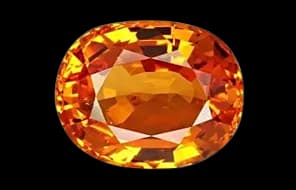
Nigerian Spessartite
Nigerian Spessartite is prized for vivid orange to reddish-orange color, strong brilliance, and excellent durability, making it a distinctive choice for fine jewelry.
Nigerian Spessartite is a variety of spessartine garnet, a manganese-aluminium member of the garnet mineral group. Its chemical composition is manganese aluminium silicate, Mn3Al2(SiO4)3. Like other garnets, it crystallizes in the cubic system and has a vitreous luster, with a Mohs hardness of about 7 to 7.5 and no cleavage, making it reasonably durable for jewelry.
The name Nigerian Spessartite refers to material mined in Nigeria rather than to a separate mineral species. Nigerian material is especially appreciated for bright orange, reddish-orange, and occasionally yellowish-orange colors. Fine stones can show intense saturation and lively brilliance because of their relatively high refractive index. Color is influenced primarily by manganese and can range from pure orange to deeper orange-red tones.
Spessartite garnet forms in geological environments associated with granitic and metamorphic rocks, where manganese-rich conditions allow the garnet to crystallize. Nigeria became an important source of attractive orange spessartite, adding to the gemstone's prominence in the international colored-stone market. Nigerian stones are particularly valued when they combine strong saturation, good transparency, attractive cutting, and larger size.
Historically, garnet has been used as a gemstone for thousands of years, while modern Nigerian Spessartite has become popular among collectors and jewelry buyers seeking vivid orange gemstones. It is commonly fashioned into faceted rings, earrings, pendants, bracelets, and statement pieces. Its combination of color, brilliance, durability, and distinctive African origin makes natural Nigerian Spessartite appealing to both jewelry enthusiasts and collectors.
For buyers, the most important distinction is between an attractive natural stone and a stone whose appearance is being overstated through marketing. A quality Nigerian Spessartite should be evaluated by its actual color, clarity, cut, carat weight, origin documentation where available, and any treatments disclosed by the seller.
- Mineral Family
- Garnet
- Chemical Formula
- Mn3Al2(SiO4)3
- Mohs Hardness
- 7 - 7.5
- Refractive Index
- 1.79 - 1.81
- Specific Gravity
- 4.12 - 4.20
- Cleavage
- None
- Crystal System
- Cubic
- Luster
- Vitreous
- Color Range
- Orange, Red, Yellow
When buying Nigerian Spessartite, begin with color. Strong, vivid orange and reddish-orange hues are generally the most sought after, particularly when the color remains attractive under different lighting conditions. Avoid judging a stone from heavily edited photographs alone; request natural-light images or video when possible.
Clarity is also important because transparent, eye-clean material allows more light to return through the stone. Minor inclusions can occur naturally and do not automatically indicate poor quality, but prominent inclusions that reduce transparency or durability can affect value.
Cut has a major influence on brilliance. A well-proportioned faceted stone should return light effectively without obvious dark areas or excessive windowing. Carat weight also affects price, but larger stones are not automatically more valuable if their color, clarity, or cut is weak.
Origin can add interest and collector appeal, but a Nigerian origin claim should be supported when it is presented as a significant value factor. A reputable laboratory report may identify the gemstone and, where the laboratory has sufficient evidence, provide an origin opinion. Certification is particularly useful for higher-value stones.
Ask the seller whether the gemstone is natural, laboratory-grown, or treated. Natural Nigerian Spessartite is mined material, while synthetic spessartine can exist as laboratory-created material and should not be represented as natural. Treatments should be disclosed clearly. Because garnet varieties can be difficult to distinguish visually, independent laboratory testing is advisable for expensive purchases.
Price depends on color saturation, hue, clarity, cut quality, carat weight, origin, rarity, treatment status, and overall beauty. For anyone planning to buy Spessartite online, compare several stones using standardized photographs, request treatment and origin information, check the seller's return policy, and obtain an independent certificate when the purchase is significant.
Nigerian Spessartite is suitable for regular jewelry use when handled thoughtfully. Clean it with lukewarm water, a small amount of mild soap, and a soft brush or cloth. Rinse thoroughly and dry with a soft cloth.
Store the gemstone separately from harder materials to reduce the risk of scratches. A fabric-lined jewelry box or individual soft pouch is preferable to storing loose stones together.
Although its Mohs hardness of 7 to 7.5 provides good everyday durability, rings and bracelets receive more impact than earrings and pendants. Remove Spessartite jewelry before strenuous activities, household work, or situations where the stone could receive a hard knock.
Avoid harsh chemicals, abrasive cleaners, sudden temperature changes, and ultrasonic or steam cleaning unless a qualified gemologist has confirmed that the particular stone and its inclusions are suitable. If the gemstone has a visible fracture or unusual inclusion, choose gentle cleaning methods.
Nigerian Spessartite is a variety of spessartine garnet, a manganese-aluminium member of the garnet mineral group. Its chemical composition is manganese aluminium silicate, Mn3Al2(SiO4)3. Like other garnets, it crystallizes in the cubic system and has a vitreous luster, with a Mohs hardness of about 7 to 7.5 and no cleavage, making it reasonably durable for jewelry.
The name Nigerian Spessartite refers to material mined in Nigeria rather than to a separate mineral species. Nigerian material is especially appreciated for bright orange, reddish-orange, and occasionally yellowish-orange colors. Fine stones can show intense saturation and lively brilliance because of their relatively high refractive index. Color is influenced primarily by manganese and can range from pure orange to deeper orange-red tones.
Spessartite garnet forms in geological environments associated with granitic and metamorphic rocks, where manganese-rich conditions allow the garnet to crystallize. Nigeria became an important source of attractive orange spessartite, adding to the gemstone's prominence in the international colored-stone market. Nigerian stones are particularly valued when they combine strong saturation, good transparency, attractive cutting, and larger size.
Historically, garnet has been used as a gemstone for thousands of years, while modern Nigerian Spessartite has become popular among collectors and jewelry buyers seeking vivid orange gemstones. It is commonly fashioned into faceted rings, earrings, pendants, bracelets, and statement pieces. Its combination of color, brilliance, durability, and distinctive African origin makes natural Nigerian Spessartite appealing to both jewelry enthusiasts and collectors.
For buyers, the most important distinction is between an attractive natural stone and a stone whose appearance is being overstated through marketing. A quality Nigerian Spessartite should be evaluated by its actual color, clarity, cut, carat weight, origin documentation where available, and any treatments disclosed by the seller.
- Mineral Family
- Garnet
- Chemical Formula
- Mn3Al2(SiO4)3
- Mohs Hardness
- 7 - 7.5
- Refractive Index
- 1.79 - 1.81
- Specific Gravity
- 4.12 - 4.20
- Cleavage
- None
- Crystal System
- Cubic
- Luster
- Vitreous
- Color Range
- Orange, Red, Yellow
When buying Nigerian Spessartite, begin with color. Strong, vivid orange and reddish-orange hues are generally the most sought after, particularly when the color remains attractive under different lighting conditions. Avoid judging a stone from heavily edited photographs alone; request natural-light images or video when possible.
Clarity is also important because transparent, eye-clean material allows more light to return through the stone. Minor inclusions can occur naturally and do not automatically indicate poor quality, but prominent inclusions that reduce transparency or durability can affect value.
Cut has a major influence on brilliance. A well-proportioned faceted stone should return light effectively without obvious dark areas or excessive windowing. Carat weight also affects price, but larger stones are not automatically more valuable if their color, clarity, or cut is weak.
Origin can add interest and collector appeal, but a Nigerian origin claim should be supported when it is presented as a significant value factor. A reputable laboratory report may identify the gemstone and, where the laboratory has sufficient evidence, provide an origin opinion. Certification is particularly useful for higher-value stones.
Ask the seller whether the gemstone is natural, laboratory-grown, or treated. Natural Nigerian Spessartite is mined material, while synthetic spessartine can exist as laboratory-created material and should not be represented as natural. Treatments should be disclosed clearly. Because garnet varieties can be difficult to distinguish visually, independent laboratory testing is advisable for expensive purchases.
Price depends on color saturation, hue, clarity, cut quality, carat weight, origin, rarity, treatment status, and overall beauty. For anyone planning to buy Spessartite online, compare several stones using standardized photographs, request treatment and origin information, check the seller's return policy, and obtain an independent certificate when the purchase is significant.
Nigerian Spessartite is suitable for regular jewelry use when handled thoughtfully. Clean it with lukewarm water, a small amount of mild soap, and a soft brush or cloth. Rinse thoroughly and dry with a soft cloth.
Store the gemstone separately from harder materials to reduce the risk of scratches. A fabric-lined jewelry box or individual soft pouch is preferable to storing loose stones together.
Although its Mohs hardness of 7 to 7.5 provides good everyday durability, rings and bracelets receive more impact than earrings and pendants. Remove Spessartite jewelry before strenuous activities, household work, or situations where the stone could receive a hard knock.
Avoid harsh chemicals, abrasive cleaners, sudden temperature changes, and ultrasonic or steam cleaning unless a qualified gemologist has confirmed that the particular stone and its inclusions are suitable. If the gemstone has a visible fracture or unusual inclusion, choose gentle cleaning methods.
Nigerian Spessartite for Sale
No gems found
Try broadening your search or adjusting your filters.
Have a gem of your own? List it free - no fees