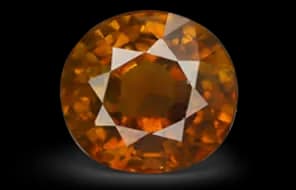
Grossular Garnet
Grossular Garnet is a versatile garnet prized for its fresh greens, warm oranges and distinctive varieties, including rare Tsavorite and classic Hessonite.
Grossular Garnet is a calcium-aluminum member of the garnet mineral group, with the chemical formula Ca3Al2(SiO4)3. It crystallizes in the cubic system and typically has a vitreous to adamantine luster, no cleavage, a Mohs hardness of about 6.5–7.5, a refractive index of approximately 1.730–1.760, and a specific gravity around 3.55–3.73. Grossular is one of the most color-diverse garnets. Its colors can range from colorless and white through yellow, orange, brown, pink and red to attractive green. Color is influenced by trace elements and variations in composition. Two of its best-known gem varieties are Hessonite, recognized for its warm honey, orange and cinnamon-brown tones, and Tsavorite, valued for its vivid green color. Other grossular materials include mint-green and colorless examples, while some stones occur in unusual pink, red or yellow-green hues. Grossular commonly forms in calcium-rich metamorphic environments, particularly rocks affected by contact metamorphism and skarn formation. Garnets have been used and traded for centuries, while modern interest in gem-quality Grossular grew strongly through the recognition of distinctive varieties such as Hessonite and Tsavorite. Tsavorite became particularly important in the modern gem trade after high-quality green grossular deposits were recognized in East Africa during the twentieth century. Today, Grossular Garnet is used in rings, earrings, pendants and bracelets. Its combination of attractive color, good durability and broad range of appearances makes it appealing to both jewelry buyers and collectors. Buyers may choose classic Hessonite for its warm character, vivid Tsavorite for its saturated green color, or less common grossular colors for a more distinctive jewelry design. The best stones combine attractive color, good transparency, pleasing proportions and strong overall visual appeal.
- Mineral Family
- Garnet
- Chemical Formula
- Ca3Al2(SiO4)3
- Mohs Hardness
- 6.5 - 7.5
- Refractive Index
- 1.730 - 1.760
- Specific Gravity
- 3.55 - 3.73
- Cleavage
- None
- Crystal System
- Cubic
- Luster
- Vitreous
- Color Range
- Green, Yellow, Orange, Pink, Red, White
When buying Grossular Garnet, begin with color. Look for attractive saturation and even distribution, while recognizing that the ideal appearance depends on the variety and personal preference. Vivid green is especially important in Tsavorite, while Hessonite is commonly appreciated for rich golden-orange to cinnamon-brown tones. Clarity should be evaluated in relation to the stone's size and variety. Grossular can contain natural inclusions, and some varieties have characteristic internal features that can help identify them. A clean appearance is generally more valuable when the color remains strong and lively. Cut has a major effect on brilliance, color presentation and face-up appearance. Well-proportioned faceting can make a Grossular Garnet appear brighter and more attractive, while overly deep or poorly cut stones may look darker or less lively. Carat weight matters, but price does not rise at a fixed rate with size. Fine color, clarity, rarity and variety can have a greater effect on value. Origin can also influence price, particularly for fine Tsavorite and other material with recognized geographic provenance, but origin should be supported by credible documentation rather than assumed from appearance alone. Grossular Garnet is generally encountered as a natural gemstone, and treatment disclosure remains important. Do not assume that a stone is untreated simply because it looks natural; ask the seller specifically about treatments. Laboratory-grown or synthetic garnet materials also exist, so buyers should confirm that a stone is natural Grossular when that is what they intend to purchase. For higher-value stones, an independent gemological report can help confirm species, variety, natural or laboratory-grown status and detectable treatments. Authenticity should be assessed using gemological testing rather than color alone. Price is influenced by variety, color, clarity, transparency, carat weight, cut quality, origin, rarity, treatment status and certification. A reliable seller should provide clear information about what is being sold and disclose any known treatments or laboratory findings.
Grossular Garnet is suitable for many types of jewelry, but its moderate-to-good hardness means reasonable care is still important. For routine cleaning, use lukewarm water, mild soap and a soft brush or lint-free cloth. Rinse thoroughly and dry gently. Avoid harsh chemicals, abrasive cleaners and sudden temperature changes. Ultrasonic or steam cleaning should be avoided when the stone has significant inclusions, fractures or uncertain stability. For rings and bracelets, remove Grossular Garnet jewelry before activities that could expose it to hard impacts, abrasive surfaces or chemicals. Store each piece separately in a soft pouch or lined jewelry compartment to reduce scratching and contact with other gemstones or metal. Regularly inspect settings, especially on rings worn frequently. With sensible handling and proper cleaning, Grossular Garnet can remain an attractive choice for everyday and occasion jewelry.
Grossular Garnet is a calcium-aluminum member of the garnet mineral group, with the chemical formula Ca3Al2(SiO4)3. It crystallizes in the cubic system and typically has a vitreous to adamantine luster, no cleavage, a Mohs hardness of about 6.5–7.5, a refractive index of approximately 1.730–1.760, and a specific gravity around 3.55–3.73. Grossular is one of the most color-diverse garnets. Its colors can range from colorless and white through yellow, orange, brown, pink and red to attractive green. Color is influenced by trace elements and variations in composition. Two of its best-known gem varieties are Hessonite, recognized for its warm honey, orange and cinnamon-brown tones, and Tsavorite, valued for its vivid green color. Other grossular materials include mint-green and colorless examples, while some stones occur in unusual pink, red or yellow-green hues. Grossular commonly forms in calcium-rich metamorphic environments, particularly rocks affected by contact metamorphism and skarn formation. Garnets have been used and traded for centuries, while modern interest in gem-quality Grossular grew strongly through the recognition of distinctive varieties such as Hessonite and Tsavorite. Tsavorite became particularly important in the modern gem trade after high-quality green grossular deposits were recognized in East Africa during the twentieth century. Today, Grossular Garnet is used in rings, earrings, pendants and bracelets. Its combination of attractive color, good durability and broad range of appearances makes it appealing to both jewelry buyers and collectors. Buyers may choose classic Hessonite for its warm character, vivid Tsavorite for its saturated green color, or less common grossular colors for a more distinctive jewelry design. The best stones combine attractive color, good transparency, pleasing proportions and strong overall visual appeal.
- Mineral Family
- Garnet
- Chemical Formula
- Ca3Al2(SiO4)3
- Mohs Hardness
- 6.5 - 7.5
- Refractive Index
- 1.730 - 1.760
- Specific Gravity
- 3.55 - 3.73
- Cleavage
- None
- Crystal System
- Cubic
- Luster
- Vitreous
- Color Range
- Green, Yellow, Orange, Pink, Red, White
When buying Grossular Garnet, begin with color. Look for attractive saturation and even distribution, while recognizing that the ideal appearance depends on the variety and personal preference. Vivid green is especially important in Tsavorite, while Hessonite is commonly appreciated for rich golden-orange to cinnamon-brown tones. Clarity should be evaluated in relation to the stone's size and variety. Grossular can contain natural inclusions, and some varieties have characteristic internal features that can help identify them. A clean appearance is generally more valuable when the color remains strong and lively. Cut has a major effect on brilliance, color presentation and face-up appearance. Well-proportioned faceting can make a Grossular Garnet appear brighter and more attractive, while overly deep or poorly cut stones may look darker or less lively. Carat weight matters, but price does not rise at a fixed rate with size. Fine color, clarity, rarity and variety can have a greater effect on value. Origin can also influence price, particularly for fine Tsavorite and other material with recognized geographic provenance, but origin should be supported by credible documentation rather than assumed from appearance alone. Grossular Garnet is generally encountered as a natural gemstone, and treatment disclosure remains important. Do not assume that a stone is untreated simply because it looks natural; ask the seller specifically about treatments. Laboratory-grown or synthetic garnet materials also exist, so buyers should confirm that a stone is natural Grossular when that is what they intend to purchase. For higher-value stones, an independent gemological report can help confirm species, variety, natural or laboratory-grown status and detectable treatments. Authenticity should be assessed using gemological testing rather than color alone. Price is influenced by variety, color, clarity, transparency, carat weight, cut quality, origin, rarity, treatment status and certification. A reliable seller should provide clear information about what is being sold and disclose any known treatments or laboratory findings.
Grossular Garnet is suitable for many types of jewelry, but its moderate-to-good hardness means reasonable care is still important. For routine cleaning, use lukewarm water, mild soap and a soft brush or lint-free cloth. Rinse thoroughly and dry gently. Avoid harsh chemicals, abrasive cleaners and sudden temperature changes. Ultrasonic or steam cleaning should be avoided when the stone has significant inclusions, fractures or uncertain stability. For rings and bracelets, remove Grossular Garnet jewelry before activities that could expose it to hard impacts, abrasive surfaces or chemicals. Store each piece separately in a soft pouch or lined jewelry compartment to reduce scratching and contact with other gemstones or metal. Regularly inspect settings, especially on rings worn frequently. With sensible handling and proper cleaning, Grossular Garnet can remain an attractive choice for everyday and occasion jewelry.
Grossular Garnet for Sale
No gems found
Try broadening your search or adjusting your filters.
Have a gem of your own? List it free - no fees