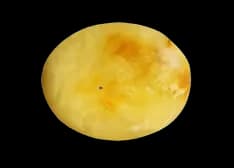
Yellow Amber
Yellow Amber gemstone is fossilized tree resin prized for its warm golden glow, exceptional lightness, ancient inclusions, and distinctive organic character.
Yellow Amber is an organic gemstone formed from tree resin that was buried, preserved, and gradually fossilized over millions of years. Unlike mineral gemstones, Amber has no crystal structure and is valued for its natural warmth, light weight, and fascinating inclusions. Its commonly represented chemical composition is C10H16O, with a refractive index of about 1.540, specific gravity around 1.08, Mohs hardness of 2.0 to 2.5, and resinous luster. Amber is typically transparent to opaque and is best known for yellow, golden, honey, orange, and brownish tones. Yellow Amber refers particularly to material displaying bright yellow to golden coloration, sometimes with cloudy or internally textured appearances. Amber deposits occur in many parts of the world, with the Baltic region historically being one of the most important sources. Significant material is also known from the Dominican Republic, Myanmar, Mexico, Indonesia, Ethiopia, and Vietnam. Some specimens contain preserved insects, plant matter, feathers, flowers, and other organic inclusions, making them valuable natural records of ancient ecosystems. A famous historical example is the Amber Room, an elaborate 18th-century interior decorated with large quantities of Amber. Amber has been traded and worn for thousands of years across Europe and Asia, valued as an ornamental material as well as a substance of cultural and historical importance. Today, Yellow Amber is commonly fashioned into beads, cabochons, freeform polished pieces, pendants, earrings, bracelets, necklaces, and occasional rings. Because Amber is soft and lightweight, it is especially comfortable for larger statement jewelry. Buyers value natural Yellow Amber for its distinctive golden color, organic origin, interesting inclusions, historical importance, and individuality. The term Yellow Amber gemstone describes a natural organic gem material rather than a mineral crystal.
- Mineral Family
- Amber
- Chemical Formula
- C10H16O
- Mohs Hardness
- 2.0 - 2.5
- Refractive Index
- 1.540
- Specific Gravity
- 1.08
- Cleavage
- None
- Crystal System
- Amorphous
- Luster
- Resinous
- Color Range
- Yellow, Orange
When buying Yellow Amber online, authenticity and overall character should be considered before size alone. Color: Look for attractive yellow, golden, honey, or warm orange tones with an even or naturally interesting appearance. Color preference is subjective, but strong, appealing bodycolor can increase desirability. Clarity: Amber may range from transparent to opaque. Clear material can be attractive, while natural inclusions such as insects, plants, air bubbles, and flow structures can add significant collector interest. Cut: Amber is commonly polished as cabochons, beads, freeform shapes, and smooth ornamental pieces rather than precision-faceted cuts. The best cut should preserve the material's natural color, transparency, and inclusions. Carat: Amber has a very low specific gravity, so a large Amber piece can weigh considerably less than a similarly sized mineral gemstone. Size should therefore be evaluated alongside color, clarity, inclusions, craftsmanship, and condition. Origin: Baltic Amber has major historical and commercial importance, while Dominican, Myanmar, Mexican, Indonesian, Ethiopian, and Vietnamese Amber can also be significant depending on material quality and characteristics. Origin alone does not guarantee higher value. Treatments: Ask whether the Amber is untreated, heated, clarified, dyed, reconstructed, pressed, or otherwise modified. Treatments and enhancements should be disclosed because they can affect appearance, durability, rarity, and value. Natural vs lab-grown: Natural Amber is fossilized organic resin. It should not be confused with copal, pressed or reconstructed Amber, or synthetic resin and plastic imitations. Laboratory-created synthetic Amber is not equivalent to naturally fossilized Amber in origin or collector significance. Certification: For valuable or unusual specimens, request an independent gemological laboratory report that identifies the material and, where appropriate, discloses treatments or reconstruction. Authenticity: Amber is lightweight and can develop static electricity when rubbed, but simple home tests are not definitive and some imitations can produce misleading results. Professional gemological testing, especially advanced analytical methods such as FTIR when appropriate, is a safer choice for valuable purchases. Price factors: Value is influenced by color, transparency, inclusions, size, origin, condition, workmanship, treatment status, and whether the material is natural or reconstructed. Rare and visually compelling inclusions can command strong collector interest. When buying Yellow Amber jewelry, prioritize transparent disclosure, accurate descriptions, and reputable sellers over claims about spiritual or health benefits.
Yellow Amber requires more careful handling than most jewelry gemstones because its Mohs hardness is only 2.0 to 2.5. Cleaning: Wipe Amber gently with a soft, slightly damp cloth and dry it immediately. For routine cleaning, avoid aggressive brushing and abrasive materials. Storage: Store Yellow Amber separately from harder gemstones and metal jewelry that could scratch its surface. A soft pouch or lined jewelry box is ideal. Everyday wear: Amber can be comfortable for everyday jewelry when worn carefully, particularly in pendants and earrings. Rings and bracelets receive more knocks and scratches, so they require greater caution. Things to avoid: Keep Amber away from prolonged heat, strong chemicals, solvents, perfumes, cosmetics, harsh cleaners, and prolonged soaking. Avoid ultrasonic and steam cleaners. Do not expose Amber to unnecessary high temperatures, as heat can damage or alter the material. Handle polished surfaces gently to preserve their natural luster and appearance.
Yellow Amber is an organic gemstone formed from tree resin that was buried, preserved, and gradually fossilized over millions of years. Unlike mineral gemstones, Amber has no crystal structure and is valued for its natural warmth, light weight, and fascinating inclusions. Its commonly represented chemical composition is C10H16O, with a refractive index of about 1.540, specific gravity around 1.08, Mohs hardness of 2.0 to 2.5, and resinous luster. Amber is typically transparent to opaque and is best known for yellow, golden, honey, orange, and brownish tones. Yellow Amber refers particularly to material displaying bright yellow to golden coloration, sometimes with cloudy or internally textured appearances. Amber deposits occur in many parts of the world, with the Baltic region historically being one of the most important sources. Significant material is also known from the Dominican Republic, Myanmar, Mexico, Indonesia, Ethiopia, and Vietnam. Some specimens contain preserved insects, plant matter, feathers, flowers, and other organic inclusions, making them valuable natural records of ancient ecosystems. A famous historical example is the Amber Room, an elaborate 18th-century interior decorated with large quantities of Amber. Amber has been traded and worn for thousands of years across Europe and Asia, valued as an ornamental material as well as a substance of cultural and historical importance. Today, Yellow Amber is commonly fashioned into beads, cabochons, freeform polished pieces, pendants, earrings, bracelets, necklaces, and occasional rings. Because Amber is soft and lightweight, it is especially comfortable for larger statement jewelry. Buyers value natural Yellow Amber for its distinctive golden color, organic origin, interesting inclusions, historical importance, and individuality. The term Yellow Amber gemstone describes a natural organic gem material rather than a mineral crystal.
- Mineral Family
- Amber
- Chemical Formula
- C10H16O
- Mohs Hardness
- 2.0 - 2.5
- Refractive Index
- 1.540
- Specific Gravity
- 1.08
- Cleavage
- None
- Crystal System
- Amorphous
- Luster
- Resinous
- Color Range
- Yellow, Orange
When buying Yellow Amber online, authenticity and overall character should be considered before size alone. Color: Look for attractive yellow, golden, honey, or warm orange tones with an even or naturally interesting appearance. Color preference is subjective, but strong, appealing bodycolor can increase desirability. Clarity: Amber may range from transparent to opaque. Clear material can be attractive, while natural inclusions such as insects, plants, air bubbles, and flow structures can add significant collector interest. Cut: Amber is commonly polished as cabochons, beads, freeform shapes, and smooth ornamental pieces rather than precision-faceted cuts. The best cut should preserve the material's natural color, transparency, and inclusions. Carat: Amber has a very low specific gravity, so a large Amber piece can weigh considerably less than a similarly sized mineral gemstone. Size should therefore be evaluated alongside color, clarity, inclusions, craftsmanship, and condition. Origin: Baltic Amber has major historical and commercial importance, while Dominican, Myanmar, Mexican, Indonesian, Ethiopian, and Vietnamese Amber can also be significant depending on material quality and characteristics. Origin alone does not guarantee higher value. Treatments: Ask whether the Amber is untreated, heated, clarified, dyed, reconstructed, pressed, or otherwise modified. Treatments and enhancements should be disclosed because they can affect appearance, durability, rarity, and value. Natural vs lab-grown: Natural Amber is fossilized organic resin. It should not be confused with copal, pressed or reconstructed Amber, or synthetic resin and plastic imitations. Laboratory-created synthetic Amber is not equivalent to naturally fossilized Amber in origin or collector significance. Certification: For valuable or unusual specimens, request an independent gemological laboratory report that identifies the material and, where appropriate, discloses treatments or reconstruction. Authenticity: Amber is lightweight and can develop static electricity when rubbed, but simple home tests are not definitive and some imitations can produce misleading results. Professional gemological testing, especially advanced analytical methods such as FTIR when appropriate, is a safer choice for valuable purchases. Price factors: Value is influenced by color, transparency, inclusions, size, origin, condition, workmanship, treatment status, and whether the material is natural or reconstructed. Rare and visually compelling inclusions can command strong collector interest. When buying Yellow Amber jewelry, prioritize transparent disclosure, accurate descriptions, and reputable sellers over claims about spiritual or health benefits.
Yellow Amber requires more careful handling than most jewelry gemstones because its Mohs hardness is only 2.0 to 2.5. Cleaning: Wipe Amber gently with a soft, slightly damp cloth and dry it immediately. For routine cleaning, avoid aggressive brushing and abrasive materials. Storage: Store Yellow Amber separately from harder gemstones and metal jewelry that could scratch its surface. A soft pouch or lined jewelry box is ideal. Everyday wear: Amber can be comfortable for everyday jewelry when worn carefully, particularly in pendants and earrings. Rings and bracelets receive more knocks and scratches, so they require greater caution. Things to avoid: Keep Amber away from prolonged heat, strong chemicals, solvents, perfumes, cosmetics, harsh cleaners, and prolonged soaking. Avoid ultrasonic and steam cleaners. Do not expose Amber to unnecessary high temperatures, as heat can damage or alter the material. Handle polished surfaces gently to preserve their natural luster and appearance.
Yellow Amber for Sale
No gems found
Try broadening your search or adjusting your filters.
Have a gem of your own? List it free - no fees