Amber
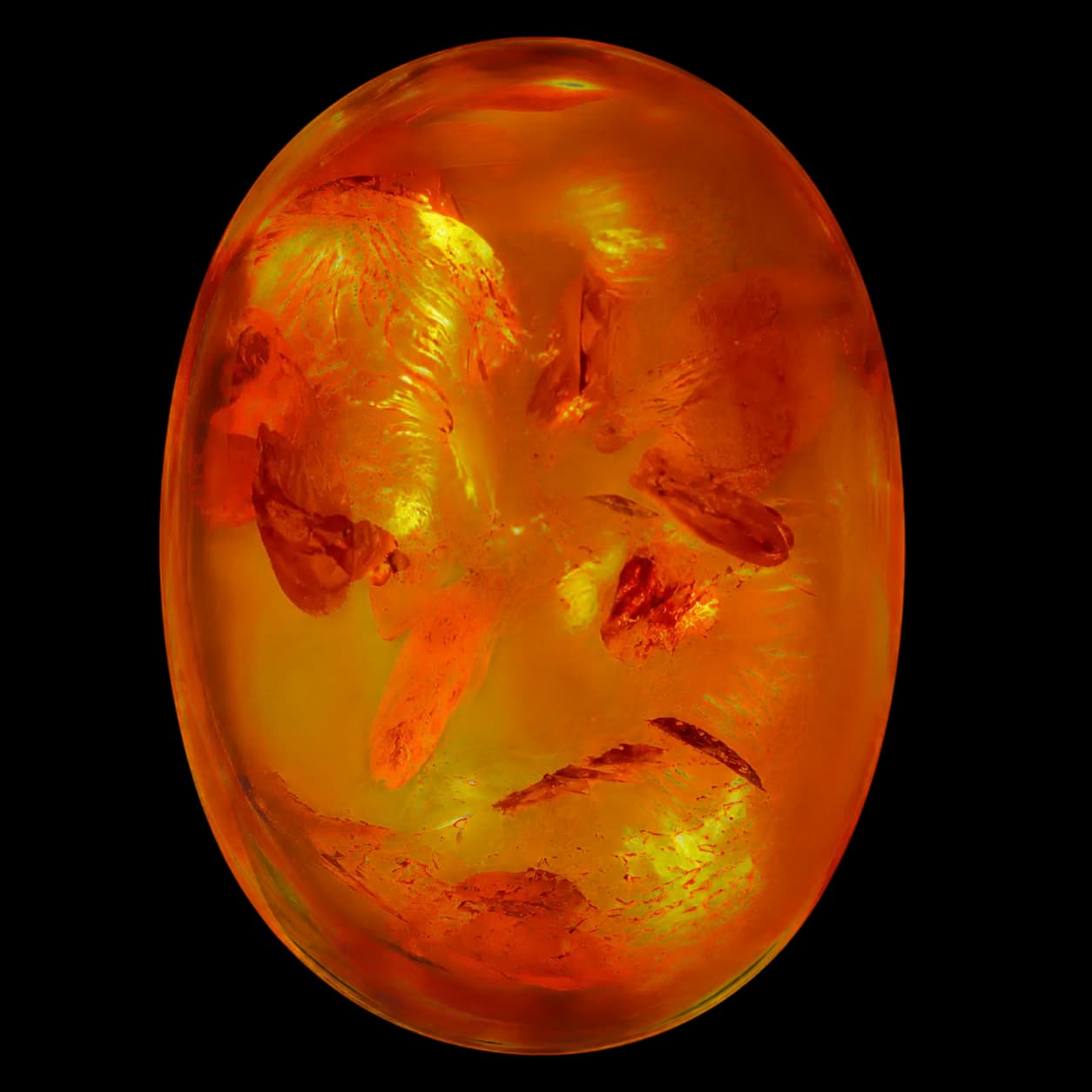
Amber is a remarkable organic gemstone formed from fossilized tree resin millions of years ago. Valued for its warm glow, fascinating inclusions, and lightweight comfort, natural Amber is treasured by collectors and jewelry lovers alike.
Amber is one of the world's most distinctive gemstones because it is not a mineral but fossilized tree resin that has hardened over millions of years. Formed primarily from ancient conifer forests, Amber preserves a unique record of prehistoric ecosystems and occasionally contains naturally trapped insects, plant material, or air bubbles that make each piece truly one of a kind.
Unlike crystalline gemstones, Amber is an amorphous organic material composed mainly of carbon, hydrogen, and oxygen. It has a Mohs hardness of 2–2.5, making it lightweight and comfortable for everyday jewelry while requiring thoughtful care.
Amber occurs in a wide range of natural colors including golden yellow, honey, orange, reddish cherry, creamy white, green, blue, and black. Baltic Amber is the most widely known variety and contains relatively high levels of succinic acid, while Dominican Amber is celebrated for its exceptional transparency and rare blue fluorescence. Burmese (Myanmar), Indonesian, Mexican, and Ukrainian Amber are also highly regarded by collectors.
Throughout history, Amber has been admired by civilizations including the Egyptians, Greeks, Romans, Vikings, and peoples along the ancient Amber Road that connected Northern Europe with the Mediterranean. Today it remains popular in rings, pendants, necklaces, earrings, bracelets, and artisan jewelry where its warm appearance complements both modern and vintage designs.
Collectors value Amber for its natural inclusions, geological history, rarity of certain colors, craftsmanship, and authentic origin. Every natural Amber gemstone represents a small piece of Earth's prehistoric past, making it unlike any other gemstone available today.
- Mineral Family
- Amber
- Chemical Formula
- Variable organic material composed primarily of carbon, hydrogen, and oxygen
- Mohs Hardness
- 2 - 2.5
- Refractive Index
- 1.539 - 1.545
- Specific Gravity
- 1.05 - 1.10
- Cleavage
- None
- Crystal System
- Amorphous
- Luster
- Resinous
- Color Range
- Yellow, Orange, Red, White, Blue, Green, Black
When buying natural Amber, prioritize authenticity before appearance, as imitations made from plastic, copal, glass, or synthetic resins are common.
Color is one of the most important value factors. Rich honey-yellow and golden Amber remain the most popular, while naturally occurring blue, green, cherry-red, and white varieties are significantly rarer and often command premium prices.
Clarity varies from completely transparent to heavily opaque. Transparent Amber with attractive natural inclusions, especially ancient insects or plant fragments, is highly collectible. Cloudiness caused by microscopic bubbles may also be desirable depending on the variety.
Amber is usually fashioned into cabochons, beads, carvings, and freeform shapes rather than faceted gemstones because of its softness. Good polish and balanced proportions improve overall appearance.
Larger pieces are considerably rarer than small specimens, particularly when they remain free of fractures. Weight is measured in both carats and grams depending on the intended use.
Origin can significantly influence value. Baltic, Dominican, Burmese, Mexican, and Indonesian Amber each possess distinctive characteristics appreciated by different buyers.
Natural Amber is generally untreated, although heating or clarification may occasionally improve transparency. Some material may be pressed from smaller Amber fragments to create reconstructed Amber, while young tree resin known as copal should not be confused with true Amber. Laboratory-grown Amber is uncommon, but synthetic substitutes exist.
Always purchase certified Amber from reputable sellers. Independent gemological certification helps verify authenticity and discloses treatments or reconstructed material. Price depends on authenticity, origin, color, clarity, rarity, inclusions, size, craftsmanship, and certification.
Amber is considerably softer than most gemstones and should be handled with care.
Clean Amber using lukewarm water, mild soap, and a soft microfiber cloth. Avoid ultrasonic cleaners, steam cleaning, abrasive brushes, and harsh chemicals, as these may damage the surface.
Remove Amber jewelry before exercising, swimming, bathing, gardening, or using household cleaning products. Prolonged exposure to heat, direct sunlight, perfumes, cosmetics, and solvents can gradually affect its appearance.
Store Amber separately in a soft pouch or lined jewelry box to prevent scratches from harder gemstones or metals. Regular gentle cleaning and careful storage will help preserve its natural beauty for many years.
Amber is one of the world's most distinctive gemstones because it is not a mineral but fossilized tree resin that has hardened over millions of years. Formed primarily from ancient conifer forests, Amber preserves a unique record of prehistoric ecosystems and occasionally contains naturally trapped insects, plant material, or air bubbles that make each piece truly one of a kind.
Unlike crystalline gemstones, Amber is an amorphous organic material composed mainly of carbon, hydrogen, and oxygen. It has a Mohs hardness of 2–2.5, making it lightweight and comfortable for everyday jewelry while requiring thoughtful care.
Amber occurs in a wide range of natural colors including golden yellow, honey, orange, reddish cherry, creamy white, green, blue, and black. Baltic Amber is the most widely known variety and contains relatively high levels of succinic acid, while Dominican Amber is celebrated for its exceptional transparency and rare blue fluorescence. Burmese (Myanmar), Indonesian, Mexican, and Ukrainian Amber are also highly regarded by collectors.
Throughout history, Amber has been admired by civilizations including the Egyptians, Greeks, Romans, Vikings, and peoples along the ancient Amber Road that connected Northern Europe with the Mediterranean. Today it remains popular in rings, pendants, necklaces, earrings, bracelets, and artisan jewelry where its warm appearance complements both modern and vintage designs.
Collectors value Amber for its natural inclusions, geological history, rarity of certain colors, craftsmanship, and authentic origin. Every natural Amber gemstone represents a small piece of Earth's prehistoric past, making it unlike any other gemstone available today.
- Mineral Family
- Amber
- Chemical Formula
- Variable organic material composed primarily of carbon, hydrogen, and oxygen
- Mohs Hardness
- 2 - 2.5
- Refractive Index
- 1.539 - 1.545
- Specific Gravity
- 1.05 - 1.10
- Cleavage
- None
- Crystal System
- Amorphous
- Luster
- Resinous
- Color Range
- Yellow, Orange, Red, White, Blue, Green, Black
When buying natural Amber, prioritize authenticity before appearance, as imitations made from plastic, copal, glass, or synthetic resins are common.
Color is one of the most important value factors. Rich honey-yellow and golden Amber remain the most popular, while naturally occurring blue, green, cherry-red, and white varieties are significantly rarer and often command premium prices.
Clarity varies from completely transparent to heavily opaque. Transparent Amber with attractive natural inclusions, especially ancient insects or plant fragments, is highly collectible. Cloudiness caused by microscopic bubbles may also be desirable depending on the variety.
Amber is usually fashioned into cabochons, beads, carvings, and freeform shapes rather than faceted gemstones because of its softness. Good polish and balanced proportions improve overall appearance.
Larger pieces are considerably rarer than small specimens, particularly when they remain free of fractures. Weight is measured in both carats and grams depending on the intended use.
Origin can significantly influence value. Baltic, Dominican, Burmese, Mexican, and Indonesian Amber each possess distinctive characteristics appreciated by different buyers.
Natural Amber is generally untreated, although heating or clarification may occasionally improve transparency. Some material may be pressed from smaller Amber fragments to create reconstructed Amber, while young tree resin known as copal should not be confused with true Amber. Laboratory-grown Amber is uncommon, but synthetic substitutes exist.
Always purchase certified Amber from reputable sellers. Independent gemological certification helps verify authenticity and discloses treatments or reconstructed material. Price depends on authenticity, origin, color, clarity, rarity, inclusions, size, craftsmanship, and certification.
Amber is considerably softer than most gemstones and should be handled with care.
Clean Amber using lukewarm water, mild soap, and a soft microfiber cloth. Avoid ultrasonic cleaners, steam cleaning, abrasive brushes, and harsh chemicals, as these may damage the surface.
Remove Amber jewelry before exercising, swimming, bathing, gardening, or using household cleaning products. Prolonged exposure to heat, direct sunlight, perfumes, cosmetics, and solvents can gradually affect its appearance.
Store Amber separately in a soft pouch or lined jewelry box to prevent scratches from harder gemstones or metals. Regular gentle cleaning and careful storage will help preserve its natural beauty for many years.
Amber for Sale
No gems found
Try broadening your search or adjusting your filters.
Have a gem of your own? List it free - no fees