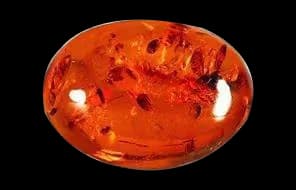
Brown Amber
Brown Amber gemstone combines warm earthy tones with the natural character of fossilized tree resin, making it a distinctive choice for jewelry and collectors.
Brown Amber is a warm-toned variety of amber, an organic gem material formed from fossilized prehistoric tree resin rather than a crystalline mineral. Amber is primarily composed of carbon, hydrogen, and oxygen, with a commonly cited chemical formula of C10H16O. It is amorphous, has a resinous luster, a refractive index of about 1.540, a specific gravity of about 1.08, and a Mohs hardness of 2.0-2.5. Brown Amber ranges from honey-brown and reddish brown to deeper earthy brown shades, sometimes with cloudy, transparent, translucent, or patterned appearances. Natural inclusions such as plant fragments, air bubbles, and insects can provide valuable evidence of its organic origin and add individuality. Amber deposits occur in several parts of the world, with Baltic amber being particularly well known, while important material has also been found in regions including the Dominican Republic, Myanmar, Sicily, and other areas. Amber has been valued and traded for thousands of years and has appeared in decorative objects, beads, carvings, and jewelry. Today, Brown Amber jewelry is commonly fashioned into cabochons, beads, polished free-form pieces, pendants, earrings, and statement designs. Buyers value it for its exceptionally light weight, warm appearance, natural inclusions, and connection to ancient forests and prehistoric ecosystems. Because amber is soft compared with most crystalline gemstones, it is best suited to jewelry designs that provide reasonable protection from abrasion.
- Mineral Family
- Amber
- Chemical Formula
- C10H16O
- Mohs Hardness
- 2.0-2.5
- Refractive Index
- 1.540
- Specific Gravity
- 1.08
- Cleavage
- None
- Crystal System
- Amorphous
- Luster
- Resinous
- Color Range
- Orange
When buying Brown Amber, color, clarity, inclusions, cut, size, origin, treatment, and authenticity should all be considered. Color ranges from light honey-brown and golden brown to reddish and dark brown, with attractive natural body color generally preferred according to personal taste. Clarity can range from transparent to opaque, and natural inclusions may increase collector interest when they are genuine and visually attractive. Amber is commonly cut as cabochons, beads, polished free-form shapes, and occasionally faceted pieces. Carat weight should be considered alongside dimensions because amber has a very low specific gravity and therefore weighs considerably less than many mineral gemstones of similar size. Origin can influence desirability and price, particularly when the locality is documented and the material has recognizable characteristics. Buyers should also ask whether the amber has been heated, clarified, dyed, pressed, filled, or otherwise treated. Natural amber should be distinguished from reconstructed or pressed amber, copal, and plastic imitations. Laboratory-grown amber is not generally the standard commercial category; therefore, sellers should clearly disclose whether material is natural, reconstructed, treated, or imitation. A reputable independent gemological report can help verify identity, treatments, and, where possible, provenance. Authenticity should not be judged from a single home test; professional testing is preferable, especially for valuable specimens. Price depends on color, transparency, size, inclusion quality, origin, treatment status, craftsmanship, and overall condition.
Brown Amber requires gentle care because its Mohs hardness of 2.0-2.5 makes it considerably softer than most jewelry gemstones. Clean it with a soft, damp cloth and, when necessary, mild soapy water, then dry it carefully. Avoid ultrasonic cleaners, steam cleaners, harsh chemicals, solvents, and prolonged exposure to strong heat. Store amber separately from harder gemstones to prevent scratches, ideally in a soft pouch or lined compartment. Avoid spraying perfume, hairspray, or cosmetics directly onto the stone. Remove Brown Amber jewelry before strenuous activities, household cleaning, bathing, or situations where it may experience impact or abrasion. With careful handling and appropriate storage, natural amber can retain its warm luster and distinctive character for many years.
Brown Amber is a warm-toned variety of amber, an organic gem material formed from fossilized prehistoric tree resin rather than a crystalline mineral. Amber is primarily composed of carbon, hydrogen, and oxygen, with a commonly cited chemical formula of C10H16O. It is amorphous, has a resinous luster, a refractive index of about 1.540, a specific gravity of about 1.08, and a Mohs hardness of 2.0-2.5. Brown Amber ranges from honey-brown and reddish brown to deeper earthy brown shades, sometimes with cloudy, transparent, translucent, or patterned appearances. Natural inclusions such as plant fragments, air bubbles, and insects can provide valuable evidence of its organic origin and add individuality. Amber deposits occur in several parts of the world, with Baltic amber being particularly well known, while important material has also been found in regions including the Dominican Republic, Myanmar, Sicily, and other areas. Amber has been valued and traded for thousands of years and has appeared in decorative objects, beads, carvings, and jewelry. Today, Brown Amber jewelry is commonly fashioned into cabochons, beads, polished free-form pieces, pendants, earrings, and statement designs. Buyers value it for its exceptionally light weight, warm appearance, natural inclusions, and connection to ancient forests and prehistoric ecosystems. Because amber is soft compared with most crystalline gemstones, it is best suited to jewelry designs that provide reasonable protection from abrasion.
- Mineral Family
- Amber
- Chemical Formula
- C10H16O
- Mohs Hardness
- 2.0-2.5
- Refractive Index
- 1.540
- Specific Gravity
- 1.08
- Cleavage
- None
- Crystal System
- Amorphous
- Luster
- Resinous
- Color Range
- Orange
When buying Brown Amber, color, clarity, inclusions, cut, size, origin, treatment, and authenticity should all be considered. Color ranges from light honey-brown and golden brown to reddish and dark brown, with attractive natural body color generally preferred according to personal taste. Clarity can range from transparent to opaque, and natural inclusions may increase collector interest when they are genuine and visually attractive. Amber is commonly cut as cabochons, beads, polished free-form shapes, and occasionally faceted pieces. Carat weight should be considered alongside dimensions because amber has a very low specific gravity and therefore weighs considerably less than many mineral gemstones of similar size. Origin can influence desirability and price, particularly when the locality is documented and the material has recognizable characteristics. Buyers should also ask whether the amber has been heated, clarified, dyed, pressed, filled, or otherwise treated. Natural amber should be distinguished from reconstructed or pressed amber, copal, and plastic imitations. Laboratory-grown amber is not generally the standard commercial category; therefore, sellers should clearly disclose whether material is natural, reconstructed, treated, or imitation. A reputable independent gemological report can help verify identity, treatments, and, where possible, provenance. Authenticity should not be judged from a single home test; professional testing is preferable, especially for valuable specimens. Price depends on color, transparency, size, inclusion quality, origin, treatment status, craftsmanship, and overall condition.
Brown Amber requires gentle care because its Mohs hardness of 2.0-2.5 makes it considerably softer than most jewelry gemstones. Clean it with a soft, damp cloth and, when necessary, mild soapy water, then dry it carefully. Avoid ultrasonic cleaners, steam cleaners, harsh chemicals, solvents, and prolonged exposure to strong heat. Store amber separately from harder gemstones to prevent scratches, ideally in a soft pouch or lined compartment. Avoid spraying perfume, hairspray, or cosmetics directly onto the stone. Remove Brown Amber jewelry before strenuous activities, household cleaning, bathing, or situations where it may experience impact or abrasion. With careful handling and appropriate storage, natural amber can retain its warm luster and distinctive character for many years.
Brown Amber for Sale
No gems found
Try broadening your search or adjusting your filters.
Have a gem of your own? List it free - no fees