Malachite
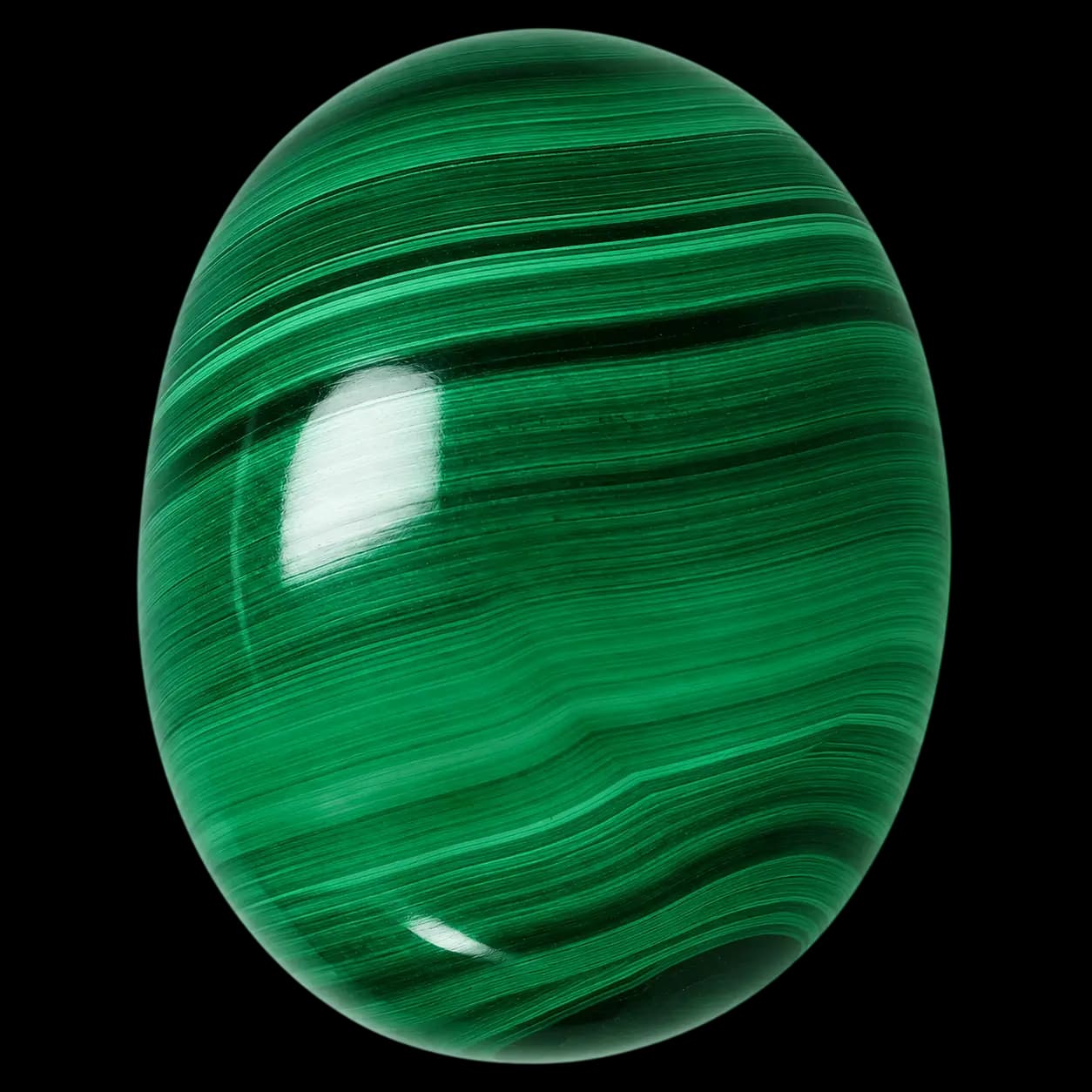
Malachite is a distinctive green gemstone known for its dramatic banded patterns, rich color, and artistic appeal. Popular in jewelry and collections, each piece showcases nature’s unique designs.
Malachite is a copper carbonate hydroxide mineral admired for its vivid green colors and naturally occurring banded patterns. It belongs to the carbonate mineral family and is best known as a decorative gemstone, ornamental material, and collector’s mineral.
Malachite forms in the oxidized zones of copper deposits where copper-rich minerals interact with carbonated water. Major sources include the Democratic Republic of the Congo, Zambia, Russia, Namibia, and other copper-producing regions. Its distinctive green shades range from light green to deep forest green, often displaying concentric rings, swirling patterns, and layered designs.
The chemical composition of Malachite is Cu2CO3(OH)2. It has a monoclinic crystal system, a Mohs hardness of 3.5-4, and a vitreous to silky luster depending on the material. Because of its softness and perfect cleavage, Malachite requires careful handling compared with harder gemstones.
Throughout history, Malachite has been used for decorative objects, pigments, carvings, and jewelry. Ancient civilizations valued its intense green pigment, while today it is appreciated for statement rings, pendants, bracelets, beads, and artistic gemstone pieces.
Collectors and jewelry buyers value natural Malachite because every stone has unique patterns created by geological processes over thousands of years. Its bold appearance makes Malachite jewelry a popular choice for those seeking a gemstone with character, natural beauty, and individuality.
- Mineral Family
- Carbonate
- Chemical Formula
- Cu2CO3(OH)2
- Mohs Hardness
- 3.5-4
- Refractive Index
- 1.655-1.909
- Specific Gravity
- 3.6-4.0
- Cleavage
- Perfect cleavage on {001}
- Crystal System
- Monoclinic
- Luster
- Adamantine
- Color Range
- Green
When buying Malachite gemstone pieces, focus on pattern, color quality, craftsmanship, and authenticity.
Color: The most desirable Malachite displays rich green shades with strong contrast between lighter and darker bands. Deep green tones and well-defined natural patterns are generally preferred by collectors and jewelry buyers.
Clarity and Pattern: Unlike transparent gemstones, Malachite is valued for its surface appearance and pattern quality. Look for smooth polished surfaces, attractive banding, and minimal cracks or chips. Unique circular, wavy, and layered patterns can increase the appeal of a piece.
Cut and Shape: Malachite is commonly cut as cabochons to highlight its natural designs. It is also used for beads, carvings, decorative objects, and freeform specimens. Skilled polishing helps reveal the stone’s natural contrast and beauty.
Carat and Size: Size affects the price of Malachite, but pattern quality is often more important than weight alone. A smaller piece with exceptional banding may be more desirable than a larger stone with less attractive patterns.
Origin: Important Malachite sources include the Democratic Republic of the Congo, Zambia, Russia, and Namibia. Origin may influence appearance and collector interest, especially for material with distinctive patterns.
Treatments: Most natural Malachite is sold untreated. Some pieces may be stabilized to improve durability. Buyers should ask sellers about any treatments before purchase.
Natural vs Imitation: Natural Malachite has irregular, organic patterns and natural variations. Synthetic or imitation materials may show repetitive designs or an artificial appearance. Buying from reputable sellers and requesting authenticity details helps ensure confidence.
Certification and Price Factors: For valuable Malachite specimens or jewelry, certification and detailed product information can provide additional assurance. Prices depend on color intensity, pattern uniqueness, size, craftsmanship, and overall quality.
To buy Malachite online, choose trusted gemstone sellers offering clear descriptions, authentic images, and transparent sourcing information.
Malachite is a relatively soft gemstone and requires gentle care to maintain its polished surface.
Clean Malachite jewelry using a soft microfiber cloth and mild soapy water if needed. Avoid harsh chemicals, ultrasonic cleaners, steam cleaners, and abrasive materials because they can damage the stone.
Store Malachite separately from harder gemstones such as diamonds, sapphires, and rubies to prevent scratches. Keep jewelry pieces in a soft pouch or lined box when not being worn.
Because of its softness and sensitivity, Malachite is best suited for occasional wear rather than activities involving impacts, chemicals, or rough handling. Remove Malachite jewelry before swimming, cleaning, or exercising.
Malachite is a copper carbonate hydroxide mineral admired for its vivid green colors and naturally occurring banded patterns. It belongs to the carbonate mineral family and is best known as a decorative gemstone, ornamental material, and collector’s mineral.
Malachite forms in the oxidized zones of copper deposits where copper-rich minerals interact with carbonated water. Major sources include the Democratic Republic of the Congo, Zambia, Russia, Namibia, and other copper-producing regions. Its distinctive green shades range from light green to deep forest green, often displaying concentric rings, swirling patterns, and layered designs.
The chemical composition of Malachite is Cu2CO3(OH)2. It has a monoclinic crystal system, a Mohs hardness of 3.5-4, and a vitreous to silky luster depending on the material. Because of its softness and perfect cleavage, Malachite requires careful handling compared with harder gemstones.
Throughout history, Malachite has been used for decorative objects, pigments, carvings, and jewelry. Ancient civilizations valued its intense green pigment, while today it is appreciated for statement rings, pendants, bracelets, beads, and artistic gemstone pieces.
Collectors and jewelry buyers value natural Malachite because every stone has unique patterns created by geological processes over thousands of years. Its bold appearance makes Malachite jewelry a popular choice for those seeking a gemstone with character, natural beauty, and individuality.
- Mineral Family
- Carbonate
- Chemical Formula
- Cu2CO3(OH)2
- Mohs Hardness
- 3.5-4
- Refractive Index
- 1.655-1.909
- Specific Gravity
- 3.6-4.0
- Cleavage
- Perfect cleavage on {001}
- Crystal System
- Monoclinic
- Luster
- Adamantine
- Color Range
- Green
When buying Malachite gemstone pieces, focus on pattern, color quality, craftsmanship, and authenticity.
Color: The most desirable Malachite displays rich green shades with strong contrast between lighter and darker bands. Deep green tones and well-defined natural patterns are generally preferred by collectors and jewelry buyers.
Clarity and Pattern: Unlike transparent gemstones, Malachite is valued for its surface appearance and pattern quality. Look for smooth polished surfaces, attractive banding, and minimal cracks or chips. Unique circular, wavy, and layered patterns can increase the appeal of a piece.
Cut and Shape: Malachite is commonly cut as cabochons to highlight its natural designs. It is also used for beads, carvings, decorative objects, and freeform specimens. Skilled polishing helps reveal the stone’s natural contrast and beauty.
Carat and Size: Size affects the price of Malachite, but pattern quality is often more important than weight alone. A smaller piece with exceptional banding may be more desirable than a larger stone with less attractive patterns.
Origin: Important Malachite sources include the Democratic Republic of the Congo, Zambia, Russia, and Namibia. Origin may influence appearance and collector interest, especially for material with distinctive patterns.
Treatments: Most natural Malachite is sold untreated. Some pieces may be stabilized to improve durability. Buyers should ask sellers about any treatments before purchase.
Natural vs Imitation: Natural Malachite has irregular, organic patterns and natural variations. Synthetic or imitation materials may show repetitive designs or an artificial appearance. Buying from reputable sellers and requesting authenticity details helps ensure confidence.
Certification and Price Factors: For valuable Malachite specimens or jewelry, certification and detailed product information can provide additional assurance. Prices depend on color intensity, pattern uniqueness, size, craftsmanship, and overall quality.
To buy Malachite online, choose trusted gemstone sellers offering clear descriptions, authentic images, and transparent sourcing information.
Malachite is a relatively soft gemstone and requires gentle care to maintain its polished surface.
Clean Malachite jewelry using a soft microfiber cloth and mild soapy water if needed. Avoid harsh chemicals, ultrasonic cleaners, steam cleaners, and abrasive materials because they can damage the stone.
Store Malachite separately from harder gemstones such as diamonds, sapphires, and rubies to prevent scratches. Keep jewelry pieces in a soft pouch or lined box when not being worn.
Because of its softness and sensitivity, Malachite is best suited for occasional wear rather than activities involving impacts, chemicals, or rough handling. Remove Malachite jewelry before swimming, cleaning, or exercising.
Malachite for Sale
No gems found
Try broadening your search or adjusting your filters.
Have a gem of your own? List it free - no fees