Azurite
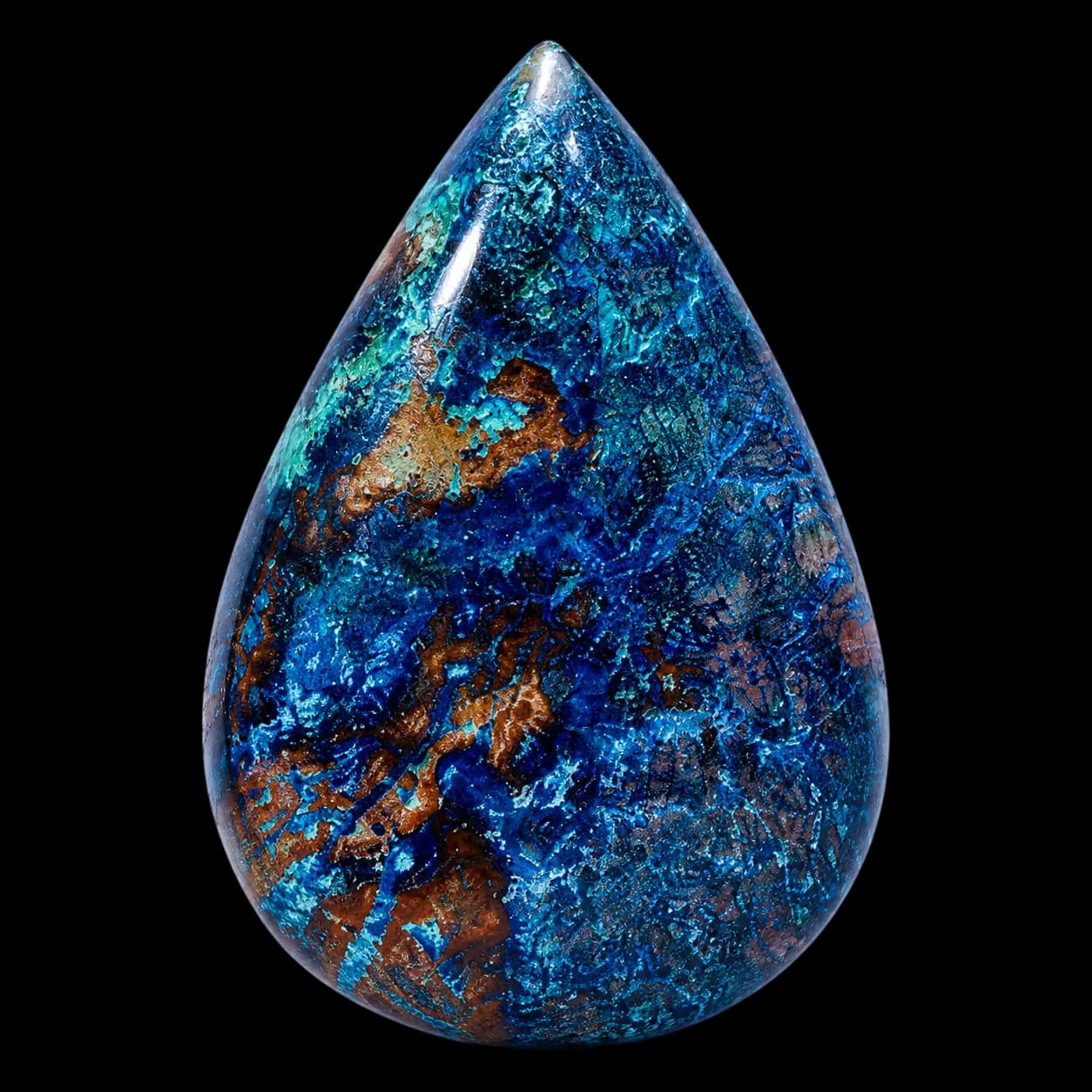
Azurite is a captivating deep blue copper mineral gemstone admired for its intense color, unique patterns, and collector appeal. Its rich blue tones make it a distinctive choice for jewelry and mineral enthusiasts.
Azurite is a rare blue copper carbonate mineral valued for its vivid color and striking natural formations. It belongs to the carbonate mineral family and is commonly found alongside malachite in copper ore deposits.
Azurite forms when copper-rich minerals undergo chemical changes near the Earth's surface. Its chemical composition is copper carbonate hydroxide (Cu3(CO3)2(OH)2), giving the gemstone its characteristic deep blue appearance.
Azurite has a Mohs hardness of 3.5 to 4, making it a relatively soft gemstone that requires careful handling. It has a monoclinic crystal system, perfect cleavage, and a vitreous to dull luster. Due to its softness, Azurite is generally more suitable for collector pieces, pendants, and occasional-wear jewelry rather than everyday rings.
The most recognized color of Azurite is an intense deep blue, ranging from bright azure shades to dark inky blue tones. Some specimens display attractive banding or natural patterns caused by mixtures with other copper minerals, especially malachite.
Important Azurite deposits have been found in countries including Morocco, France, Australia, the United States, Mexico, Namibia, and China. The mineral has been known since ancient times and was historically used as a pigment for creating blue colors in artwork and decorative applications.
Today, natural Azurite is primarily appreciated by gemstone collectors, mineral enthusiasts, and designers seeking unusual gemstone materials. Its exceptional blue color and natural crystal formations make each specimen unique.
Buyers value Azurite gemstone for its rarity, distinctive appearance, and connection to the natural world. When selecting Azurite jewelry, understanding its softness and care requirements helps ensure long-lasting beauty.
- Mineral Family
- Carbonate
- Chemical Formula
- Cu3(CO3)2(OH)2
- Mohs Hardness
- 3.5 - 4
- Refractive Index
- 1.730 - 1.838
- Specific Gravity
- 3.77
- Cleavage
- Perfect cleavage in one direction
- Crystal System
- Monoclinic
- Luster
- Vitreous
- Color Range
- Blue
When buying natural Azurite gemstone, several factors influence quality, appearance, and value.
Color: Color is the most important factor in Azurite. Premium specimens display strong, saturated blue tones with even coloration and attractive natural patterns.
Clarity: Azurite is typically opaque or translucent and often contains natural inclusions, matrix patterns, or mineral associations. These features are considered part of its natural character rather than flaws for collector specimens.
Cut: Azurite is usually cut as cabochons, polished specimens, carvings, or display pieces. Because of its softness and cleavage, skilled cutting is important to preserve the stone.
Carat Weight: Larger Azurite specimens with excellent color, unique patterns, and well-preserved formations are often more desirable among collectors.
Origin: Azurite from locations such as Morocco, France, Australia, and the United States is popular among collectors due to distinctive crystal habits and color quality.
Treatments: Natural Azurite is generally valued in its original form. Buyers should ask whether any treatments, stabilization methods, or enhancements have been applied.
Natural vs Lab-Grown: Natural Azurite is the material commonly traded in the gemstone and mineral market. Synthetic Azurite is uncommon compared with many popular gemstones.
Certification and Authenticity: A reputable gemological certificate or mineral identification report can help confirm authenticity, especially for valuable specimens.
Price Factors: Azurite prices depend on color intensity, size, crystal formation, origin, condition, rarity, and overall visual appeal. Unique collector-quality specimens generally command higher prices.
Azurite requires gentle care because of its low hardness and perfect cleavage.
Clean Azurite using a soft, dry cloth or a slightly damp cloth when necessary. Avoid harsh chemicals, ultrasonic cleaners, steam cleaning, and abrasive materials that may damage the surface.
Store Azurite separately from harder gemstones such as diamonds, sapphires, and rubies to prevent scratches. Keep it in a soft pouch or lined jewelry box.
Due to its softness, Azurite is best suited for pendants, earrings, and protected jewelry designs. Avoid wearing Azurite jewelry during sports, household work, or activities where the stone may receive impacts.
Azurite is a rare blue copper carbonate mineral valued for its vivid color and striking natural formations. It belongs to the carbonate mineral family and is commonly found alongside malachite in copper ore deposits.
Azurite forms when copper-rich minerals undergo chemical changes near the Earth's surface. Its chemical composition is copper carbonate hydroxide (Cu3(CO3)2(OH)2), giving the gemstone its characteristic deep blue appearance.
Azurite has a Mohs hardness of 3.5 to 4, making it a relatively soft gemstone that requires careful handling. It has a monoclinic crystal system, perfect cleavage, and a vitreous to dull luster. Due to its softness, Azurite is generally more suitable for collector pieces, pendants, and occasional-wear jewelry rather than everyday rings.
The most recognized color of Azurite is an intense deep blue, ranging from bright azure shades to dark inky blue tones. Some specimens display attractive banding or natural patterns caused by mixtures with other copper minerals, especially malachite.
Important Azurite deposits have been found in countries including Morocco, France, Australia, the United States, Mexico, Namibia, and China. The mineral has been known since ancient times and was historically used as a pigment for creating blue colors in artwork and decorative applications.
Today, natural Azurite is primarily appreciated by gemstone collectors, mineral enthusiasts, and designers seeking unusual gemstone materials. Its exceptional blue color and natural crystal formations make each specimen unique.
Buyers value Azurite gemstone for its rarity, distinctive appearance, and connection to the natural world. When selecting Azurite jewelry, understanding its softness and care requirements helps ensure long-lasting beauty.
- Mineral Family
- Carbonate
- Chemical Formula
- Cu3(CO3)2(OH)2
- Mohs Hardness
- 3.5 - 4
- Refractive Index
- 1.730 - 1.838
- Specific Gravity
- 3.77
- Cleavage
- Perfect cleavage in one direction
- Crystal System
- Monoclinic
- Luster
- Vitreous
- Color Range
- Blue
When buying natural Azurite gemstone, several factors influence quality, appearance, and value.
Color: Color is the most important factor in Azurite. Premium specimens display strong, saturated blue tones with even coloration and attractive natural patterns.
Clarity: Azurite is typically opaque or translucent and often contains natural inclusions, matrix patterns, or mineral associations. These features are considered part of its natural character rather than flaws for collector specimens.
Cut: Azurite is usually cut as cabochons, polished specimens, carvings, or display pieces. Because of its softness and cleavage, skilled cutting is important to preserve the stone.
Carat Weight: Larger Azurite specimens with excellent color, unique patterns, and well-preserved formations are often more desirable among collectors.
Origin: Azurite from locations such as Morocco, France, Australia, and the United States is popular among collectors due to distinctive crystal habits and color quality.
Treatments: Natural Azurite is generally valued in its original form. Buyers should ask whether any treatments, stabilization methods, or enhancements have been applied.
Natural vs Lab-Grown: Natural Azurite is the material commonly traded in the gemstone and mineral market. Synthetic Azurite is uncommon compared with many popular gemstones.
Certification and Authenticity: A reputable gemological certificate or mineral identification report can help confirm authenticity, especially for valuable specimens.
Price Factors: Azurite prices depend on color intensity, size, crystal formation, origin, condition, rarity, and overall visual appeal. Unique collector-quality specimens generally command higher prices.
Azurite requires gentle care because of its low hardness and perfect cleavage.
Clean Azurite using a soft, dry cloth or a slightly damp cloth when necessary. Avoid harsh chemicals, ultrasonic cleaners, steam cleaning, and abrasive materials that may damage the surface.
Store Azurite separately from harder gemstones such as diamonds, sapphires, and rubies to prevent scratches. Keep it in a soft pouch or lined jewelry box.
Due to its softness, Azurite is best suited for pendants, earrings, and protected jewelry designs. Avoid wearing Azurite jewelry during sports, household work, or activities where the stone may receive impacts.
Azurite for Sale
No gems found
Try broadening your search or adjusting your filters.
Have a gem of your own? List it free - no fees