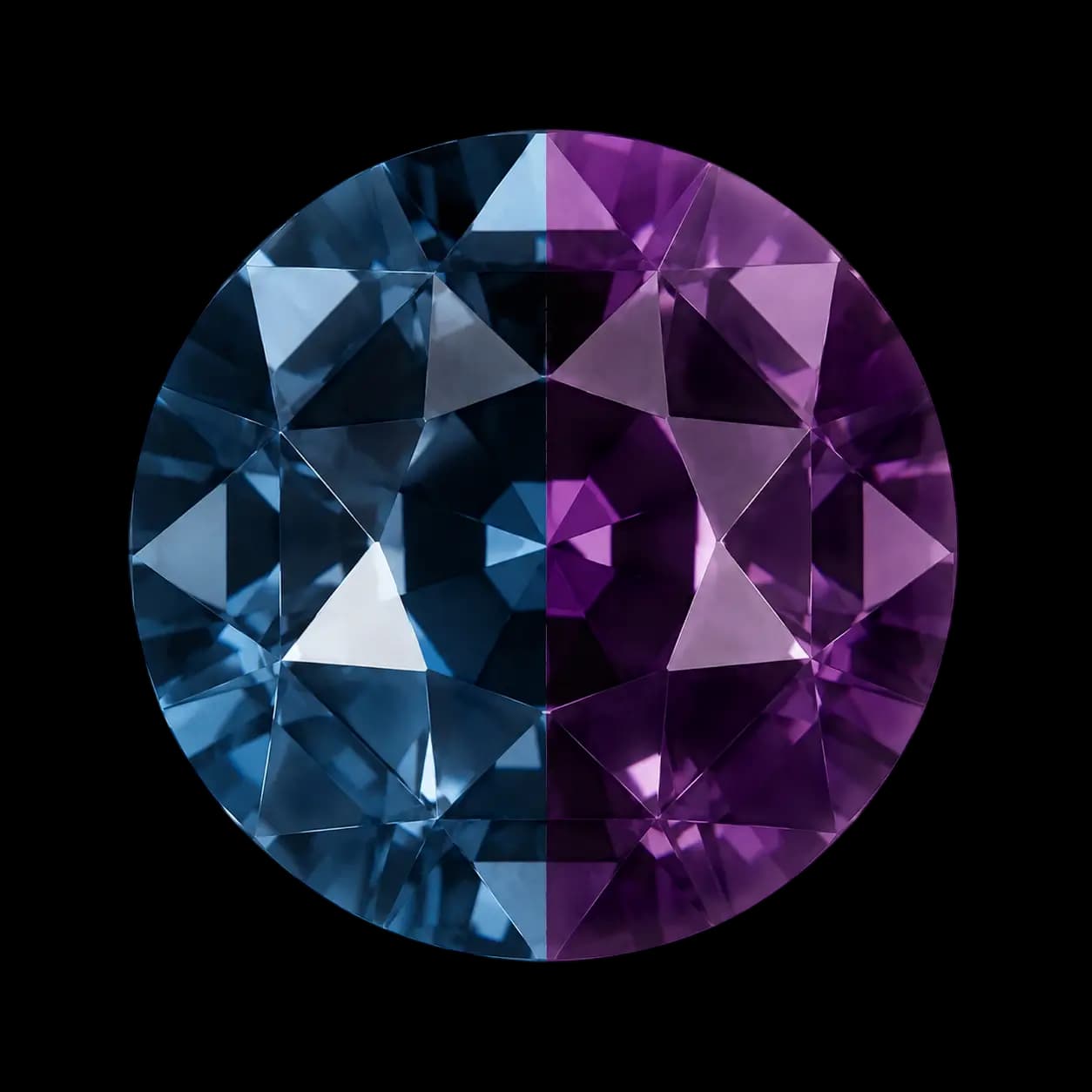
Color Change Sapphire
Color Change Sapphire is one of the rarest sapphire varieties, admired for its remarkable ability to display different colors under different light sources while offering exceptional durability and timeless elegance.
Color Change Sapphire is an exceptionally rare variety of corundum prized for its fascinating optical phenomenon of changing color under different lighting conditions. A fine gemstone may appear blue or greenish-blue in daylight and shift to violet, purple, or reddish-purple under incandescent light. This dramatic transformation results from trace elements, primarily chromium and vanadium, interacting differently with various light spectra.
Like all sapphires except ruby, Color Change Sapphire is composed of aluminum oxide (Al₂O₃). It crystallizes in the trigonal crystal system and ranks 9 on the Mohs hardness scale, making it one of the most durable gemstones suitable for everyday jewelry.
Natural Color Change Sapphires form deep within the Earth's crust under intense heat and pressure over millions of years. They are recovered from both primary hard-rock deposits and secondary alluvial deposits.
The finest examples display a strong and distinct color shift with excellent transparency and brilliance. While blue-to-violet transitions are the most recognized, some stones exhibit green-to-purple or bluish-green to reddish-purple changes depending on their trace-element chemistry.
Major sources include Sri Lanka, Madagascar, Tanzania, and Thailand, with Sri Lanka historically producing some of the world's finest specimens. Because of their rarity, high-quality Color Change Sapphires are sought after by collectors, investors, and jewelry enthusiasts alike.
Their exceptional durability, unique optical character, and limited availability make them highly desirable for engagement rings, statement rings, pendants, earrings, and bespoke fine jewelry. Each natural Color Change Sapphire offers a distinctive appearance that makes every gemstone truly unique.
- Mineral Family
- Corundum
- Chemical Formula
- Al₂O₃
- Mohs Hardness
- 9
- Refractive Index
- 1.762 - 1.770
- Specific Gravity
- 3.95 - 4.03
- Cleavage
- None
- Crystal System
- Trigonal
- Luster
- Vitreous
- Color Range
- Blue, Purple, Green, Pink
When buying a Color Change Sapphire, the strength and attractiveness of its color change are the most important quality factors. Stones displaying a vivid and obvious shift between two attractive colors command the highest prices.
Color should remain vibrant under both daylight and warm incandescent lighting. Weak or barely noticeable color changes are generally less valuable.
Clarity is another important consideration. Eye-clean stones with excellent transparency allow the color transition and brilliance to be fully appreciated. Minor inclusions are acceptable in natural stones, but significant inclusions may reduce value.
A well-executed cut maximizes brilliance while enhancing the visibility of the color-changing effect. Oval, cushion, round, and mixed cuts are among the most common shapes.
Carat weight significantly influences price because larger Color Change Sapphires are exceptionally rare. As size increases, prices often rise exponentially when quality remains high.
Origin may also influence desirability, with Sri Lankan stones often commanding premium prices due to their exceptional quality and historical reputation. Madagascar and Tanzania also produce beautiful examples.
Most natural sapphires receive heat treatment to improve color and clarity. Untreated Color Change Sapphires with excellent color change are considerably rarer and generally more valuable. Always request full disclosure of any treatments.
Laboratory-created Color Change Sapphires are available and can display impressive color shifts. Buyers seeking rarity and long-term collectible value should choose natural gemstones.
Always purchase gemstones accompanied by reports from reputable gemological laboratories such as GIA, AGL, SSEF, Gübelin, GRS, Lotus Gemology, or IGI when appropriate. Certification helps verify authenticity, natural origin, treatments, and gemstone identity.
Overall pricing depends on color-change intensity, color quality, clarity, cut, carat weight, origin, treatment status, and certification.
Color Change Sapphire is highly durable and well suited for everyday wear thanks to its Mohs hardness of 9.
Clean the gemstone using warm water, mild soap, and a soft brush. Rinse thoroughly and dry with a lint-free cloth. Ultrasonic cleaners are generally safe for untreated stones, but caution is recommended for heavily included or fracture-filled gems.
Store Color Change Sapphire separately in a fabric-lined jewelry box or soft pouch to prevent scratching softer gemstones. Although extremely hard, sapphires can scratch many other gems.
Avoid prolonged exposure to harsh chemicals, bleach, and sudden extreme temperature changes. Remove sapphire jewelry before heavy manual work or high-impact activities to reduce the risk of chipping.
Periodic professional inspection of ring settings helps ensure the gemstone remains secure and preserves its beauty for generations.
Color Change Sapphire is an exceptionally rare variety of corundum prized for its fascinating optical phenomenon of changing color under different lighting conditions. A fine gemstone may appear blue or greenish-blue in daylight and shift to violet, purple, or reddish-purple under incandescent light. This dramatic transformation results from trace elements, primarily chromium and vanadium, interacting differently with various light spectra.
Like all sapphires except ruby, Color Change Sapphire is composed of aluminum oxide (Al₂O₃). It crystallizes in the trigonal crystal system and ranks 9 on the Mohs hardness scale, making it one of the most durable gemstones suitable for everyday jewelry.
Natural Color Change Sapphires form deep within the Earth's crust under intense heat and pressure over millions of years. They are recovered from both primary hard-rock deposits and secondary alluvial deposits.
The finest examples display a strong and distinct color shift with excellent transparency and brilliance. While blue-to-violet transitions are the most recognized, some stones exhibit green-to-purple or bluish-green to reddish-purple changes depending on their trace-element chemistry.
Major sources include Sri Lanka, Madagascar, Tanzania, and Thailand, with Sri Lanka historically producing some of the world's finest specimens. Because of their rarity, high-quality Color Change Sapphires are sought after by collectors, investors, and jewelry enthusiasts alike.
Their exceptional durability, unique optical character, and limited availability make them highly desirable for engagement rings, statement rings, pendants, earrings, and bespoke fine jewelry. Each natural Color Change Sapphire offers a distinctive appearance that makes every gemstone truly unique.
- Mineral Family
- Corundum
- Chemical Formula
- Al₂O₃
- Mohs Hardness
- 9
- Refractive Index
- 1.762 - 1.770
- Specific Gravity
- 3.95 - 4.03
- Cleavage
- None
- Crystal System
- Trigonal
- Luster
- Vitreous
- Color Range
- Blue, Purple, Green, Pink
When buying a Color Change Sapphire, the strength and attractiveness of its color change are the most important quality factors. Stones displaying a vivid and obvious shift between two attractive colors command the highest prices.
Color should remain vibrant under both daylight and warm incandescent lighting. Weak or barely noticeable color changes are generally less valuable.
Clarity is another important consideration. Eye-clean stones with excellent transparency allow the color transition and brilliance to be fully appreciated. Minor inclusions are acceptable in natural stones, but significant inclusions may reduce value.
A well-executed cut maximizes brilliance while enhancing the visibility of the color-changing effect. Oval, cushion, round, and mixed cuts are among the most common shapes.
Carat weight significantly influences price because larger Color Change Sapphires are exceptionally rare. As size increases, prices often rise exponentially when quality remains high.
Origin may also influence desirability, with Sri Lankan stones often commanding premium prices due to their exceptional quality and historical reputation. Madagascar and Tanzania also produce beautiful examples.
Most natural sapphires receive heat treatment to improve color and clarity. Untreated Color Change Sapphires with excellent color change are considerably rarer and generally more valuable. Always request full disclosure of any treatments.
Laboratory-created Color Change Sapphires are available and can display impressive color shifts. Buyers seeking rarity and long-term collectible value should choose natural gemstones.
Always purchase gemstones accompanied by reports from reputable gemological laboratories such as GIA, AGL, SSEF, Gübelin, GRS, Lotus Gemology, or IGI when appropriate. Certification helps verify authenticity, natural origin, treatments, and gemstone identity.
Overall pricing depends on color-change intensity, color quality, clarity, cut, carat weight, origin, treatment status, and certification.
Color Change Sapphire is highly durable and well suited for everyday wear thanks to its Mohs hardness of 9.
Clean the gemstone using warm water, mild soap, and a soft brush. Rinse thoroughly and dry with a lint-free cloth. Ultrasonic cleaners are generally safe for untreated stones, but caution is recommended for heavily included or fracture-filled gems.
Store Color Change Sapphire separately in a fabric-lined jewelry box or soft pouch to prevent scratching softer gemstones. Although extremely hard, sapphires can scratch many other gems.
Avoid prolonged exposure to harsh chemicals, bleach, and sudden extreme temperature changes. Remove sapphire jewelry before heavy manual work or high-impact activities to reduce the risk of chipping.
Periodic professional inspection of ring settings helps ensure the gemstone remains secure and preserves its beauty for generations.
Color Change Sapphire for Sale
No gems found
Try broadening your search or adjusting your filters.
Have a gem of your own? List it free - no fees