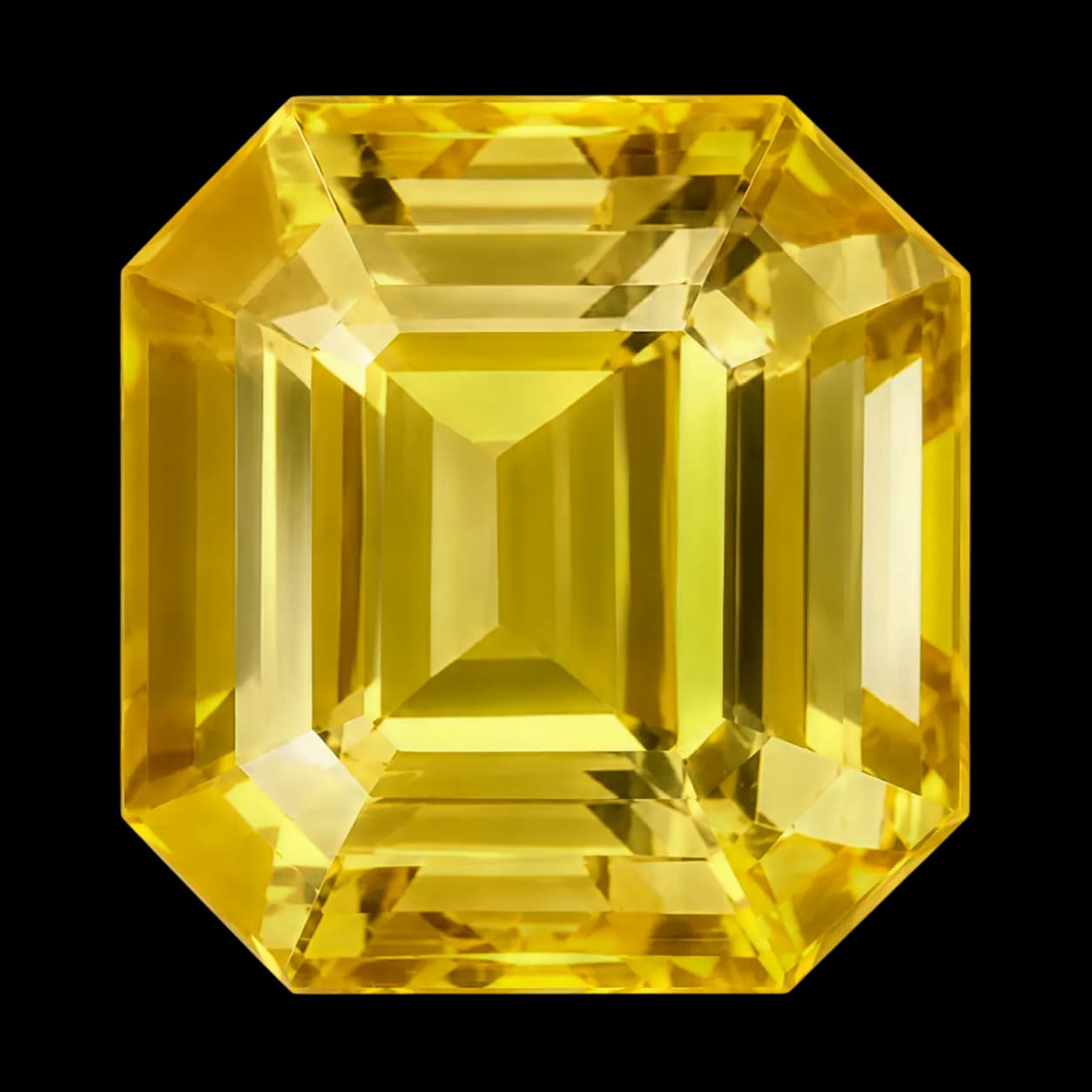
Ceylon Yellow Sapphire
Ceylon Yellow Sapphire is a radiant natural sapphire admired for its bright golden-yellow color, excellent durability, and refined jewelry appeal.
Ceylon Yellow Sapphire is the yellow variety of the mineral corundum, the same mineral family that includes all sapphires. Its chemical formula is Al2O3, and its attractive yellow color is caused by trace elements within the crystal structure. Formed deep within the earth under intense heat and pressure, this gemstone is prized for its beauty, hardness, and dependable wearability. Sri Lanka is especially famous for producing yellow sapphires with lively color and strong transparency, which is why the word “Ceylon” carries strong market recognition.
Natural Ceylon Yellow Sapphire ranges from pale lemon to rich golden yellow, with the most desirable stones showing a bright, even color and good clarity. Because sapphire is extremely durable, it is popular for rings, pendants, earrings, and collector pieces. Buyers value it for its classic elegance, long-lasting performance, and the premium reputation associated with Sri Lankan origin. In fine jewelry, a well-cut Ceylon Yellow Sapphire offers a warm, luminous look that feels both timeless and luxurious.
- Mineral Family
- Corundum
- Chemical Formula
- Al2O3
- Mohs Hardness
- 9
- Refractive Index
- 1.762 - 1.770
- Specific Gravity
- 3.98 - 4.10
- Cleavage
- None
- Crystal System
- Trigonal
- Luster
- Vitreous
- Color Range
- Yellow
When buying Ceylon Yellow Sapphire, start with color. The most desirable stones show a vivid, even yellow tone without appearing too pale, brownish, or overly dark. Clarity is also important; small natural inclusions are common, but a cleaner stone usually commands a higher value. Cut affects brilliance, symmetry, and face-up color, so a well-proportioned cut can make the stone appear brighter and more attractive. Carat weight matters too, because larger fine-quality yellow sapphires are rarer and usually more expensive.
Origin can influence value, and Sri Lankan material is widely respected for its brightness and transparency. Always ask about treatments, since heating is common in sapphire and can affect price. Natural and lab-grown sapphires may look similar, but they differ in origin and value, so certification is essential. A trustworthy lab report helps confirm identity, treatments, and origin claims. For authenticity, buy from a seller who clearly discloses whether the stone is natural, treated, or lab-grown, and who provides return policies and independent certification. Price is shaped by color, clarity, cut, carat, origin, treatment status, and overall rarity.
Clean Ceylon Yellow Sapphire with warm water, mild soap, and a soft brush. Rinse well and dry with a lint-free cloth. Store it separately from harder jewelry to avoid scratches, ideally in a fabric-lined box or pouch.
For everyday wear, sapphire is an excellent choice because of its hardness, but the setting should still be checked regularly if the stone is worn in a ring. Avoid harsh chemicals, bleach, strong detergents, and rough knocks against hard surfaces. Ultrasonic and steam cleaning may be suitable for some sapphires, but only if the stone is confirmed to be secure and free from fragile treatments or internal fractures. When in doubt, choose gentle hand cleaning.
Ceylon Yellow Sapphire is the yellow variety of the mineral corundum, the same mineral family that includes all sapphires. Its chemical formula is Al2O3, and its attractive yellow color is caused by trace elements within the crystal structure. Formed deep within the earth under intense heat and pressure, this gemstone is prized for its beauty, hardness, and dependable wearability. Sri Lanka is especially famous for producing yellow sapphires with lively color and strong transparency, which is why the word “Ceylon” carries strong market recognition.
Natural Ceylon Yellow Sapphire ranges from pale lemon to rich golden yellow, with the most desirable stones showing a bright, even color and good clarity. Because sapphire is extremely durable, it is popular for rings, pendants, earrings, and collector pieces. Buyers value it for its classic elegance, long-lasting performance, and the premium reputation associated with Sri Lankan origin. In fine jewelry, a well-cut Ceylon Yellow Sapphire offers a warm, luminous look that feels both timeless and luxurious.
- Mineral Family
- Corundum
- Chemical Formula
- Al2O3
- Mohs Hardness
- 9
- Refractive Index
- 1.762 - 1.770
- Specific Gravity
- 3.98 - 4.10
- Cleavage
- None
- Crystal System
- Trigonal
- Luster
- Vitreous
- Color Range
- Yellow
When buying Ceylon Yellow Sapphire, start with color. The most desirable stones show a vivid, even yellow tone without appearing too pale, brownish, or overly dark. Clarity is also important; small natural inclusions are common, but a cleaner stone usually commands a higher value. Cut affects brilliance, symmetry, and face-up color, so a well-proportioned cut can make the stone appear brighter and more attractive. Carat weight matters too, because larger fine-quality yellow sapphires are rarer and usually more expensive.
Origin can influence value, and Sri Lankan material is widely respected for its brightness and transparency. Always ask about treatments, since heating is common in sapphire and can affect price. Natural and lab-grown sapphires may look similar, but they differ in origin and value, so certification is essential. A trustworthy lab report helps confirm identity, treatments, and origin claims. For authenticity, buy from a seller who clearly discloses whether the stone is natural, treated, or lab-grown, and who provides return policies and independent certification. Price is shaped by color, clarity, cut, carat, origin, treatment status, and overall rarity.
Clean Ceylon Yellow Sapphire with warm water, mild soap, and a soft brush. Rinse well and dry with a lint-free cloth. Store it separately from harder jewelry to avoid scratches, ideally in a fabric-lined box or pouch.
For everyday wear, sapphire is an excellent choice because of its hardness, but the setting should still be checked regularly if the stone is worn in a ring. Avoid harsh chemicals, bleach, strong detergents, and rough knocks against hard surfaces. Ultrasonic and steam cleaning may be suitable for some sapphires, but only if the stone is confirmed to be secure and free from fragile treatments or internal fractures. When in doubt, choose gentle hand cleaning.
Ceylon Yellow Sapphire for Sale
No gems found
Try broadening your search or adjusting your filters.
Have a gem of your own? List it free - no fees