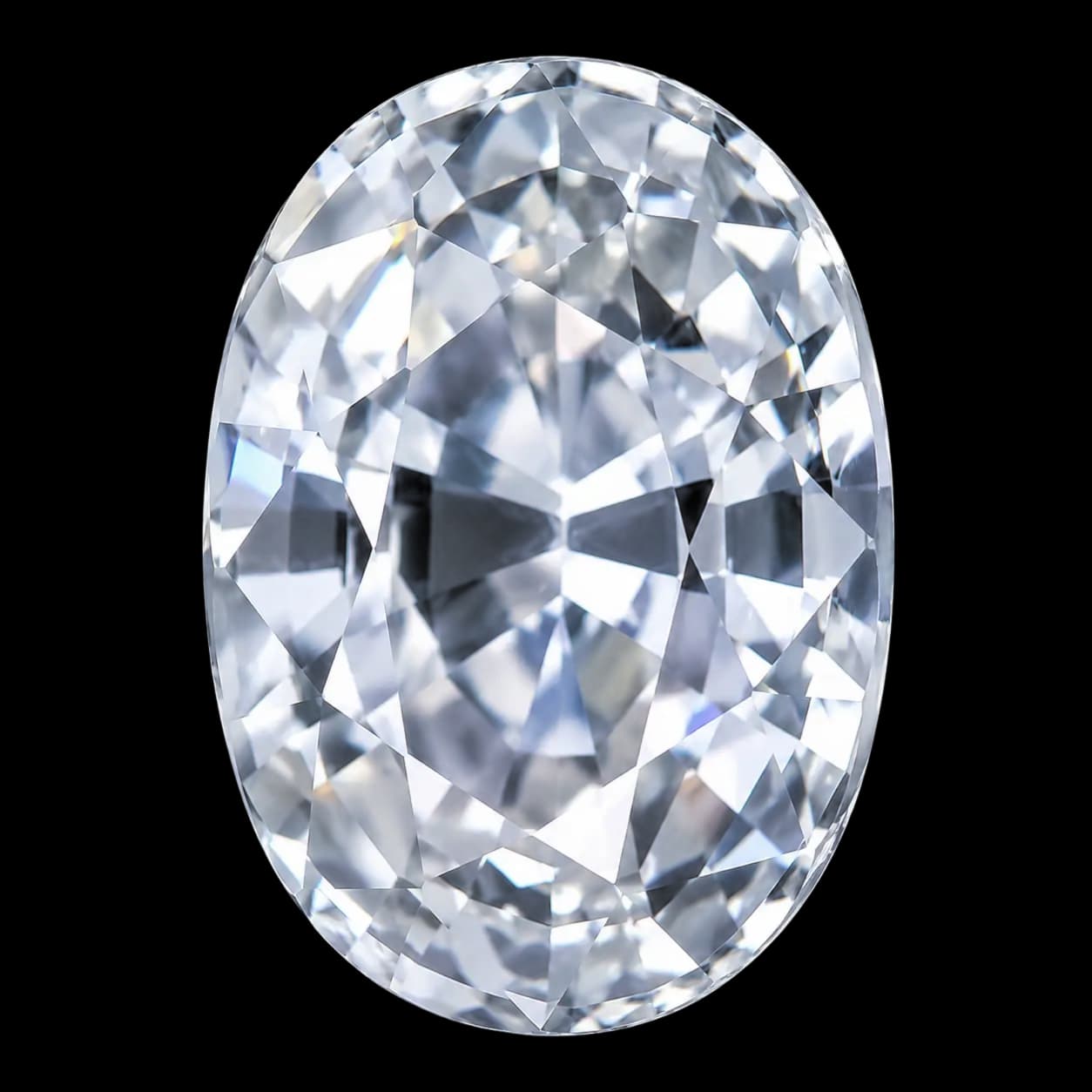
Ceylon White Sapphire
Elegant, durable, and naturally brilliant, Ceylon White Sapphire offers a refined colorless look with lasting appeal for fine jewelry and collectors.
Ceylon White Sapphire is the colorless to near-colorless variety of corundum, the same mineral family that includes blue sapphire and ruby. Its clean, bright appearance comes from the absence of strong color-causing trace elements, while the gem’s excellent hardness and brightness make it a favorite for elegant, everyday jewelry. Sri Lanka has long been admired for producing fine sapphires, and the “Ceylon” name is closely associated with classic gemstone quality and trusted origin.
Scientifically, white sapphire is aluminum oxide with the formula Al2O3. It has a trigonal crystal system, a vitreous luster, no true cleavage, and a Mohs hardness of 9, which makes it highly durable for rings, pendants, earrings, and bracelets. Its refractive index and brilliance give it a crisp sparkle, though it typically has a softer, more understated look than diamond. White sapphire may occur with colorless, pale gray, or faintly milky appearances, depending on clarity and crystal growth. Famous natural white sapphires are often discussed less for dramatic color than for their clean beauty, strong durability, and classic versatility.
Historically, sapphires from Sri Lanka have been prized for centuries by collectors, royal courts, and gem merchants, and Ceylon-origin stones continue to carry strong prestige in today’s market. Modern buyers value Ceylon White Sapphire for its timeless style, everyday wearability, and ability to suit both minimalist and luxury settings. It is especially appealing to shoppers who want the brightness and sophistication of a white gemstone with the resilience of a sapphire.
- Mineral Family
- Corundum
- Chemical Formula
- Al₂O₃
- Mohs Hardness
- 9
- Refractive Index
- 1.762 - 1.770
- Specific Gravity
- 3.95 - 4.03
- Cleavage
- None
- Crystal System
- Trigonal
- Luster
- Vitreous
- Color Range
- White
When buying Ceylon White Sapphire, start with color. The most desirable stones are crisp white or colorless with even appearance and no obvious yellow, gray, or milky cast. Clarity is equally important: cleaner stones look brighter and more lively, although many natural sapphires contain internal features that should be evaluated by a trained eye. Cut has a major impact on beauty, because a well-proportioned cut improves brilliance, symmetry, and face-up size.
Carat weight affects price, but a smaller stone with excellent color, clarity, and cut can be more attractive than a larger stone with weaker appearance. Origin can also matter, and Sri Lankan material is often sought after when buyers want classic “Ceylon” provenance. Treatments should always be disclosed. Heat treatment is common in the sapphire trade, while untreated stones are generally rarer and may command a premium. Lab-grown white sapphire has the same basic chemical composition as natural sapphire, so certification is important if you need to confirm natural origin. Ask for a reputable gemological report whenever possible.
Authenticity checks should include a close look at transparency, luster, inclusions, and the stone’s overall feel. Be cautious of stones sold with vague descriptions or missing documentation. Price depends on color, clarity, cut quality, carat weight, treatment status, origin, and whether the stone is natural or lab-grown. For the best value, compare several certified stones and choose the one that balances beauty, durability, and budget.
Clean Ceylon White Sapphire with lukewarm water, mild soap, and a soft brush or cloth. Rinse well and dry gently with a lint-free cloth. Because sapphire is very hard, it suits regular wear, but the jewelry setting still needs care, especially if the stone is mounted in a delicate design.
Store the gem separately in a soft pouch or lined jewelry box to prevent scratches from harder gemstones and to protect the setting from abrasion. For everyday wear, remove the jewelry before heavy manual work, sports, or exposure to harsh chemicals. Avoid bleach, strong cleaners, and sudden temperature changes. Ultrasonic or steam cleaning may be suitable for some untreated sapphires, but it is best to follow the advice of a jeweler, especially if the stone has inclusions, fillings, or a fragile mounting.
Ceylon White Sapphire is the colorless to near-colorless variety of corundum, the same mineral family that includes blue sapphire and ruby. Its clean, bright appearance comes from the absence of strong color-causing trace elements, while the gem’s excellent hardness and brightness make it a favorite for elegant, everyday jewelry. Sri Lanka has long been admired for producing fine sapphires, and the “Ceylon” name is closely associated with classic gemstone quality and trusted origin.
Scientifically, white sapphire is aluminum oxide with the formula Al2O3. It has a trigonal crystal system, a vitreous luster, no true cleavage, and a Mohs hardness of 9, which makes it highly durable for rings, pendants, earrings, and bracelets. Its refractive index and brilliance give it a crisp sparkle, though it typically has a softer, more understated look than diamond. White sapphire may occur with colorless, pale gray, or faintly milky appearances, depending on clarity and crystal growth. Famous natural white sapphires are often discussed less for dramatic color than for their clean beauty, strong durability, and classic versatility.
Historically, sapphires from Sri Lanka have been prized for centuries by collectors, royal courts, and gem merchants, and Ceylon-origin stones continue to carry strong prestige in today’s market. Modern buyers value Ceylon White Sapphire for its timeless style, everyday wearability, and ability to suit both minimalist and luxury settings. It is especially appealing to shoppers who want the brightness and sophistication of a white gemstone with the resilience of a sapphire.
- Mineral Family
- Corundum
- Chemical Formula
- Al₂O₃
- Mohs Hardness
- 9
- Refractive Index
- 1.762 - 1.770
- Specific Gravity
- 3.95 - 4.03
- Cleavage
- None
- Crystal System
- Trigonal
- Luster
- Vitreous
- Color Range
- White
When buying Ceylon White Sapphire, start with color. The most desirable stones are crisp white or colorless with even appearance and no obvious yellow, gray, or milky cast. Clarity is equally important: cleaner stones look brighter and more lively, although many natural sapphires contain internal features that should be evaluated by a trained eye. Cut has a major impact on beauty, because a well-proportioned cut improves brilliance, symmetry, and face-up size.
Carat weight affects price, but a smaller stone with excellent color, clarity, and cut can be more attractive than a larger stone with weaker appearance. Origin can also matter, and Sri Lankan material is often sought after when buyers want classic “Ceylon” provenance. Treatments should always be disclosed. Heat treatment is common in the sapphire trade, while untreated stones are generally rarer and may command a premium. Lab-grown white sapphire has the same basic chemical composition as natural sapphire, so certification is important if you need to confirm natural origin. Ask for a reputable gemological report whenever possible.
Authenticity checks should include a close look at transparency, luster, inclusions, and the stone’s overall feel. Be cautious of stones sold with vague descriptions or missing documentation. Price depends on color, clarity, cut quality, carat weight, treatment status, origin, and whether the stone is natural or lab-grown. For the best value, compare several certified stones and choose the one that balances beauty, durability, and budget.
Clean Ceylon White Sapphire with lukewarm water, mild soap, and a soft brush or cloth. Rinse well and dry gently with a lint-free cloth. Because sapphire is very hard, it suits regular wear, but the jewelry setting still needs care, especially if the stone is mounted in a delicate design.
Store the gem separately in a soft pouch or lined jewelry box to prevent scratches from harder gemstones and to protect the setting from abrasion. For everyday wear, remove the jewelry before heavy manual work, sports, or exposure to harsh chemicals. Avoid bleach, strong cleaners, and sudden temperature changes. Ultrasonic or steam cleaning may be suitable for some untreated sapphires, but it is best to follow the advice of a jeweler, especially if the stone has inclusions, fillings, or a fragile mounting.
Ceylon White Sapphire for Sale
No gems found
Try broadening your search or adjusting your filters.
Have a gem of your own? List it free - no fees