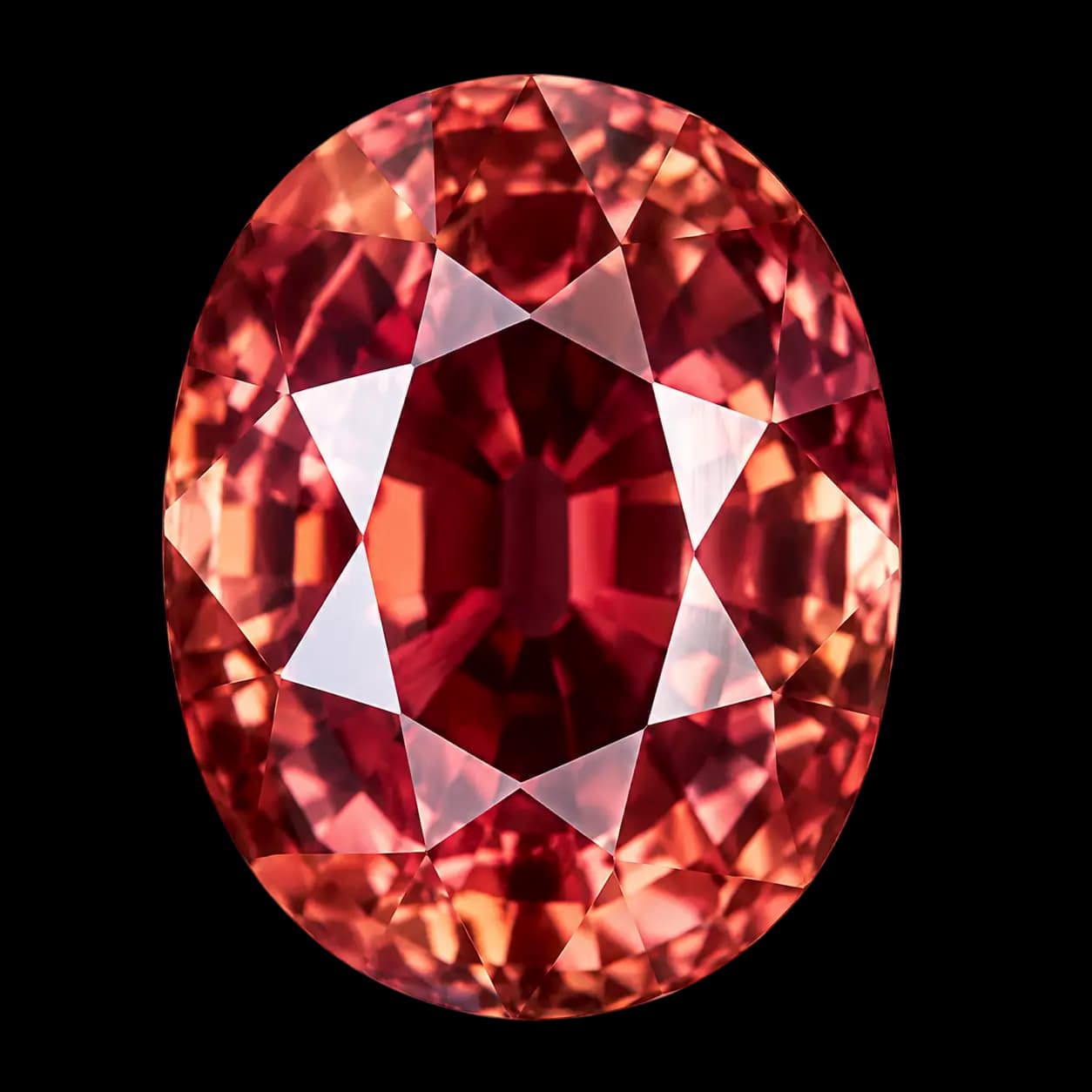
Ceylon Padparadscha Sapphire
Ceylon Padparadscha Sapphire is one of the rarest sapphire varieties, celebrated for its delicate blend of pink and orange hues, exceptional rarity, and timeless appeal in fine jewelry.
Ceylon Padparadscha Sapphire is an exceptionally rare variety of sapphire from the corundum mineral family. The name Padparadscha comes from the Sinhalese word associated with the color of a lotus blossom, describing its distinctive combination of soft pink and orange tones.
Like all sapphires, Ceylon Padparadscha Sapphire is a variety of corundum with the chemical composition aluminum oxide (Al₂O₃). Trace elements, especially iron and chromium, influence the gemstone’s unique coloration. It forms deep within the Earth under intense heat and pressure over millions of years before being discovered in mineral-rich deposits.
Ceylon Padparadscha Sapphires are especially valued for their balanced pastel coloration, transparency, brilliance, and rarity. The most desirable stones display a harmonious mixture of pink and orange without either color overpowering the other.
Sri Lanka, historically known as Ceylon, is one of the world’s most important sources of fine sapphires and has produced some of the finest Padparadscha Sapphire gemstones. These gems have been admired by collectors and jewelry enthusiasts worldwide for generations.
Today, natural Padparadscha Sapphire jewelry is highly sought after for engagement rings, luxury rings, earrings, pendants, and collector pieces. Buyers value this gemstone for its unusual color, scarcity, durability, and ability to create distinctive fine jewelry designs.
- Mineral Family
- Corundum
- Chemical Formula
- Al₂O₃
- Mohs Hardness
- 9
- Refractive Index
- 1.760 - 1.770
- Specific Gravity
- 3.99 - 4.00
- Cleavage
- None
- Crystal System
- Trigonal
- Luster
- Vitreous
- Color Range
- Orange, Pink
When choosing a natural Ceylon Padparadscha Sapphire, several quality factors influence its beauty and value.
Color: Color is the most important factor. Premium Padparadscha Sapphires show a balanced pink-orange appearance with attractive saturation and brightness. Stones that are too pink or too orange may be valued differently depending on market preferences.
Clarity: Fine Padparadscha Sapphires often contain natural inclusions. Completely inclusion-free stones are extremely rare, but the best examples have excellent transparency with inclusions that do not significantly affect beauty.
Cut: A skilled cut enhances the gemstone’s color, brilliance, and light reflection. Oval and cushion cuts are popular because they often maximize the attractive color distribution.
Carat Weight: Larger natural Padparadscha Sapphires are exceptionally rare. As carat weight increases, high-quality stones typically command significantly higher prices.
Origin: Ceylon (Sri Lanka) origin is highly respected among collectors due to the country’s historic production of fine-quality sapphires. However, gemstone quality remains the primary value factor.
Treatments: Many sapphires undergo heat treatment to improve color and clarity. Untreated natural Padparadscha Sapphires are particularly rare and valuable. Always request treatment disclosure before purchasing.
Natural vs Lab-Grown: Natural Padparadscha Sapphires are formed through geological processes over millions of years. Lab-grown sapphires have the same chemical composition and physical properties but are created in controlled environments and are generally more affordable.
Certification and Authenticity: For valuable purchases, choose gemstones accompanied by a reputable gemological laboratory certificate confirming authenticity, variety, treatment status, and important characteristics.
Price Factors: The price of a Ceylon Padparadscha Sapphire depends on color quality, clarity, carat size, origin, treatment status, certification, and overall rarity.
Ceylon Padparadscha Sapphire is a durable gemstone with a Mohs hardness of 9, making it suitable for everyday jewelry use when properly cared for.
Clean your Padparadscha Sapphire jewelry using warm water, mild soap, and a soft brush or cloth. Rinse thoroughly and dry with a soft, lint-free cloth.
Store sapphire jewelry separately from softer gemstones to prevent scratches. Keeping pieces in individual fabric-lined compartments is recommended.
Avoid exposure to harsh chemicals, abrasive cleaners, and sudden temperature changes. Although sapphire is durable, protective settings are recommended for rings worn during activities that may expose the stone to strong impacts.
Regular professional inspections can help maintain the condition of the gemstone setting and jewelry piece.
Ceylon Padparadscha Sapphire is an exceptionally rare variety of sapphire from the corundum mineral family. The name Padparadscha comes from the Sinhalese word associated with the color of a lotus blossom, describing its distinctive combination of soft pink and orange tones.
Like all sapphires, Ceylon Padparadscha Sapphire is a variety of corundum with the chemical composition aluminum oxide (Al₂O₃). Trace elements, especially iron and chromium, influence the gemstone’s unique coloration. It forms deep within the Earth under intense heat and pressure over millions of years before being discovered in mineral-rich deposits.
Ceylon Padparadscha Sapphires are especially valued for their balanced pastel coloration, transparency, brilliance, and rarity. The most desirable stones display a harmonious mixture of pink and orange without either color overpowering the other.
Sri Lanka, historically known as Ceylon, is one of the world’s most important sources of fine sapphires and has produced some of the finest Padparadscha Sapphire gemstones. These gems have been admired by collectors and jewelry enthusiasts worldwide for generations.
Today, natural Padparadscha Sapphire jewelry is highly sought after for engagement rings, luxury rings, earrings, pendants, and collector pieces. Buyers value this gemstone for its unusual color, scarcity, durability, and ability to create distinctive fine jewelry designs.
- Mineral Family
- Corundum
- Chemical Formula
- Al₂O₃
- Mohs Hardness
- 9
- Refractive Index
- 1.760 - 1.770
- Specific Gravity
- 3.99 - 4.00
- Cleavage
- None
- Crystal System
- Trigonal
- Luster
- Vitreous
- Color Range
- Orange, Pink
When choosing a natural Ceylon Padparadscha Sapphire, several quality factors influence its beauty and value.
Color: Color is the most important factor. Premium Padparadscha Sapphires show a balanced pink-orange appearance with attractive saturation and brightness. Stones that are too pink or too orange may be valued differently depending on market preferences.
Clarity: Fine Padparadscha Sapphires often contain natural inclusions. Completely inclusion-free stones are extremely rare, but the best examples have excellent transparency with inclusions that do not significantly affect beauty.
Cut: A skilled cut enhances the gemstone’s color, brilliance, and light reflection. Oval and cushion cuts are popular because they often maximize the attractive color distribution.
Carat Weight: Larger natural Padparadscha Sapphires are exceptionally rare. As carat weight increases, high-quality stones typically command significantly higher prices.
Origin: Ceylon (Sri Lanka) origin is highly respected among collectors due to the country’s historic production of fine-quality sapphires. However, gemstone quality remains the primary value factor.
Treatments: Many sapphires undergo heat treatment to improve color and clarity. Untreated natural Padparadscha Sapphires are particularly rare and valuable. Always request treatment disclosure before purchasing.
Natural vs Lab-Grown: Natural Padparadscha Sapphires are formed through geological processes over millions of years. Lab-grown sapphires have the same chemical composition and physical properties but are created in controlled environments and are generally more affordable.
Certification and Authenticity: For valuable purchases, choose gemstones accompanied by a reputable gemological laboratory certificate confirming authenticity, variety, treatment status, and important characteristics.
Price Factors: The price of a Ceylon Padparadscha Sapphire depends on color quality, clarity, carat size, origin, treatment status, certification, and overall rarity.
Ceylon Padparadscha Sapphire is a durable gemstone with a Mohs hardness of 9, making it suitable for everyday jewelry use when properly cared for.
Clean your Padparadscha Sapphire jewelry using warm water, mild soap, and a soft brush or cloth. Rinse thoroughly and dry with a soft, lint-free cloth.
Store sapphire jewelry separately from softer gemstones to prevent scratches. Keeping pieces in individual fabric-lined compartments is recommended.
Avoid exposure to harsh chemicals, abrasive cleaners, and sudden temperature changes. Although sapphire is durable, protective settings are recommended for rings worn during activities that may expose the stone to strong impacts.
Regular professional inspections can help maintain the condition of the gemstone setting and jewelry piece.
Ceylon Padparadscha Sapphire for Sale
No gems found
Try broadening your search or adjusting your filters.
Have a gem of your own? List it free - no fees