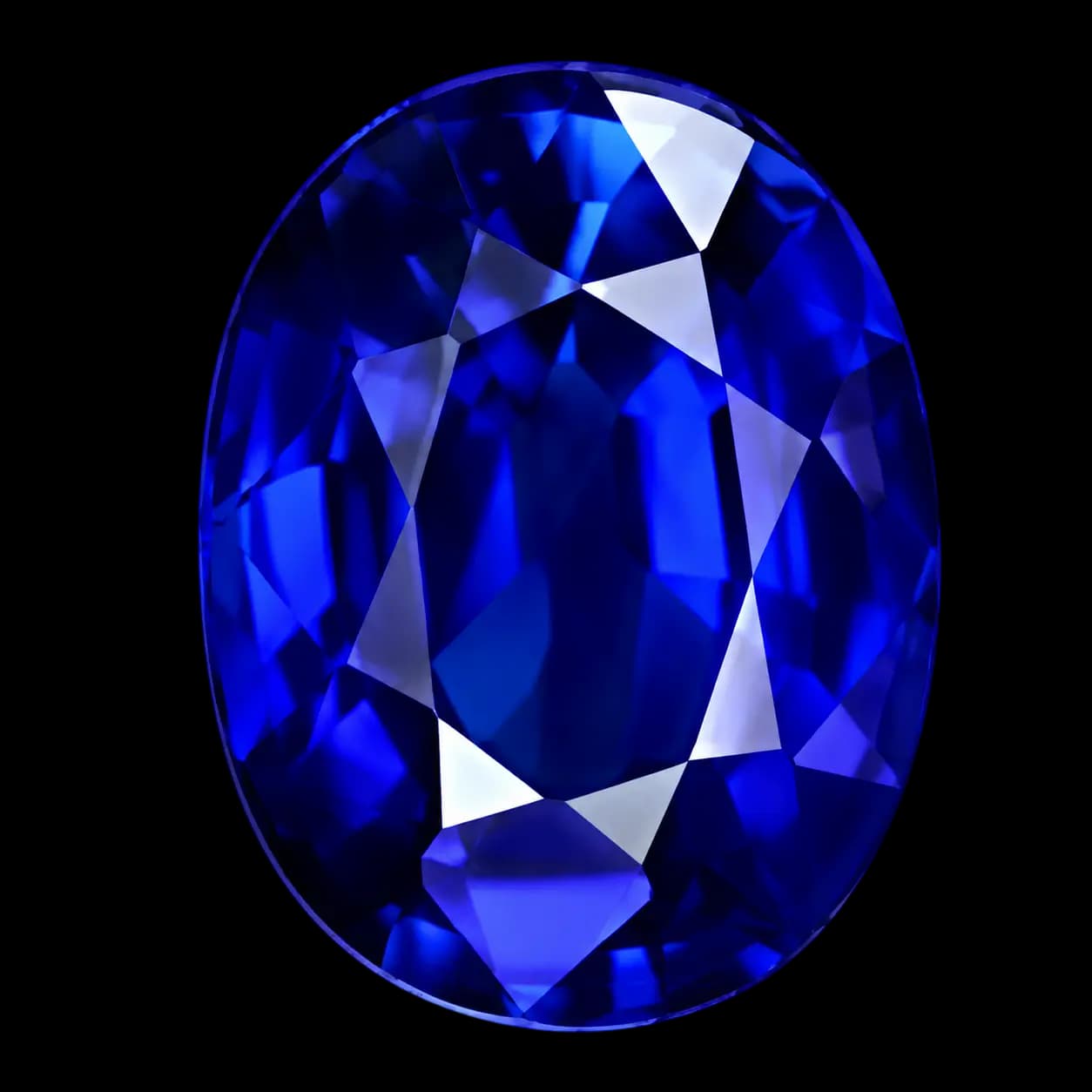
Cambodian Blue Sapphire
Cambodian Blue Sapphire is admired for its rich blue hues, exceptional durability, and historic significance. Known for its rarity, it remains a treasured choice for luxury jewelry and collectors worldwide.
Cambodian Blue Sapphire is a natural variety of corundum, a mineral species known for its remarkable hardness and brilliance. It forms deep within the Earth under intense heat and pressure, where trace elements such as iron and titanium create its distinctive blue coloration.
Historically, Cambodia has been recognized as an important source of high-quality sapphires, especially from the Pailin region. Cambodian sapphires are valued for their attractive blue tones, often displaying strong saturation and elegant transparency. Their unique geological formation contributes to their character and appeal among gemstone collectors.
With a chemical composition of aluminum oxide (Al₂O₃), Blue Sapphire belongs to the trigonal crystal system. It has a Mohs hardness of 9, making it one of the hardest natural gemstones after diamond and suitable for everyday jewelry use. Its vitreous luster and excellent light performance enhance its beauty when expertly cut.
Cambodian Blue Sapphire is commonly found in shades ranging from medium blue to deep blue. Fine examples may show excellent clarity, balanced color distribution, and strong brilliance. Some stones may contain natural inclusions that help gemologists identify their origin and authenticity.
Today, Cambodian Blue Sapphire is used in premium rings, earrings, necklaces, and bespoke jewelry designs. Its combination of durability, rarity, and timeless beauty makes it highly valued by collectors, jewelers, and gemstone enthusiasts around the world.
- Mineral Family
- Corundum
- Chemical Formula
- Al₂O₃
- Mohs Hardness
- 9
- Refractive Index
- 1.760 - 1.770
- Specific Gravity
- 3.95 - 4.03
- Cleavage
- None
- Crystal System
- Trigonal
- Luster
- Vitreous
- Color Range
- Blue
When buying Cambodian Blue Sapphire, evaluate the key quality factors including color, clarity, cut, carat weight, origin, and treatment.
Color is the most important factor. Highly desirable stones display vivid, evenly distributed blue tones with strong saturation. Clarity affects transparency and brilliance, with cleaner stones generally commanding higher value.
The quality of the cut determines how effectively the sapphire reflects light. Well-proportioned cuts maximize brightness and showcase the gemstone’s natural color. Larger carat sizes are rarer and often increase in value when combined with excellent quality.
Origin can influence market value, and Cambodian origin is appreciated because of its historical reputation. Buyers should always request reliable gemological certification confirming authenticity and treatment information.
Natural Blue Sapphire should be distinguished from synthetic or treated stones. Heat treatment is a common industry practice used to improve color and clarity, but untreated stones with exceptional quality are generally more valuable.
When purchasing online, choose reputable sellers who provide detailed gemstone information, certification, clear photographs, and transparent return policies. Consider the gemstone’s intended use, whether for collection, investment, or fine jewelry.
Cambodian Blue Sapphire is durable and suitable for daily wear due to its Mohs hardness of 9. Clean the gemstone regularly using warm water, mild soap, and a soft brush to remove dirt and oils.
Avoid exposing sapphire jewelry to harsh chemicals, strong cleaning agents, or sudden temperature changes. Ultrasonic and steam cleaning are generally safe for untreated sapphires, but caution is recommended for stones with fractures or certain treatments.
Store sapphire jewelry separately from softer gemstones to prevent scratches. Keep pieces in a fabric-lined jewelry box and remove jewelry during activities that may cause strong impacts.
Professional inspection and cleaning by a jeweler are recommended periodically to maintain settings and ensure long-term beauty.
Cambodian Blue Sapphire is a natural variety of corundum, a mineral species known for its remarkable hardness and brilliance. It forms deep within the Earth under intense heat and pressure, where trace elements such as iron and titanium create its distinctive blue coloration.
Historically, Cambodia has been recognized as an important source of high-quality sapphires, especially from the Pailin region. Cambodian sapphires are valued for their attractive blue tones, often displaying strong saturation and elegant transparency. Their unique geological formation contributes to their character and appeal among gemstone collectors.
With a chemical composition of aluminum oxide (Al₂O₃), Blue Sapphire belongs to the trigonal crystal system. It has a Mohs hardness of 9, making it one of the hardest natural gemstones after diamond and suitable for everyday jewelry use. Its vitreous luster and excellent light performance enhance its beauty when expertly cut.
Cambodian Blue Sapphire is commonly found in shades ranging from medium blue to deep blue. Fine examples may show excellent clarity, balanced color distribution, and strong brilliance. Some stones may contain natural inclusions that help gemologists identify their origin and authenticity.
Today, Cambodian Blue Sapphire is used in premium rings, earrings, necklaces, and bespoke jewelry designs. Its combination of durability, rarity, and timeless beauty makes it highly valued by collectors, jewelers, and gemstone enthusiasts around the world.
- Mineral Family
- Corundum
- Chemical Formula
- Al₂O₃
- Mohs Hardness
- 9
- Refractive Index
- 1.760 - 1.770
- Specific Gravity
- 3.95 - 4.03
- Cleavage
- None
- Crystal System
- Trigonal
- Luster
- Vitreous
- Color Range
- Blue
When buying Cambodian Blue Sapphire, evaluate the key quality factors including color, clarity, cut, carat weight, origin, and treatment.
Color is the most important factor. Highly desirable stones display vivid, evenly distributed blue tones with strong saturation. Clarity affects transparency and brilliance, with cleaner stones generally commanding higher value.
The quality of the cut determines how effectively the sapphire reflects light. Well-proportioned cuts maximize brightness and showcase the gemstone’s natural color. Larger carat sizes are rarer and often increase in value when combined with excellent quality.
Origin can influence market value, and Cambodian origin is appreciated because of its historical reputation. Buyers should always request reliable gemological certification confirming authenticity and treatment information.
Natural Blue Sapphire should be distinguished from synthetic or treated stones. Heat treatment is a common industry practice used to improve color and clarity, but untreated stones with exceptional quality are generally more valuable.
When purchasing online, choose reputable sellers who provide detailed gemstone information, certification, clear photographs, and transparent return policies. Consider the gemstone’s intended use, whether for collection, investment, or fine jewelry.
Cambodian Blue Sapphire is durable and suitable for daily wear due to its Mohs hardness of 9. Clean the gemstone regularly using warm water, mild soap, and a soft brush to remove dirt and oils.
Avoid exposing sapphire jewelry to harsh chemicals, strong cleaning agents, or sudden temperature changes. Ultrasonic and steam cleaning are generally safe for untreated sapphires, but caution is recommended for stones with fractures or certain treatments.
Store sapphire jewelry separately from softer gemstones to prevent scratches. Keep pieces in a fabric-lined jewelry box and remove jewelry during activities that may cause strong impacts.
Professional inspection and cleaning by a jeweler are recommended periodically to maintain settings and ensure long-term beauty.
Cambodian Blue Sapphire for Sale
No gems found
Try broadening your search or adjusting your filters.
Have a gem of your own? List it free - no fees