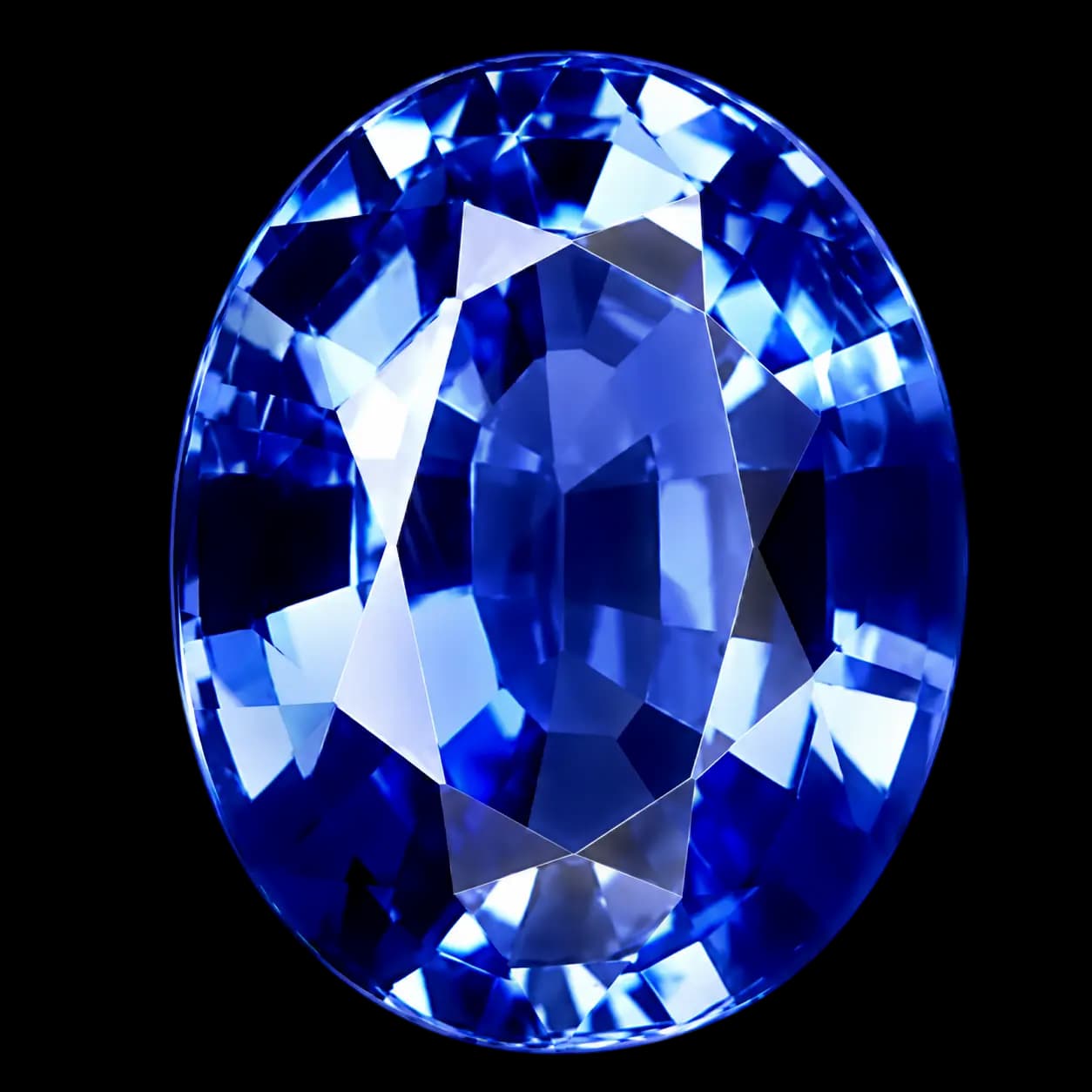
Blue Sapphire
Blue Sapphire is one of the world's most treasured gemstones, admired for its deep blue color, exceptional durability, and timeless elegance. Its rarity and beauty make it a favorite for fine jewelry and collectors.
Blue Sapphire is the blue variety of corundum, a durable mineral composed of aluminium oxide (Al₂O₃). Its famous blue color is created by trace amounts of iron and titanium within the crystal structure.
Formed deep within the Earth through geological processes involving intense heat and pressure, natural Blue Sapphire is found in renowned sources including Sri Lanka, Kashmir, Myanmar, Madagascar, Australia, and Africa. Each origin can produce unique color characteristics, inclusions, and optical qualities.
Blue Sapphire has a Mohs hardness of 9, making it one of the hardest natural gemstones after diamond. It features a trigonal crystal system, vitreous luster, excellent durability, and strong resistance to scratches, making it ideal for engagement rings and everyday jewelry.
The finest Blue Sapphires are valued for their vivid blue color, balanced saturation, transparency, and attractive brilliance. Some stones may display natural inclusions such as rutile silk, which can help identify their natural origin.
Throughout history, Blue Sapphire has been associated with royalty and luxury. Today, it remains one of the most popular precious gemstones, appreciated for sapphire jewelry, investment collections, and exceptional natural beauty.
- Mineral Family
- Corundum
- Chemical Formula
- Al₂O₃
- Mohs Hardness
- 9
- Refractive Index
- 1.760 - 1.770
- Specific Gravity
- 3.95 - 4.03
- Cleavage
- None
- Crystal System
- Trigonal
- Luster
- Vitreous
- Color Range
- Blue, Cyan, Gray
When buying a Blue Sapphire gemstone, several factors determine its quality and value.
Color: Color is the most important factor. Premium Blue Sapphires display a rich, vivid blue with excellent saturation and even distribution.
Clarity: High-quality sapphires typically have good transparency with minimal visible inclusions. Natural inclusions may provide evidence of authenticity.
Cut: A well-proportioned cut improves brilliance, light reflection, and overall appearance while enhancing the gemstone's natural blue color.
Carat Weight: Larger Blue Sapphires are rarer and usually increase significantly in value when combined with excellent color and clarity.
Origin: Origin can influence market value, especially for historically important sources such as Kashmir, Myanmar, and Sri Lanka.
Treatments: Many Blue Sapphires undergo heat treatment to improve color and clarity. Buyers should always request treatment disclosure and certification.
Natural vs Synthetic: Natural Blue Sapphire forms naturally in the Earth, while synthetic sapphire is created in laboratories. A reputable gemological certificate helps verify authenticity.
When buying Blue Sapphire online, check gemstone photographs, certification, return policies, treatment information, and seller reputation.
Blue Sapphire is highly durable and suitable for daily jewelry wear. Clean it with warm water, mild soap, and a soft brush to maintain its brilliance.
Avoid harsh chemicals, abrasive cleaners, and sudden temperature changes. Although sapphire is resistant to scratches, strong impacts may damage stones with internal fractures.
Ultrasonic cleaning is generally safe for untreated Blue Sapphire but should be avoided for heavily included or treated stones. Steam cleaning should only be performed after professional assessment.
Store Blue Sapphire jewelry separately from softer gemstones and have settings professionally inspected periodically to maintain security and appearance.
Blue Sapphire is the blue variety of corundum, a durable mineral composed of aluminium oxide (Al₂O₃). Its famous blue color is created by trace amounts of iron and titanium within the crystal structure.
Formed deep within the Earth through geological processes involving intense heat and pressure, natural Blue Sapphire is found in renowned sources including Sri Lanka, Kashmir, Myanmar, Madagascar, Australia, and Africa. Each origin can produce unique color characteristics, inclusions, and optical qualities.
Blue Sapphire has a Mohs hardness of 9, making it one of the hardest natural gemstones after diamond. It features a trigonal crystal system, vitreous luster, excellent durability, and strong resistance to scratches, making it ideal for engagement rings and everyday jewelry.
The finest Blue Sapphires are valued for their vivid blue color, balanced saturation, transparency, and attractive brilliance. Some stones may display natural inclusions such as rutile silk, which can help identify their natural origin.
Throughout history, Blue Sapphire has been associated with royalty and luxury. Today, it remains one of the most popular precious gemstones, appreciated for sapphire jewelry, investment collections, and exceptional natural beauty.
- Mineral Family
- Corundum
- Chemical Formula
- Al₂O₃
- Mohs Hardness
- 9
- Refractive Index
- 1.760 - 1.770
- Specific Gravity
- 3.95 - 4.03
- Cleavage
- None
- Crystal System
- Trigonal
- Luster
- Vitreous
- Color Range
- Blue, Cyan, Gray
When buying a Blue Sapphire gemstone, several factors determine its quality and value.
Color: Color is the most important factor. Premium Blue Sapphires display a rich, vivid blue with excellent saturation and even distribution.
Clarity: High-quality sapphires typically have good transparency with minimal visible inclusions. Natural inclusions may provide evidence of authenticity.
Cut: A well-proportioned cut improves brilliance, light reflection, and overall appearance while enhancing the gemstone's natural blue color.
Carat Weight: Larger Blue Sapphires are rarer and usually increase significantly in value when combined with excellent color and clarity.
Origin: Origin can influence market value, especially for historically important sources such as Kashmir, Myanmar, and Sri Lanka.
Treatments: Many Blue Sapphires undergo heat treatment to improve color and clarity. Buyers should always request treatment disclosure and certification.
Natural vs Synthetic: Natural Blue Sapphire forms naturally in the Earth, while synthetic sapphire is created in laboratories. A reputable gemological certificate helps verify authenticity.
When buying Blue Sapphire online, check gemstone photographs, certification, return policies, treatment information, and seller reputation.
Blue Sapphire is highly durable and suitable for daily jewelry wear. Clean it with warm water, mild soap, and a soft brush to maintain its brilliance.
Avoid harsh chemicals, abrasive cleaners, and sudden temperature changes. Although sapphire is resistant to scratches, strong impacts may damage stones with internal fractures.
Ultrasonic cleaning is generally safe for untreated Blue Sapphire but should be avoided for heavily included or treated stones. Steam cleaning should only be performed after professional assessment.
Store Blue Sapphire jewelry separately from softer gemstones and have settings professionally inspected periodically to maintain security and appearance.
Blue Sapphire for Sale
No gems found
Try broadening your search or adjusting your filters.
Have a gem of your own? List it free - no fees