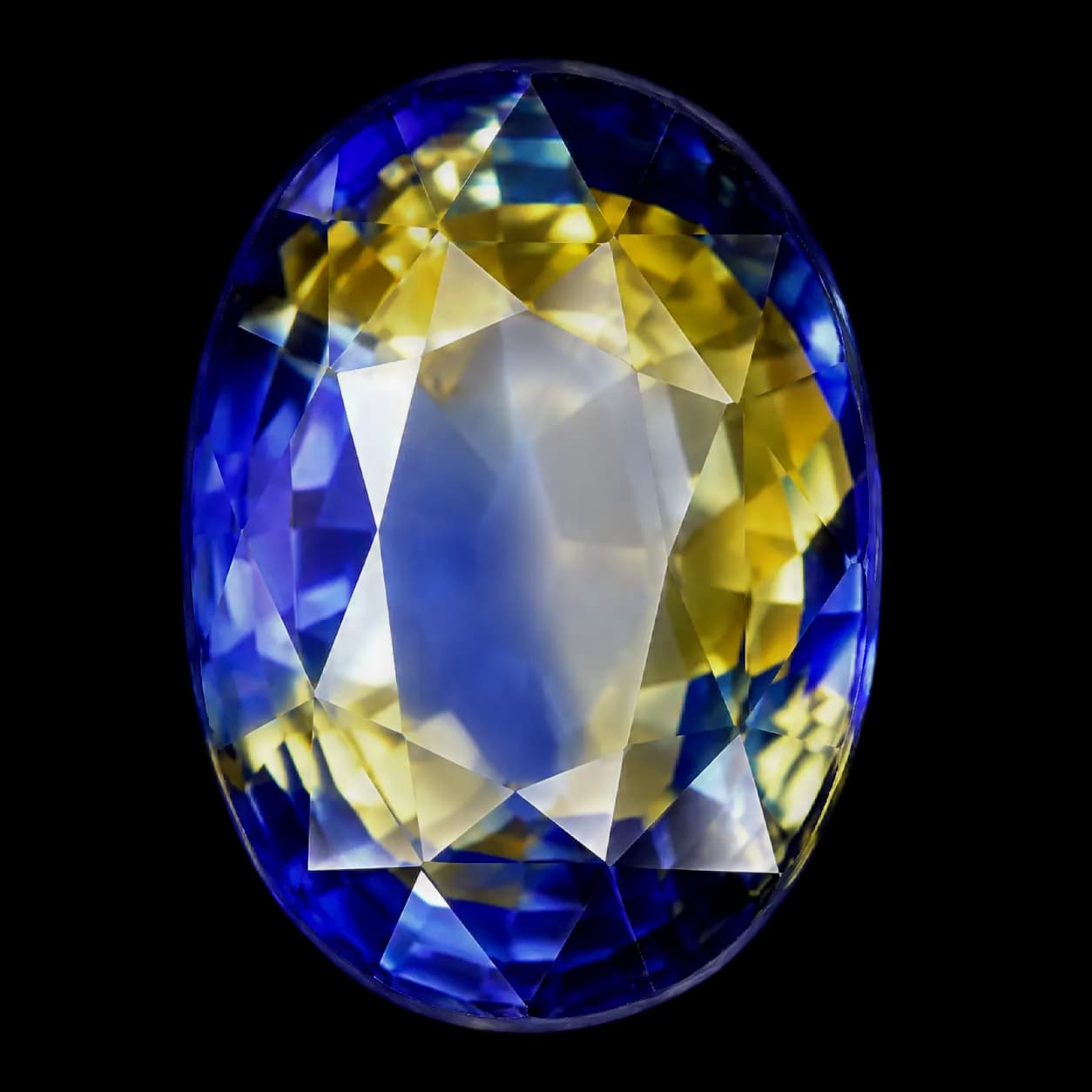
Bicolor Sapphire
Bicolor Sapphire is a rare variety of sapphire displaying two distinct colors within a single gemstone. Its natural color contrast, durability, and exceptional beauty make it a fascinating choice for collectors and luxury jewelry.
Bicolor Sapphire is a natural variety of corundum, the same mineral family as all sapphires. It is formed deep within the Earth under intense heat and pressure, where trace elements such as iron, titanium, chromium, or vanadium influence its final colors.
Unlike traditional single-color sapphires, Bicolor Sapphire features two visible color zones in one crystal, commonly appearing as combinations of blue and yellow, blue and green, pink and yellow, or other attractive contrasts. These color variations occur due to changing chemical conditions during crystal growth.
With a chemical composition of aluminium oxide (Al₂O₃), Bicolor Sapphire has excellent durability, ranking 9 on the Mohs hardness scale. It has a trigonal crystal system, vitreous luster, and outstanding resistance to scratches, making it suitable for rings, earrings, pendants, and everyday jewelry.
Many Bicolor Sapphires are sourced from renowned sapphire-producing regions including Sri Lanka, Madagascar, Tanzania, and Australia. Their unique appearance and natural color zoning make each gemstone distinctive, increasing their appeal among collectors and jewelry enthusiasts.
In modern jewelry design, Bicolor Sapphire is valued for its individuality and artistic character. Since no two stones display exactly the same color pattern, these gems offer a personalized alternative to traditional colored gemstones.
- Mineral Family
- Corundum
- Chemical Formula
- Al₂O₃
- Mohs Hardness
- 9
- Refractive Index
- 1.760 - 1.770
- Specific Gravity
- 3.95 - 4.03
- Cleavage
- None
- Crystal System
- Trigonal
- Luster
- Vitreous
- Color Range
- Blue, Green, Yellow, Pink
When buying a Bicolor Sapphire gemstone, consider the key quality factors that influence beauty and value.
Color: The most important feature is the strength, balance, and attractiveness of the two colors. Stones with vivid, well-defined color separation are generally more desirable.
Clarity: Eye-clean Bicolor Sapphires with good transparency are preferred. Natural inclusions are common and may help confirm authenticity.
Cut: A skilled cut enhances brilliance while preserving the natural color zoning. Symmetrical cuts can improve the gemstone’s overall visual appeal.
Carat Weight: Larger Bicolor Sapphires with attractive color patterns are rarer and often command higher prices.
Origin: Geographic origin can influence market value, especially for stones from recognized sapphire-producing regions.
Treatments: Some sapphires undergo heat treatment to improve color and clarity. Buyers should always request treatment disclosure and reliable certification.
Natural vs Synthetic: Natural Bicolor Sapphire has naturally formed color zones, while synthetic versions are created in laboratories. Certification from a trusted gemological laboratory helps verify authenticity.
When buying Bicolor Sapphire online, review gemstone photographs, certification details, seller reputation, return policies, and complete disclosure of treatments before purchasing.
Bicolor Sapphire is a durable gemstone suitable for regular jewelry wear. Clean it using warm water, mild soap, and a soft brush to remove dirt and oils.
Avoid exposing the gemstone to harsh chemicals, strong acids, or abrasive cleaners. Although sapphire is highly resistant to scratches, strong impacts can still damage the stone, especially if it contains internal fractures.
Ultrasonic cleaning is generally safe for untreated sapphires but should be avoided when the gemstone has significant inclusions, fractures, or certain treatments. Steam cleaning should only be performed after professional evaluation.
Store Bicolor Sapphire jewelry separately from softer gemstones to prevent scratching. Periodic professional inspections are recommended to check settings and maintain jewelry quality.
Bicolor Sapphire is a natural variety of corundum, the same mineral family as all sapphires. It is formed deep within the Earth under intense heat and pressure, where trace elements such as iron, titanium, chromium, or vanadium influence its final colors.
Unlike traditional single-color sapphires, Bicolor Sapphire features two visible color zones in one crystal, commonly appearing as combinations of blue and yellow, blue and green, pink and yellow, or other attractive contrasts. These color variations occur due to changing chemical conditions during crystal growth.
With a chemical composition of aluminium oxide (Al₂O₃), Bicolor Sapphire has excellent durability, ranking 9 on the Mohs hardness scale. It has a trigonal crystal system, vitreous luster, and outstanding resistance to scratches, making it suitable for rings, earrings, pendants, and everyday jewelry.
Many Bicolor Sapphires are sourced from renowned sapphire-producing regions including Sri Lanka, Madagascar, Tanzania, and Australia. Their unique appearance and natural color zoning make each gemstone distinctive, increasing their appeal among collectors and jewelry enthusiasts.
In modern jewelry design, Bicolor Sapphire is valued for its individuality and artistic character. Since no two stones display exactly the same color pattern, these gems offer a personalized alternative to traditional colored gemstones.
- Mineral Family
- Corundum
- Chemical Formula
- Al₂O₃
- Mohs Hardness
- 9
- Refractive Index
- 1.760 - 1.770
- Specific Gravity
- 3.95 - 4.03
- Cleavage
- None
- Crystal System
- Trigonal
- Luster
- Vitreous
- Color Range
- Blue, Green, Yellow, Pink
When buying a Bicolor Sapphire gemstone, consider the key quality factors that influence beauty and value.
Color: The most important feature is the strength, balance, and attractiveness of the two colors. Stones with vivid, well-defined color separation are generally more desirable.
Clarity: Eye-clean Bicolor Sapphires with good transparency are preferred. Natural inclusions are common and may help confirm authenticity.
Cut: A skilled cut enhances brilliance while preserving the natural color zoning. Symmetrical cuts can improve the gemstone’s overall visual appeal.
Carat Weight: Larger Bicolor Sapphires with attractive color patterns are rarer and often command higher prices.
Origin: Geographic origin can influence market value, especially for stones from recognized sapphire-producing regions.
Treatments: Some sapphires undergo heat treatment to improve color and clarity. Buyers should always request treatment disclosure and reliable certification.
Natural vs Synthetic: Natural Bicolor Sapphire has naturally formed color zones, while synthetic versions are created in laboratories. Certification from a trusted gemological laboratory helps verify authenticity.
When buying Bicolor Sapphire online, review gemstone photographs, certification details, seller reputation, return policies, and complete disclosure of treatments before purchasing.
Bicolor Sapphire is a durable gemstone suitable for regular jewelry wear. Clean it using warm water, mild soap, and a soft brush to remove dirt and oils.
Avoid exposing the gemstone to harsh chemicals, strong acids, or abrasive cleaners. Although sapphire is highly resistant to scratches, strong impacts can still damage the stone, especially if it contains internal fractures.
Ultrasonic cleaning is generally safe for untreated sapphires but should be avoided when the gemstone has significant inclusions, fractures, or certain treatments. Steam cleaning should only be performed after professional evaluation.
Store Bicolor Sapphire jewelry separately from softer gemstones to prevent scratching. Periodic professional inspections are recommended to check settings and maintain jewelry quality.
Bicolor Sapphire for Sale
No gems found
Try broadening your search or adjusting your filters.
Have a gem of your own? List it free - no fees