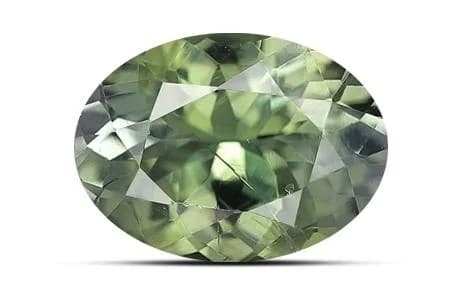
Zoisite
Zoisite is a distinctive mineral prized for its natural color range and gem varieties, including vivid Tanzanite, pink Thulite, and green Ruby-in-Zoisite.
Zoisite is a calcium aluminium sorosilicate mineral belonging to the epidote group. It crystallizes in the orthorhombic crystal system and typically has a vitreous luster. Its chemical formula is Ca2Al3(SiO4)(Si2O7)O(OH), with a Mohs hardness of about 6-7, refractive index of approximately 1.685-1.707, and specific gravity around 3.10-3.38. Zoisite has perfect cleavage in one direction, so finished stones should be handled with reasonable care. The mineral can occur in transparent to translucent material and displays colors including pink, red, green, blue, violet, yellow, gray, white, and related tones. Important gem varieties include Tanzanite, the blue to violet-blue variety; Thulite, a pink to red variety; and Ruby-in-Zoisite, a green Zoisite matrix containing ruby and commonly dark inclusions. Zoisite forms mainly in metamorphic environments and is found in several parts of the world. The mineral was named after the Carniolan naturalist and mineral collector Sigmund Zois. Tanzanite, discovered in northern Tanzania in the 20th century, transformed Zoisite's importance in the gem trade and remains its best-known gem variety. Today, Zoisite materials are used for faceted gemstones, cabochons, beads, carvings, and decorative jewelry. Tanzanite is especially valued for its blue-violet color, strong pleochroism, transparency, and rarity of its known commercial source. Thulite and Ruby-in-Zoisite are appreciated for their distinctive body colors and natural patterns. Buyers value Zoisite for the diversity of its varieties, attractive color, geological interest, and the individuality of natural specimens.
- Mineral Family
- Zoisite
- Chemical Formula
- Ca2Al3(SiO4)(Si2O7)O(OH)
- Mohs Hardness
- 6 - 7
- Refractive Index
- 1.685 - 1.707
- Specific Gravity
- 3.10 - 3.38
- Cleavage
- Perfect
- Crystal System
- Orthorhombic
- Luster
- Vitreous
- Color Range
- Pink, Purple, Red, Blue, Gray, Yellow, Green, White
When buying Zoisite, first identify the specific variety because quality factors and market value vary considerably between Tanzanite, Thulite, and Ruby-in-Zoisite. Color is especially important for transparent gem-quality material. In Tanzanite, attractive blue to violet-blue saturation, tone, and strong pleochroic color can significantly influence value. Thulite is generally appreciated for attractive pink to red color, while Ruby-in-Zoisite is valued for the visual balance between green Zoisite, red or pink ruby, and any contrasting dark inclusions. Clarity matters most for transparent faceted Zoisite varieties. Eye-clean or well-formed transparent material is generally more desirable, while inclusions and patterns can be an inherent part of the appeal of opaque varieties. Cut should maximize color, brilliance, and visual appeal while protecting the stone from its cleavage. Tanzanite is commonly fashioned into faceted cuts, whereas Thulite and Ruby-in-Zoisite are often cut as cabochons, beads, carvings, or ornamental pieces. Carat weight also affects price, but quality, color, transparency, and variety should be considered alongside size. Origin can be important, particularly for Tanzanite, which is associated with its limited source area in northern Tanzania. Treatment disclosure is essential. Most commercial Tanzanite is heat-treated to develop or enhance its blue-violet appearance, and the treatment should be disclosed by the seller. Buyers should also ask whether any other treatment has been applied. Natural Zoisite is mined from geological deposits, while commercially significant lab-grown Zoisite is not a standard category in the gem market; any claim of synthetic or laboratory-grown material should therefore be clearly documented. For higher-value stones, an independent gemological report can help confirm species, variety, treatment status where detectable, and other identifying characteristics. A trustworthy seller should provide accurate disclosure and supporting documentation where appropriate. Authenticity should be assessed through gemological testing rather than appearance alone. Zoisite price depends on variety, color, clarity, transparency, cut, carat weight, origin, treatment, and overall quality. For Tanzanite in particular, vivid and attractive blue-violet material with good transparency and desirable color distribution can command significantly higher prices.
Zoisite jewelry should be cleaned gently with lukewarm water, mild soap, and a soft cloth or soft brush. Avoid harsh chemicals, abrasive cleaners, ultrasonic cleaners, and steam cleaning unless a qualified gemologist confirms that they are suitable for the specific stone and any treatments it may have received. Because Zoisite has a hardness of about 6-7 and has significant cleavage, protect it from sharp impacts, sudden knocks, and contact with harder gemstones that may scratch it. Rings and other pieces exposed to frequent impact are best reserved for careful everyday wear rather than demanding activities. Remove Zoisite jewelry before sports, heavy manual work, gardening, or situations where the stone may be struck. Store each piece separately in a soft pouch or lined jewelry compartment to prevent scratches and accidental contact. Tanzanite deserves particular care because its cleavage and moderate hardness make it less suitable for rough wear than very durable gemstones such as sapphire or diamond.
Zoisite is a calcium aluminium sorosilicate mineral belonging to the epidote group. It crystallizes in the orthorhombic crystal system and typically has a vitreous luster. Its chemical formula is Ca2Al3(SiO4)(Si2O7)O(OH), with a Mohs hardness of about 6-7, refractive index of approximately 1.685-1.707, and specific gravity around 3.10-3.38. Zoisite has perfect cleavage in one direction, so finished stones should be handled with reasonable care. The mineral can occur in transparent to translucent material and displays colors including pink, red, green, blue, violet, yellow, gray, white, and related tones. Important gem varieties include Tanzanite, the blue to violet-blue variety; Thulite, a pink to red variety; and Ruby-in-Zoisite, a green Zoisite matrix containing ruby and commonly dark inclusions. Zoisite forms mainly in metamorphic environments and is found in several parts of the world. The mineral was named after the Carniolan naturalist and mineral collector Sigmund Zois. Tanzanite, discovered in northern Tanzania in the 20th century, transformed Zoisite's importance in the gem trade and remains its best-known gem variety. Today, Zoisite materials are used for faceted gemstones, cabochons, beads, carvings, and decorative jewelry. Tanzanite is especially valued for its blue-violet color, strong pleochroism, transparency, and rarity of its known commercial source. Thulite and Ruby-in-Zoisite are appreciated for their distinctive body colors and natural patterns. Buyers value Zoisite for the diversity of its varieties, attractive color, geological interest, and the individuality of natural specimens.
- Mineral Family
- Zoisite
- Chemical Formula
- Ca2Al3(SiO4)(Si2O7)O(OH)
- Mohs Hardness
- 6 - 7
- Refractive Index
- 1.685 - 1.707
- Specific Gravity
- 3.10 - 3.38
- Cleavage
- Perfect
- Crystal System
- Orthorhombic
- Luster
- Vitreous
- Color Range
- Pink, Purple, Red, Blue, Gray, Yellow, Green, White
When buying Zoisite, first identify the specific variety because quality factors and market value vary considerably between Tanzanite, Thulite, and Ruby-in-Zoisite. Color is especially important for transparent gem-quality material. In Tanzanite, attractive blue to violet-blue saturation, tone, and strong pleochroic color can significantly influence value. Thulite is generally appreciated for attractive pink to red color, while Ruby-in-Zoisite is valued for the visual balance between green Zoisite, red or pink ruby, and any contrasting dark inclusions. Clarity matters most for transparent faceted Zoisite varieties. Eye-clean or well-formed transparent material is generally more desirable, while inclusions and patterns can be an inherent part of the appeal of opaque varieties. Cut should maximize color, brilliance, and visual appeal while protecting the stone from its cleavage. Tanzanite is commonly fashioned into faceted cuts, whereas Thulite and Ruby-in-Zoisite are often cut as cabochons, beads, carvings, or ornamental pieces. Carat weight also affects price, but quality, color, transparency, and variety should be considered alongside size. Origin can be important, particularly for Tanzanite, which is associated with its limited source area in northern Tanzania. Treatment disclosure is essential. Most commercial Tanzanite is heat-treated to develop or enhance its blue-violet appearance, and the treatment should be disclosed by the seller. Buyers should also ask whether any other treatment has been applied. Natural Zoisite is mined from geological deposits, while commercially significant lab-grown Zoisite is not a standard category in the gem market; any claim of synthetic or laboratory-grown material should therefore be clearly documented. For higher-value stones, an independent gemological report can help confirm species, variety, treatment status where detectable, and other identifying characteristics. A trustworthy seller should provide accurate disclosure and supporting documentation where appropriate. Authenticity should be assessed through gemological testing rather than appearance alone. Zoisite price depends on variety, color, clarity, transparency, cut, carat weight, origin, treatment, and overall quality. For Tanzanite in particular, vivid and attractive blue-violet material with good transparency and desirable color distribution can command significantly higher prices.
Zoisite jewelry should be cleaned gently with lukewarm water, mild soap, and a soft cloth or soft brush. Avoid harsh chemicals, abrasive cleaners, ultrasonic cleaners, and steam cleaning unless a qualified gemologist confirms that they are suitable for the specific stone and any treatments it may have received. Because Zoisite has a hardness of about 6-7 and has significant cleavage, protect it from sharp impacts, sudden knocks, and contact with harder gemstones that may scratch it. Rings and other pieces exposed to frequent impact are best reserved for careful everyday wear rather than demanding activities. Remove Zoisite jewelry before sports, heavy manual work, gardening, or situations where the stone may be struck. Store each piece separately in a soft pouch or lined jewelry compartment to prevent scratches and accidental contact. Tanzanite deserves particular care because its cleavage and moderate hardness make it less suitable for rough wear than very durable gemstones such as sapphire or diamond.
Zoisite for Sale
No gems found
Try broadening your search or adjusting your filters.
Have a gem of your own? List it free - no fees