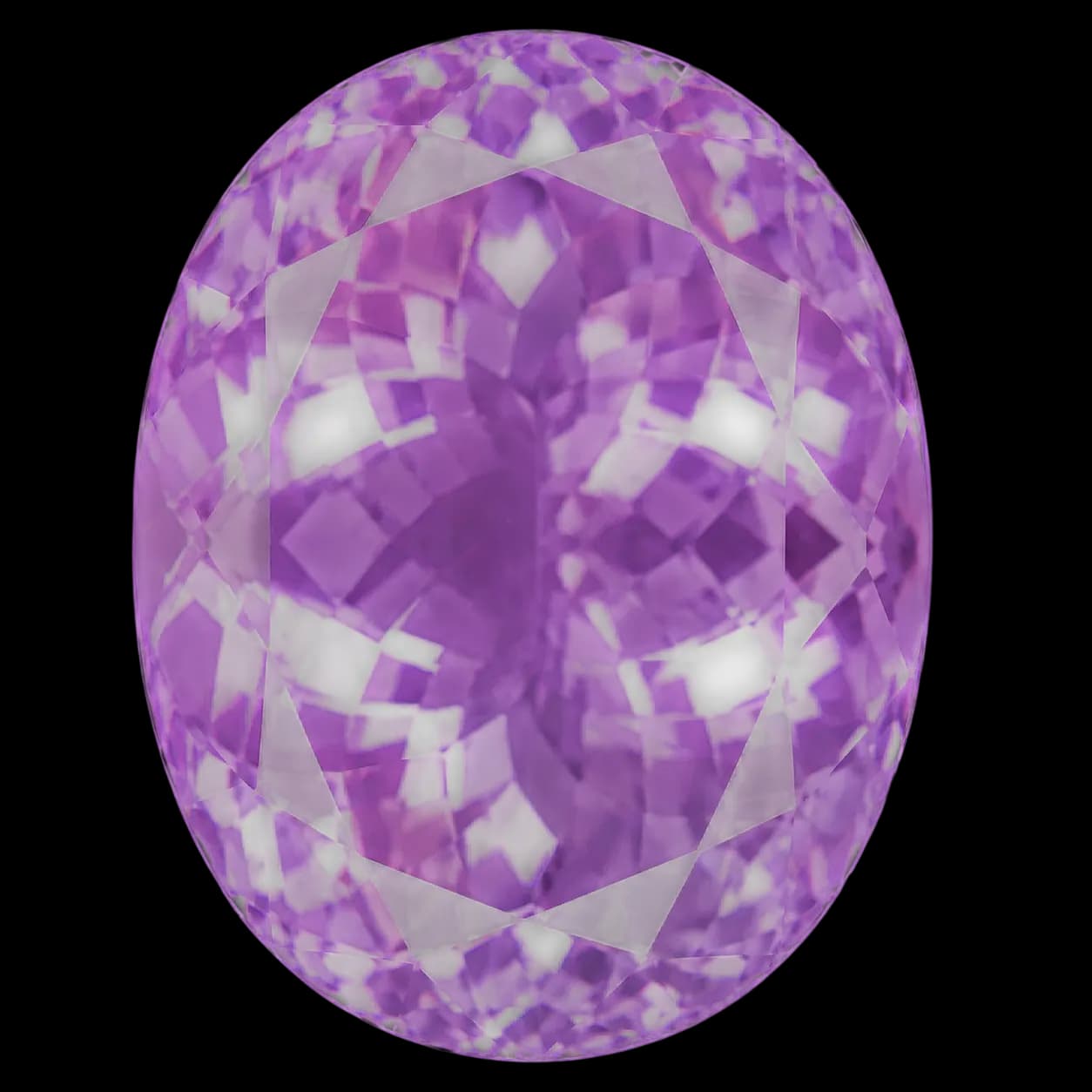
Kunzite
Kunzite is a captivating pink to violet gemstone from the spodumene family, admired for its delicate colors, brilliance, transparency, and elegant appeal in fine jewelry.
Kunzite is a beautiful variety of spodumene, a lithium aluminum silicate mineral known for producing gemstones with exceptional clarity and attractive pastel colors. First identified as a gemstone in the early 20th century, Kunzite was named after renowned gemologist George Frederick Kunz.
Natural Kunzite gemstone is primarily recognized for its soft pink, lilac, and violet shades. The color is caused by trace amounts of manganese within the crystal structure. Some stones display strong pleochroism, showing different color intensities when viewed from different angles, making skilled cutting essential to maximize beauty.
Kunzite forms in lithium-rich pegmatite deposits where mineral-rich fluids allow large crystals to develop over geological time. Major sources include Brazil, Afghanistan, Pakistan, Madagascar, and the United States. Brazilian Kunzite is particularly admired for its attractive color and transparency.
With a Mohs hardness of 6.5 to 7, Kunzite is suitable for many types of jewelry, including pendants, earrings, and carefully designed rings. Because of its perfect cleavage, extra care is recommended for pieces exposed to impact.
Collectors and jewelry enthusiasts value Kunzite for its romantic pastel shades, impressive transparency, large crystal sizes, and distinctive character. Today, natural Kunzite jewelry remains a popular choice for buyers looking for a unique gemstone with refined elegance.
- Mineral Family
- Spodumene
- Chemical Formula
- LiAlSi2O6
- Mohs Hardness
- 6.5 - 7
- Refractive Index
- 1.660 - 1.681
- Specific Gravity
- 3.15 - 3.21
- Cleavage
- Perfect cleavage in two directions
- Crystal System
- Monoclinic
- Luster
- Vitreous
- Color Range
- Pink, Purple
When choosing a natural Kunzite gemstone, buyers should evaluate several important quality factors.
Color: Color is one of the most important factors affecting Kunzite value. Stones with stronger saturation, attractive pink to violet hues, and even color distribution are generally more desirable. Very pale stones may be less valuable compared with richly colored specimens.
Clarity: Kunzite is often found with excellent transparency. Eye-clean gemstones with minimal visible inclusions are preferred for jewelry. Natural internal features may occur and should be assessed based on their effect on beauty and durability.
Cut: Due to Kunzite's pleochroism, expert cutting plays an important role in displaying the best color and brilliance. Well-cut gemstones show balanced proportions, good light return, and attractive color presentation.
Carat: Kunzite crystals can occur in large sizes, and larger gemstones are relatively available compared with many other colored gems. However, fine color and excellent clarity in larger sizes can significantly increase value.
Origin: Geographic origin can influence collector interest, especially for stones with exceptional color and quality. Brazilian Kunzite is widely appreciated, while other origins may also produce attractive gemstones.
Treatments: Some Kunzite gemstones may be heat treated to enhance color. Buyers should always request disclosure of any treatments before purchase.
Natural vs Lab-Grown: Natural Kunzite is valued for its geological origin and unique characteristics. Buyers should confirm whether a gemstone is natural or laboratory-created through reliable documentation.
Certification: A gemstone certificate from a reputable gemological laboratory helps verify authenticity, treatments, and quality characteristics.
Price Factors: Kunzite price depends mainly on color, clarity, cut quality, carat weight, origin, and treatment status. High-quality stones with vivid color and excellent transparency command premium prices.
Kunzite jewelry should be handled carefully to maintain its beauty and brilliance.
Clean Kunzite using warm water, mild soap, and a soft brush. Avoid harsh chemicals, ultrasonic cleaners, and steam cleaning, as they may affect the gemstone or its setting.
Store Kunzite separately from harder gemstones to prevent scratches. A soft jewelry pouch or lined box is recommended.
Although Kunzite has good hardness, its perfect cleavage means strong impacts can cause damage. Remove Kunzite rings before activities involving heavy contact or sudden impact.
Long exposure to strong sunlight may gradually affect the color of some Kunzite stones, so storing jewelry away from direct sunlight is recommended.
Kunzite is a beautiful variety of spodumene, a lithium aluminum silicate mineral known for producing gemstones with exceptional clarity and attractive pastel colors. First identified as a gemstone in the early 20th century, Kunzite was named after renowned gemologist George Frederick Kunz.
Natural Kunzite gemstone is primarily recognized for its soft pink, lilac, and violet shades. The color is caused by trace amounts of manganese within the crystal structure. Some stones display strong pleochroism, showing different color intensities when viewed from different angles, making skilled cutting essential to maximize beauty.
Kunzite forms in lithium-rich pegmatite deposits where mineral-rich fluids allow large crystals to develop over geological time. Major sources include Brazil, Afghanistan, Pakistan, Madagascar, and the United States. Brazilian Kunzite is particularly admired for its attractive color and transparency.
With a Mohs hardness of 6.5 to 7, Kunzite is suitable for many types of jewelry, including pendants, earrings, and carefully designed rings. Because of its perfect cleavage, extra care is recommended for pieces exposed to impact.
Collectors and jewelry enthusiasts value Kunzite for its romantic pastel shades, impressive transparency, large crystal sizes, and distinctive character. Today, natural Kunzite jewelry remains a popular choice for buyers looking for a unique gemstone with refined elegance.
- Mineral Family
- Spodumene
- Chemical Formula
- LiAlSi2O6
- Mohs Hardness
- 6.5 - 7
- Refractive Index
- 1.660 - 1.681
- Specific Gravity
- 3.15 - 3.21
- Cleavage
- Perfect cleavage in two directions
- Crystal System
- Monoclinic
- Luster
- Vitreous
- Color Range
- Pink, Purple
When choosing a natural Kunzite gemstone, buyers should evaluate several important quality factors.
Color: Color is one of the most important factors affecting Kunzite value. Stones with stronger saturation, attractive pink to violet hues, and even color distribution are generally more desirable. Very pale stones may be less valuable compared with richly colored specimens.
Clarity: Kunzite is often found with excellent transparency. Eye-clean gemstones with minimal visible inclusions are preferred for jewelry. Natural internal features may occur and should be assessed based on their effect on beauty and durability.
Cut: Due to Kunzite's pleochroism, expert cutting plays an important role in displaying the best color and brilliance. Well-cut gemstones show balanced proportions, good light return, and attractive color presentation.
Carat: Kunzite crystals can occur in large sizes, and larger gemstones are relatively available compared with many other colored gems. However, fine color and excellent clarity in larger sizes can significantly increase value.
Origin: Geographic origin can influence collector interest, especially for stones with exceptional color and quality. Brazilian Kunzite is widely appreciated, while other origins may also produce attractive gemstones.
Treatments: Some Kunzite gemstones may be heat treated to enhance color. Buyers should always request disclosure of any treatments before purchase.
Natural vs Lab-Grown: Natural Kunzite is valued for its geological origin and unique characteristics. Buyers should confirm whether a gemstone is natural or laboratory-created through reliable documentation.
Certification: A gemstone certificate from a reputable gemological laboratory helps verify authenticity, treatments, and quality characteristics.
Price Factors: Kunzite price depends mainly on color, clarity, cut quality, carat weight, origin, and treatment status. High-quality stones with vivid color and excellent transparency command premium prices.
Kunzite jewelry should be handled carefully to maintain its beauty and brilliance.
Clean Kunzite using warm water, mild soap, and a soft brush. Avoid harsh chemicals, ultrasonic cleaners, and steam cleaning, as they may affect the gemstone or its setting.
Store Kunzite separately from harder gemstones to prevent scratches. A soft jewelry pouch or lined box is recommended.
Although Kunzite has good hardness, its perfect cleavage means strong impacts can cause damage. Remove Kunzite rings before activities involving heavy contact or sudden impact.
Long exposure to strong sunlight may gradually affect the color of some Kunzite stones, so storing jewelry away from direct sunlight is recommended.
Kunzite for Sale
No gems found
Try broadening your search or adjusting your filters.
Have a gem of your own? List it free - no fees