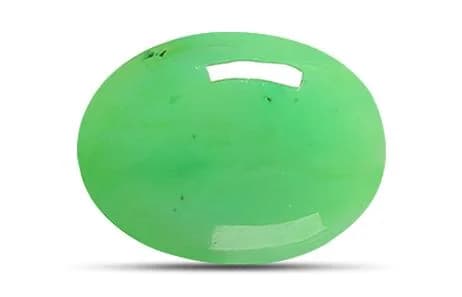
Vesuvianite
Vesuvianite is a distinctive natural gemstone prized for its glassy luster, earthy green hues, and unusual mineral character, making it an appealing choice for jewelry and collectors.
Vesuvianite, also known as Idocrase, is a calcium-rich silicate mineral valued as both a gemstone and a collector mineral. It belongs to the sorosilicate group and crystallizes in the tetragonal crystal system. Its complex chemical composition commonly includes calcium, aluminum, silicon, magnesium, iron, hydroxyl, fluorine, and oxygen. Vesuvianite typically forms through contact or hydrothermal metamorphism in carbonate-rich rocks such as limestone, dolomite, marble, and skarn, often near igneous intrusions.
The gemstone is best known for green, yellow-green, olive, and brownish-green colors, although natural material can also occur in yellow, pink, purple, blue, red, white, black, and colorless varieties. Iron and chromium can contribute to green coloration, while manganese may influence pink hues. Some specimens display attractive color zoning or combinations of green and brown. Vesuvianite commonly has a vitreous to greasy luster and can range from opaque or translucent to transparent in finer gem-quality material.
Vesuvianite was named after Mount Vesuvius in Italy, where crystals were first recognized in the late eighteenth century. The name Idocrase was introduced separately and remains widely used in the gem trade. Important gem-quality occurrences have been documented in Italy, Quebec in Canada, Switzerland, California, Pakistan, Kenya, Tanzania, and other localities. The Val d'Ala region of Piedmont, Italy, is known for attractive green and polychromatic material, while the Jeffrey Mine in Quebec is famous among mineral collectors for well-formed crystals. Californite, a massive green variety of Vesuvianite from California, is sometimes fashioned as a jade-like ornamental material.
For jewelry, transparent Vesuvianite can be faceted to emphasize its color and luster, while translucent or opaque material is commonly fashioned into cabochons, beads, carvings, and ornamental pieces. With a Mohs hardness of about 6.5, it offers reasonable resistance to scratching but is comparatively brittle, so it is better suited to earrings, pendants, brooches, and carefully protected rings than to jewelry exposed to frequent impact. Buyers value Vesuvianite for its distinctive appearance, geological interest, availability in unusual colors, and the opportunity to own a natural gemstone that is less commonly encountered than mainstream jewelry stones.
- Mineral Family
- Vesuvianite
- Chemical Formula
- (Ca,Na)19(Al,Mg,Fe)13(SiO4)10(Si2O7)4(OH,F,O)10
- Mohs Hardness
- 6.5
- Refractive Index
- 1.70 - 1.72
- Specific Gravity
- 3.3 - 3.5
- Cleavage
- Poorly defined
- Crystal System
- Tetragonal
- Luster
- Greasy
- Color Range
- Green, Yellow, Red, Purple, White, Black
When buying Vesuvianite gemstone, start with color. Green, yellow-green, olive, and attractive brownish-green stones are among the most recognizable choices. Look for lively, well-saturated color and an even appearance where appropriate. Unusual colors such as blue, purple, pink, or strongly contrasting color zones can have particular collector appeal.
Clarity depends strongly on the type of Vesuvianite. Transparent material suitable for faceting is less common, while translucent and opaque material is frequently used for cabochons and carvings. Natural inclusions are not automatically a defect, but excessive fractures, distracting cloudiness, or surface-reaching damage can reduce beauty and durability.
Cut should match the material. Faceted cuts work well when the rough is transparent enough to show internal light return, while cabochons can showcase translucent green or olive material with a smooth, polished surface. Carat weight matters, but larger size alone does not guarantee higher value. Color quality, transparency, cut quality, rarity of the material, and overall appearance are generally more important considerations.
Origin can add interest and, for certain collector specimens, value. Vesuvianite associated with localities such as Val d'Ala in Italy or Quebec's Jeffrey Mine may be particularly desirable to collectors, but origin should be supported by credible documentation rather than used as an unsupported premium claim.
Vesuvianite is not widely known for routine commercial treatments, and reliable mineralogical sources report no established synthetic Vesuvianite used as a standard gem substitute. Nevertheless, buyers should ask whether a stone has undergone any treatment, enhancement, dyeing, filling, or coating and ensure that any treatment is clearly disclosed. Natural Vesuvianite should not be assumed simply because a seller describes a stone as Idocrase.
For higher-value natural Vesuvianite, independent laboratory identification is the safest way to confirm authenticity, especially when the material resembles jade, serpentine, peridot, or other green gemstones. A reputable report can document the gem's identity and disclose relevant treatments. When you buy Vesuvianite online, choose a seller that provides clear photographs, accurate dimensions and carat weight, treatment disclosure, return terms, and laboratory documentation when appropriate.
Vesuvianite can be cleaned safely with lukewarm water, a mild soap, and a soft cloth or soft brush. Rinse thoroughly and dry with a clean, lint-free cloth. Because the gemstone has a hardness of about 6.5 and can be brittle, avoid abrasive cleaners, harsh chemicals, and rough handling. Ultrasonic or steam cleaning is best avoided unless a qualified professional has confirmed that the particular stone and setting can safely withstand the treatment.
Store Vesuvianite jewelry separately from harder gemstones such as sapphire, ruby, and diamond to reduce the risk of scratches. A soft jewelry pouch or individual compartment is ideal. Avoid dropping the stone, exposing it to strong impacts, or wearing it during activities involving heavy abrasion. Rings and bracelets deserve extra protection because they are more likely to encounter knocks. Pendants and earrings are generally better choices for frequent wear.
Remove Vesuvianite jewelry before sports, manual work, gardening, or other activities where the stone could be struck. With sensible handling and regular gentle cleaning, a Vesuvianite gemstone can retain its natural color and polished luster for many years.
Vesuvianite, also known as Idocrase, is a calcium-rich silicate mineral valued as both a gemstone and a collector mineral. It belongs to the sorosilicate group and crystallizes in the tetragonal crystal system. Its complex chemical composition commonly includes calcium, aluminum, silicon, magnesium, iron, hydroxyl, fluorine, and oxygen. Vesuvianite typically forms through contact or hydrothermal metamorphism in carbonate-rich rocks such as limestone, dolomite, marble, and skarn, often near igneous intrusions.
The gemstone is best known for green, yellow-green, olive, and brownish-green colors, although natural material can also occur in yellow, pink, purple, blue, red, white, black, and colorless varieties. Iron and chromium can contribute to green coloration, while manganese may influence pink hues. Some specimens display attractive color zoning or combinations of green and brown. Vesuvianite commonly has a vitreous to greasy luster and can range from opaque or translucent to transparent in finer gem-quality material.
Vesuvianite was named after Mount Vesuvius in Italy, where crystals were first recognized in the late eighteenth century. The name Idocrase was introduced separately and remains widely used in the gem trade. Important gem-quality occurrences have been documented in Italy, Quebec in Canada, Switzerland, California, Pakistan, Kenya, Tanzania, and other localities. The Val d'Ala region of Piedmont, Italy, is known for attractive green and polychromatic material, while the Jeffrey Mine in Quebec is famous among mineral collectors for well-formed crystals. Californite, a massive green variety of Vesuvianite from California, is sometimes fashioned as a jade-like ornamental material.
For jewelry, transparent Vesuvianite can be faceted to emphasize its color and luster, while translucent or opaque material is commonly fashioned into cabochons, beads, carvings, and ornamental pieces. With a Mohs hardness of about 6.5, it offers reasonable resistance to scratching but is comparatively brittle, so it is better suited to earrings, pendants, brooches, and carefully protected rings than to jewelry exposed to frequent impact. Buyers value Vesuvianite for its distinctive appearance, geological interest, availability in unusual colors, and the opportunity to own a natural gemstone that is less commonly encountered than mainstream jewelry stones.
- Mineral Family
- Vesuvianite
- Chemical Formula
- (Ca,Na)19(Al,Mg,Fe)13(SiO4)10(Si2O7)4(OH,F,O)10
- Mohs Hardness
- 6.5
- Refractive Index
- 1.70 - 1.72
- Specific Gravity
- 3.3 - 3.5
- Cleavage
- Poorly defined
- Crystal System
- Tetragonal
- Luster
- Greasy
- Color Range
- Green, Yellow, Red, Purple, White, Black
When buying Vesuvianite gemstone, start with color. Green, yellow-green, olive, and attractive brownish-green stones are among the most recognizable choices. Look for lively, well-saturated color and an even appearance where appropriate. Unusual colors such as blue, purple, pink, or strongly contrasting color zones can have particular collector appeal.
Clarity depends strongly on the type of Vesuvianite. Transparent material suitable for faceting is less common, while translucent and opaque material is frequently used for cabochons and carvings. Natural inclusions are not automatically a defect, but excessive fractures, distracting cloudiness, or surface-reaching damage can reduce beauty and durability.
Cut should match the material. Faceted cuts work well when the rough is transparent enough to show internal light return, while cabochons can showcase translucent green or olive material with a smooth, polished surface. Carat weight matters, but larger size alone does not guarantee higher value. Color quality, transparency, cut quality, rarity of the material, and overall appearance are generally more important considerations.
Origin can add interest and, for certain collector specimens, value. Vesuvianite associated with localities such as Val d'Ala in Italy or Quebec's Jeffrey Mine may be particularly desirable to collectors, but origin should be supported by credible documentation rather than used as an unsupported premium claim.
Vesuvianite is not widely known for routine commercial treatments, and reliable mineralogical sources report no established synthetic Vesuvianite used as a standard gem substitute. Nevertheless, buyers should ask whether a stone has undergone any treatment, enhancement, dyeing, filling, or coating and ensure that any treatment is clearly disclosed. Natural Vesuvianite should not be assumed simply because a seller describes a stone as Idocrase.
For higher-value natural Vesuvianite, independent laboratory identification is the safest way to confirm authenticity, especially when the material resembles jade, serpentine, peridot, or other green gemstones. A reputable report can document the gem's identity and disclose relevant treatments. When you buy Vesuvianite online, choose a seller that provides clear photographs, accurate dimensions and carat weight, treatment disclosure, return terms, and laboratory documentation when appropriate.
Vesuvianite can be cleaned safely with lukewarm water, a mild soap, and a soft cloth or soft brush. Rinse thoroughly and dry with a clean, lint-free cloth. Because the gemstone has a hardness of about 6.5 and can be brittle, avoid abrasive cleaners, harsh chemicals, and rough handling. Ultrasonic or steam cleaning is best avoided unless a qualified professional has confirmed that the particular stone and setting can safely withstand the treatment.
Store Vesuvianite jewelry separately from harder gemstones such as sapphire, ruby, and diamond to reduce the risk of scratches. A soft jewelry pouch or individual compartment is ideal. Avoid dropping the stone, exposing it to strong impacts, or wearing it during activities involving heavy abrasion. Rings and bracelets deserve extra protection because they are more likely to encounter knocks. Pendants and earrings are generally better choices for frequent wear.
Remove Vesuvianite jewelry before sports, manual work, gardening, or other activities where the stone could be struck. With sensible handling and regular gentle cleaning, a Vesuvianite gemstone can retain its natural color and polished luster for many years.
Vesuvianite for Sale
No gems found
Try broadening your search or adjusting your filters.
Have a gem of your own? List it free - no fees