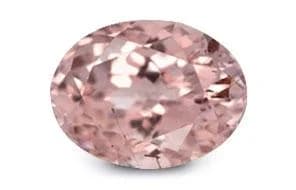
Taaffeite
Taaffeite is an exceptionally rare gemstone prized for its refined violet, pink, red, and blue-green colors, vitreous luster, and remarkable collector appeal.
Taaffeite is an exceptionally rare gemstone and mineral species valued by collectors for its scarcity, subtle color range, and fascinating history. It belongs to the beryllium magnesium aluminum oxide group and is chemically composed of magnesium, aluminum, beryllium, and oxygen. Its ideal chemical formula is Mg3Al8BeO16. Taaffeite crystallizes in the hexagonal system and typically has a vitreous luster, transparent to translucent appearance, a Mohs hardness of about 8 to 8.5, and a specific gravity around 3.60 to 3.62. Its refractive index is approximately 1.719 to 1.723 in commonly documented gem material.
Taaffeite is best known for delicate mauve, lilac, and violet hues, but natural specimens can also occur in pink, red, bluish, greenish, grayish, and nearly colorless tones. Color is influenced by trace elements and chemical substitutions within the crystal structure. Fine, evenly colored stones with attractive saturation and good transparency are especially desirable among collectors.
The gemstone has an unusual place in gemological history. In 1945, Irish gemologist Richard Taaffe identified a faceted stone that had originally been considered spinel. The discovery was significant because taaffeite became famous as a gemstone first recognized after cutting rather than from an obvious rough crystal specimen. Early material was eventually traced to Sri Lanka, particularly the gem-rich areas around Ratnapura. Taaffeite has also been documented from Tanzania, Myanmar, China, and other limited localities.
Geologically, taaffeite is associated with unusual magnesium-, aluminum-, and beryllium-rich environments. Natural material is exceptionally scarce, and much of what reaches the gem market is already faceted, making documented provenance and laboratory identification particularly important.
Taaffeite is suitable for fine jewelry because its hardness is relatively high, but its rarity makes it more appropriate for carefully designed collector and occasional-wear pieces than for jewelry exposed regularly to heavy impact. It can be fashioned into rings, earrings, pendants, and custom collector pieces, with faceting used to maximize brilliance and reveal its delicate body color.
Why do buyers value Taaffeite? Its appeal comes from the combination of genuine rarity, unusual gemological history, attractive color, and limited availability. Unlike widely traded gemstones, natural Taaffeite is encountered infrequently, so an independently verified specimen can hold strong interest for serious gemstone collectors.
- Mineral Family
- Taaffeite
- Chemical Formula
- Mg3Al8BeO16
- Mohs Hardness
- 8-8.5
- Refractive Index
- 1.719-1.723
- Specific Gravity
- 3.60-3.62
- Cleavage
- None
- Crystal System
- Hexagonal
- Luster
- Vitreous
- Color Range
- Pink, Purple, Red, Blue, Green, White, Gray
When buying Taaffeite online or in person, authenticity should be the first consideration because the material is exceptionally rare and can resemble other gemstones, particularly spinel. A professional laboratory report is strongly recommended for significant purchases.
Color: Attractive mauve, lilac, violet, pink, and red stones are among the most recognizable examples, while blue-green and other unusual colors are also documented. Look for even, attractive color with good saturation and transparency. Highly desirable color is ultimately a matter of rarity, beauty, and market demand rather than a single universal grading scale.
Clarity: Taaffeite can contain natural inclusions such as crystals, healed fractures, and other internal features. Clean stones are uncommon, so excellent transparency and clarity can increase desirability. Inclusions should be evaluated in relation to the stone's size, color, cut, and overall appearance.
Cut: Good cutting is important because faceting can improve brilliance, color presentation, and visual balance. Examine the symmetry, facet alignment, polish, windowing, extinction, and overall light return rather than judging the gemstone by carat weight alone.
Carat: Larger natural Taaffeite is particularly scarce. Carat weight can therefore have a significant effect on desirability, but size should always be considered together with color, clarity, cut, origin, and laboratory documentation.
Origin: Sri Lanka is historically important for Taaffeite, with notable material associated with the Ratnapura region. Tanzania and Myanmar are also documented sources. Origin can be useful information for collectors, but it should not be treated as proof of authenticity without proper gemological testing.
Treatments: Taaffeite is not commonly encountered as a routinely treated commercial gemstone. Nevertheless, buyers should request a clear treatment disclosure and ensure that any stated treatment status is supported by a reputable laboratory report.
Natural vs lab-grown: Natural Taaffeite is the material of primary interest in the collector market. There is no widely established commercial market for laboratory-grown Taaffeite comparable to synthetic corundum or synthetic spinel. Any material represented as laboratory-grown, reconstructed, or otherwise manufactured should be clearly disclosed and independently identified.
Certification: For a rare gemstone such as Taaffeite, an independent report from a respected gemological laboratory is one of the most important purchasing safeguards. The report should identify the gemstone species and disclose any detectable treatments or relevant observations.
Authenticity: Do not rely on appearance, seller descriptions, or unusually low prices alone. Taaffeite can be confused with other transparent colored stones, and definitive identification may require advanced laboratory methods. A reputable report provides much stronger evidence of identity and helps protect the buyer from misrepresentation.
Price factors: Taaffeite value is highly individual because the gemstone is rare and the supply of fine natural material is limited. Color quality, clarity, transparency, cut quality, carat weight, origin documentation, treatment status, laboratory certification, and overall provenance can all influence price. Because market prices vary considerably between individual stones, buyers should compare documented specimens rather than rely on a fixed price-per-carat chart.
Taaffeite is relatively hard at about 8 to 8.5 on the Mohs scale, but it should still be treated carefully because natural material is exceptionally rare and can be damaged by impact. It is best suited to carefully worn jewelry rather than pieces exposed to repeated knocks or demanding physical activities.
Cleaning: Clean Taaffeite with lukewarm water, mild soap, and a soft cloth or very soft brush. Rinse thoroughly and dry with a lint-free cloth. Avoid abrasive cleaners that can damage the polish or setting.
Storage: Store Taaffeite separately from other jewelry, preferably in a soft pouch or a fabric-lined compartment. Although its hardness is relatively high, contact with harder gemstones can cause scratches or surface damage.
Everyday wear: Rings deserve extra care because they are more likely to encounter accidental impacts. Pendants and earrings can offer more protection for an exceptionally rare stone. Remove Taaffeite jewelry before strenuous activities, sports, heavy manual work, or situations where the stone may be struck.
Things to avoid: Avoid harsh chemicals, abrasive materials, sudden temperature changes, and unnecessary exposure to high heat. For cleaning methods such as ultrasonic or steam cleaning, follow the advice of a qualified jeweler or gemological professional, especially when the stone has inclusions, fractures, or a delicate setting.
Taaffeite is an exceptionally rare gemstone and mineral species valued by collectors for its scarcity, subtle color range, and fascinating history. It belongs to the beryllium magnesium aluminum oxide group and is chemically composed of magnesium, aluminum, beryllium, and oxygen. Its ideal chemical formula is Mg3Al8BeO16. Taaffeite crystallizes in the hexagonal system and typically has a vitreous luster, transparent to translucent appearance, a Mohs hardness of about 8 to 8.5, and a specific gravity around 3.60 to 3.62. Its refractive index is approximately 1.719 to 1.723 in commonly documented gem material.
Taaffeite is best known for delicate mauve, lilac, and violet hues, but natural specimens can also occur in pink, red, bluish, greenish, grayish, and nearly colorless tones. Color is influenced by trace elements and chemical substitutions within the crystal structure. Fine, evenly colored stones with attractive saturation and good transparency are especially desirable among collectors.
The gemstone has an unusual place in gemological history. In 1945, Irish gemologist Richard Taaffe identified a faceted stone that had originally been considered spinel. The discovery was significant because taaffeite became famous as a gemstone first recognized after cutting rather than from an obvious rough crystal specimen. Early material was eventually traced to Sri Lanka, particularly the gem-rich areas around Ratnapura. Taaffeite has also been documented from Tanzania, Myanmar, China, and other limited localities.
Geologically, taaffeite is associated with unusual magnesium-, aluminum-, and beryllium-rich environments. Natural material is exceptionally scarce, and much of what reaches the gem market is already faceted, making documented provenance and laboratory identification particularly important.
Taaffeite is suitable for fine jewelry because its hardness is relatively high, but its rarity makes it more appropriate for carefully designed collector and occasional-wear pieces than for jewelry exposed regularly to heavy impact. It can be fashioned into rings, earrings, pendants, and custom collector pieces, with faceting used to maximize brilliance and reveal its delicate body color.
Why do buyers value Taaffeite? Its appeal comes from the combination of genuine rarity, unusual gemological history, attractive color, and limited availability. Unlike widely traded gemstones, natural Taaffeite is encountered infrequently, so an independently verified specimen can hold strong interest for serious gemstone collectors.
- Mineral Family
- Taaffeite
- Chemical Formula
- Mg3Al8BeO16
- Mohs Hardness
- 8-8.5
- Refractive Index
- 1.719-1.723
- Specific Gravity
- 3.60-3.62
- Cleavage
- None
- Crystal System
- Hexagonal
- Luster
- Vitreous
- Color Range
- Pink, Purple, Red, Blue, Green, White, Gray
When buying Taaffeite online or in person, authenticity should be the first consideration because the material is exceptionally rare and can resemble other gemstones, particularly spinel. A professional laboratory report is strongly recommended for significant purchases.
Color: Attractive mauve, lilac, violet, pink, and red stones are among the most recognizable examples, while blue-green and other unusual colors are also documented. Look for even, attractive color with good saturation and transparency. Highly desirable color is ultimately a matter of rarity, beauty, and market demand rather than a single universal grading scale.
Clarity: Taaffeite can contain natural inclusions such as crystals, healed fractures, and other internal features. Clean stones are uncommon, so excellent transparency and clarity can increase desirability. Inclusions should be evaluated in relation to the stone's size, color, cut, and overall appearance.
Cut: Good cutting is important because faceting can improve brilliance, color presentation, and visual balance. Examine the symmetry, facet alignment, polish, windowing, extinction, and overall light return rather than judging the gemstone by carat weight alone.
Carat: Larger natural Taaffeite is particularly scarce. Carat weight can therefore have a significant effect on desirability, but size should always be considered together with color, clarity, cut, origin, and laboratory documentation.
Origin: Sri Lanka is historically important for Taaffeite, with notable material associated with the Ratnapura region. Tanzania and Myanmar are also documented sources. Origin can be useful information for collectors, but it should not be treated as proof of authenticity without proper gemological testing.
Treatments: Taaffeite is not commonly encountered as a routinely treated commercial gemstone. Nevertheless, buyers should request a clear treatment disclosure and ensure that any stated treatment status is supported by a reputable laboratory report.
Natural vs lab-grown: Natural Taaffeite is the material of primary interest in the collector market. There is no widely established commercial market for laboratory-grown Taaffeite comparable to synthetic corundum or synthetic spinel. Any material represented as laboratory-grown, reconstructed, or otherwise manufactured should be clearly disclosed and independently identified.
Certification: For a rare gemstone such as Taaffeite, an independent report from a respected gemological laboratory is one of the most important purchasing safeguards. The report should identify the gemstone species and disclose any detectable treatments or relevant observations.
Authenticity: Do not rely on appearance, seller descriptions, or unusually low prices alone. Taaffeite can be confused with other transparent colored stones, and definitive identification may require advanced laboratory methods. A reputable report provides much stronger evidence of identity and helps protect the buyer from misrepresentation.
Price factors: Taaffeite value is highly individual because the gemstone is rare and the supply of fine natural material is limited. Color quality, clarity, transparency, cut quality, carat weight, origin documentation, treatment status, laboratory certification, and overall provenance can all influence price. Because market prices vary considerably between individual stones, buyers should compare documented specimens rather than rely on a fixed price-per-carat chart.
Taaffeite is relatively hard at about 8 to 8.5 on the Mohs scale, but it should still be treated carefully because natural material is exceptionally rare and can be damaged by impact. It is best suited to carefully worn jewelry rather than pieces exposed to repeated knocks or demanding physical activities.
Cleaning: Clean Taaffeite with lukewarm water, mild soap, and a soft cloth or very soft brush. Rinse thoroughly and dry with a lint-free cloth. Avoid abrasive cleaners that can damage the polish or setting.
Storage: Store Taaffeite separately from other jewelry, preferably in a soft pouch or a fabric-lined compartment. Although its hardness is relatively high, contact with harder gemstones can cause scratches or surface damage.
Everyday wear: Rings deserve extra care because they are more likely to encounter accidental impacts. Pendants and earrings can offer more protection for an exceptionally rare stone. Remove Taaffeite jewelry before strenuous activities, sports, heavy manual work, or situations where the stone may be struck.
Things to avoid: Avoid harsh chemicals, abrasive materials, sudden temperature changes, and unnecessary exposure to high heat. For cleaning methods such as ultrasonic or steam cleaning, follow the advice of a qualified jeweler or gemological professional, especially when the stone has inclusions, fractures, or a delicate setting.
Taaffeite for Sale
No gems found
Try broadening your search or adjusting your filters.
Have a gem of your own? List it free - no fees