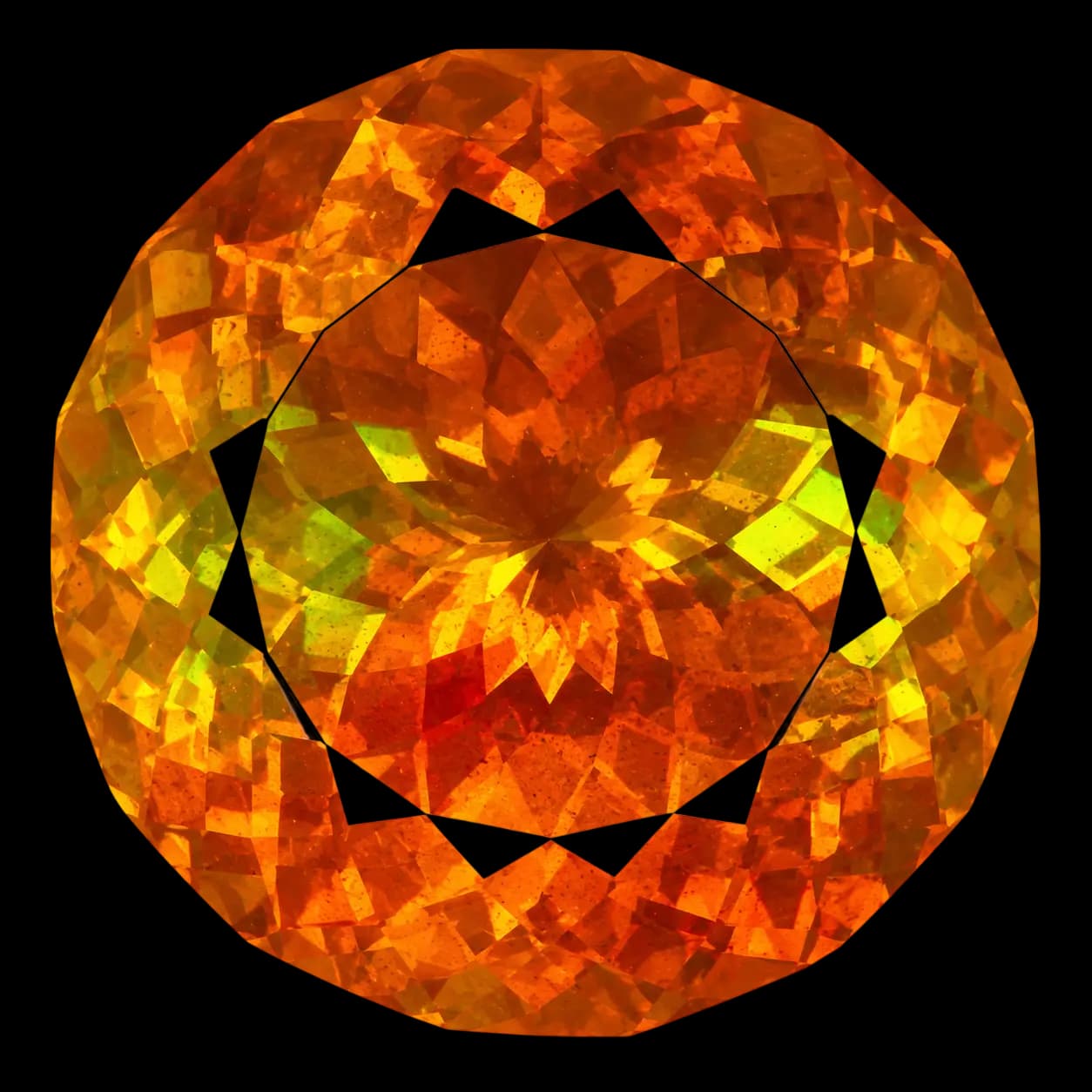
Sphalerite
Sphalerite is a rare collector gemstone admired for its exceptional brilliance, vivid colors, and extraordinary dispersion. Known for its intense rainbow flashes, natural Sphalerite offers a unique choice for distinctive jewelry and gem collections.
Sphalerite is a zinc sulfide mineral and the primary ore of zinc. While the mineral itself is widely distributed, transparent gem-quality Sphalerite is uncommon and highly valued by collectors for its exceptional optical performance.
Natural Sphalerite forms in hydrothermal environments and sedimentary deposits where zinc-rich fluids interact with surrounding rocks. Its chemical composition is zinc sulfide (ZnS), and it belongs to the cubic crystal system. It has a high refractive index, giving it remarkable brilliance, while its dispersion is among the highest of all transparent gemstones, creating strong flashes of spectral colors.
Sphalerite occurs in colors including yellow, golden, orange, red, brown, green, and black. Transparent yellow to orange and reddish specimens are especially popular among gem enthusiasts. Some famous gem-quality Sphalerite specimens come from Spain, particularly the Aliva Mine in the Picos de Europa region, as well as sources in Mexico and other mining regions.
Throughout history, Sphalerite has been valued mainly as an important zinc mineral, but fine gem material has gained recognition among collectors and jewelry designers. Today, Sphalerite jewelry is appreciated for its unusual sparkle and rarity. Because of its softness, it is best suited for carefully worn pieces such as pendants, earrings, and occasional-wear rings.
Buyers value Sphalerite gemstone for its intense fire, distinctive appearance, and status as a rare collector gem that stands apart from more common jewelry stones.
- Mineral Family
- Sphalerite
- Chemical Formula
- ZnS
- Mohs Hardness
- 3.5 - 4
- Refractive Index
- 2.37 - 2.43
- Specific Gravity
- 3.9 - 4.1
- Cleavage
- Perfect in six directions (dodecahedral)
- Crystal System
- Cubic
- Luster
- Adamantine
- Color Range
- Yellow, Orange, Red, Black, Green
When choosing a natural Sphalerite gemstone, buyers should evaluate color, clarity, cut, carat weight, origin, treatments, and certification.
Color: The most desirable Sphalerite gems show attractive golden yellow, orange, or reddish tones with strong transparency and vivid flashes. Bright, evenly distributed color generally increases appeal.
Clarity: Gem-quality Sphalerite is valued when it is transparent with fewer visible inclusions. Since clean crystals are rare, well-positioned natural inclusions may be accepted in collector specimens.
Cut: A precision cut is essential because Sphalerite’s exceptional dispersion creates its famous fire. Faceted cuts that maximize light return can reveal dramatic rainbow flashes.
Carat: Larger transparent Sphalerite crystals are uncommon. Size can influence value, but brilliance, transparency, and overall beauty are often more important than weight alone.
Origin: Material from notable locations such as Spain may be especially appreciated by collectors, although quality characteristics remain the primary value factors.
Treatments: Most fine Sphalerite is sold in its natural state. Buyers should ask sellers about any treatments or enhancements before purchase.
Natural vs lab-grown: Natural Sphalerite is the traditional choice for collectors. Buyers should confirm whether a stone is natural and request disclosure from reputable sellers.
Certification: A gemstone report from a recognized gemological laboratory can confirm identity, characteristics, and authenticity. When you buy Sphalerite online, choose sellers who provide clear descriptions, photographs, and certification options.
Sphalerite requires careful handling because its Mohs hardness of 3.5-4 makes it softer than many popular jewelry gemstones.
Cleaning: Use lukewarm water, mild soap, and a soft cloth or brush. Avoid ultrasonic cleaners, steam cleaners, and harsh chemicals because they may damage the gemstone.
Storage: Store Sphalerite separately from harder gemstones such as diamond, sapphire, and ruby to prevent scratches. A soft pouch or lined jewelry box is recommended.
Everyday wear: Sphalerite jewelry is best suited for occasional wear, especially in rings that experience frequent impact. Pendants and earrings are excellent choices because they receive less physical contact.
Avoid exposing Sphalerite to strong impacts, abrasive surfaces, and household chemicals to preserve its natural brilliance.
Sphalerite is a zinc sulfide mineral and the primary ore of zinc. While the mineral itself is widely distributed, transparent gem-quality Sphalerite is uncommon and highly valued by collectors for its exceptional optical performance.
Natural Sphalerite forms in hydrothermal environments and sedimentary deposits where zinc-rich fluids interact with surrounding rocks. Its chemical composition is zinc sulfide (ZnS), and it belongs to the cubic crystal system. It has a high refractive index, giving it remarkable brilliance, while its dispersion is among the highest of all transparent gemstones, creating strong flashes of spectral colors.
Sphalerite occurs in colors including yellow, golden, orange, red, brown, green, and black. Transparent yellow to orange and reddish specimens are especially popular among gem enthusiasts. Some famous gem-quality Sphalerite specimens come from Spain, particularly the Aliva Mine in the Picos de Europa region, as well as sources in Mexico and other mining regions.
Throughout history, Sphalerite has been valued mainly as an important zinc mineral, but fine gem material has gained recognition among collectors and jewelry designers. Today, Sphalerite jewelry is appreciated for its unusual sparkle and rarity. Because of its softness, it is best suited for carefully worn pieces such as pendants, earrings, and occasional-wear rings.
Buyers value Sphalerite gemstone for its intense fire, distinctive appearance, and status as a rare collector gem that stands apart from more common jewelry stones.
- Mineral Family
- Sphalerite
- Chemical Formula
- ZnS
- Mohs Hardness
- 3.5 - 4
- Refractive Index
- 2.37 - 2.43
- Specific Gravity
- 3.9 - 4.1
- Cleavage
- Perfect in six directions (dodecahedral)
- Crystal System
- Cubic
- Luster
- Adamantine
- Color Range
- Yellow, Orange, Red, Black, Green
When choosing a natural Sphalerite gemstone, buyers should evaluate color, clarity, cut, carat weight, origin, treatments, and certification.
Color: The most desirable Sphalerite gems show attractive golden yellow, orange, or reddish tones with strong transparency and vivid flashes. Bright, evenly distributed color generally increases appeal.
Clarity: Gem-quality Sphalerite is valued when it is transparent with fewer visible inclusions. Since clean crystals are rare, well-positioned natural inclusions may be accepted in collector specimens.
Cut: A precision cut is essential because Sphalerite’s exceptional dispersion creates its famous fire. Faceted cuts that maximize light return can reveal dramatic rainbow flashes.
Carat: Larger transparent Sphalerite crystals are uncommon. Size can influence value, but brilliance, transparency, and overall beauty are often more important than weight alone.
Origin: Material from notable locations such as Spain may be especially appreciated by collectors, although quality characteristics remain the primary value factors.
Treatments: Most fine Sphalerite is sold in its natural state. Buyers should ask sellers about any treatments or enhancements before purchase.
Natural vs lab-grown: Natural Sphalerite is the traditional choice for collectors. Buyers should confirm whether a stone is natural and request disclosure from reputable sellers.
Certification: A gemstone report from a recognized gemological laboratory can confirm identity, characteristics, and authenticity. When you buy Sphalerite online, choose sellers who provide clear descriptions, photographs, and certification options.
Sphalerite requires careful handling because its Mohs hardness of 3.5-4 makes it softer than many popular jewelry gemstones.
Cleaning: Use lukewarm water, mild soap, and a soft cloth or brush. Avoid ultrasonic cleaners, steam cleaners, and harsh chemicals because they may damage the gemstone.
Storage: Store Sphalerite separately from harder gemstones such as diamond, sapphire, and ruby to prevent scratches. A soft pouch or lined jewelry box is recommended.
Everyday wear: Sphalerite jewelry is best suited for occasional wear, especially in rings that experience frequent impact. Pendants and earrings are excellent choices because they receive less physical contact.
Avoid exposing Sphalerite to strong impacts, abrasive surfaces, and household chemicals to preserve its natural brilliance.
Sphalerite for Sale
No gems found
Try broadening your search or adjusting your filters.
Have a gem of your own? List it free - no fees