Sodalite
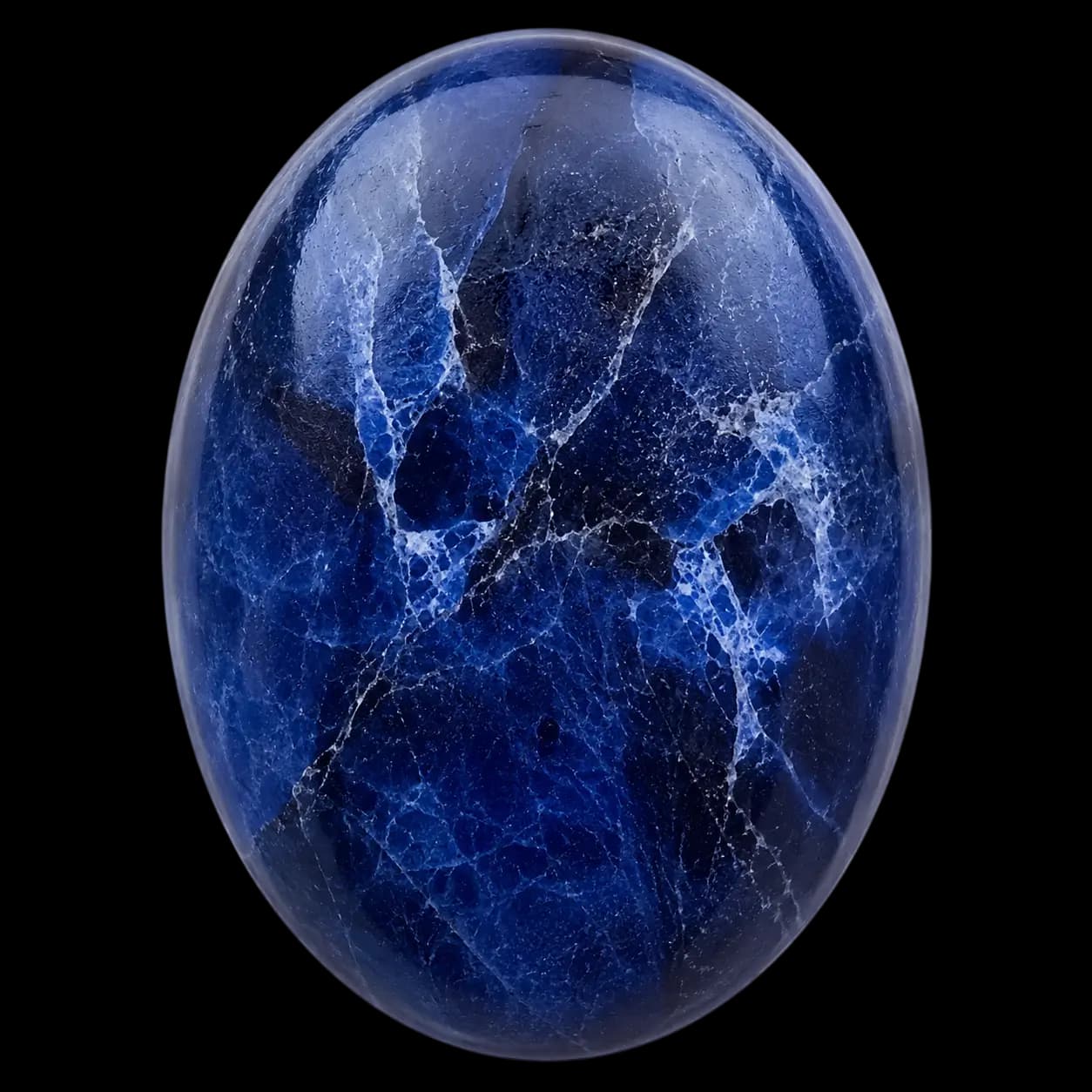
Sodalite gemstone is admired for its rich blue tones, natural white veining, and artistic patterns. This attractive mineral is popular in jewelry, carvings, and collector specimens worldwide.
Sodalite is a blue tectosilicate mineral belonging to the sodalite group of minerals, valued for its distinctive color patterns and decorative appeal. Its name comes from its high sodium content. The chemical composition of Sodalite is Na8(Al6Si6O24)Cl2, and it commonly forms in silica-poor igneous rocks such as nepheline syenites.
Natural Sodalite gemstone is best known for deep blue, violet-blue, gray, and white color combinations. The characteristic white calcite veining often creates unique patterns that make every piece visually different. High-quality specimens display attractive blue saturation, balanced patterns, and a smooth polished surface.
With a Mohs hardness of 5.5-6, Sodalite is suitable for many jewelry applications but requires reasonable care to avoid scratches and damage. It has a cubic crystal system, vitreous to greasy luster, and poor to indistinct cleavage.
Important deposits of Sodalite are found in Canada, Brazil, Namibia, Greenland, and other locations. Canada’s Bancroft region is especially famous for producing fine blue Sodalite specimens. Throughout modern history, Sodalite has been used for decorative objects, carvings, beads, and contemporary jewelry designs.
Today, Sodalite jewelry is appreciated by buyers who enjoy unique natural patterns and affordable gemstones with a distinctive appearance. Rings, pendants, bracelets, and earrings made with Sodalite offer a bold blue aesthetic for casual and artistic jewelry collections.
- Mineral Family
- Sodalite
- Chemical Formula
- Na8(Al6Si6O24)Cl2
- Mohs Hardness
- 5.5 - 6
- Refractive Index
- 1.483 - 1.487
- Specific Gravity
- 2.14 - 2.30
- Cleavage
- Poor to indistinct
- Crystal System
- Cubic
- Luster
- Greasy
- Color Range
- Blue, White, Gray
When buying Sodalite gemstone, consider color, pattern, clarity, cut, size, origin, and authenticity.
Color: The most desirable Sodalite features rich blue tones with attractive white or gray natural veining. Brightly dyed or unnatural colors should be approached carefully.
Clarity: Unlike transparent gemstones, Sodalite is valued for its pattern and overall appearance rather than high transparency. Fine examples have appealing color distribution and minimal damaging fractures.
Cut: Sodalite is commonly shaped into cabochons, beads, polished stones, and decorative carvings. A good cut highlights the stone’s natural patterns and color contrast.
Carat: Sodalite is generally sold by size, weight, or finished piece rather than strict gemstone carat pricing. Larger pieces with attractive patterns may command higher prices.
Origin: Specimens from recognized sources such as Canada, Brazil, and Namibia may be valued by collectors depending on quality and appearance.
Treatments: Natural Sodalite is usually sold without treatment, but buyers should ask whether coloring or enhancement has been applied.
Natural vs Lab-grown: Natural Sodalite is widely available and appreciated for its unique mineral patterns. Synthetic alternatives are uncommon compared with many popular gemstones.
Certification: For valuable specimens or jewelry purchases, request details about gemstone identity, treatments, and seller authenticity guarantees. Reputable sellers provide clear photographs, descriptions, and return policies.
Price factors: Sodalite prices depend on color quality, pattern attractiveness, size, craftsmanship, and overall finish. Buyers looking to buy Sodalite online should compare product images, specifications, and seller reputation before purchasing.
Sodalite jewelry should be cleaned gently using warm water, mild soap, and a soft cloth. Avoid harsh chemicals, ultrasonic cleaners, and steam cleaning because they may affect the stone or its setting.
Store Sodalite separately from harder gemstones to prevent scratches. A soft pouch or lined jewelry box is recommended.
Sodalite can be worn in earrings, pendants, and occasional-wear rings. Due to its moderate hardness, avoid wearing Sodalite jewelry during activities involving strong impact, rough surfaces, or heavy physical work.
Sodalite is a blue tectosilicate mineral belonging to the sodalite group of minerals, valued for its distinctive color patterns and decorative appeal. Its name comes from its high sodium content. The chemical composition of Sodalite is Na8(Al6Si6O24)Cl2, and it commonly forms in silica-poor igneous rocks such as nepheline syenites.
Natural Sodalite gemstone is best known for deep blue, violet-blue, gray, and white color combinations. The characteristic white calcite veining often creates unique patterns that make every piece visually different. High-quality specimens display attractive blue saturation, balanced patterns, and a smooth polished surface.
With a Mohs hardness of 5.5-6, Sodalite is suitable for many jewelry applications but requires reasonable care to avoid scratches and damage. It has a cubic crystal system, vitreous to greasy luster, and poor to indistinct cleavage.
Important deposits of Sodalite are found in Canada, Brazil, Namibia, Greenland, and other locations. Canada’s Bancroft region is especially famous for producing fine blue Sodalite specimens. Throughout modern history, Sodalite has been used for decorative objects, carvings, beads, and contemporary jewelry designs.
Today, Sodalite jewelry is appreciated by buyers who enjoy unique natural patterns and affordable gemstones with a distinctive appearance. Rings, pendants, bracelets, and earrings made with Sodalite offer a bold blue aesthetic for casual and artistic jewelry collections.
- Mineral Family
- Sodalite
- Chemical Formula
- Na8(Al6Si6O24)Cl2
- Mohs Hardness
- 5.5 - 6
- Refractive Index
- 1.483 - 1.487
- Specific Gravity
- 2.14 - 2.30
- Cleavage
- Poor to indistinct
- Crystal System
- Cubic
- Luster
- Greasy
- Color Range
- Blue, White, Gray
When buying Sodalite gemstone, consider color, pattern, clarity, cut, size, origin, and authenticity.
Color: The most desirable Sodalite features rich blue tones with attractive white or gray natural veining. Brightly dyed or unnatural colors should be approached carefully.
Clarity: Unlike transparent gemstones, Sodalite is valued for its pattern and overall appearance rather than high transparency. Fine examples have appealing color distribution and minimal damaging fractures.
Cut: Sodalite is commonly shaped into cabochons, beads, polished stones, and decorative carvings. A good cut highlights the stone’s natural patterns and color contrast.
Carat: Sodalite is generally sold by size, weight, or finished piece rather than strict gemstone carat pricing. Larger pieces with attractive patterns may command higher prices.
Origin: Specimens from recognized sources such as Canada, Brazil, and Namibia may be valued by collectors depending on quality and appearance.
Treatments: Natural Sodalite is usually sold without treatment, but buyers should ask whether coloring or enhancement has been applied.
Natural vs Lab-grown: Natural Sodalite is widely available and appreciated for its unique mineral patterns. Synthetic alternatives are uncommon compared with many popular gemstones.
Certification: For valuable specimens or jewelry purchases, request details about gemstone identity, treatments, and seller authenticity guarantees. Reputable sellers provide clear photographs, descriptions, and return policies.
Price factors: Sodalite prices depend on color quality, pattern attractiveness, size, craftsmanship, and overall finish. Buyers looking to buy Sodalite online should compare product images, specifications, and seller reputation before purchasing.
Sodalite jewelry should be cleaned gently using warm water, mild soap, and a soft cloth. Avoid harsh chemicals, ultrasonic cleaners, and steam cleaning because they may affect the stone or its setting.
Store Sodalite separately from harder gemstones to prevent scratches. A soft pouch or lined jewelry box is recommended.
Sodalite can be worn in earrings, pendants, and occasional-wear rings. Due to its moderate hardness, avoid wearing Sodalite jewelry during activities involving strong impact, rough surfaces, or heavy physical work.
Sodalite for Sale
No gems found
Try broadening your search or adjusting your filters.
Have a gem of your own? List it free - no fees