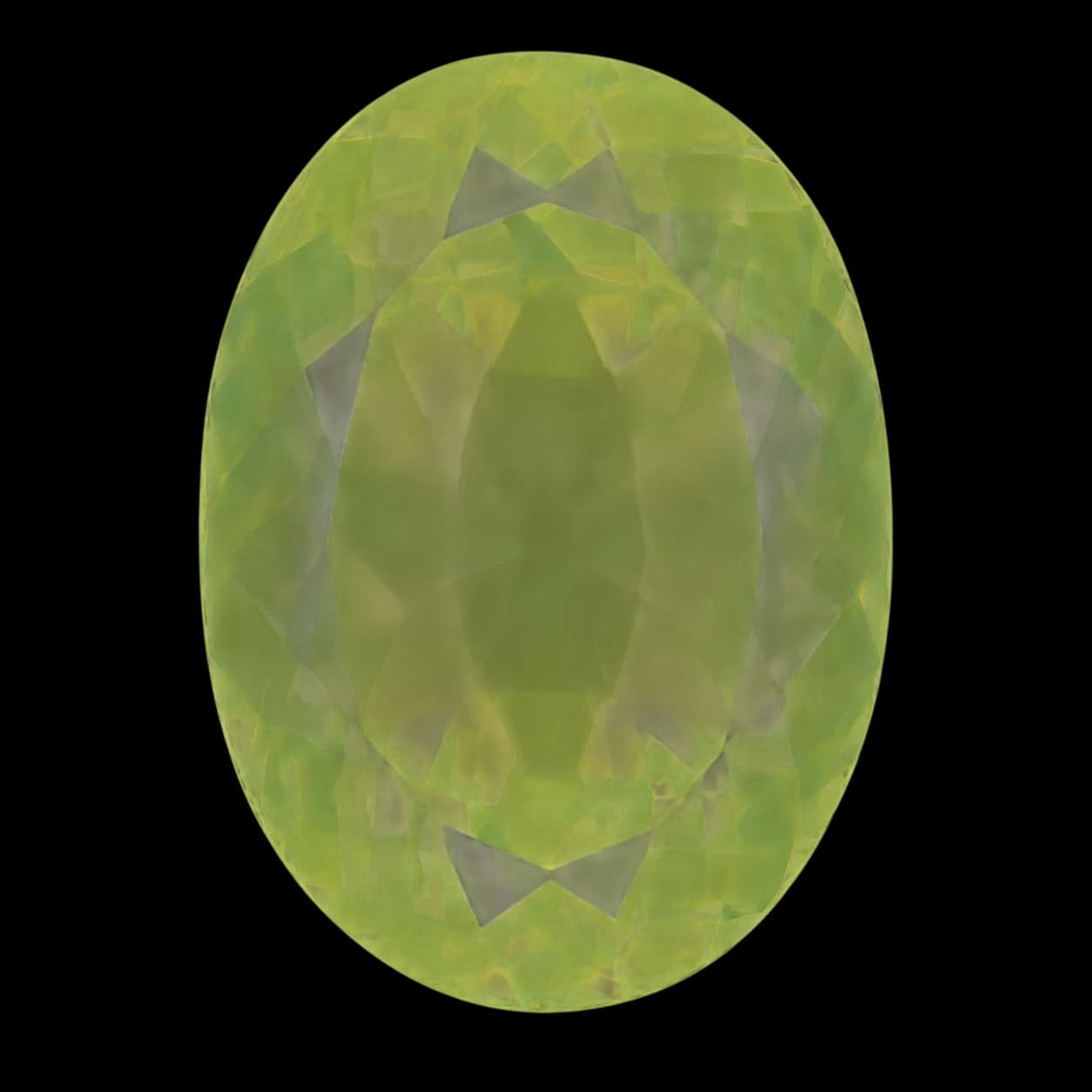
Prehnite
Natural Prehnite is admired for its soft green glow, gentle translucency, and distinctive crystal formations. Its unique appearance and affordability make it a favorite for jewelry collectors and gemstone enthusiasts.
Prehnite is a calcium aluminum silicate mineral prized for its soothing green to yellow-green appearance and attractive translucence. First described in the late 18th century, it was named after Dutch military officer Colonel Hendrik von Prehn, making it one of the first minerals named after a person.
Belonging to the phyllosilicate mineral group, Prehnite commonly forms in cavities of volcanic rocks through low-grade hydrothermal processes. It is also found in metamorphic environments, where mineral-rich fluids create rounded crystal masses and botryoidal aggregates.
Its chemical formula is Ca2Al(AlSi3O10)(OH)2. Prehnite has a Mohs hardness of 6 to 6.5, vitreous to pearly luster, orthorhombic crystal system, and a refractive index ranging from approximately 1.611 to 1.669. Most specimens display translucent clarity with a soft, glowing appearance that is highly desirable in jewelry.
Natural Prehnite is most commonly pale green or yellow-green due to trace iron, although white, gray, and nearly colorless varieties also occur. Some rare stones contain dark needle-like inclusions of epidote, creating attractive patterns sought after by collectors.
Important deposits are found in South Africa, Australia, China, Namibia, Scotland, India, and the United States. South African material is especially well known for producing high-quality translucent specimens suitable for fine jewelry.
Prehnite is fashioned into cabochons, beads, carvings, and occasionally faceted gemstones when transparent enough. Its gentle color complements both yellow and white precious metals, making it popular in rings, pendants, earrings, and bracelets.
Buyers appreciate Prehnite for its distinctive appearance, affordability, natural beauty, and collectible mineral interest. Modern symbolic associations often connect Prehnite meaning with calmness, harmony, and emotional balance, though these are cultural interpretations rather than scientific properties.
- Mineral Family
- Prehnite
- Chemical Formula
- Ca2Al(AlSi3O10)(OH)2
- Mohs Hardness
- 6 - 6.5
- Refractive Index
- 1.611 - 1.669
- Specific Gravity
- 2.80 - 2.95
- Cleavage
- Perfect in one direction
- Crystal System
- Orthorhombic
- Luster
- Vitreous
- Color Range
- Green, Yellow, White, Gray
When buying a natural Prehnite gemstone, prioritize color first. The most valuable stones display an even, fresh apple-green to yellow-green color with an attractive glowing translucency.
Clarity is also important. While minor inclusions are common, eye-clean or highly translucent stones generally command higher prices. Epidote inclusions may increase collector appeal if they create attractive natural patterns.
Cabochon cuts are the most common because they enhance Prehnite's soft internal glow. Transparent material may also be faceted to maximize brilliance. Symmetry, polish, and proportions significantly affect beauty.
Larger gemstones remain relatively affordable compared to many other colored gemstones, although exceptionally transparent pieces become increasingly scarce as size increases.
South African origin is especially respected for premium-quality material, though excellent stones are also produced from Australia, Namibia, China, and the United States.
Prehnite is generally untreated, making untreated natural stones readily available. Laboratory-grown Prehnite is not commonly found in the jewelry market.
Always purchase from reputable sellers who clearly disclose treatments, origin when known, and provide certification for higher-value gemstones. Certification helps verify authenticity and gives buyers greater confidence.
Price depends primarily on color saturation, transparency, cut quality, size, rarity of attractive inclusions, and overall craftsmanship when mounted in jewelry.
Prehnite jewelry should be cleaned using lukewarm water, mild soap, and a soft cloth or soft brush. Rinse thoroughly and dry carefully after cleaning.
Avoid ultrasonic and steam cleaners, as internal fractures or inclusions may be affected by sudden temperature or vibration.
Store Prehnite separately from harder gemstones such as sapphire or diamond to prevent scratching. Soft fabric pouches or individual jewelry boxes provide excellent protection.
Although suitable for regular wear with reasonable care, remove Prehnite jewelry before heavy physical activity, gardening, sports, or household cleaning. Protect it from strong impacts, harsh chemicals, and prolonged exposure to extreme heat to preserve its polish and beauty for many years.
Prehnite is a calcium aluminum silicate mineral prized for its soothing green to yellow-green appearance and attractive translucence. First described in the late 18th century, it was named after Dutch military officer Colonel Hendrik von Prehn, making it one of the first minerals named after a person.
Belonging to the phyllosilicate mineral group, Prehnite commonly forms in cavities of volcanic rocks through low-grade hydrothermal processes. It is also found in metamorphic environments, where mineral-rich fluids create rounded crystal masses and botryoidal aggregates.
Its chemical formula is Ca2Al(AlSi3O10)(OH)2. Prehnite has a Mohs hardness of 6 to 6.5, vitreous to pearly luster, orthorhombic crystal system, and a refractive index ranging from approximately 1.611 to 1.669. Most specimens display translucent clarity with a soft, glowing appearance that is highly desirable in jewelry.
Natural Prehnite is most commonly pale green or yellow-green due to trace iron, although white, gray, and nearly colorless varieties also occur. Some rare stones contain dark needle-like inclusions of epidote, creating attractive patterns sought after by collectors.
Important deposits are found in South Africa, Australia, China, Namibia, Scotland, India, and the United States. South African material is especially well known for producing high-quality translucent specimens suitable for fine jewelry.
Prehnite is fashioned into cabochons, beads, carvings, and occasionally faceted gemstones when transparent enough. Its gentle color complements both yellow and white precious metals, making it popular in rings, pendants, earrings, and bracelets.
Buyers appreciate Prehnite for its distinctive appearance, affordability, natural beauty, and collectible mineral interest. Modern symbolic associations often connect Prehnite meaning with calmness, harmony, and emotional balance, though these are cultural interpretations rather than scientific properties.
- Mineral Family
- Prehnite
- Chemical Formula
- Ca2Al(AlSi3O10)(OH)2
- Mohs Hardness
- 6 - 6.5
- Refractive Index
- 1.611 - 1.669
- Specific Gravity
- 2.80 - 2.95
- Cleavage
- Perfect in one direction
- Crystal System
- Orthorhombic
- Luster
- Vitreous
- Color Range
- Green, Yellow, White, Gray
When buying a natural Prehnite gemstone, prioritize color first. The most valuable stones display an even, fresh apple-green to yellow-green color with an attractive glowing translucency.
Clarity is also important. While minor inclusions are common, eye-clean or highly translucent stones generally command higher prices. Epidote inclusions may increase collector appeal if they create attractive natural patterns.
Cabochon cuts are the most common because they enhance Prehnite's soft internal glow. Transparent material may also be faceted to maximize brilliance. Symmetry, polish, and proportions significantly affect beauty.
Larger gemstones remain relatively affordable compared to many other colored gemstones, although exceptionally transparent pieces become increasingly scarce as size increases.
South African origin is especially respected for premium-quality material, though excellent stones are also produced from Australia, Namibia, China, and the United States.
Prehnite is generally untreated, making untreated natural stones readily available. Laboratory-grown Prehnite is not commonly found in the jewelry market.
Always purchase from reputable sellers who clearly disclose treatments, origin when known, and provide certification for higher-value gemstones. Certification helps verify authenticity and gives buyers greater confidence.
Price depends primarily on color saturation, transparency, cut quality, size, rarity of attractive inclusions, and overall craftsmanship when mounted in jewelry.
Prehnite jewelry should be cleaned using lukewarm water, mild soap, and a soft cloth or soft brush. Rinse thoroughly and dry carefully after cleaning.
Avoid ultrasonic and steam cleaners, as internal fractures or inclusions may be affected by sudden temperature or vibration.
Store Prehnite separately from harder gemstones such as sapphire or diamond to prevent scratching. Soft fabric pouches or individual jewelry boxes provide excellent protection.
Although suitable for regular wear with reasonable care, remove Prehnite jewelry before heavy physical activity, gardening, sports, or household cleaning. Protect it from strong impacts, harsh chemicals, and prolonged exposure to extreme heat to preserve its polish and beauty for many years.
Prehnite for Sale
No gems found
Try broadening your search or adjusting your filters.
Have a gem of your own? List it free - no fees