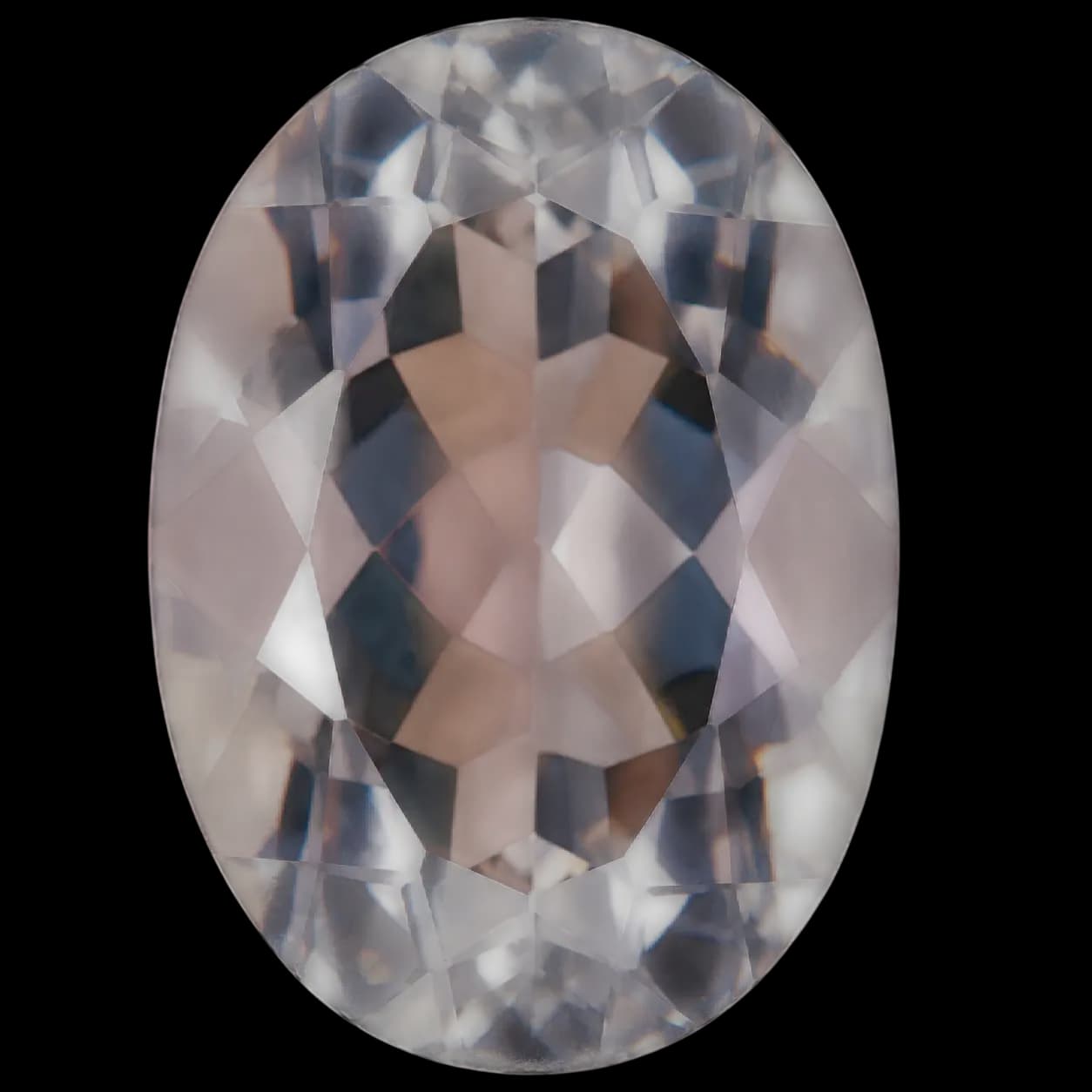
Petalite
Petalite is a rare lithium-bearing gemstone admired for its exceptional transparency, soft pastel colors, glassy luster, and collector appeal. Its elegant appearance makes it a unique choice for fine jewelry.
Petalite is a rare gemstone from the feldspathoid-related mineral group and is best known as a lithium aluminum silicate mineral. It forms in lithium-rich pegmatite deposits, where slow crystallization allows large and well-formed crystals to develop.
The chemical composition of Petalite is LiAlSi4O10. It has a monoclinic crystal system, a Mohs hardness of 6 to 6.5, and a vitreous to pearly luster. With its high transparency and subtle brilliance, well-cut Petalite gemstones can display an attractive glass-like appearance.
Petalite is most commonly found in colorless or white varieties, but natural specimens may also appear in soft shades of pink, pale yellow, gray, and green. Transparent colorless stones are especially appreciated by collectors and jewelry enthusiasts.
Historically, Petalite was first discovered in Sweden in the 18th century and later became important as one of the minerals containing lithium. Significant deposits have also been found in Brazil, the United States, Australia, Afghanistan, Namibia, and other pegmatite regions.
Today, natural Petalite is mainly valued by gemstone collectors and designers seeking distinctive jewelry materials. Because of its rarity and moderate hardness, it is best suited for carefully worn rings, pendants, earrings, and custom jewelry pieces. Buyers appreciate Petalite for its unusual beauty, limited availability, and connection to mineral collecting history.
- Mineral Family
- Petalite
- Chemical Formula
- LiAlSi4O10
- Mohs Hardness
- 6.0 - 6.5
- Refractive Index
- 1.502 - 1.528
- Specific Gravity
- 2.40 - 2.46
- Cleavage
- Perfect in one direction
- Crystal System
- Monoclinic
- Luster
- Vitreous
- Color Range
- White, Pink, Yellow, Gray, Green
When buying a Petalite gemstone, several quality factors should be considered.
Color: Colorless and transparent Petalite is among the most desirable varieties. Rare pink and attractive pastel-colored stones can also command higher interest due to their limited availability.
Clarity: Petalite is valued for its transparency. Eye-clean gemstones with minimal internal inclusions are preferred, as visible fractures or cloudiness can reduce beauty and value.
Cut: Due to its cleavage and moderate hardness, Petalite requires skilled cutting. Faceted cuts can enhance its brilliance, while cabochon cuts may be used for translucent material or special collector specimens.
Carat: Larger Petalite crystals exist, but fine transparent faceted stones are uncommon. Size, quality, and overall appearance influence pricing more than carat weight alone.
Origin: Petalite deposits are found in locations including Brazil, Sweden, the United States, Australia, Afghanistan, and Namibia. Origin may add collector interest but does not replace the importance of gemstone quality.
Treatments: Natural Petalite is generally sold without treatments. Buyers should ask whether any enhancement has been applied and request disclosure from sellers.
Natural vs Lab-Grown: Natural Petalite is the primary material available in the gemstone market. Buyers should confirm authenticity because rare natural specimens can be valuable to collectors.
Certification: A gemstone certificate from a reputable gemological laboratory can verify identity, natural origin, and any treatments, helping buyers make informed decisions.
Price Factors: Petalite value depends on transparency, color, cut quality, rarity, size, origin, and collector demand. High-quality transparent stones are significantly more desirable than common opaque material.
Petalite requires careful handling due to its cleavage and moderate hardness.
Cleaning: Clean Petalite jewelry using mild soap, warm water, and a soft cloth. Avoid harsh chemicals, ultrasonic cleaners, and steam cleaners, which may damage the gemstone.
Storage: Store Petalite separately from harder gemstones such as diamonds and sapphires to prevent scratches. A soft jewelry pouch or lined box is recommended.
Everyday Wear: Petalite is suitable for earrings, pendants, and occasional-wear rings. Avoid wearing Petalite jewelry during activities that may expose it to impacts or pressure.
Things to Avoid: Protect Petalite from sudden temperature changes, strong knocks, abrasive materials, and chemical exposure to maintain its clarity and polish.
Petalite is a rare gemstone from the feldspathoid-related mineral group and is best known as a lithium aluminum silicate mineral. It forms in lithium-rich pegmatite deposits, where slow crystallization allows large and well-formed crystals to develop.
The chemical composition of Petalite is LiAlSi4O10. It has a monoclinic crystal system, a Mohs hardness of 6 to 6.5, and a vitreous to pearly luster. With its high transparency and subtle brilliance, well-cut Petalite gemstones can display an attractive glass-like appearance.
Petalite is most commonly found in colorless or white varieties, but natural specimens may also appear in soft shades of pink, pale yellow, gray, and green. Transparent colorless stones are especially appreciated by collectors and jewelry enthusiasts.
Historically, Petalite was first discovered in Sweden in the 18th century and later became important as one of the minerals containing lithium. Significant deposits have also been found in Brazil, the United States, Australia, Afghanistan, Namibia, and other pegmatite regions.
Today, natural Petalite is mainly valued by gemstone collectors and designers seeking distinctive jewelry materials. Because of its rarity and moderate hardness, it is best suited for carefully worn rings, pendants, earrings, and custom jewelry pieces. Buyers appreciate Petalite for its unusual beauty, limited availability, and connection to mineral collecting history.
- Mineral Family
- Petalite
- Chemical Formula
- LiAlSi4O10
- Mohs Hardness
- 6.0 - 6.5
- Refractive Index
- 1.502 - 1.528
- Specific Gravity
- 2.40 - 2.46
- Cleavage
- Perfect in one direction
- Crystal System
- Monoclinic
- Luster
- Vitreous
- Color Range
- White, Pink, Yellow, Gray, Green
When buying a Petalite gemstone, several quality factors should be considered.
Color: Colorless and transparent Petalite is among the most desirable varieties. Rare pink and attractive pastel-colored stones can also command higher interest due to their limited availability.
Clarity: Petalite is valued for its transparency. Eye-clean gemstones with minimal internal inclusions are preferred, as visible fractures or cloudiness can reduce beauty and value.
Cut: Due to its cleavage and moderate hardness, Petalite requires skilled cutting. Faceted cuts can enhance its brilliance, while cabochon cuts may be used for translucent material or special collector specimens.
Carat: Larger Petalite crystals exist, but fine transparent faceted stones are uncommon. Size, quality, and overall appearance influence pricing more than carat weight alone.
Origin: Petalite deposits are found in locations including Brazil, Sweden, the United States, Australia, Afghanistan, and Namibia. Origin may add collector interest but does not replace the importance of gemstone quality.
Treatments: Natural Petalite is generally sold without treatments. Buyers should ask whether any enhancement has been applied and request disclosure from sellers.
Natural vs Lab-Grown: Natural Petalite is the primary material available in the gemstone market. Buyers should confirm authenticity because rare natural specimens can be valuable to collectors.
Certification: A gemstone certificate from a reputable gemological laboratory can verify identity, natural origin, and any treatments, helping buyers make informed decisions.
Price Factors: Petalite value depends on transparency, color, cut quality, rarity, size, origin, and collector demand. High-quality transparent stones are significantly more desirable than common opaque material.
Petalite requires careful handling due to its cleavage and moderate hardness.
Cleaning: Clean Petalite jewelry using mild soap, warm water, and a soft cloth. Avoid harsh chemicals, ultrasonic cleaners, and steam cleaners, which may damage the gemstone.
Storage: Store Petalite separately from harder gemstones such as diamonds and sapphires to prevent scratches. A soft jewelry pouch or lined box is recommended.
Everyday Wear: Petalite is suitable for earrings, pendants, and occasional-wear rings. Avoid wearing Petalite jewelry during activities that may expose it to impacts or pressure.
Things to Avoid: Protect Petalite from sudden temperature changes, strong knocks, abrasive materials, and chemical exposure to maintain its clarity and polish.
Petalite for Sale
No gems found
Try broadening your search or adjusting your filters.
Have a gem of your own? List it free - no fees