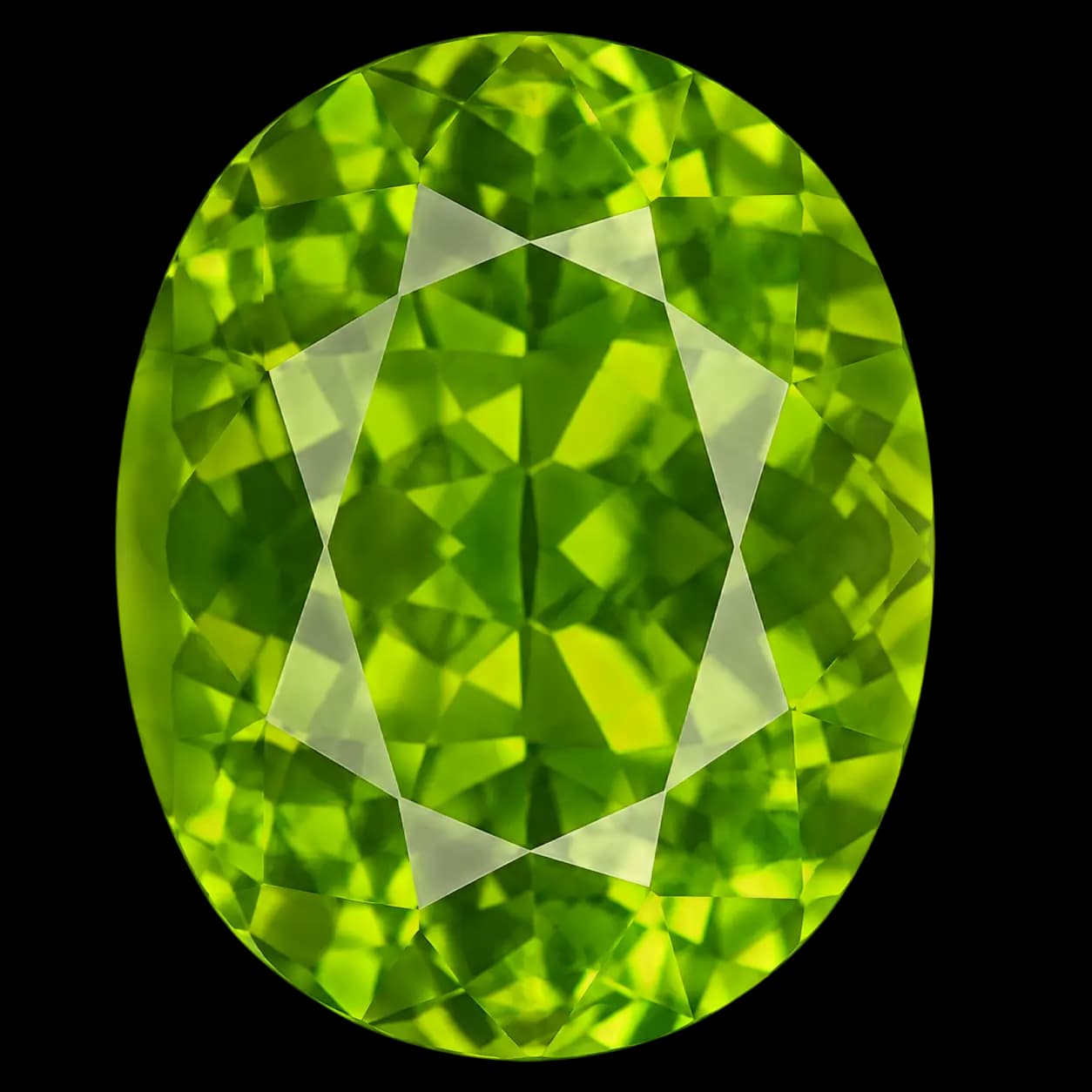
Peridot
Peridot is a vibrant green gemstone from the olivine mineral family, admired for its fresh lime-green glow, natural brilliance, and timeless appeal in fine jewelry.
Peridot is a beautiful green gemstone variety of olivine, valued for its distinctive yellow-green to olive-green color and lively transparent appearance. Unlike many gemstones that obtain their color from trace elements, peridot's green color is mainly caused by iron naturally present in its crystal structure.
Peridot belongs to the olivine mineral group and forms deep within the Earth's mantle under high temperatures and pressure. Gem-quality peridot is created when olivine crystals are brought closer to the surface through volcanic activity or geological processes. Some exceptional peridot crystals are also found in meteorites, making this gemstone unique among jewelry stones.
Natural peridot is composed of magnesium iron silicate with the chemical formula Mg2SiO4. It has a Mohs hardness of 6.5 to 7, vitreous luster, and an orthorhombic crystal structure. Peridot typically shows excellent transparency and a bright appearance when properly cut.
Peridot is best known for its fresh green shades ranging from yellow-green and lime green to olive green. The most desirable stones usually display a strong, evenly distributed green color with good transparency and minimal brown tones.
Peridot has been treasured for thousands of years and was used in ancient Egyptian jewelry. Historical sources suggest that many green gemstones admired in ancient collections were later identified as peridot. Important deposits have been found in locations including Myanmar, Pakistan, Arizona in the United States, China, and other regions.
Peridot jewelry is popular for its refreshing color and distinctive character. It is commonly used in rings, earrings, pendants, bracelets, and custom jewelry designs. Its bright green appearance pairs especially well with yellow gold, white gold, and platinum settings.
Collectors and jewelry buyers appreciate peridot for its natural green color, unique geological origin, affordability compared with many precious gemstones, and its ability to bring a vibrant touch to both everyday and luxury jewelry collections.
- Mineral Family
- Peridot
- Chemical Formula
- Mg2SiO4
- Mohs Hardness
- 6.5 - 7
- Refractive Index
- 1.654 - 1.690
- Specific Gravity
- 3.22 - 3.45
- Cleavage
- Poor cleavage in two directions
- Crystal System
- Orthorhombic
- Luster
- Vitreous
- Color Range
- Green, Yellow
Choosing a high-quality natural Peridot gemstone requires evaluating several important factors including color, clarity, cut, carat weight, origin, and authenticity.
Color: Color is one of the most important factors affecting Peridot value. Premium stones usually display a vivid, evenly distributed green color with strong saturation. Stones with excessive yellow or brown tones generally have lower value.
Clarity: Peridot is commonly transparent and may contain natural inclusions. Characteristic inclusions known as lily pad inclusions can occur and may help confirm natural origin. However, large cracks, heavy cloudiness, or inclusions that reduce transparency can decrease value.
Cut: A skilled cut enhances Peridot's brightness and showcases its natural green color. Popular cuts include oval, cushion, round, pear, and emerald shapes. Well-proportioned faceting improves brilliance and overall appearance.
Carat Weight: Larger Peridot gemstones with excellent color and clarity are rarer and usually command higher prices. However, quality factors remain more important than size alone.
Origin: Important Peridot sources include Pakistan, Myanmar, Arizona (USA), China, and other locations. Some origins are valued by collectors for producing larger crystals or distinctive color qualities.
Treatments: Natural Peridot is generally not treated because its attractive color occurs naturally. Buyers should always ask whether any enhancement has been applied and request proper documentation.
Natural vs Lab-Grown Peridot: Natural Peridot forms through geological processes over millions of years. Synthetic or lab-created peridot is uncommon compared with many other gemstones, but buyers should confirm gemstone identity through reliable testing.
Certification and Authenticity: When buying Peridot online, choose sellers who provide independent gemstone certification from recognized laboratories. Certification helps verify gemstone identity, weight, and important quality characteristics.
Price Factors: Peridot gemstone prices depend on color quality, clarity, size, cut, origin, and certification. High-quality stones with vibrant green color and excellent transparency typically attract greater demand.
Peridot jewelry can maintain its beauty for generations with proper care.
Cleaning: Clean Peridot using warm water, mild soap, and a soft brush or cloth. Gently remove dirt and oils without using harsh chemicals.
Storage: Store Peridot jewelry separately from harder gemstones such as diamonds or sapphires to prevent scratches. A soft pouch or lined jewelry box is recommended.
Everyday Wear Advice: Peridot is suitable for many jewelry styles but should be worn with care because of its moderate hardness. Remove Peridot jewelry before activities involving strong impacts, harsh cleaning products, or sudden temperature changes.
Things to Avoid: Avoid exposing Peridot to strong acids, abrasive materials, steam cleaning, and ultrasonic cleaning unless recommended by a professional jeweler.
Peridot is a beautiful green gemstone variety of olivine, valued for its distinctive yellow-green to olive-green color and lively transparent appearance. Unlike many gemstones that obtain their color from trace elements, peridot's green color is mainly caused by iron naturally present in its crystal structure.
Peridot belongs to the olivine mineral group and forms deep within the Earth's mantle under high temperatures and pressure. Gem-quality peridot is created when olivine crystals are brought closer to the surface through volcanic activity or geological processes. Some exceptional peridot crystals are also found in meteorites, making this gemstone unique among jewelry stones.
Natural peridot is composed of magnesium iron silicate with the chemical formula Mg2SiO4. It has a Mohs hardness of 6.5 to 7, vitreous luster, and an orthorhombic crystal structure. Peridot typically shows excellent transparency and a bright appearance when properly cut.
Peridot is best known for its fresh green shades ranging from yellow-green and lime green to olive green. The most desirable stones usually display a strong, evenly distributed green color with good transparency and minimal brown tones.
Peridot has been treasured for thousands of years and was used in ancient Egyptian jewelry. Historical sources suggest that many green gemstones admired in ancient collections were later identified as peridot. Important deposits have been found in locations including Myanmar, Pakistan, Arizona in the United States, China, and other regions.
Peridot jewelry is popular for its refreshing color and distinctive character. It is commonly used in rings, earrings, pendants, bracelets, and custom jewelry designs. Its bright green appearance pairs especially well with yellow gold, white gold, and platinum settings.
Collectors and jewelry buyers appreciate peridot for its natural green color, unique geological origin, affordability compared with many precious gemstones, and its ability to bring a vibrant touch to both everyday and luxury jewelry collections.
- Mineral Family
- Peridot
- Chemical Formula
- Mg2SiO4
- Mohs Hardness
- 6.5 - 7
- Refractive Index
- 1.654 - 1.690
- Specific Gravity
- 3.22 - 3.45
- Cleavage
- Poor cleavage in two directions
- Crystal System
- Orthorhombic
- Luster
- Vitreous
- Color Range
- Green, Yellow
Choosing a high-quality natural Peridot gemstone requires evaluating several important factors including color, clarity, cut, carat weight, origin, and authenticity.
Color: Color is one of the most important factors affecting Peridot value. Premium stones usually display a vivid, evenly distributed green color with strong saturation. Stones with excessive yellow or brown tones generally have lower value.
Clarity: Peridot is commonly transparent and may contain natural inclusions. Characteristic inclusions known as lily pad inclusions can occur and may help confirm natural origin. However, large cracks, heavy cloudiness, or inclusions that reduce transparency can decrease value.
Cut: A skilled cut enhances Peridot's brightness and showcases its natural green color. Popular cuts include oval, cushion, round, pear, and emerald shapes. Well-proportioned faceting improves brilliance and overall appearance.
Carat Weight: Larger Peridot gemstones with excellent color and clarity are rarer and usually command higher prices. However, quality factors remain more important than size alone.
Origin: Important Peridot sources include Pakistan, Myanmar, Arizona (USA), China, and other locations. Some origins are valued by collectors for producing larger crystals or distinctive color qualities.
Treatments: Natural Peridot is generally not treated because its attractive color occurs naturally. Buyers should always ask whether any enhancement has been applied and request proper documentation.
Natural vs Lab-Grown Peridot: Natural Peridot forms through geological processes over millions of years. Synthetic or lab-created peridot is uncommon compared with many other gemstones, but buyers should confirm gemstone identity through reliable testing.
Certification and Authenticity: When buying Peridot online, choose sellers who provide independent gemstone certification from recognized laboratories. Certification helps verify gemstone identity, weight, and important quality characteristics.
Price Factors: Peridot gemstone prices depend on color quality, clarity, size, cut, origin, and certification. High-quality stones with vibrant green color and excellent transparency typically attract greater demand.
Peridot jewelry can maintain its beauty for generations with proper care.
Cleaning: Clean Peridot using warm water, mild soap, and a soft brush or cloth. Gently remove dirt and oils without using harsh chemicals.
Storage: Store Peridot jewelry separately from harder gemstones such as diamonds or sapphires to prevent scratches. A soft pouch or lined jewelry box is recommended.
Everyday Wear Advice: Peridot is suitable for many jewelry styles but should be worn with care because of its moderate hardness. Remove Peridot jewelry before activities involving strong impacts, harsh cleaning products, or sudden temperature changes.
Things to Avoid: Avoid exposing Peridot to strong acids, abrasive materials, steam cleaning, and ultrasonic cleaning unless recommended by a professional jeweler.
Peridot for Sale
No gems found
Try broadening your search or adjusting your filters.
Have a gem of your own? List it free - no fees