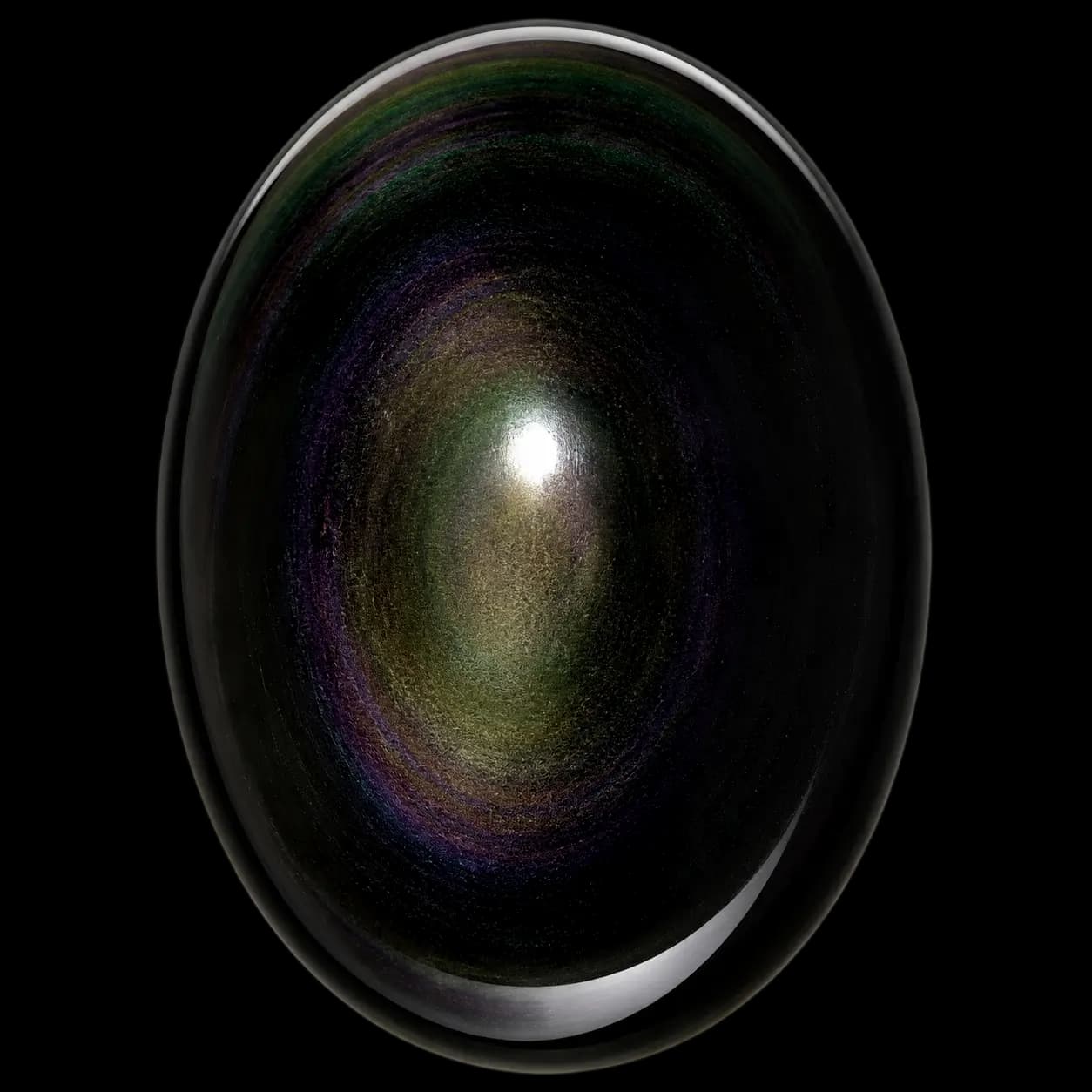
Obsidian
Obsidian is a captivating natural volcanic glass admired for its deep colors, smooth luster, and unique patterns. This durable gemstone is popular for jewelry, carvings, and collectors.
Obsidian is a natural volcanic glass formed when silica-rich lava cools rapidly, preventing crystals from forming. Unlike most gemstones, Obsidian is not a crystalline mineral but an amorphous material belonging to the volcanic glass family.
Its composition is primarily silicon dioxide (SiO₂), similar to quartz, with small amounts of other mineral elements that create its wide range of colors and patterns. Obsidian has a vitreous luster, no cleavage, and a Mohs hardness of approximately 5 to 5.5, making it suitable for decorative jewelry when handled with care.
The most recognized variety is Black Obsidian, known for its glossy dark appearance. Other varieties include Snowflake Obsidian, featuring white cristobalite patterns; Mahogany Obsidian, displaying reddish-brown markings; Rainbow Obsidian, showing colorful iridescent layers; and Golden Sheen Obsidian, which exhibits a reflective golden glow.
Obsidian deposits are found in volcanic regions around the world, including Mexico, the United States, Iceland, Japan, Armenia, and Turkey. Historically, Obsidian was highly valued by ancient civilizations for making sharp tools, blades, and ceremonial objects because of its ability to fracture into extremely sharp edges.
Today, natural Obsidian is widely used in gemstone jewelry, including pendants, beads, bracelets, earrings, and carved ornaments. Buyers appreciate Obsidian for its distinctive appearance, affordable pricing, natural origin, and connection to Earth's volcanic history.
- Mineral Family
- Volcanic Glass
- Chemical Formula
- SiO₂ (silicon dioxide, volcanic glass)
- Mohs Hardness
- 5 - 5.5
- Refractive Index
- 1.45 - 1.55
- Specific Gravity
- 2.30 - 2.60
- Cleavage
- None
- Crystal System
- Amorphous
- Luster
- Vitreous
- Color Range
- Black, Gray, Green, White
When buying Obsidian gemstone, several factors influence quality, appearance, and value.
Color: Deep, consistent colors and attractive natural patterns are highly desirable. Black Obsidian is popular for its classic glossy appearance, while patterned varieties such as Rainbow and Snowflake Obsidian are valued for their visual effects.
Clarity: Since Obsidian is volcanic glass, traditional gemstone clarity grading does not apply in the same way as crystalline gems. Buyers should look for attractive surfaces, natural patterns, and minimal unwanted fractures.
Cut: Obsidian can be shaped into cabochons, beads, carvings, and polished decorative pieces. A high-quality polish enhances its glass-like luster.
Carat: Larger Obsidian pieces are commonly available and remain relatively affordable compared with many gemstones. Size affects price, but pattern and craftsmanship often influence value more significantly.
Origin: Obsidian from famous volcanic regions may attract collectors, especially specimens with distinctive colors or optical effects.
Treatments: Natural Obsidian is generally untreated. Some products may be enhanced through polishing or shaping rather than artificial treatments.
Natural vs Lab-Grown: Natural Obsidian is formed through volcanic processes. Synthetic volcanic glass materials may exist but are generally not considered natural Obsidian.
Certification: For valuable collector specimens or premium jewelry pieces, certification from a recognized gemological laboratory can help confirm authenticity.
Price Factors: Obsidian remains an affordable gemstone. Value depends on variety, pattern, size, craftsmanship, and overall visual appeal. Rainbow and rare patterned varieties may command higher prices.
Obsidian jewelry should be handled with care because its glass-like structure can chip or scratch despite its moderate hardness.
Cleaning: Clean Obsidian using warm water, mild soap, and a soft cloth. Avoid harsh chemicals, ultrasonic cleaners, and steam cleaning.
Storage: Store Obsidian jewelry separately from harder gemstones to prevent scratches. A soft pouch or lined jewelry box is recommended.
Everyday Wear: Obsidian is suitable for occasional and careful everyday wear in pendants, earrings, and bracelets. Rings may require extra protection because they experience more impact.
Avoid: Avoid dropping Obsidian pieces, exposing them to sudden temperature changes, and contact with abrasive surfaces.
Obsidian is a natural volcanic glass formed when silica-rich lava cools rapidly, preventing crystals from forming. Unlike most gemstones, Obsidian is not a crystalline mineral but an amorphous material belonging to the volcanic glass family.
Its composition is primarily silicon dioxide (SiO₂), similar to quartz, with small amounts of other mineral elements that create its wide range of colors and patterns. Obsidian has a vitreous luster, no cleavage, and a Mohs hardness of approximately 5 to 5.5, making it suitable for decorative jewelry when handled with care.
The most recognized variety is Black Obsidian, known for its glossy dark appearance. Other varieties include Snowflake Obsidian, featuring white cristobalite patterns; Mahogany Obsidian, displaying reddish-brown markings; Rainbow Obsidian, showing colorful iridescent layers; and Golden Sheen Obsidian, which exhibits a reflective golden glow.
Obsidian deposits are found in volcanic regions around the world, including Mexico, the United States, Iceland, Japan, Armenia, and Turkey. Historically, Obsidian was highly valued by ancient civilizations for making sharp tools, blades, and ceremonial objects because of its ability to fracture into extremely sharp edges.
Today, natural Obsidian is widely used in gemstone jewelry, including pendants, beads, bracelets, earrings, and carved ornaments. Buyers appreciate Obsidian for its distinctive appearance, affordable pricing, natural origin, and connection to Earth's volcanic history.
- Mineral Family
- Volcanic Glass
- Chemical Formula
- SiO₂ (silicon dioxide, volcanic glass)
- Mohs Hardness
- 5 - 5.5
- Refractive Index
- 1.45 - 1.55
- Specific Gravity
- 2.30 - 2.60
- Cleavage
- None
- Crystal System
- Amorphous
- Luster
- Vitreous
- Color Range
- Black, Gray, Green, White
When buying Obsidian gemstone, several factors influence quality, appearance, and value.
Color: Deep, consistent colors and attractive natural patterns are highly desirable. Black Obsidian is popular for its classic glossy appearance, while patterned varieties such as Rainbow and Snowflake Obsidian are valued for their visual effects.
Clarity: Since Obsidian is volcanic glass, traditional gemstone clarity grading does not apply in the same way as crystalline gems. Buyers should look for attractive surfaces, natural patterns, and minimal unwanted fractures.
Cut: Obsidian can be shaped into cabochons, beads, carvings, and polished decorative pieces. A high-quality polish enhances its glass-like luster.
Carat: Larger Obsidian pieces are commonly available and remain relatively affordable compared with many gemstones. Size affects price, but pattern and craftsmanship often influence value more significantly.
Origin: Obsidian from famous volcanic regions may attract collectors, especially specimens with distinctive colors or optical effects.
Treatments: Natural Obsidian is generally untreated. Some products may be enhanced through polishing or shaping rather than artificial treatments.
Natural vs Lab-Grown: Natural Obsidian is formed through volcanic processes. Synthetic volcanic glass materials may exist but are generally not considered natural Obsidian.
Certification: For valuable collector specimens or premium jewelry pieces, certification from a recognized gemological laboratory can help confirm authenticity.
Price Factors: Obsidian remains an affordable gemstone. Value depends on variety, pattern, size, craftsmanship, and overall visual appeal. Rainbow and rare patterned varieties may command higher prices.
Obsidian jewelry should be handled with care because its glass-like structure can chip or scratch despite its moderate hardness.
Cleaning: Clean Obsidian using warm water, mild soap, and a soft cloth. Avoid harsh chemicals, ultrasonic cleaners, and steam cleaning.
Storage: Store Obsidian jewelry separately from harder gemstones to prevent scratches. A soft pouch or lined jewelry box is recommended.
Everyday Wear: Obsidian is suitable for occasional and careful everyday wear in pendants, earrings, and bracelets. Rings may require extra protection because they experience more impact.
Avoid: Avoid dropping Obsidian pieces, exposing them to sudden temperature changes, and contact with abrasive surfaces.
Obsidian for Sale
No gems found
Try broadening your search or adjusting your filters.
Have a gem of your own? List it free - no fees