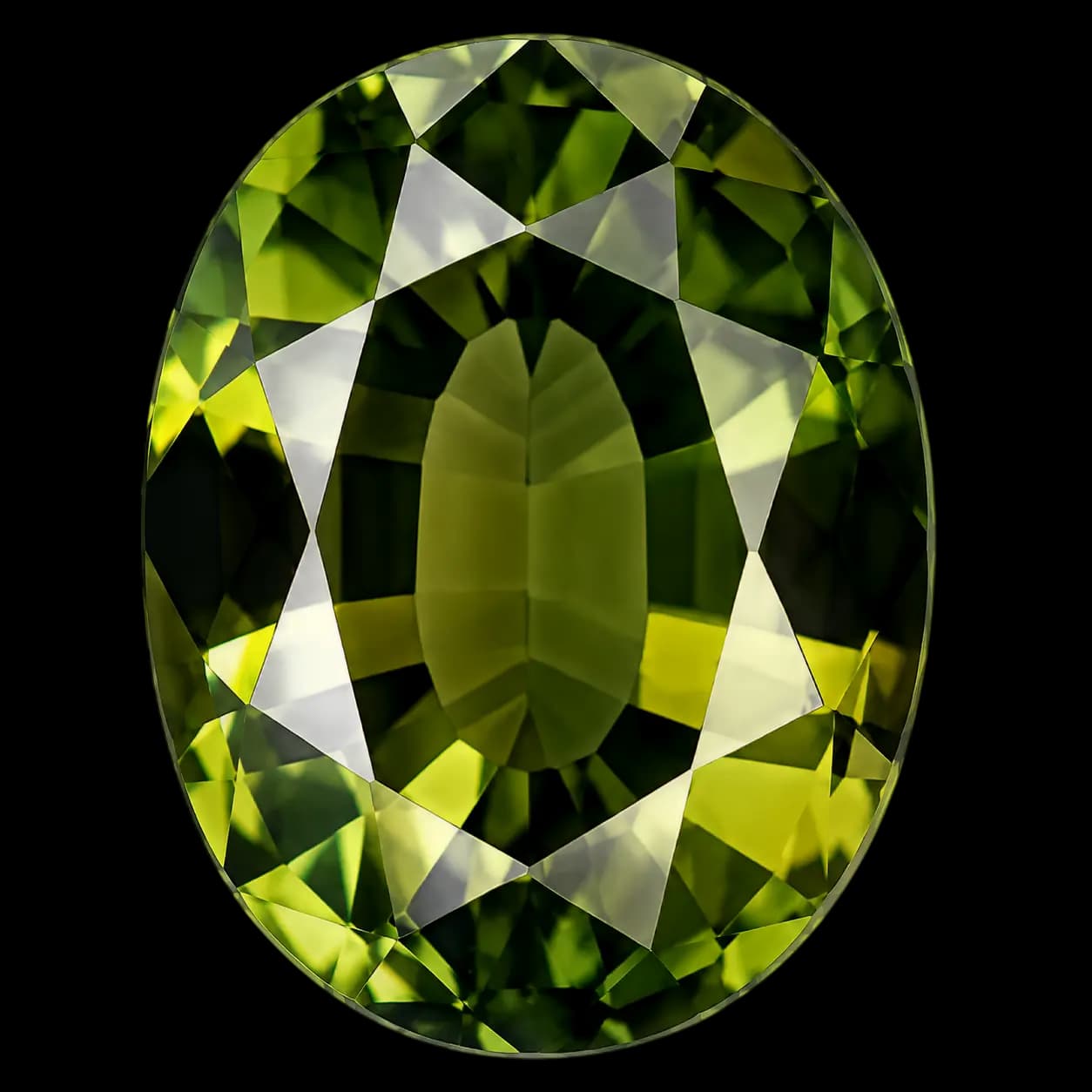
Kornerupine
Kornerupine is a rare gemstone admired for its elegant green, blue, and yellow hues, exceptional rarity, and sophisticated appeal in fine jewelry and collections.
Kornerupine is a rare gemstone from the Kornerupine mineral group, named after Danish geologist Andreas Nikolaus Kornerup. It was first discovered in Greenland in 1884 and remains one of the more unusual gemstones valued by collectors and jewelry enthusiasts.
This gemstone belongs to the orthorhombic crystal system and is a magnesium aluminum borosilicate mineral with the chemical composition MgAl6(Si5Al)O18. It forms deep within metamorphic rocks under high-pressure geological conditions, often occurring alongside minerals such as sapphirine, garnet, and feldspar.
Natural Kornerupine displays a beautiful range of colors, including green, blue, bluish-green, yellow, brownish-yellow, and gray tones. Some exceptional specimens show attractive pleochroism, meaning the gemstone can display different colors when viewed from different directions. Green and blue-green Kornerupine varieties are among the most desirable due to their rich color and rarity.
Major sources of Kornerupine include Madagascar, Sri Lanka, Myanmar, Tanzania, Kenya, South Africa, and Greenland. Fine-quality specimens from Madagascar and Sri Lanka are especially appreciated for their vivid colors and transparency.
Although Kornerupine has a relatively recent history compared with many traditional gemstones, its scarcity and unique appearance have earned it a place among collector gemstones. Today, natural Kornerupine is used in exclusive rings, pendants, earrings, and custom jewelry pieces where individuality and rarity are highly valued.
- Mineral Family
- Kornerupine
- Chemical Formula
- MgAl6(Si5Al)O18
- Mohs Hardness
- 6.5 - 7
- Refractive Index
- 1.66 - 1.68
- Specific Gravity
- 3.28 - 3.35
- Cleavage
- Poor
- Crystal System
- Orthorhombic
- Luster
- Vitreous
- Color Range
- Green, Blue, Yellow, Orange, Gray
When buying Kornerupine gemstone, several factors influence quality, beauty, and value.
Color: Color is one of the most important considerations. The most desirable Kornerupine gemstones display strong saturation, attractive tones, and even distribution of color. Rich green, blue-green, and blue varieties are especially sought after by collectors.
Clarity: Transparent and eye-clean Kornerupine specimens are rare and valuable. Because this gemstone is naturally uncommon, some internal inclusions may be accepted when they do not reduce overall beauty or durability.
Cut: A skilled cut enhances Kornerupine's natural brilliance, pleochroism, and color display. Common cuts include oval, cushion, round, and other custom shapes designed to maximize visual appeal.
Carat: Larger Kornerupine gemstones with excellent color and clarity are significantly rarer and usually command higher prices. However, quality factors such as color and transparency often have more influence than size alone.
Origin: Geographic origin can affect collector interest and market value. Specimens from recognized sources such as Madagascar and Sri Lanka are often appreciated for their attractive colors and quality.
Treatments: Natural Kornerupine is generally sold without treatments. Any enhancement should always be disclosed by the seller.
Natural vs Lab-Grown: Natural Kornerupine is valued because of its rarity and geological formation. Lab-grown Kornerupine is not commonly available in the gemstone market.
Certification: A professional gemstone certificate from a reputable gemological laboratory helps verify authenticity, natural origin, treatments, and important characteristics before purchase.
Price Factors: Kornerupine price depends on color quality, clarity, size, origin, cut quality, and certification. Buyers looking to buy Kornerupine online should prioritize trusted sellers and verified gemstone reports.
Kornerupine jewelry should be handled with care to preserve its beauty and condition.
Cleaning: Clean Kornerupine using warm water, mild soap, and a soft brush. Gently remove dirt and avoid harsh chemicals or abrasive cleaners.
Storage: Store Kornerupine jewelry separately in a soft pouch or lined jewelry box to prevent scratches from harder gemstones.
Everyday Wear: With a Mohs hardness of 6.5-7, Kornerupine is suitable for many jewelry designs, including pendants, earrings, and occasional-wear rings. Avoid strong impacts and rough activities that may damage the gemstone.
Things to Avoid: Avoid ultrasonic and steam cleaning unless recommended by a gem professional, especially if the gemstone contains significant inclusions.
Kornerupine is a rare gemstone from the Kornerupine mineral group, named after Danish geologist Andreas Nikolaus Kornerup. It was first discovered in Greenland in 1884 and remains one of the more unusual gemstones valued by collectors and jewelry enthusiasts.
This gemstone belongs to the orthorhombic crystal system and is a magnesium aluminum borosilicate mineral with the chemical composition MgAl6(Si5Al)O18. It forms deep within metamorphic rocks under high-pressure geological conditions, often occurring alongside minerals such as sapphirine, garnet, and feldspar.
Natural Kornerupine displays a beautiful range of colors, including green, blue, bluish-green, yellow, brownish-yellow, and gray tones. Some exceptional specimens show attractive pleochroism, meaning the gemstone can display different colors when viewed from different directions. Green and blue-green Kornerupine varieties are among the most desirable due to their rich color and rarity.
Major sources of Kornerupine include Madagascar, Sri Lanka, Myanmar, Tanzania, Kenya, South Africa, and Greenland. Fine-quality specimens from Madagascar and Sri Lanka are especially appreciated for their vivid colors and transparency.
Although Kornerupine has a relatively recent history compared with many traditional gemstones, its scarcity and unique appearance have earned it a place among collector gemstones. Today, natural Kornerupine is used in exclusive rings, pendants, earrings, and custom jewelry pieces where individuality and rarity are highly valued.
- Mineral Family
- Kornerupine
- Chemical Formula
- MgAl6(Si5Al)O18
- Mohs Hardness
- 6.5 - 7
- Refractive Index
- 1.66 - 1.68
- Specific Gravity
- 3.28 - 3.35
- Cleavage
- Poor
- Crystal System
- Orthorhombic
- Luster
- Vitreous
- Color Range
- Green, Blue, Yellow, Orange, Gray
When buying Kornerupine gemstone, several factors influence quality, beauty, and value.
Color: Color is one of the most important considerations. The most desirable Kornerupine gemstones display strong saturation, attractive tones, and even distribution of color. Rich green, blue-green, and blue varieties are especially sought after by collectors.
Clarity: Transparent and eye-clean Kornerupine specimens are rare and valuable. Because this gemstone is naturally uncommon, some internal inclusions may be accepted when they do not reduce overall beauty or durability.
Cut: A skilled cut enhances Kornerupine's natural brilliance, pleochroism, and color display. Common cuts include oval, cushion, round, and other custom shapes designed to maximize visual appeal.
Carat: Larger Kornerupine gemstones with excellent color and clarity are significantly rarer and usually command higher prices. However, quality factors such as color and transparency often have more influence than size alone.
Origin: Geographic origin can affect collector interest and market value. Specimens from recognized sources such as Madagascar and Sri Lanka are often appreciated for their attractive colors and quality.
Treatments: Natural Kornerupine is generally sold without treatments. Any enhancement should always be disclosed by the seller.
Natural vs Lab-Grown: Natural Kornerupine is valued because of its rarity and geological formation. Lab-grown Kornerupine is not commonly available in the gemstone market.
Certification: A professional gemstone certificate from a reputable gemological laboratory helps verify authenticity, natural origin, treatments, and important characteristics before purchase.
Price Factors: Kornerupine price depends on color quality, clarity, size, origin, cut quality, and certification. Buyers looking to buy Kornerupine online should prioritize trusted sellers and verified gemstone reports.
Kornerupine jewelry should be handled with care to preserve its beauty and condition.
Cleaning: Clean Kornerupine using warm water, mild soap, and a soft brush. Gently remove dirt and avoid harsh chemicals or abrasive cleaners.
Storage: Store Kornerupine jewelry separately in a soft pouch or lined jewelry box to prevent scratches from harder gemstones.
Everyday Wear: With a Mohs hardness of 6.5-7, Kornerupine is suitable for many jewelry designs, including pendants, earrings, and occasional-wear rings. Avoid strong impacts and rough activities that may damage the gemstone.
Things to Avoid: Avoid ultrasonic and steam cleaning unless recommended by a gem professional, especially if the gemstone contains significant inclusions.
Kornerupine for Sale
No gems found
Try broadening your search or adjusting your filters.
Have a gem of your own? List it free - no fees