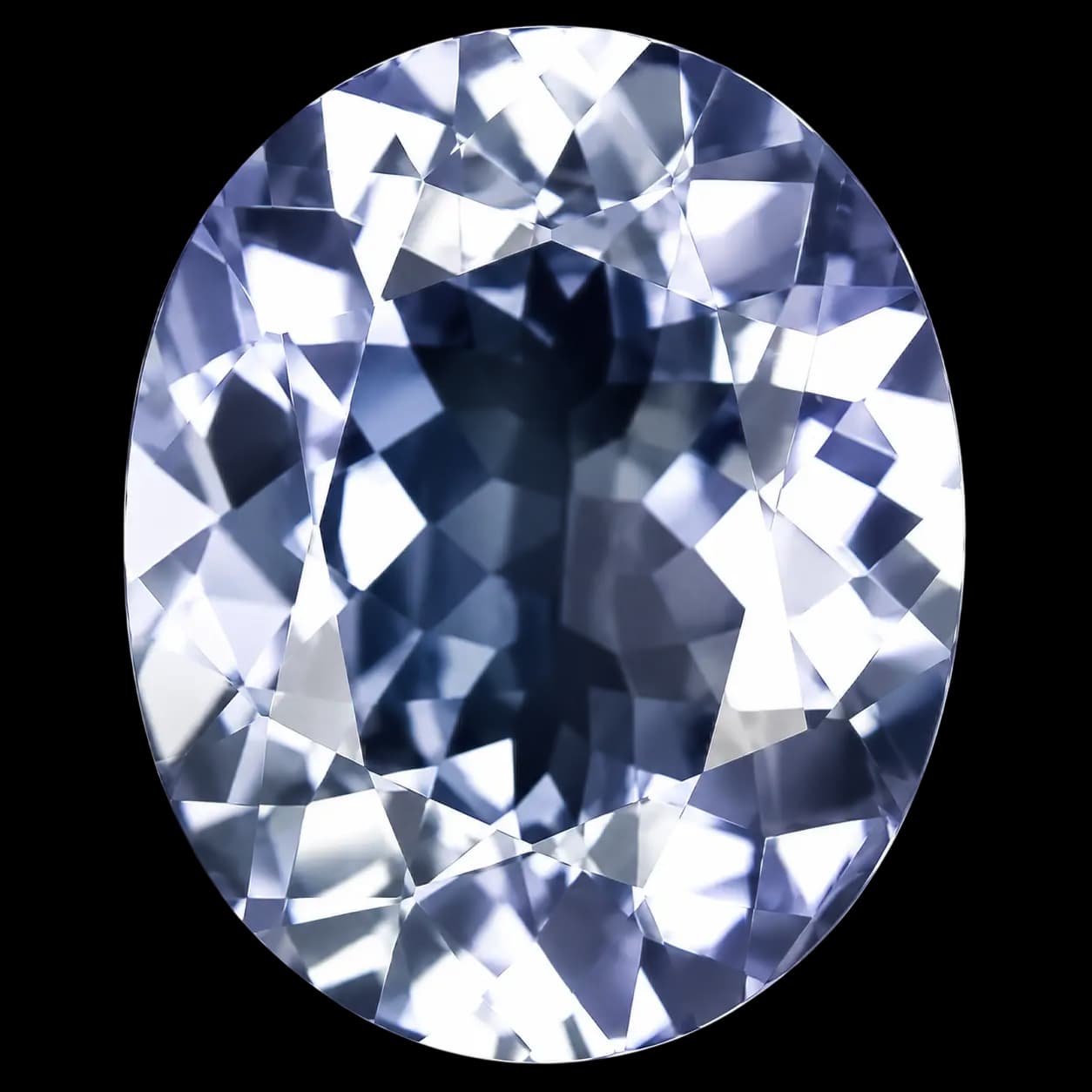
Jeremejevite
Jeremejevite is an exceptionally rare gemstone admired for its delicate blue hues, remarkable transparency, and collector-level beauty. This natural gemstone is prized for exclusive jewelry creations.
Jeremejevite is one of the world's rarest gemstones, belonging to the borate mineral group. It is a barium aluminum borate mineral with the chemical composition BaAl(BO3)O. The gemstone was first discovered in Siberia, Russia, and later significant gem-quality material was found in Namibia, particularly in the Erongo Mountains.
Jeremejevite forms in highly evolved granite pegmatites, where unusual mineral conditions allow this rare borate mineral to crystallize. Gem-quality specimens are extremely limited, making it highly valued among collectors and fine gemstone enthusiasts.
The most desirable Jeremejevite gemstones display attractive pale blue to vivid blue colors, although colorless, yellowish, and light greenish specimens may also occur. Its vitreous luster, excellent transparency, and delicate pastel appearance make it especially appealing for unique jewelry designs.
With a Mohs hardness of around 6.5 to 7, Jeremejevite is suitable for carefully designed jewelry pieces, including pendants, earrings, and occasional-wear rings. Due to its scarcity, larger faceted stones are considered exceptional collector gems.
Throughout modern gem history, Jeremejevite has gained recognition as a rare mineral treasure rather than a commonly available jewelry stone. Today, buyers value natural Jeremejevite for its extraordinary rarity, unusual chemistry, and captivating blue appearance.
- Mineral Family
- Jeremejevite
- Chemical Formula
- BaAl(BO3)O
- Mohs Hardness
- 6.5 - 7
- Refractive Index
- 1.653 - 1.687
- Specific Gravity
- 3.31 - 3.35
- Cleavage
- None
- Crystal System
- Hexagonal
- Luster
- Vitreous
- Color Range
- Blue, White
When buying a Jeremejevite gemstone, rarity and authenticity are the most important considerations.
Color: Blue Jeremejevite is generally the most sought-after, especially stones with attractive saturation, even tone, and good transparency. Pale blue and colorless varieties can also be valuable depending on quality and rarity.
Clarity: Fine Jeremejevite gemstones are usually valued for their transparency and eye-clean appearance. Because natural crystals are rare, minor inclusions may be acceptable and can help confirm natural origin.
Cut: Expert cutting is important to maximize the gemstone's brilliance, transparency, and delicate color. Custom faceting is often used because of the limited availability of rough material.
Carat: Larger Jeremejevite gemstones are extremely uncommon. Size significantly influences value because high-quality stones above one carat are rare.
Origin: Namibia is the most recognized modern source of gem-quality Jeremejevite. Provenance can influence collector interest, although quality remains the primary value factor.
Treatments: Natural Jeremejevite is generally not known for common enhancement treatments. Buyers should request disclosure of any treatments before purchase.
Natural vs Lab-Grown: Natural Jeremejevite is exceptionally rare, and buyers should verify that the stone is genuine and not confused with similar-looking minerals.
Certification: A reputable gemological laboratory report is recommended to confirm identity, natural origin, and gemstone characteristics. Certification helps buyers make informed purchasing decisions.
Price Factors: Value depends on color quality, transparency, size, rarity, origin, cutting quality, and laboratory verification.
Jeremejevite requires careful handling to preserve its beauty. Clean the gemstone using warm water, mild soap, and a soft brush. Avoid harsh chemicals, sudden temperature changes, and abrasive cleaning materials.
Because of its cleavage and rarity, avoid ultrasonic and steam cleaners unless a professional gemologist confirms they are safe. Store Jeremejevite separately from harder gemstones to prevent scratches.
For everyday wear, pendants and earrings are excellent choices because they provide better protection. Rings should be worn carefully and designed with secure settings to reduce impact risks.
Jeremejevite is one of the world's rarest gemstones, belonging to the borate mineral group. It is a barium aluminum borate mineral with the chemical composition BaAl(BO3)O. The gemstone was first discovered in Siberia, Russia, and later significant gem-quality material was found in Namibia, particularly in the Erongo Mountains.
Jeremejevite forms in highly evolved granite pegmatites, where unusual mineral conditions allow this rare borate mineral to crystallize. Gem-quality specimens are extremely limited, making it highly valued among collectors and fine gemstone enthusiasts.
The most desirable Jeremejevite gemstones display attractive pale blue to vivid blue colors, although colorless, yellowish, and light greenish specimens may also occur. Its vitreous luster, excellent transparency, and delicate pastel appearance make it especially appealing for unique jewelry designs.
With a Mohs hardness of around 6.5 to 7, Jeremejevite is suitable for carefully designed jewelry pieces, including pendants, earrings, and occasional-wear rings. Due to its scarcity, larger faceted stones are considered exceptional collector gems.
Throughout modern gem history, Jeremejevite has gained recognition as a rare mineral treasure rather than a commonly available jewelry stone. Today, buyers value natural Jeremejevite for its extraordinary rarity, unusual chemistry, and captivating blue appearance.
- Mineral Family
- Jeremejevite
- Chemical Formula
- BaAl(BO3)O
- Mohs Hardness
- 6.5 - 7
- Refractive Index
- 1.653 - 1.687
- Specific Gravity
- 3.31 - 3.35
- Cleavage
- None
- Crystal System
- Hexagonal
- Luster
- Vitreous
- Color Range
- Blue, White
When buying a Jeremejevite gemstone, rarity and authenticity are the most important considerations.
Color: Blue Jeremejevite is generally the most sought-after, especially stones with attractive saturation, even tone, and good transparency. Pale blue and colorless varieties can also be valuable depending on quality and rarity.
Clarity: Fine Jeremejevite gemstones are usually valued for their transparency and eye-clean appearance. Because natural crystals are rare, minor inclusions may be acceptable and can help confirm natural origin.
Cut: Expert cutting is important to maximize the gemstone's brilliance, transparency, and delicate color. Custom faceting is often used because of the limited availability of rough material.
Carat: Larger Jeremejevite gemstones are extremely uncommon. Size significantly influences value because high-quality stones above one carat are rare.
Origin: Namibia is the most recognized modern source of gem-quality Jeremejevite. Provenance can influence collector interest, although quality remains the primary value factor.
Treatments: Natural Jeremejevite is generally not known for common enhancement treatments. Buyers should request disclosure of any treatments before purchase.
Natural vs Lab-Grown: Natural Jeremejevite is exceptionally rare, and buyers should verify that the stone is genuine and not confused with similar-looking minerals.
Certification: A reputable gemological laboratory report is recommended to confirm identity, natural origin, and gemstone characteristics. Certification helps buyers make informed purchasing decisions.
Price Factors: Value depends on color quality, transparency, size, rarity, origin, cutting quality, and laboratory verification.
Jeremejevite requires careful handling to preserve its beauty. Clean the gemstone using warm water, mild soap, and a soft brush. Avoid harsh chemicals, sudden temperature changes, and abrasive cleaning materials.
Because of its cleavage and rarity, avoid ultrasonic and steam cleaners unless a professional gemologist confirms they are safe. Store Jeremejevite separately from harder gemstones to prevent scratches.
For everyday wear, pendants and earrings are excellent choices because they provide better protection. Rings should be worn carefully and designed with secure settings to reduce impact risks.
Jeremejevite for Sale
No gems found
Try broadening your search or adjusting your filters.
Have a gem of your own? List it free - no fees