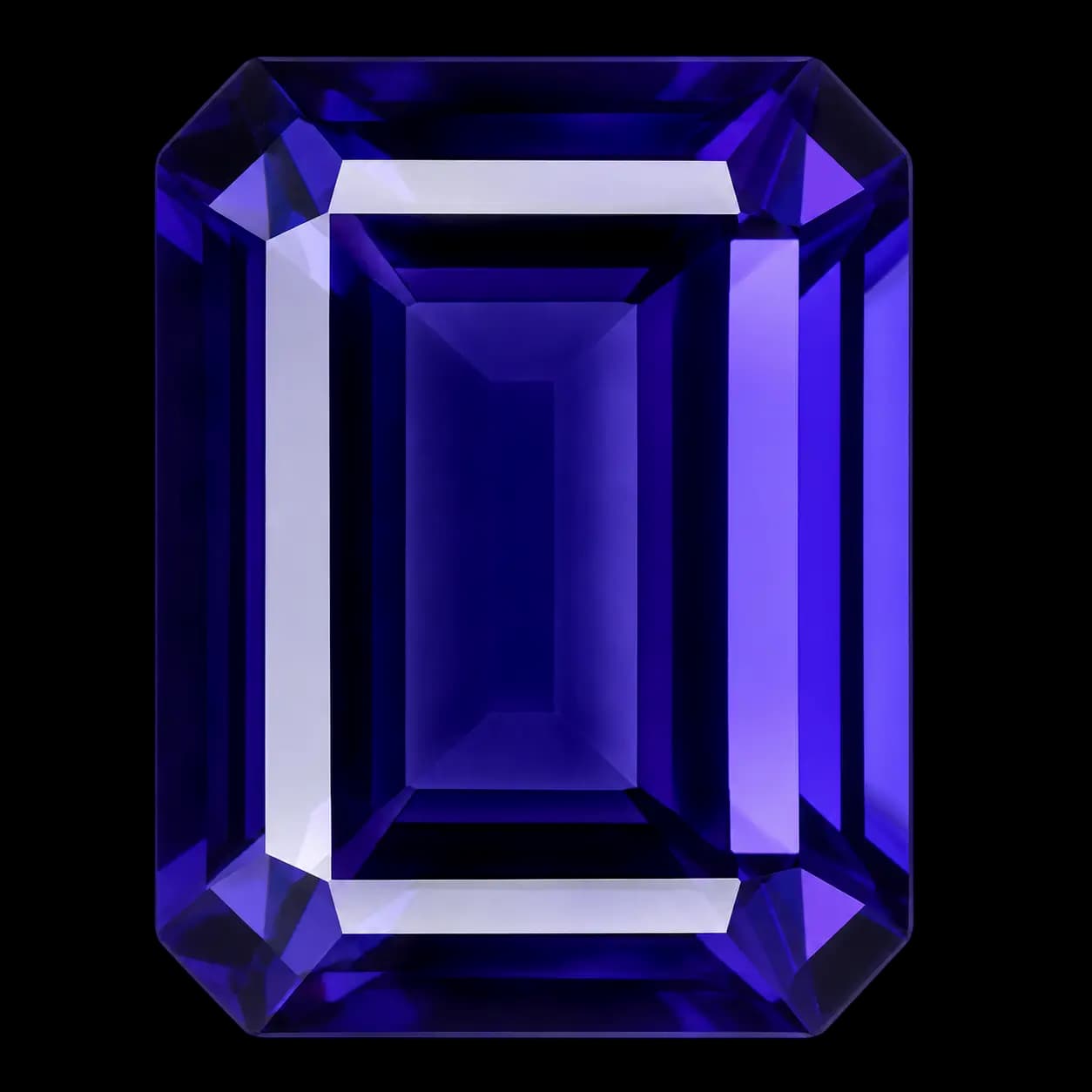
Iolite
Iolite is a captivating violet-blue gemstone from the cordierite family, admired for its pleochroism, natural beauty, and elegant appeal in fine jewelry.
Iolite is a natural gemstone variety of cordierite, a magnesium aluminum silicate mineral known for its attractive violet-blue colors and remarkable pleochroism. The name Iolite comes from the Greek word "ios," meaning violet, reflecting its characteristic hues.
Iolite gemstones form mainly in metamorphic and igneous environments where high temperatures and pressures allow cordierite crystals to develop. Important sources include India, Sri Lanka, Madagascar, Brazil, Myanmar, and Tanzania. Some historic sources have produced exceptional stones with strong blue-violet coloration and excellent transparency.
One of Iolite's most distinctive properties is pleochroism, meaning the gemstone can display different colors when viewed from different directions. A single stone may show violet, blue, gray, or slightly yellowish tones depending on the viewing angle and lighting conditions. This natural optical feature gives Iolite a unique personality compared with many other colored gemstones.
With a Mohs hardness of 7 to 7.5, Iolite offers good durability for jewelry when properly cared for. It has a vitreous luster, an orthorhombic crystal system, and no significant cleavage, although careful handling is recommended because strong impacts can still damage the stone.
Historically, Iolite was sometimes called "Water Sapphire" because of its blue appearance. Some historians also associate thin slices of cordierite with Viking navigation tools because of their ability to interact with polarized light, although this connection remains a topic of historical discussion.
Today, Iolite jewelry is appreciated by collectors and designers seeking a distinctive gemstone with natural color variation. Iolite rings, earrings, pendants, and custom jewelry pieces are popular choices for buyers who value individuality, affordability, and unusual gemstone beauty.
- Mineral Family
- Iolite
- Chemical Formula
- Mg₂Al₄Si₅O₁₈
- Mohs Hardness
- 7 to 7.5
- Refractive Index
- 1.542 - 1.551
- Specific Gravity
- 2.53 - 2.78
- Cleavage
- Poor to indistinct
- Crystal System
- Orthorhombic
- Luster
- Vitreous
- Color Range
- Blue, Purple, Gray
Buying a natural Iolite gemstone requires attention to color, clarity, cut, carat weight, origin, treatments, and certification.
Color: The most desirable Iolite gemstones display attractive medium to deep violet-blue tones with noticeable pleochroism. Stones that show balanced blue and violet colors are generally more valued than pale or overly gray specimens.
Clarity: Iolite is commonly found with natural inclusions. Higher-quality stones have good transparency and fewer visible inclusions that interfere with light movement. Eye-clean specimens with strong color are especially desirable.
Cut: Proper cutting is essential because Iolite's pleochroism can create different appearances depending on orientation. Skilled cutters position the gemstone to maximize its most attractive blue-violet color while maintaining brilliance and symmetry.
Carat: Larger Iolite gemstones are available, but fine-quality stones with strong color and clarity become increasingly rare as size increases. Price is determined by the overall quality rather than carat weight alone.
Origin: Iolite from locations such as Sri Lanka, Madagascar, India, and Brazil may produce attractive specimens. However, gemstone quality depends more on individual characteristics than geographic origin alone.
Treatments: Natural Iolite is generally not treated. Buyers should always ask whether any enhancements have been applied and request proper disclosure.
Natural vs Lab-Grown: Natural Iolite is valued for its geological formation and unique internal characteristics. Buyers should confirm authenticity because imitations and similar-looking materials may exist.
Certification: A reputable gemological certificate can confirm gemstone identity, natural origin where available, and any treatment information. Certification provides confidence when purchasing valuable Iolite jewelry or loose gemstones online.
Price Factors: Iolite gemstone prices depend mainly on color intensity, transparency, cut quality, size, origin reputation, and certification.
Iolite jewelry requires regular care to maintain its natural brilliance and violet-blue appearance.
Cleaning: Clean Iolite using warm water, mild soap, and a soft cloth or soft brush. Gently remove dirt and oils without applying excessive pressure.
Storage: Store Iolite gemstones separately from harder gemstones to prevent surface scratches. A soft jewelry pouch or lined box is recommended.
Everyday Wear: With a hardness of 7 to 7.5, Iolite is suitable for many jewelry designs, including pendants, earrings, and occasional-wear rings. Rings should be worn carefully during activities that may expose the stone to strong impacts.
Avoid: Avoid harsh chemicals, sudden temperature changes, ultrasonic cleaners, and steam cleaning unless recommended by a professional jeweler. Remove Iolite jewelry before swimming, cleaning, or using chemical products.
Regular Inspection: Check jewelry settings periodically, especially rings, to ensure the gemstone remains secure.
Iolite is a natural gemstone variety of cordierite, a magnesium aluminum silicate mineral known for its attractive violet-blue colors and remarkable pleochroism. The name Iolite comes from the Greek word "ios," meaning violet, reflecting its characteristic hues.
Iolite gemstones form mainly in metamorphic and igneous environments where high temperatures and pressures allow cordierite crystals to develop. Important sources include India, Sri Lanka, Madagascar, Brazil, Myanmar, and Tanzania. Some historic sources have produced exceptional stones with strong blue-violet coloration and excellent transparency.
One of Iolite's most distinctive properties is pleochroism, meaning the gemstone can display different colors when viewed from different directions. A single stone may show violet, blue, gray, or slightly yellowish tones depending on the viewing angle and lighting conditions. This natural optical feature gives Iolite a unique personality compared with many other colored gemstones.
With a Mohs hardness of 7 to 7.5, Iolite offers good durability for jewelry when properly cared for. It has a vitreous luster, an orthorhombic crystal system, and no significant cleavage, although careful handling is recommended because strong impacts can still damage the stone.
Historically, Iolite was sometimes called "Water Sapphire" because of its blue appearance. Some historians also associate thin slices of cordierite with Viking navigation tools because of their ability to interact with polarized light, although this connection remains a topic of historical discussion.
Today, Iolite jewelry is appreciated by collectors and designers seeking a distinctive gemstone with natural color variation. Iolite rings, earrings, pendants, and custom jewelry pieces are popular choices for buyers who value individuality, affordability, and unusual gemstone beauty.
- Mineral Family
- Iolite
- Chemical Formula
- Mg₂Al₄Si₅O₁₈
- Mohs Hardness
- 7 to 7.5
- Refractive Index
- 1.542 - 1.551
- Specific Gravity
- 2.53 - 2.78
- Cleavage
- Poor to indistinct
- Crystal System
- Orthorhombic
- Luster
- Vitreous
- Color Range
- Blue, Purple, Gray
Buying a natural Iolite gemstone requires attention to color, clarity, cut, carat weight, origin, treatments, and certification.
Color: The most desirable Iolite gemstones display attractive medium to deep violet-blue tones with noticeable pleochroism. Stones that show balanced blue and violet colors are generally more valued than pale or overly gray specimens.
Clarity: Iolite is commonly found with natural inclusions. Higher-quality stones have good transparency and fewer visible inclusions that interfere with light movement. Eye-clean specimens with strong color are especially desirable.
Cut: Proper cutting is essential because Iolite's pleochroism can create different appearances depending on orientation. Skilled cutters position the gemstone to maximize its most attractive blue-violet color while maintaining brilliance and symmetry.
Carat: Larger Iolite gemstones are available, but fine-quality stones with strong color and clarity become increasingly rare as size increases. Price is determined by the overall quality rather than carat weight alone.
Origin: Iolite from locations such as Sri Lanka, Madagascar, India, and Brazil may produce attractive specimens. However, gemstone quality depends more on individual characteristics than geographic origin alone.
Treatments: Natural Iolite is generally not treated. Buyers should always ask whether any enhancements have been applied and request proper disclosure.
Natural vs Lab-Grown: Natural Iolite is valued for its geological formation and unique internal characteristics. Buyers should confirm authenticity because imitations and similar-looking materials may exist.
Certification: A reputable gemological certificate can confirm gemstone identity, natural origin where available, and any treatment information. Certification provides confidence when purchasing valuable Iolite jewelry or loose gemstones online.
Price Factors: Iolite gemstone prices depend mainly on color intensity, transparency, cut quality, size, origin reputation, and certification.
Iolite jewelry requires regular care to maintain its natural brilliance and violet-blue appearance.
Cleaning: Clean Iolite using warm water, mild soap, and a soft cloth or soft brush. Gently remove dirt and oils without applying excessive pressure.
Storage: Store Iolite gemstones separately from harder gemstones to prevent surface scratches. A soft jewelry pouch or lined box is recommended.
Everyday Wear: With a hardness of 7 to 7.5, Iolite is suitable for many jewelry designs, including pendants, earrings, and occasional-wear rings. Rings should be worn carefully during activities that may expose the stone to strong impacts.
Avoid: Avoid harsh chemicals, sudden temperature changes, ultrasonic cleaners, and steam cleaning unless recommended by a professional jeweler. Remove Iolite jewelry before swimming, cleaning, or using chemical products.
Regular Inspection: Check jewelry settings periodically, especially rings, to ensure the gemstone remains secure.
Iolite for Sale
No gems found
Try broadening your search or adjusting your filters.
Have a gem of your own? List it free - no fees