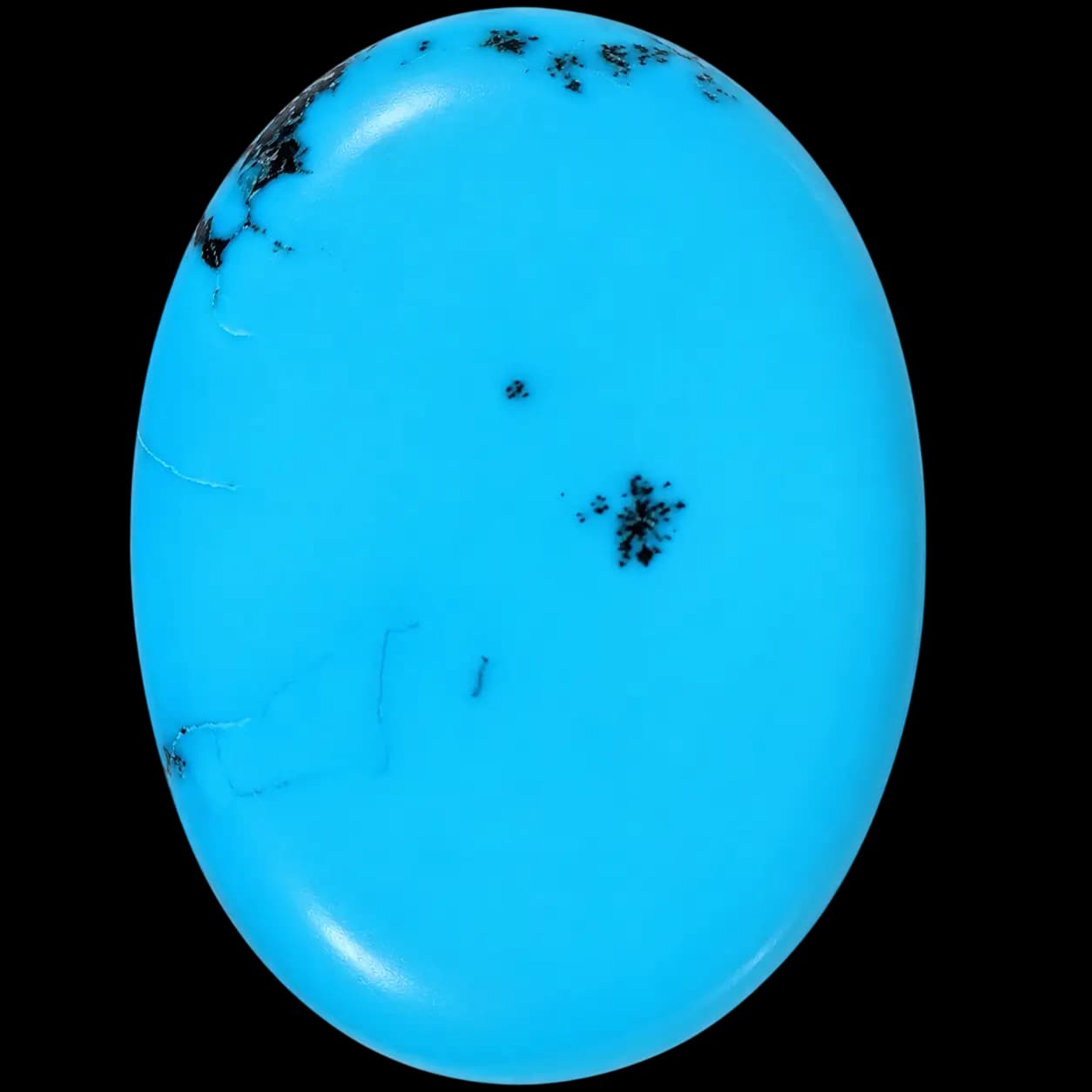
Howlite
Howlite is a distinctive white gemstone admired for its soft appearance, dark veining, and artistic appeal. Popular in modern jewelry, it offers unique natural patterns and versatile design possibilities.
Howlite is a calcium borosilicate hydroxide mineral belonging to the borate mineral family. It was discovered in the 19th century and named after Canadian geologist and chemist Henry How.
Naturally forming in evaporite deposits, Howlite develops as irregular nodules or masses within sedimentary environments. Its chemical composition consists mainly of calcium, boron, silicon, oxygen, and hydroxide groups, creating its characteristic porous structure and distinctive appearance.
The most recognizable feature of Howlite gemstone is its creamy white to light gray body color with dark gray or black spiderweb-like veining. These natural matrix patterns make every stone visually unique. Although white is the classic natural color, Howlite is commonly dyed in blue, green, purple, and other shades to create colorful jewelry pieces and imitate the appearance of gemstones such as turquoise.
With a Mohs hardness of around 3.5, Howlite is a relatively soft gemstone and is usually polished into cabochons, beads, carvings, and decorative objects rather than faceted stones. Its soft luster and attractive patterns make it especially popular for bracelets, pendants, earrings, and artisan jewelry.
Important Howlite sources include Canada, the United States, and other locations where borate mineral deposits occur. Canadian Howlite from Nova Scotia is historically significant, while material from California is also well known among collectors.
Today, buyers value Howlite gemstone for its natural character, affordability, artistic appearance, and suitability for unique handmade jewelry designs.
- Mineral Family
- Howlite
- Chemical Formula
- Ca2B5SiO9(OH)5
- Mohs Hardness
- 3.5
- Refractive Index
- 1.52 - 1.54
- Specific Gravity
- 2.53 - 2.59
- Cleavage
- Perfect cleavage in one direction
- Crystal System
- Monoclinic
- Luster
- Pearly
- Color Range
- White, Gray
When buying Howlite gemstone, several factors influence appearance, quality, and value.
Color: Natural Howlite is typically white or light gray with contrasting dark veining. Stones with attractive and balanced matrix patterns are often preferred. Dyed Howlite is available in many colors, especially blue varieties designed to resemble turquoise, but buyers should confirm whether the color is natural or treated.
Clarity: Howlite commonly contains natural inclusions and matrix patterns. A desirable piece has an attractive surface, even texture, and well-defined natural veining without excessive damage or fractures.
Cut: Due to its softness, Howlite is mainly cut as cabochons with smooth polished surfaces. Symmetrical shapes such as round, oval, and pear cabochons are popular for jewelry.
Carat: Large Howlite pieces are widely available because the material commonly occurs in sizable formations. Weight has less impact on value compared with pattern, polish, and overall appearance.
Origin: Origin can influence collector interest, especially for historically known sources such as Canada and California. However, quality and appearance remain the main factors for most jewelry buyers.
Treatments: Howlite is frequently dyed to produce different colors. Reputable sellers should clearly disclose any treatments. Natural untreated Howlite remains popular for its authentic white appearance.
Natural vs Lab-Grown: Natural Howlite is mined from geological deposits. Synthetic Howlite is uncommon, but buyers should request accurate product descriptions and gemstone identification when authenticity matters.
Certification: For confidence when purchasing natural Howlite online, choose sellers who provide clear gemstone details, treatment disclosure, and reliable certification where applicable.
Price Factors: Howlite is generally an affordable gemstone. Price depends on color, pattern quality, craftsmanship, size, polish, and whether the material is natural or dyed.
Howlite requires gentle care because of its relatively low hardness.
Cleaning: Clean Howlite jewelry using a soft cloth and mild soapy water. Avoid harsh chemicals, ultrasonic cleaners, and steam cleaning, as they may damage the stone or affect dyed colors.
Storage: Store Howlite separately from harder gemstones such as sapphire, ruby, and diamond to prevent scratches. Keep jewelry in a soft pouch or lined box when not in use.
Everyday Wear: Howlite is suitable for occasional and careful everyday jewelry use, especially in pendants and earrings. Rings and bracelets may require extra protection because they experience more impact and abrasion.
Avoid exposing Howlite to strong chemicals, prolonged sunlight, and rough surfaces to preserve its polish and appearance.
Howlite is a calcium borosilicate hydroxide mineral belonging to the borate mineral family. It was discovered in the 19th century and named after Canadian geologist and chemist Henry How.
Naturally forming in evaporite deposits, Howlite develops as irregular nodules or masses within sedimentary environments. Its chemical composition consists mainly of calcium, boron, silicon, oxygen, and hydroxide groups, creating its characteristic porous structure and distinctive appearance.
The most recognizable feature of Howlite gemstone is its creamy white to light gray body color with dark gray or black spiderweb-like veining. These natural matrix patterns make every stone visually unique. Although white is the classic natural color, Howlite is commonly dyed in blue, green, purple, and other shades to create colorful jewelry pieces and imitate the appearance of gemstones such as turquoise.
With a Mohs hardness of around 3.5, Howlite is a relatively soft gemstone and is usually polished into cabochons, beads, carvings, and decorative objects rather than faceted stones. Its soft luster and attractive patterns make it especially popular for bracelets, pendants, earrings, and artisan jewelry.
Important Howlite sources include Canada, the United States, and other locations where borate mineral deposits occur. Canadian Howlite from Nova Scotia is historically significant, while material from California is also well known among collectors.
Today, buyers value Howlite gemstone for its natural character, affordability, artistic appearance, and suitability for unique handmade jewelry designs.
- Mineral Family
- Howlite
- Chemical Formula
- Ca2B5SiO9(OH)5
- Mohs Hardness
- 3.5
- Refractive Index
- 1.52 - 1.54
- Specific Gravity
- 2.53 - 2.59
- Cleavage
- Perfect cleavage in one direction
- Crystal System
- Monoclinic
- Luster
- Pearly
- Color Range
- White, Gray
When buying Howlite gemstone, several factors influence appearance, quality, and value.
Color: Natural Howlite is typically white or light gray with contrasting dark veining. Stones with attractive and balanced matrix patterns are often preferred. Dyed Howlite is available in many colors, especially blue varieties designed to resemble turquoise, but buyers should confirm whether the color is natural or treated.
Clarity: Howlite commonly contains natural inclusions and matrix patterns. A desirable piece has an attractive surface, even texture, and well-defined natural veining without excessive damage or fractures.
Cut: Due to its softness, Howlite is mainly cut as cabochons with smooth polished surfaces. Symmetrical shapes such as round, oval, and pear cabochons are popular for jewelry.
Carat: Large Howlite pieces are widely available because the material commonly occurs in sizable formations. Weight has less impact on value compared with pattern, polish, and overall appearance.
Origin: Origin can influence collector interest, especially for historically known sources such as Canada and California. However, quality and appearance remain the main factors for most jewelry buyers.
Treatments: Howlite is frequently dyed to produce different colors. Reputable sellers should clearly disclose any treatments. Natural untreated Howlite remains popular for its authentic white appearance.
Natural vs Lab-Grown: Natural Howlite is mined from geological deposits. Synthetic Howlite is uncommon, but buyers should request accurate product descriptions and gemstone identification when authenticity matters.
Certification: For confidence when purchasing natural Howlite online, choose sellers who provide clear gemstone details, treatment disclosure, and reliable certification where applicable.
Price Factors: Howlite is generally an affordable gemstone. Price depends on color, pattern quality, craftsmanship, size, polish, and whether the material is natural or dyed.
Howlite requires gentle care because of its relatively low hardness.
Cleaning: Clean Howlite jewelry using a soft cloth and mild soapy water. Avoid harsh chemicals, ultrasonic cleaners, and steam cleaning, as they may damage the stone or affect dyed colors.
Storage: Store Howlite separately from harder gemstones such as sapphire, ruby, and diamond to prevent scratches. Keep jewelry in a soft pouch or lined box when not in use.
Everyday Wear: Howlite is suitable for occasional and careful everyday jewelry use, especially in pendants and earrings. Rings and bracelets may require extra protection because they experience more impact and abrasion.
Avoid exposing Howlite to strong chemicals, prolonged sunlight, and rough surfaces to preserve its polish and appearance.
Howlite for Sale
No gems found
Try broadening your search or adjusting your filters.
Have a gem of your own? List it free - no fees