Grandidierite
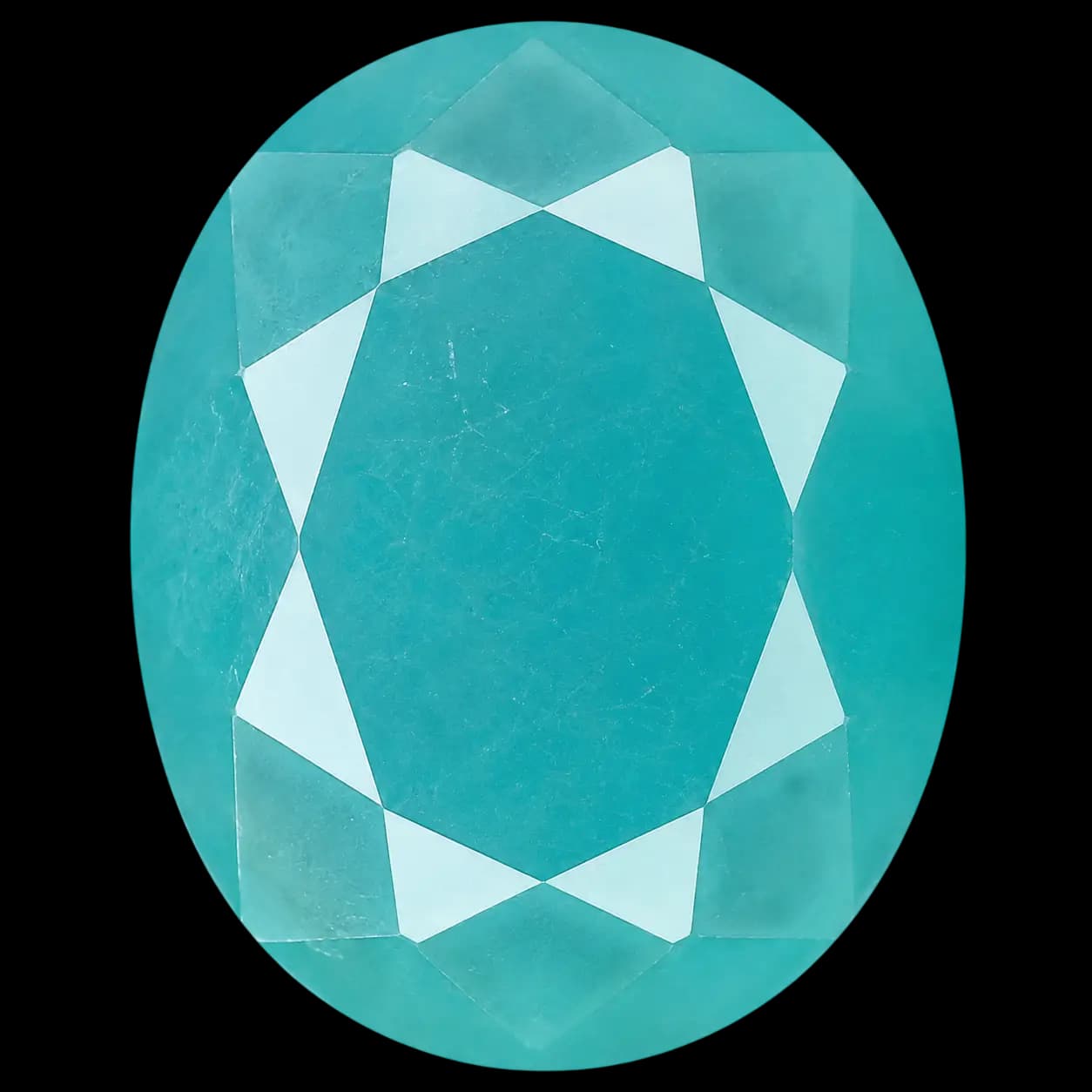
Grandidierite is an exceptionally rare blue-green gemstone prized for its striking color, strong pleochroism, and collector appeal. Its scarcity and elegant appearance make it a remarkable choice for fine jewelry and gemstone collections.
Grandidierite is a rare gemstone from the borosilicate mineral group, admired for its distinctive blue-green to greenish-blue colors and exceptional rarity. It was first discovered in Madagascar in 1902 and was named in honor of French explorer Alfred Grandidier, who studied the island’s natural history.
Grandidierite belongs to the mineral family of magnesium aluminium borosilicates. Its chemical composition is represented as (Mg,Fe2+)(Al,Fe3+)3(SiO4)(BO3)O2, with iron content influencing its attractive blue and green coloration.
This gemstone forms in metamorphic environments where boron-rich minerals interact with aluminum and magnesium-bearing rocks over geological periods. Gem-quality Grandidierite is extremely uncommon, with transparent specimens being particularly rare.
Grandidierite is known for its strong trichroic pleochroism, meaning it can display three different colors depending on the viewing angle. Fine specimens may show shades of dark blue-green, green, and nearly colorless tones. This optical phenomenon adds to its uniqueness and collector value.
With a Mohs hardness of 7.5, Grandidierite has good resistance to scratches and can be used in jewelry when properly designed and protected. However, its cleavage requires careful cutting and handling.
Important sources of Grandidierite include Madagascar, especially the original deposits near Cap Andrahomana and Tranomaro. Smaller occurrences have also been reported in countries including Sri Lanka, the United States, New Zealand, Antarctica, and India.
Today, natural Grandidierite is highly valued by gemstone collectors, jewelers, and enthusiasts seeking rare gemstones. It is commonly fashioned into rings, pendants, earrings, and collector pieces where its unusual color and rarity can be appreciated.
- Mineral Family
- Grandidierite
- Chemical Formula
- (Mg,Fe2+)(Al,Fe3+)3(SiO4)(BO3)O2
- Mohs Hardness
- 7.5
- Refractive Index
- 1.590 - 1.650
- Specific Gravity
- 2.98 - 3.04
- Cleavage
- Perfect in one direction and good in another direction
- Crystal System
- Orthorhombic
- Luster
- Vitreous
- Color Range
- Green, Cyan
When buying natural Grandidierite, several factors influence quality, rarity, and value.
Color: The most desirable Grandidierite gemstones display vivid blue-green or greenish-blue colors with strong saturation. Stones with attractive pleochroic effects and balanced color appearance are generally more valuable.
Clarity: Transparent Grandidierite is extremely rare and highly sought after. Many specimens are translucent or opaque, while fine transparent stones command premium prices due to their scarcity.
Cut: Experienced gem cutters carefully orient Grandidierite to maximize its pleochroism and color display. Due to its cleavage properties, precision cutting is important to preserve the gemstone’s durability.
Carat Weight: Large transparent Grandidierite gemstones are exceptionally uncommon. Size, combined with clarity and color quality, significantly affects value.
Origin: Madagascar remains the most historically important source of fine Grandidierite. Provenance can add interest and value, especially for rare collector-quality specimens.
Treatments: Grandidierite is generally not known to undergo common treatments such as heating or enhancement. Buyers should request disclosure of any treatments and confirm details through a reputable gemological report.
Natural vs Lab-Grown: Natural Grandidierite is extremely rare. Buyers should verify whether a gemstone is natural and request certification from a recognized gemological laboratory.
Certification and Authenticity: A professional gemstone certificate can confirm identity, natural origin where available, and important characteristics. Buying from trusted gemstone sellers helps ensure authenticity and transparency.
Grandidierite jewelry requires careful handling to maintain its beauty and condition.
Clean Grandidierite using warm water, mild soap, and a soft brush or cloth. Avoid harsh chemicals, sudden temperature changes, and abrasive cleaning materials.
Because Grandidierite has cleavage, avoid strong impacts that could cause fractures or damage. Ultrasonic and steam cleaners should be used only with professional guidance.
For storage, keep Grandidierite jewelry separately in a soft pouch or lined jewelry box to prevent contact with harder gemstones that may cause scratches.
Grandidierite is suitable for occasional rings, pendants, and earrings. Jewelry designs that provide protective settings are recommended for pieces worn frequently.
Grandidierite is a rare gemstone from the borosilicate mineral group, admired for its distinctive blue-green to greenish-blue colors and exceptional rarity. It was first discovered in Madagascar in 1902 and was named in honor of French explorer Alfred Grandidier, who studied the island’s natural history.
Grandidierite belongs to the mineral family of magnesium aluminium borosilicates. Its chemical composition is represented as (Mg,Fe2+)(Al,Fe3+)3(SiO4)(BO3)O2, with iron content influencing its attractive blue and green coloration.
This gemstone forms in metamorphic environments where boron-rich minerals interact with aluminum and magnesium-bearing rocks over geological periods. Gem-quality Grandidierite is extremely uncommon, with transparent specimens being particularly rare.
Grandidierite is known for its strong trichroic pleochroism, meaning it can display three different colors depending on the viewing angle. Fine specimens may show shades of dark blue-green, green, and nearly colorless tones. This optical phenomenon adds to its uniqueness and collector value.
With a Mohs hardness of 7.5, Grandidierite has good resistance to scratches and can be used in jewelry when properly designed and protected. However, its cleavage requires careful cutting and handling.
Important sources of Grandidierite include Madagascar, especially the original deposits near Cap Andrahomana and Tranomaro. Smaller occurrences have also been reported in countries including Sri Lanka, the United States, New Zealand, Antarctica, and India.
Today, natural Grandidierite is highly valued by gemstone collectors, jewelers, and enthusiasts seeking rare gemstones. It is commonly fashioned into rings, pendants, earrings, and collector pieces where its unusual color and rarity can be appreciated.
- Mineral Family
- Grandidierite
- Chemical Formula
- (Mg,Fe2+)(Al,Fe3+)3(SiO4)(BO3)O2
- Mohs Hardness
- 7.5
- Refractive Index
- 1.590 - 1.650
- Specific Gravity
- 2.98 - 3.04
- Cleavage
- Perfect in one direction and good in another direction
- Crystal System
- Orthorhombic
- Luster
- Vitreous
- Color Range
- Green, Cyan
When buying natural Grandidierite, several factors influence quality, rarity, and value.
Color: The most desirable Grandidierite gemstones display vivid blue-green or greenish-blue colors with strong saturation. Stones with attractive pleochroic effects and balanced color appearance are generally more valuable.
Clarity: Transparent Grandidierite is extremely rare and highly sought after. Many specimens are translucent or opaque, while fine transparent stones command premium prices due to their scarcity.
Cut: Experienced gem cutters carefully orient Grandidierite to maximize its pleochroism and color display. Due to its cleavage properties, precision cutting is important to preserve the gemstone’s durability.
Carat Weight: Large transparent Grandidierite gemstones are exceptionally uncommon. Size, combined with clarity and color quality, significantly affects value.
Origin: Madagascar remains the most historically important source of fine Grandidierite. Provenance can add interest and value, especially for rare collector-quality specimens.
Treatments: Grandidierite is generally not known to undergo common treatments such as heating or enhancement. Buyers should request disclosure of any treatments and confirm details through a reputable gemological report.
Natural vs Lab-Grown: Natural Grandidierite is extremely rare. Buyers should verify whether a gemstone is natural and request certification from a recognized gemological laboratory.
Certification and Authenticity: A professional gemstone certificate can confirm identity, natural origin where available, and important characteristics. Buying from trusted gemstone sellers helps ensure authenticity and transparency.
Grandidierite jewelry requires careful handling to maintain its beauty and condition.
Clean Grandidierite using warm water, mild soap, and a soft brush or cloth. Avoid harsh chemicals, sudden temperature changes, and abrasive cleaning materials.
Because Grandidierite has cleavage, avoid strong impacts that could cause fractures or damage. Ultrasonic and steam cleaners should be used only with professional guidance.
For storage, keep Grandidierite jewelry separately in a soft pouch or lined jewelry box to prevent contact with harder gemstones that may cause scratches.
Grandidierite is suitable for occasional rings, pendants, and earrings. Jewelry designs that provide protective settings are recommended for pieces worn frequently.
Grandidierite for Sale
No gems found
Try broadening your search or adjusting your filters.
Have a gem of your own? List it free - no fees